
Beagle Weight Calculator — Free Puppy Growth Chart & Adult Size Predictor
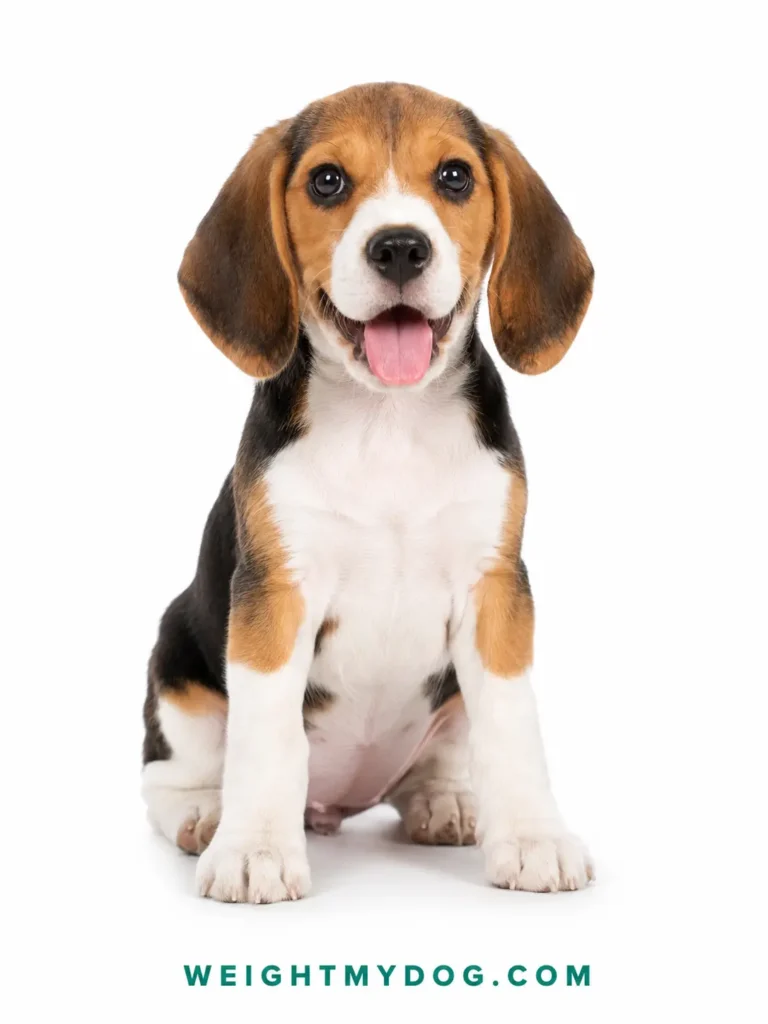
Most dog breed conversations begin with personality, but experienced owners know that tracking a Beagle’s weight from puppyhood reveals far more about long-term health than temperament ever could. Size tells a deeper story.
Beagles come in two sizes, and understanding which variety your pup belongs to changes everything — from food portioning to exercise planning. Early size awareness shapes smarter, healthier owners who make better daily decisions consistently.
What surprises many first-time Beagle handlers is how rapidly puppies grow during their earliest weeks. The trajectory from 2–3 lb newborns to solid adolescents happens faster than most small to medium dogs, demanding attentive, proactive monitoring throughout.
A truly fulfilling life for any Beagle starts with understanding healthy maturity benchmarks. Responsible ownership means recognizing when growth is progressing well — and when subtle deviations signal something requiring professional veterinary attention immediately.
Experienced handlers often describe Beagles as chowhounds — dogs who overeat enthusiastically without self-regulation. That food-motivated nature makes structured monitoring of intake non-negotiable, especially during the rapid developmental window between birth and 18 months.
This resource combines a puppy growth calculator, expert breed-specific insight, and practical nutrition guidance to help pet owners confidently track every milestone — from the first birthday to complete adult weight stabilization.
Beagle Weight Calculator
| Age | ♂ Male (Expected) | ♀ Female (Expected) | Your Dog |
|---|
How to use the Beagle weight calculator
Get your Beagle's ideal weight in under 10 seconds. No account needed.
Enter your dog’s details
Enter your Beagle's current age, weight, and gender. Works in both lbs and kg — supports weeks, months, and years.
Get your instant weight results
See your Beagle's predicted adult weight range, current ideal weight, visual growth chart, and health status — instantly calculated.
Check your dog’s health status
Find out if your Beagle is underweight, ideal, or overweight based on AKC-verified breed standards — and get a personalised feeding guide.
Male Beagle Growth and Weight Chart by Age
| Age | Male Weight | Male Height |
|---|---|---|
| 4 Weeks (1 Month) | 3 – 4 lbs (1.36 – 1.81 kg) | 3 – 5 in (7.6 – 12.7 cm) |
| 2 Months (8 Weeks) | 5 – 7 lbs (2.27 – 3.18 kg) | 4 – 6 in (10.2 – 15.2 cm) |
| 3 Months | 8 – 11 lbs (3.63 – 4.99 kg) | 5 – 8 in (12.7 – 20.3 cm) |
| 4 Months | 10 – 13 lbs (4.54 – 5.90 kg) | 6 – 9 in (15.2 – 22.9 cm) |
| 5 Months | 11 – 15 lbs (4.99 – 6.80 kg) | 7 – 10 in (17.8 – 25.4 cm) |
| 6 Months | 14 – 18 lbs (6.35 – 8.16 kg) | 8 – 11 in (20.3 – 27.9 cm) |
| 7 Months | 16 – 20 lbs (7.26 – 9.07 kg) | 9 – 12 in (22.9 – 30.5 cm) |
| 8 Months | 18 – 22 lbs (8.16 – 9.98 kg) | 10 – 13 in (25.4 – 33.0 cm) |
| 9 Months | 18 – 22 lbs (8.16 – 9.98 kg) | 11 – 14 in (27.9 – 35.6 cm) |
| 10 Months | 20 – 25 lbs (9.07 – 11.34 kg) | 12 – 15 in (30.5 – 38.1 cm) |
| 11 Months | 20 – 27 lbs (9.07 – 12.25 kg) | 13 – 15 in (33.0 – 38.1 cm) |
| 12 Months | 20 – 27 lbs (9.07 – 12.25 kg) | 13 – 15 in (33.0 – 38.1 cm) |
| 18 Months (Adult) | 20 – 30 lbs (9.07 – 13.61 kg) | 13 – 15 in (33.0 – 38.1 cm) |
| 24 Months (Full Grown) | 20 – 30 lbs (9.07 – 13.61 kg) | 13 – 15 in (33.0 – 38.1 cm) |
Female Beagle Growth and Weight Chart by Age
| Age | Female Weight | Female Height |
|---|---|---|
| 4 Weeks (1 Month) | 2.5 – 3.5 lbs (1.13 – 1.59 kg) | 3 – 4 in (7.6 – 10.2 cm) |
| 2 Months (8 Weeks) | 4 – 6 lbs (1.81 – 2.72 kg) | 4 – 6 in (10.2 – 15.2 cm) |
| 3 Months | 7 – 10 lbs (3.18 – 4.54 kg) | 5 – 7 in (12.7 – 17.8 cm) |
| 4 Months | 9 – 12 lbs (4.08 – 5.44 kg) | 6 – 9 in (15.2 – 22.9 cm) |
| 5 Months | 10 – 14 lbs (4.54 – 6.35 kg) | 7 – 10 in (17.8 – 25.4 cm) |
| 6 Months | 13 – 17 lbs (5.90 – 7.71 kg) | 8 – 11 in (20.3 – 27.9 cm) |
| 7 Months | 14 – 18 lbs (6.35 – 8.16 kg) | 9 – 12 in (22.9 – 30.5 cm) |
| 8 Months | 16 – 20 lbs (7.26 – 9.07 kg) | 10 – 13 in (25.4 – 33.0 cm) |
| 9 Months | 16 – 20 lbs (7.26 – 9.07 kg) | 11 – 13 in (27.9 – 33.0 cm) |
| 10 Months | 18 – 23 lbs (8.16 – 10.43 kg) | 12 – 14 in (30.5 – 35.6 cm) |
| 11 Months | 18 – 25 lbs (8.16 – 11.34 kg) | 12 – 15 in (30.5 – 38.1 cm) |
| 12 Months | 18 – 25 lbs (8.16 – 11.34 kg) | 12 – 15 in (30.5 – 38.1 cm) |
| 18 Months (Adult) | 20 – 30 lbs (9.07 – 13.61 kg) | 13 – 15 in (33.0 – 38.1 cm) |
| 24 Months (Full Grown) | 20 – 30 lbs (9.07 – 13.61 kg) | 13 – 15 in (33.0 – 38.1 cm) |
Puppy Growth Chart And Official AKC Breed Weight Standard
| Breed Size | 8 Weeks | 3 Months | 4 Months | 6 Months | 1 Year |
|---|---|---|---|---|---|
| Toy | 0.9 – 1.8 kg | 1.4 – 2 kg | 2 – 2.5 kg | 2.5 – 3 kg | 3 – 5.5 kg |
| Small | 1.5 – 3 kg | 3 – 5 kg | 4 – 7 kg | 6 – 9 kg | 6 – 11 kg |
| Medium | 3 – 5 kg | 5 – 8 kg | 8 – 13 kg | 10 – 18 kg | 11 – 23 kg |
| Large | 5 – 9 kg | 9 – 12 kg | 12 – 20 kg | 18 – 30 kg | 23 – 45 kg |
| Giant | 7 – 12 kg | 12 – 18 kg | 18 – 28 kg | 28 – 40 kg | 45 – 70 kg |
Beagle Breed Overview
The Beagle is technically one breed registered under AKC Breed Standards, yet it presents in two distinct size varieties that differ meaningfully in both tall stature and adult weight at full maturity.
Classified as miniature foxhounds by early hunters, Beagles were purpose-built for long chase endurance — a balanced body with a solid body frame that could sustain hours across varied terrain without fatigue or structural breakdown.
Few realize that a Beagle’s famously long ears aren’t decorative. They actively sweep ground scents upward toward the nose, amplifying their already phenomenal sense of smell — which operates at a slower speed but extraordinary precision compared to sight hounds.
Those signature white-tipped tails served a precise working function — acting as markers for hunters tracking dogs through dense underbrush. Even today, that genetic trait persists universally across the breed, regardless of coat color variation.
Beagles produce three distinctive sounds: a standard bark, a melodic howl, and a deep bay used specifically during hunting. That vocal range once helped hunters locate their dogs across vast open fields with remarkable directional accuracy.
Structurally, Beagles measuring under 13 inches at the shoulder remain the more compact variety, while larger Beagles exceeding 13 inches carry noticeably more muscle mass — a distinction the American Kennel Club formally recognizes within its Official Standard.
How Big Should a Beagle Be at Six Months?
At six months, a Beagle puppy enters one of its most telling developmental checkpoints. By this stage, most have approached their adult height — landing between 10 inches and 13 inches tall depending on their size variety.
Weighing between 12 pounds and 17 pounds at the six-month-old mark is considered well within normal range. Puppies falling significantly outside this window deserve prompt evaluation from a qualified vet to rule out growth-related concerns early.
13-inch Beagles and 15-inch Beagles follow meaningfully different weight curves. The smaller variety typically registers 8–11 lbs at this stage, while the larger variety may already reach 14–18 lbs — a gap that widens progressively through adulthood.
Many owners mistakenly assume six months signals the end of growing. In reality, Beagle puppies continue adding muscle and body mass well beyond this point, with adult weight not fully stabilizing until closer to 18–24 months post-birth.
Growth rates at this age begin decelerating noticeably. A healthy Beagle at six months has typically achieved roughly 80% of its adult height but may only represent 60% of its eventual adult weight — meaning significant filling-out remains ahead.
Consulting your vet with a growth chart at this stage provides invaluable perspective. Comparing your puppy’s actual measurements against established Beagle weight chart ranges confirms whether development is following a healthy pace without unnecessary concern.
How Much Bigger Will My Beagle Puppy Get?
Predicting a Beagle’s final adult weight requires more than guesswork — it demands applying a reliable adult weight formula: divide puppy weight in pounds by puppy age in weeks, then multiply by 52 for a calculated projection.
If your dog weighs 9 lbs at 12 weeks, applying this equation suggests an estimated adult weight of roughly 39 lbs, with a realistic range of 35.1–42.9 lbs — though breed-specific factors and genetics influence the final size considerably.
Smaller breeds like compact Beagles typically mature as adults by 12 months, while dogs trending toward the larger variety may continue meaningful development until 16 months. Monitoring paws relative to body proportions offers one reliable visual cue early on.
Your breeder holds valuable predictive insight — examining a Beagle’s parents and reviewing litter history often provides the most accurate estimate of where your puppy’s growing trajectory will ultimately land at full developmental completion.
Understanding what percentage of adult weight your puppy currently represents helps contextualize progress. A 3-month Beagle at 5.3 lbs represents approximately 30% of its projected total — meaning substantial growth milestones still remain ahead before stabilization.
The dog weight estimator tool available on this page factors in age, current weight, and breed classification to generate a practical dog size predictor output — giving pet owners a data-informed projection rather than relying on purely anecdotal litter history comparisons.
At What Age Is a Beagle Fully Grown?
Most pet parents are surprised to learn that their Beagle doesn’t reach full height at the same time as adult weight. Height stabilizes closer to eight months, while weight continues shifting until nearly 18 months.
Understanding fully grown timelines means recognizing two distinct phases. The skeletal frame locks in earlier, but muscle density and body composition keep developing. Many owners misread a lean frame as a sign their dog stopped growing prematurely.
By adulthood, a Beagle typically falls within AKC standards — either under 13 inches at 20 pounds, or between 13–15 inches at 20–30 pounds. These aren’t arbitrary numbers; they reflect decades of breed documentation.
Reaching full adult size by 18 months doesn’t mean weight stays fixed. Slower metabolisms after the first year mean gaining weight happens faster if daily dog food portions aren’t adjusted alongside activity levels.
What surprises many veterinarian-informed owners is how genetics shape the outcome. Tall Beagles from parents who measured 15 inches will predictably mirror that inherited pattern, making early size estimates fairly reliable.
Tracking growth against a reliable growth chart each month through 12 months prevents both stunted growth and obesity before they become harder problems requiring preventative treatment or extended veterinary checkups to correct.
How Do I Make Sure My Beagle Is Healthy?
A healthy Beagle isn’t just about weight — it’s about reading the body accurately. One reliable method: stand above your dog and confirm a visible waist. If that curve disappears, your dog has likely crossed into overweight territory.
Run your hands along the ribs. You should feel them beneath a thin layer of fat — firm but not sharp. If you can’t locate them without pressing hard, schedule a body condition assessment with your vet promptly.
Food-motivated dogs like Beagles tend to overeat when food is left out freely. Keeping meals portioned matters enormously, especially as your dog ages and its metabolism slows — a shift that happens gradually after the first year.
Hip dysplasia, typically associated with large breeds, can still affect Beagles — especially those carrying excessive weight. Monitoring movement habits weekly helps catch early stiffness before it compounds into more serious intervertebral disc disease (IVDD) complications.
Watch for ear infections frequently — those floppy ears trap moisture and debris, creating ideal conditions for bacterial growth. Cleaning ears weekly, particularly after swimming or bathing, keeps this growth-related concern from becoming a recurring issue.
Diet control targeting obesity must be paired with moderate daily activity. Short walks, fetch, and scent-based games preserve joint health while managing weight — long runs or intense runs stress developing joints before they fully mature past 1 year.
How to Use the Dog Weight Calculator
A dog size calculator does more than produce a number — it helps track developmental trends across weeks. Entering height and current weight monthly gives you a trajectory, not just a snapshot of where your Beagle stands today.
For small dogs like Beagles, the formula accounts for a max height of 18 in (45.7 cm). Calculators built for medium-sized breeds will skew results, so confirming you’re using a breed-specific care tool matters before trusting any prediction.
Input your puppy’s weight at 1 month to generate a reliable projection. Most tools use a baseline near 4.4 pounds (2 kg) and body weight progression curves showing how lifespan and final size intersect — an often-overlooked feature worth exploring.
The calculator works best alongside a weight chart segmented by size variety. A smaller Beagle at 3 months weighing 7–10 lbs follows a different curve than a larger Beagle trending toward 9–12 lbs at the same age.
Nutrition, exercise, and breed-specific care aren’t separate inputs — they’re reflected in whether your puppy’s actual weight matches the calculated projection. A consistent gap below the curve may signal the need to reassess feeding or veterinary checkups.
Dogs that live longer often show a pattern where the calculator’s projected adult weight was met by 12–22 lb for smaller varieties. When body weight rises past 10 kg, the lifespan correlation data suggests decreases in long-term health outcomes worth discussing with your vet.
Beagle Growth Tips
Nutrition
Every beagle owner I’ve worked with underestimates how strongly food-motivated this breed really is. Their balanced diet needs precise calibration — not guesswork — because even slight daily overfeeding compounds quickly into gaining weight patterns that are difficult to reverse.
What surprises most people is how a beagle’s metabolism shifts dramatically after the first birthday. Puppies processing nutrients rapidly need different macro-ratios than adults. Transitioning dog food without professional guidance often triggers obesity before owners even recognize the warning signs developing.
Nutrition isn’t just about quantity — it’s about timing, ingredient quality, and breed-specific care. I’ve seen beagles maintain their healthy weight simply through portioned morning-evening splits rather than free feeding, which their pack animals ancestry unfortunately encourages them to exploit.
Exercise
Beagles were originally bred as pack hounds to hunt small game like rabbits and hares across England alongside horses. That working heritage means their exercise needs aren’t optional — they’re biologically wired for sustained movement, and sedentary lifestyles accelerate weight-related joint complications considerably.
From personal observation, beagles lacking adequate stimulation redirect energy destructively. A minimum of forty-five minutes of purposeful exercise — not just yard roaming — keeps their merry temperament regulated and prevents the restless vocal behavior that neighbors quickly grow to resent entirely.
Track your beagle’s activity patterns weekly rather than assuming daily walks suffice. Their scent hounds instinct means mental engagement during exercise matters equally to physical exertion. Nose-work games combined with structured movement deliver results that treadmill-style routines simply cannot replicate.
Health Watch
Monitoring your beagle’s body condition requires more than a scale reading. Feel ribs without pressing hard — they should be detectable but not visually prominent. A visible waist when viewed from above and a tucked abdomen from the side indicate genuinely healthy structural composition worth maintaining.
Cervical intervertebral disk disease is a condition many beagle owners overlook until symptoms emerge. Their long backs and short legs create structural vulnerability, particularly between three years and six years of age. Watch for lowered head posture, gait irregularities, or muscle spasms around the neck and shoulders area.
Regular veterinary health checkups should include screening for diabetes and weight-related health concerns beyond the standard examination. The Veterinary Centers of America recommend assessing spine visibility, rounded belly presence, and fat distribution systematically — not just relying on the number your scale displays.
Facts About Beagles
President Lyndon Johnson famously kept three Beagles at the White House, which tells you something about their affectionate, gentle temperament with families. Before that cultural moment, most Americans knew this breed primarily through Snoopy — the beloved Peanut comic character who embodied their curious, intelligent nature perfectly.
Beagles are classified as scent hounds with a strong sense of smell that rivals even specialized tracking dogs. Originally developed in England as foot hound dogs for tracking hare and small game, they operated as pack animals — which explains their deeply social, loyal, companion personality observed today.
What most people miss: beagles are genuinely intelligent despite their reputation for stubbornness. That resistance isn’t confusion — it’s prioritization. Their nose is processing thousands of competing smell signals simultaneously during playtime, making compliance a cognitive choice rather than a capability limitation that owners often misinterpret completely.
Puppy Weight Calculator Formula
The most reliable puppy weight calculator formula uses a simple prediction framework: take your puppy’s current weight at 16 weeks, double it, and you have a reasonable estimate of their adult weight. This rule of thumb works particularly well for beagles given their relatively predictable genetics.
For greater accuracy, the American Kennel Club recommends factoring in parents’ and grandparents’ documented sizes. If both parents fall within the 13 inches 20 pounds variety, offspring are unlikely to deviate significantly — inherited size patterns in this breed are remarkably consistent across litters historically.
Online weight calculator tools using age, current weight, and breed data can compute projections with reasonable accuracy — though no internet tool replaces a veterinarian’s physical assessment. I always recommend cross-referencing any puppy size predictor output against an actual growth chart before making feeding or care decisions.
Final Thoughts
Raising a beagle well means accepting that their happy-go-lucky nature masks genuine complexity beneath the surface. They are playful, friendly companion animals equally suited for children and adults — but their food-motivated tendencies and vocal independence require owners who stay consistently engaged rather than passively reactive.
The difference between a healthy beagle and one trending toward obesity-related issues often comes down to early health watch habits. Overweight beagles develop joint development problems, slower metabolisms, and reduced playtime capacity — outcomes entirely preventable when nutrition, exercise, and veterinary monitoring are treated as interconnected systems rather than separate checkboxes.
What I find most rewarding about working with this breed is their loyal, merry temperament — they genuinely want to be involved in everything. Respecting their hound heritage while managing their modern pet lifestyle, maintaining ideal weight, and honoring both their hunting purposes past and their affectionate laidback present is the real work of responsible beagle ownership.
Frequently Asked Questions — Beagle Weight
How Big Will My Beagle Be When Fully Grown?
Most dog owners overlook one critical detail — a Beagle’s final size isn’t random. It traces back to genetics, grandparents, and line. A veterinarian can offer accurate estimates based on early growth patterns and breed history.
Working with a weight calculator alongside a growth chart gives you a far clearer picture than guessing. Inherited traits make Beagle sizing surprisingly predictable, particularly when you know parents’ builds and whether your pup leans small or tall.
How Big Does a Beagle Get?
The American Kennel Club recognizes two varieties — those standing 13 inches under and those ranging 13 to 15 inches tall. These aren’t loose categories; they define size classification and directly shape expected adult height and healthy weight outcomes.
A smaller Beagle from small dog parents typically stays near 10 pounds lighter on the adult weight range. Tall Beagles from the 13–15 inches size group often reach 20 pounds to 30 pounds at full adult size around 18–24 months.
When Does a Beagle Stop Growing?
Reaching full height typically happens around eight months, yet muscular fill out continues well past that. Larger dog breed timelines confirm that 18–24 months marks true fully grown status — skeletal maturity and mass both need time to stabilize properly.
The first 3 months establish foundational growth pace. Puppies gaining too rapidly risk obesity, especially if over-eat tendencies emerge early. Keeping food portioned correctly through this window prevents heavier adult frames that stress joints long-term.
At What Age Is a Beagle Fully Grown?
Most Beagles reach skeletal maturity near eight months, but that doesn’t mean development ends there. Muscle mass and body composition continue shifting, making 18–24 months the more realistic benchmark for being truly fully grown in every measurable sense.
Owners often confuse height stabilization with complete maturity. That’s an easy mistake. A Beagle standing at full height by month eight can still fill out considerably, particularly if from a larger dog breed background with naturally heavier first 3 months growth patterns.
How Big Should a Beagle Be at Six Months?
At six months, most Beagles land somewhere between 13–20 pounds and reach close to their adult height — roughly 10 inches to 13 inches tall depending on size variety. Those from small parents typically sit at the lower end of the weight spectrum.
By 6 months, puppies have usually achieved 75–80% of adult weight, though the journey to full adult size continues. Expect growth to slow down and taper off considerably after the first birthday, with 12 months to 14 months marking near-complete development for most.
How Much Should a Beagle Puppy Weigh at 3 Months?
At three months, a Beagle puppy typically weighs between 7–10 lbs if trending toward the larger 13–15 inches variety, or closer to 4–7 lb for the smaller Beagle classification. These early numbers offer genuine clues about adult weight trajectory.
Growth rates at this stage are rapidly accelerating. Checking a weight chart against average weight and percentage of adult weight benchmarks — roughly 2.1 lbs representing about 12% at earliest weeks — gives dog owners actionable insight for managing nutrition going forward.
How Can I Tell If My Beagle Is Overweight?
An overweight Beagle won’t always look visibly round — the coat disguises a lot. Run your hands along the sides; you should feel ribs without pressing hard. A visible waist from above and a tucked abdomen from the side are reliable physical checkpoints worth knowing.
Watch for a rounded belly or absent prominent waist — both signal excess fat accumulation. The Veterinary Centers of America recommend evaluating body condition regularly. Check whether ribs feel buried, spine is difficult to locate, or waist visible definition has disappeared between routine health checkups.
How Much Bigger Will My Beagle Get?
If your Beagle is still growing past six months and shows puppy feature signs — oversized paws, loose legs, a body that seems ahead of itself — there’s likely more development coming. A breeder familiar with past litters can offer an exact estimate of final size.
Beagles approaching eight months are near adult height but haven’t finished the muscle and fill out phase. Expect weight to continue climbing toward 20 pounds or higher through the first year, particularly if the pup’s 12 months to 14–16 months window shows steady gains.
What Is the Size of a Full-Grown Beagle?
A full-grown Beagle standing under 13 inches typically weighs around 20 pounds or less. The taller variety, measuring 13 to 15 inches, generally falls between 20 pounds and 30 pounds depending on gender, diet, and overall conditioning through adulthood.
From 11 inches to 15 inches represents the realistic height span across both size varieties. Weight-wise, expect anywhere from 19 pounds to 24 pounds as a reasonable mid-range. Short legs paired with a short torso mean even compact Beagles can feel surprisingly 20–25 lbs to 25–30 lbs solid.
How Big Will My Puppy Grow If He Is 9 lbs at 12 Weeks?
A puppy weighing 9 lbs at 12 weeks is tracking toward a mid-to-large Beagle frame. Using the rule of thumb — double the weight at 16 weeks — puts projected adult weight somewhere between 18 lbs and 22 lbs, consistent with the 13–15 inches variety range.
Cross-reference this with a growth chart alongside litters’ known parents’ sizes for better accuracy. Giant breed formulas don’t apply here; Beagles follow a tighter prolonged growth window. Most reach 10 pounds to 20 pounds by 12 months, with year and a half marking true adult stabilization.
How Do I Calculate Dog Size?
Most dog weight estimator tools function as a free online resource where you input current age in weeks or days and current weight. The calculator then projects final size by size group — toy dog, small dog, medium dog, large dog, or giant dog — using verified growth rates.
For a medium dog like a Beagle, expected ranges cap around 22 lb / 10 kg at the lighter end and 57 lb / 25.9 kg for heavier large dog classifications. Max height benchmarks range from 18 in / 45.7 cm to 25 in / 63.5 cm depending on weight unit input used.
How Big Is a 30lb Dog?
A 30 lb dog sits comfortably within the medium dog classification, though it represents the upper ceiling for a Beagle from the 13–15 inches size group. At this weight, the dog is considered solidly built without crossing into large dog territory by any standard height and weight measure.
Visually, a 30 lb Beagle looks noticeably bulky compared to a skinny 10–25 lbs counterpart, though body length and height may remain similar. The difference is typically fat and muscle distribution — Beagles that even out well at this weight usually carry it proportionately across their short frames.
Do Male and Female Beagles Differ in Size?
Male weight and female weight do differ meaningfully across both size varieties. Males typically run heavier — often 2 to 5 lbs more than females of the same size classification and age. This gender distinction is consistent and worth factoring into any weight calculator projection.
At shoulder level, height at the shoulder differences between male and female Beagles are minimal but real. A breeder or pet store representative familiar with specific line history can help clarify size assignment early. Genetics from both parents reliably forecast which gender will land heavier at adult height.
Are Beagles Prone to Obesity?
Food-motivated by nature, Beagles rank among the dog breeds most likely to overeat if given unrestricted access. Their merry temperament doesn’t flag discomfort early, meaning obesity-related issues like joint development strain often develop quietly before owners notice visible weight changes in daily playtime behavior.
Scent hounds bred for hunt work historically burned significant calories tracking rabbits and hares across terrain. Modern companion dogs living without that stimulation need carefully managed portion recommendations. A balanced diet, routine health checkups, and overfeeding awareness are essential for managing slower metabolisms and preventing obesity long-term.
Table of Contents
Toggle