
Doberman Pinscher Weight Calculator — Free Age & Growth Chart for Your Dog or Puppy
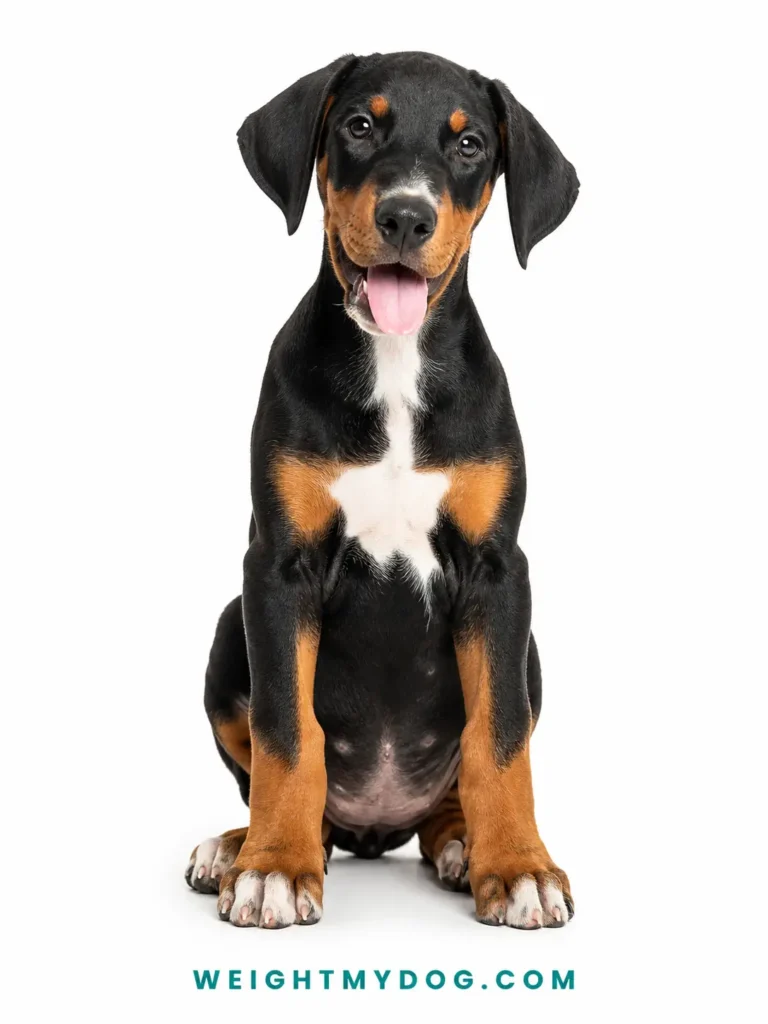
Tracking your Doberman Pinscher weight isn’t just routine record-keeping — it’s a window into their entire health trajectory. From 4 weeks onward, growth patterns reveal whether your pup is thriving or needs immediate veterinarian intervention.
Most owners discover that puppies don’t grow uniformly. Rapid growth between 6 and 8 months can mask subtle deficiencies. A reliable calculator helps you estimate expected adult weight before problems quietly compound into irreversible health consequences worth preventing early.
Here’s a contrarian truth: obsessing over lbs alone misleads you. Body condition matters far more than raw numbers. A male at 85 lbs with poor muscle tone is less healthy than a leaner, well-proportioned adult at 75 lbs.
Neutering or spaying directly alters calorie intake requirements and adulthood weight trajectories. Owners who ignore this shift often create obese dogs unintentionally. Gender differences compound this further, making breed standards a critical personalized reference rather than generic guidance.
Understanding age, current weight, and breed simultaneously gives the calculator its predictive power. Inputting weeks versus months incorrectly skews your predicted adult weight dramatically. Even a 15% deviation during the high growth phase signals something worth investigating immediately.
The AKC adult weight range of 60 to 100 pounds represents population averages, not individual destiny. Genetics, nutrition, and environment shape every Doberman Pinscher differently. Treat breed standards as a compass, never a rigid ceiling or floor.
Doberman Pinscher Weight Calculator
| Age | ♂ Male (Expected) | ♀ Female (Expected) | Your Dog |
|---|
How to use the Doberman Pinscher weight calculator
Get your Doberman Pinscher's ideal weight in under 10 seconds. No account needed.
Enter your dog’s details
Enter your Doberman Pinscher's current age, weight, and gender. Works in both lbs and kg — supports weeks, months, and years.
Get your instant weight results
See your Doberman Pinscher's predicted adult weight range, current ideal weight, visual growth chart, and health status — instantly calculated.
Check your dog’s health status
Find out if your Doberman Pinscher is underweight, ideal, or overweight based on AKC-verified breed standards — and get a personalised feeding guide.
About the Doberman Pinscher
The Doberman Pinscher emerged as a large breed built for purpose — tall, muscular, and athletically proportioned. Males run 10 to 15 lbs heavier than females consistently, a structural reality rooted deeply in centuries of intentional selective breeding.
Wobbler syndrome, cervical spine compression, and hip dysplasia aren’t rare anomalies — they’re hereditary conditions this breed genuinely faces. Responsible owners track growth through 18 months precisely because skeletal vulnerabilities emerge during the developing joints phase when stress accumulates invisibly.
Cardiomyopathy, specifically DCM, represents the most sobering health reality for this breed. Veterinary checkups during growth tracking phases catch early cardiac irregularities before they escalate. This large breed carries a genetic cardiac burden that demands proactive, consistent monitoring throughout life.
Controlled exercise during puppyhood protects everything. Avoiding intense running, jumping, and hard surfaces before 12 months prevents compounding joint damage. Leash walks and gentle play build strength without overwhelming a Doberman Pinscher’s still-developing skeletal architecture during vulnerable early phases.
Bloat, or GDV, strikes this breed with alarming frequency. Feeding multiple small meals and avoiding vigorous exercise immediately after eating reduces risk substantially. A well-proportioned adult Doberman reaching healthy adulthood requires owners who understand these breed-specific vulnerabilities from day one.
A high-quality, large-breed puppy formula supporting proper calcium and phosphorus balance from 3 to 4 meals per day early on transitions to 2 meals per day after 6 months. Joint and bone development during this window determines your Doberman’s entire adult structural foundation permanently.
Doberman Pinscher Growth Chart & Weight Ranges
Male Doberman Pinscher Weight & Height Chart
| Age | Male Weight | Male Height |
|---|---|---|
| 4 Weeks | 2 – 4 kg | 10 – 15 cm |
| 2 Months | 7 – 9 kg | 25 – 30 cm |
| 3 Months | 11 – 14 kg | 33 – 38 cm |
| 4 Months | 16 – 20 kg | 42 – 48 cm |
| 5 Months | 20 – 25 kg | 50 – 55 cm |
| 6 Months | 23 – 29 kg | 56 – 61 cm |
| 7 Months | 26 – 31 kg | 60 – 64 cm |
| 8 Months | 28 – 33 kg | 62 – 66 cm |
| 9 Months | 29 – 34 kg | 63 – 67 cm |
| 10 Months | 30 – 35 kg | 64 – 68 cm |
| 11 Months | 31 – 36 kg | 65 – 68.5 cm |
| 12 Months | 32 – 38 kg | 66 – 69 cm |
| 18 Months | 34 – 41 kg | 67 – 70 cm |
| 24 Months (Adult) | 34 – 45 kg | 68 – 72 cm |
Female Doberman Pinscher Weight & Height Chart
| Age | Female Weight | Female Height |
|---|---|---|
| 4 Weeks | 2 – 3 kg | 9 – 13 cm |
| 2 Months | 6 – 8 kg | 22 – 27 cm |
| 3 Months | 9 – 12 kg | 30 – 35 cm |
| 4 Months | 14 – 18 kg | 38 – 44 cm |
| 5 Months | 17 – 22 kg | 46 – 51 cm |
| 6 Months | 20 – 27 kg | 52 – 57 cm |
| 7 Months | 22 – 29 kg | 56 – 60 cm |
| 8 Months | 24 – 30 kg | 58 – 62 cm |
| 9 Months | 25 – 32 kg | 59 – 63 cm |
| 10 Months | 26 – 33 kg | 60 – 64 cm |
| 11 Months | 27 – 34 kg | 61 – 64.5 cm |
| 12 Months | 27 – 35 kg | 61 – 65 cm |
| 18 Months | 29 – 37 kg | 62 – 66 cm |
| 24 Months (Adult) | 29 – 40 kg | 63 – 68 cm |
Puppy Growth Chart And AKC Breed Weight Standard
| Breed Size | 8 Weeks | 3 Months | 4 Months | 6 Months | 1 Year |
|---|---|---|---|---|---|
| Toy | 0.9 – 1.8 kg | 1.4 – 2 kg | 2 – 2.5 kg | 2.5 – 3 kg | 3 – 5.5 kg |
| Small | 1.5 – 3 kg | 3 – 5 kg | 4 – 7 kg | 6 – 9 kg | 6 – 11 kg |
| Medium | 3 – 5 kg | 5 – 8 kg | 8 – 13 kg | 10 – 18 kg | 11 – 23 kg |
| Large | 5 – 9 kg | 9 – 12 kg | 12 – 20 kg | 18 – 30 kg | 23 – 45 kg |
| Giant | 7 – 12 kg | 12 – 18 kg | 18 – 28 kg | 28 – 40 kg | 45 – 70 kg |
How Much Bigger Will My Doberman Pinscher Puppy Get?
Most Doberman Pinscher owners underestimate how dramatically growth unfolds between months four and nine. Your puppy isn’t just gaining weight — skeletal architecture, muscle mass, and frame size are all reshaping simultaneously beneath the surface.
Here’s what surprises many Dobermann enthusiasts: breed data from the AKC confirms males typically reach between 60 and 100 lbs at full maturity, yet individual dogs often land outside that bracket based on lineage and conditioning during early adulthood.
A Puppy Weight Predictor works by analyzing your current age and current weight inputs against documented breed-specific curves. The tool generates an expected adulthood weight — not a guarantee, but a statistically grounded projection rooted in breed standards.
Between 9 and 12 months, most Doberman Pinscher puppies appear visually fully grown yet remain physiologically immature. True adulthood arrives closer to 18 months, when bone density stabilizes and body weight plateaus into its ideal range.
Parents often feel concerned watching their dog eat aggressively during the fast-growth window. That caloric demand is normal — the body is prioritizing skeletal development and hip dysplasia prevention requires appropriate nutrition and exercise loading simultaneously.
Tracking height alongside weight tells a richer story than either metric alone. A big, lean Doberman at 70 lbs who is still taller signals ongoing growth — your Puppy Weight Predictor reading should always be cross-referenced with American Kennel Club ideal weight range data.
How to Use the Puppy Weight Calculator
Open the calculator and enter two core values: your Doberman Pinscher puppy’s current age in weeks and their current weight in pounds. The tool immediately references the Doberman Pinscher profile benchmarks to begin generating adulthood weight projections.
The adult weight range output draws from the American Kennel Club ideal weight range — males mapped between 70 and 100 pounds, female ranges tracking slightly lower. Always verify your result against the AKC breed standards column to confirm alignment with recognized data.
Next, use the extra pounds column alongside the pet-human scaled body visual comparison feature. This tool makes abstract numbers genuinely relatable — it converts your dog’s load into a human equivalent that immediately clarifies whether the weight is proportional to the build.
A useful compare function lets you cross-reference your Dobermann’s trajectory against average adult benchmarks for the breed. If your reading consistently falls outside the weight male or weight female columns, that deviation deserves attention from your veterinary team before adulthood.
The body condition module within the calculator flags whether your growing dog skews toward overweight territory or requires a healthier weight plan. Watching changes in body weight week over week — not just monthly — gives you precise control over long-term health outcomes.
Finally, cross-check the comfort and mobility projections the tool provides. A Doberman Pinscher carrying excessive weight gain before 18 months places direct impact on joints and future mobility. The calculator helps every responsible parent catch these answers early rather than reactively.
Typical Adult Dobermann Weight
A typical Dobermann does not reach its final shape quietly — this LARGE breed surprises many owners with how dramatically mass shifts between adolescence and full maturity, landing somewhere around 40kg for males on average.
Female Dobermanns average closer to 30kg, yet both sexes can grow significantly beyond expectations when nutrition and genetics align well. Knowing 77, lb, 2, oz benchmarks helps owners plan proactively rather than react.
Weight Predictions
Most owners underestimate how muscle development transforms a Doberman during the second year, long after height has levelled off. Body mass continues shifting quietly, making early predictions unreliable without tracking full height alongside kilograms.
A solid Rule of Thumb: double a puppy’s weight recorded at 16 weeks for a reasonable estimate. By 4 months, approximately 50% of adult weight is already present, with 18 to 24 months marking true completion.
Doberman Pinscher Growth Tips
Nutrition directly determines whether a Doberman reaches its genetic ceiling or falls short — splitting meals across multiple small meals daily reduces bloat risk dramatically during the critical window before 18 months of growth-related vulnerability stabilises entirely.
Exercise discipline matters equally; energetic young Dobermans genuinely benefit from low-impact activities that protect developing joints. Avoiding over-exertion before skeletal maturity, typically around 6 months of focused conditioning, protects long-term soundness and structural integrity per day.
Nutrition
Developed in Germany during the late 19th century, the Doberman’s large breed metabolism demands precision feeding. Daily caloric intake directly shapes body condition, and even slight excessive weight gain disrupts the standardized BCS assessment protocols vets rely on.
Understanding your dog’s daily energy needs requires accounting for size, target body condition, and age. A male Doberman ranging 60–100 lbs needs structured calorie planning — predictions tied to growth stage prevent both obesity and dangerous lagging weight outcomes.
Exercise
Dobermans bred for police dogs and service animals carry powerful, high-drive physiology. Their trainability demands structured activity tied to current age and weight range — growing dogs between 35–45 lbs should never follow adult breed standards exercise regimens prematurely.
Working Dogs like the Doberman share AKC breed standard reference expectations with Boxer, Rottweiler, and Belgian Malinois lines. Cross-referencing your dog’s actual weight against the AKC Full Breed Weight Chart helps calculate appropriate exercise intensity without risking joint overload.
Health Watch
Body Condition Check using landmarks helps owners visualize health decline before it escalates. Mixed-breed Dobermans — say, a German Shepherd–Doberman cross — need mixed-breed range evaluation since dominant breed weightage at 55%–65% skews standard clinical reference charts significantly.
Individual dogs vary in how final adult weight reflects on health markers. Using puppy weight calculators tied to breed group and expected adulthood age, owners can track and predict personalized growth assessments — catching deviations early through comfort-driven body condition scoring reviews.
Understanding Pet Weight & Healthy Body Condition
Most dog owners instinctively compare their Doberman’s size to a human equivalent, yet this pet-to-human weight comparison rarely tells the full story. A lean, muscular Doberman at 85 pounds carries that mass far more efficiently than any comparable human frame would.
The real insight comes from understanding Breed Weight Ranges rather than relying on generalised charts. Every Doberman carries weight differently based on skeletal density, muscle distribution, and gender — factors a basic scale simply cannot capture or meaningfully communicate to concerned owners.
Evaluating adult weight ranges honestly requires observing rib visibility, waist definition, and spinal prominence simultaneously. Experienced handlers learn to read body condition by touch and proportion, not just numbers — a skill that develops over years of consistent, hands-on interaction with the breed.
A Daily Calorie Calculator paired with regular body condition scoring offers far more actionable data than weight alone ever provides. Feeding precision matters enormously — a Doberman consuming even fifty excess calories daily accumulates noticeable fat deposits along the back and ribcage within weeks.
Body condition assessment works alongside the human equivalent metric to give owners a relatable frame of reference. When your Doberman’s weight aligns with its structural frame, coat quality improves, joint stress decreases, and overall vitality becomes unmistakably visible during exercise or play sessions.
Understanding how Breed Weight Ranges interact with individual metabolism separates informed owners from guesswork-driven ones. Two Dobermans from identical bloodlines may maintain healthy body condition at weights differing by ten or fifteen pounds — proving that personalised assessment always outperforms standardised charts.
Mixed-Breed Doberman Weight Estimation
Estimating weight for Doberman puppies crossed with breeds like Golden Retriever or Labrador Retriever demands respect for both genetic contributions equally. Dismissing one parent’s influence routinely produces wildly inaccurate adult weight projections that mislead owners planning nutrition or housing.
A Doberman crossed with a Weimaraner or Pointer typically produces a lean, athletically built animal whose ideal weight skews lighter than a purebred Doberman. The hunting-dog genetics from breed 1 strongly influence skeletal length, muscle density, and overall metabolic efficiency across the dog’s lifetime.
When breed 2 carries heavier ancestry — say an American Bulldog or Bull Terrier — the resulting mixed-breed Doberman often develops a broader chest and thicker bone structure. Owners frequently underestimate these dogs, misreading solid musculature as excess fat during routine veterinary check-ins.
Sighthound crosses involving Greyhound or Afghan Hound genetics pull Doberman weight downward significantly. These combinations produce exceptionally deep-chested, narrow-waisted animals whose ideal weight appears deceptively low yet reflects perfectly efficient athletic conditioning throughout their active adult years.
Sporting-dog crosses — particularly Irish Setter, Dalmatian, Australian Shepherd, or Collie — produce Doberman mixes with moderate weight ranges and remarkable endurance. Estimating adult size accurately for these puppies requires tracking both parents’ documented adult weights rather than relying on visual assessment of the litter alone.
A Pit Bull Terrier cross introduces notable muscular density that consistently causes owners to overestimate body fat percentage. Experienced breeders assess these mixed-breed Doberman dogs against the heavier parent’s framework first, then calibrate the ideal weight estimate downward by roughly ten to fifteen percent for accuracy.
Frequently Asked Questions — Doberman Pinscher Weight
How Much Should a Doberman Pinscher Weigh at Each Age?
Tracking your Doberman’s weight at every age reveals more than numbers — it reflects nutrition, exercise, and breed-specific care working together. Growing pups shift fast, and a concerned parent needs reliable benchmarks to stay ahead.
AKC breed standards give you a structured lens: from a puppy in early weeks to a fully grown dog entering adulthood, ideal thresholds help you predict where your pup is headed with confidence.
How Do I Use a Doberman Pinscher Weight Calculator?
Enter your dog’s current weight, current age, breed, and gender — the tool then maps against average growth patterns to deliver your expected adulthood weight with practical clarity and speed.
Four values drive the output: current weight range, AKC adult weight, breed standards, and expected adulthood age. Whether you’re tracking excess gain or lagging weight, the Puppy Weight Predictor highlights exactly where your dog stands.
What Is the Ideal Weight for a Male vs Female Doberman?
Males typically range from 75 to 100 lbs at 18 months, while females settle between 65 and 85 lbs — a difference rooted in muscular build and frame size, not just genetics or feeding habits.
Taller, denser males carry 10 to 15 lbs more than females on average. Both sexes should reflect the adult weight range defined by AKC, keeping muscle mass proportionate to their unique skeletal frame.
How Much Should a Doberman Puppy Weigh at 8 Weeks?
At 8 weeks, a Doberman Pinscher puppy should weigh between 15 and 20 lbs for male pups, and 12 to 18 lbs for female pups — early figures that anchor your entire growth tracking journey.
These initial readings matter because rapid growth accelerates sharply between 3 and 8 months, a high growth phase where calcium and phosphorus intake directly shapes bone development and joint integrity long-term.
Is My Doberman Overweight or Underweight?
Use body condition scoring — a BCS standardized assessment — to feel key landmarks along your dog’s ribs and spine. Visualize whether extra pounds are masking muscle or whether weight loss is affecting comfort and mobility.
A veterinary team can offer personalized growth assessments that go beyond abstract numbers. Long-term health depends on honest evaluation of body condition, build, and how your dog compares to breed clinical reference ranges.
At What Age Is a Doberman Pinscher Fully Grown?
Most Doberman puppies reach full height around 12 months, but muscle and body mass continue developing through 18 to 24 months — meaning skeletal growth ends before true adulthood weight is achieved completely.
The second year is where muscle development finalizes. Controlled exercise, leash walks, and avoiding intense running or jumping on hard surfaces protect developing joints during this critical, often overlooked post-first year phase.
How Much Does a Doberman Weigh at 3, 6, and 12 months?
At 3 months, expect 25–30 lbs in male and 20–25 lbs in female pups. By 6 months, those figures climb to 50–65 lbs and 45–60 lbs respectively, reflecting the breed’s rapid weight accumulation.
By 12 months, males reach 70–85 lbs and females hit 60–75 lbs. Comparing these against your weight range chart confirms whether your dog is tracking on schedule or drifting from its breed-specific curve.
What Is the Average Weight of a Full-Grown Doberman Pinscher?
A full-grown Dobermann averages 40kg for males — roughly 77 lb 2 oz — while females average around 30kg. These figures align with typical growth patterns across the LARGE breed classification internationally.
The American Kennel Club places the adult Doberman Pinscher weight between 60 and 100 pounds, covering both sexes. This breed standard range accounts for individual variation in build, nutrition, and health history across dogs.
How Do I Calculate My Doberman Puppy’s Adult Weight?
One reliable Rule of Thumb: double your pup’s weight at 16 weeks to estimate adult weight. This works well during the high growth phase and gives a quick projection when formal tools aren’t immediately accessible.
For greater accuracy, use a Puppy Weight Predictor that factors in breed group, gender, and current age. The calculate function processes these inputs against growth data, returning your dog’s expected adult weight and adulthood timeline.
Does Neutering Affect a Doberman Pinscher’s Weight?
Neutering or spaying impacts calorie intake needs significantly — altered dogs burn fewer calories at rest, making obese outcomes more likely without dietary adjustments tied to their new metabolic reality post-procedure.
Hip dysplasia and Wobbler syndrome risk can increase when excessive weight gain stresses joints after neutering. Pair any spaying decision with updated nutrition planning and veterinary checkups to protect skeletal development and mobility through adulthood.
Table of Contents
Toggle