
Free Alaskan Malamute Weight Calculator — Age & Growth Chart for Your Dog or Puppy
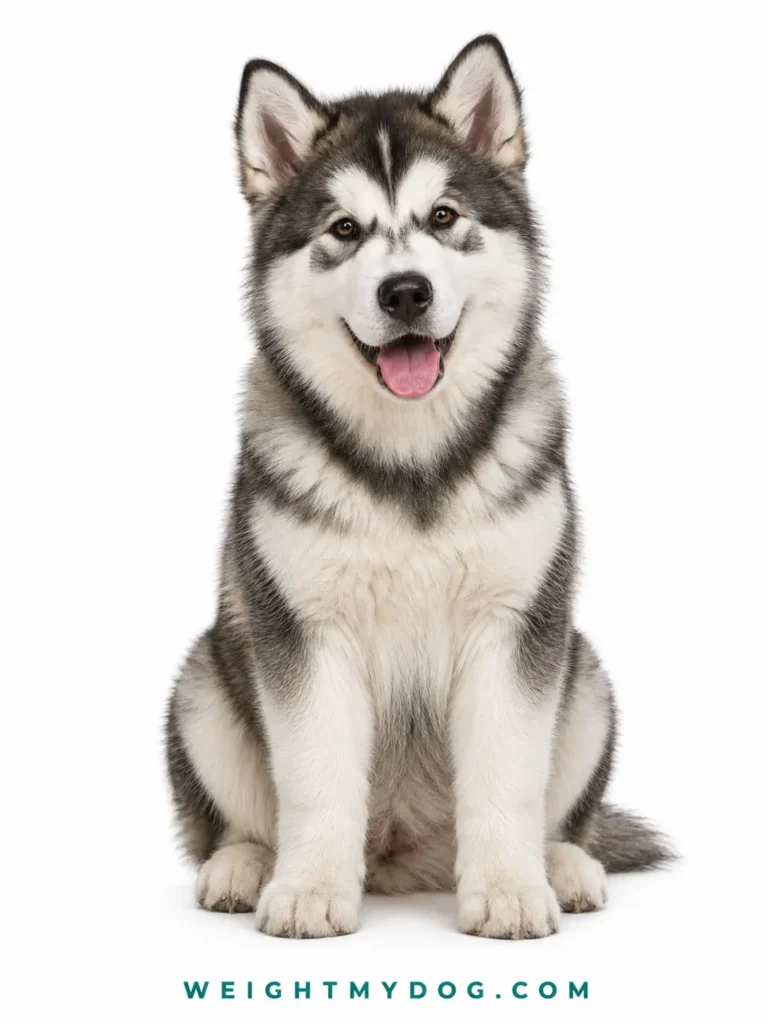
Alaskan Malamute ownership brings joy, but tracking your dog’s growth accurately matters more than most pet owners realize. Many skip weight monitoring until problems surface. Predicting your pup’s adult size early prevents costly surprises and shapes smarter diet and exercise decisions.
Every puppy follows a biological clock, but large breeds like Malamutes develop differently than small breeds. Genetics, gender, and nutrition all interplay silently beneath that fluffy dense coat, shaping what your companion becomes during each life stage transition.
A puppy weight calculator isn’t just a novelty—it’s a trusted planning tool. Pet parents who monitor weight by month catch growth-related deviations earlier, protect joint health, and make feeding schedule adjustments before health issues escalate into expensive veterinary problems.
Tracking your Alaskan Malamute’s progress through a chart gives you benchmarks rooted in breed standards. Without data, you’re guessing. With it, you gain peace of mind knowing whether your beloved pet is developing within the predicted range or needs veterinary attention.
Most growing puppies show rapid changes between 2 months and 12 months. Missing these windows means missing intervention opportunities. Veterinarian guidance combined with consistent weighing builds the complete picture that casual observation simply cannot provide for large dog development.
This guide covers growth patterns, feeding guidelines, veterinary costs, and lifestyle strategies that genuinely support healthy Malamutes. Whether you’re a novice owner or an experienced handler, understanding weight trajectories transforms how confidently you raise this powerful large breed companion.
Alaskan Malamute Weight Calculator
| Age | ♂ Male (Expected) | ♀ Female (Expected) | Your Dog |
|---|
How to use the Alaskan Malamute weight calculator
Get your Alaskan Malamute's ideal weight in under 10 seconds. No account needed.
Enter your dog’s details
Enter your Alaskan Malamute's current age, weight, and gender. Works in both lbs and kg — supports weeks, months, and years.
Get your instant weight results
See your Alaskan Malamute's predicted adult weight range, current ideal weight, visual growth chart, and health status — instantly calculated.
Check your dog’s health status
Find out if your Alaskan Malamute is underweight, ideal, or overweight based on UKC-verified breed standards — and get a personalised feeding guide.
Alaskan Malamute Breed Overview
The Alaskan Malamute descends from the Mahlemut tribe of Northwestern Alaska, selectively bred over 000 years ago as sled haulers. Archaeological evidence from Zhokhov Island near the East Siberian Sea confirms their ancient working heritage predating many modern breeds.
Unlike the Siberian Husky, Malamutes were bred for hauling heavy freight across long distances rather than speed. Their ancestors share lineage with gray wolves and Canis lupus relatives, giving them robust bone structure and endurance unmatched among Arctic sled dog breeds today.
The Mahlemut people depended entirely on these hard workers. Selectively bred for cold Arctic climates, Malamutes developed thick double coats, heavy-boned frames, and waterproof dense coat layers that protected them in brutal cooler climates and extreme conditions.
Malamutes are highly social, affectionate companions who bond deeply with family units. Despite their willful, independent nature, they thrive as friendly family member participants in active households. Their intelligence makes training rewarding but demands patience and consistency throughout development.
Modern Malamutes carry the genetics of sled dogs with working muscle mass and endurance capacity. Their cousin breeds include the Chow Chow, German Shepherd, and Akita, though Malamutes remain unique in their powerful builds and wolf-like appearance among purebred working dog classifications.
The breed was formally recognized by the American Kennel Club (AKC) and maintains official breed standards emphasizing shoulder height, weight, and structure. Today’s Malamutes serve as affectionate family dogs while preserving the strength and endurance of their historic working ancestors across generations.
Male Alaskan Malamute Growth and Weight Chart by Age
| Age | Male Weight | Male Height |
|---|---|---|
| 4 Weeks (1 Month) | 5 – 8 lbs (2.27 – 3.63 kg) | 6 – 8 in (15.2 – 20.3 cm) |
| 2 Months (8 Weeks) | 15 – 20 lbs (6.80 – 9.07 kg) | 8 – 10 in (20.3 – 25.4 cm) |
| 3 Months | 25 – 35 lbs (11.34 – 15.88 kg) | 10 – 14 in (25.4 – 35.6 cm) |
| 4 Months | 35 – 45 lbs (15.88 – 20.41 kg) | 13 – 17 in (33.0 – 43.2 cm) |
| 5 Months | 48 – 61 lbs (21.77 – 27.67 kg) | 15 – 19 in (38.1 – 48.3 cm) |
| 6 Months | 50 – 65 lbs (22.68 – 29.48 kg) | 17 – 21 in (43.2 – 53.3 cm) |
| 7 Months | 63 – 75 lbs (28.58 – 34.02 kg) | 19 – 22 in (48.3 – 55.9 cm) |
| 8 Months | 67 – 80 lbs (30.39 – 36.29 kg) | 20 – 23 in (50.8 – 58.4 cm) |
| 9 Months | 71 – 85 lbs (32.21 – 38.56 kg) | 21 – 24 in (53.3 – 61.0 cm) |
| 10 Months | 74 – 90 lbs (33.57 – 40.82 kg) | 22 – 24 in (55.9 – 61.0 cm) |
| 11 Months | 77 – 92 lbs (34.93 – 41.73 kg) | 22 – 25 in (55.9 – 63.5 cm) |
| 12 Months (1 Year) | 80 – 95 lbs (36.29 – 43.09 kg) | 23 – 25 in (58.4 – 63.5 cm) |
| 18 Months (Adult) | 85 – 100 lbs (38.56 – 45.36 kg) | 24 – 26 in (61.0 – 66.0 cm) |
| 24 Months (Full Grown) | 85 – 100 lbs (38.56 – 45.36 kg) | 24 – 26 in (61.0 – 66.0 cm) |
Female Alaskan Malamute Growth and Weight Chart by Age
| Age | Female Weight | Female Height |
|---|---|---|
| 4 Weeks (1 Month) | 4 – 7 lbs (1.81 – 3.18 kg) | 5 – 7 in (12.7 – 17.8 cm) |
| 2 Months (8 Weeks) | 12 – 18 lbs (5.44 – 8.16 kg) | 7 – 9 in (17.8 – 22.9 cm) |
| 3 Months | 20 – 30 lbs (9.07 – 13.61 kg) | 9 – 13 in (22.9 – 33.0 cm) |
| 4 Months | 30 – 40 lbs (13.61 – 18.14 kg) | 12 – 16 in (30.5 – 40.6 cm) |
| 5 Months | 40 – 52 lbs (18.14 – 23.59 kg) | 14 – 18 in (35.6 – 45.7 cm) |
| 6 Months | 45 – 60 lbs (20.41 – 27.22 kg) | 16 – 20 in (40.6 – 50.8 cm) |
| 7 Months | 53 – 65 lbs (24.04 – 29.48 kg) | 18 – 21 in (45.7 – 53.3 cm) |
| 8 Months | 57 – 70 lbs (25.85 – 31.75 kg) | 19 – 22 in (48.3 – 55.9 cm) |
| 9 Months | 60 – 75 lbs (27.22 – 34.02 kg) | 20 – 23 in (50.8 – 58.4 cm) |
| 10 Months | 64 – 78 lbs (29.03 – 35.38 kg) | 21 – 23 in (53.3 – 58.4 cm) |
| 11 Months | 67 – 80 lbs (30.39 – 36.29 kg) | 21 – 24 in (53.3 – 61.0 cm) |
| 12 Months (1 Year) | 65 – 85 lbs (29.48 – 38.56 kg) | 22 – 24 in (55.9 – 61.0 cm) |
| 18 Months (Adult) | 70 – 85 lbs (31.75 – 38.56 kg) | 22 – 24 in (55.9 – 61.0 cm) |
| 24 Months (Full Grown) | 75 – 85 lbs (34.02 – 38.56 kg) | 23 – 24 in (58.4 – 61.0 cm) |
How Big Do Alaskan Malamutes Get? (AKC Breed Standards / Adult Size)
According to the American Kennel Club, male Malamutes typically stand 25 inches tall at the withers and weigh approximately 85 pounds. Females average 23 inches in height and around 75 pounds, though individuals vary based on genetics.
AKC breed standards represent the average, not the ceiling. Some males exceed 100 pounds, while oversized individuals may reach 105 pounds or beyond depending on breeding and genetics. Reputable sellers maintain standards but acknowledge natural size variations within litters.
Adult size depends heavily on gender, genetics, and nutrition during the first year. Males tend toward heavier, taller builds, while females maintain moderate weight and slightly shorter height. Both sexes demonstrate heavy-boned, muscular frames that distinguish them from medium dog counterparts.
Breed standards define desirable traits, including almond-shaped eyes, deep-chested torsos, and strong neck structure. Body condition matters as much as raw pounds—a Malamute at 85 pounds with good muscle mass differs vastly from one carrying excess fat instead.
Full physical maturity in Malamutes means more than reaching adult weight. Bone mass, muscle development, and dense coat fullness continue developing past the first birthday, extending into the second year before full structural maturity is genuinely achieved in these large dogs.
The Alaskan breed falls within the large to giant classification on the breed spectrum. Unlike giant breed puppies from mastiff lines, Malamutes occupy a medium position between large breeds and true giant breeds, making their growth rate comparatively faster than many assume.
How Big Should an Alaskan Malamute Puppy Be at Six Months?
At six months, male Malamute puppies typically weigh between 55 and 65 lbs, representing roughly 70% to 75% of their projected adult weight. This six months checkpoint reveals whether growth is trending within healthy weight benchmarks appropriately.
Female puppies at six months generally land between 45 and 55 lbs. Breed-specific data suggests females at this age have completed significant bone development, though filling out of muscle mass and chest breadth continues well beyond this growth phase milestone.
Your veterinarian can palpate ribs, assess visible waist, and evaluate body condition score at six months to determine whether your puppy is on track. Simply checking weight on a scale misses the qualitative assessment that ensures healthy growth rather than just mass accumulation.
When Do Alaskan Malamutes Stop Growing?
Malamutes don’t stop growing cleanly at one moment—it’s gradual. Height peaks around 12 months to 18 months, but muscle development and filling out of their chest, back, and neck continues actively until they reach 24 months of age.
The growth rate slows considerably after 12 months, shifting from rapid skeletal expansion to muscle consolidation. By 18 months, most Malamutes have reached full height, yet their body continues developing in breadth and weight until the 2nd birthday arrives officially.
Full maturity by 2 years reflects breed size biology. Large breeds simply require longer developmental timelines than small dogs. Owners expecting full physical maturity by 12 months often overfeed trying to accelerate growth, which creates joint stress and orthopedic issues instead of healthy outcomes.
Neutering timing significantly affects when Malamutes complete growth. Neutered dogs may experience altered growth plates closure timing, potentially resulting in taller, slightly different-framed adults compared to intact counterparts. Veterinarian consultation about neuter status timing protects long-term health effectively.
Growth plates in large breeds close later than in small breeds. Forcing intense exercise or high-impact activities like jumping or climbing stairs before growth plates close risks permanent joint damage. Protecting developing bones during this window pays dividends across their life expectancy.
Many owners confuse adolescent stage behavioral changes with physical maturity. A Malamute at 14 months may act adult but remains physically developing. Understanding this distinction protects them from injuries caused by exercise routines designed for fully grown dogs rather than still-growing ones.
How Much Bigger Will My Alaskan Malamute Get?
If your Malamute is under 12 months, expect considerable growth still ahead. Puppies at 4 months have typically reached only 50% of adult weight. Use current weight and age together to estimate the final size with reasonable accuracy.
Between 6 months and 12 months, growth rate slows but doesn’t stop. Body condition shifts from rapid skeletal growth to muscle development. Filling out replaces shooting upward, and weight gains become more steady and gradual during this adolescent stage transition period.
Paw size serves as a surprisingly useful predictor of adult size for growing Malamutes. Puppies with disproportionately large paws relative to legs signal significant additional growth ahead. Breeders use this alongside parents’ weight for broad estimate projections.
By 18 months, most owners can determine final weight within a 10 to 15 pound range. Comparing your dog’s body condition score against breed averages at this age provides a strong estimate of whether they’re nearing their complete adult size trajectory.
Genetics remains the most reliable predictor of final size. If both parents were 85 pounds or heavier, your puppy will likely grow comparably. Smaller mother combined with larger father produces estimates closer to the average of both parents’ combined weight.
Owners often worry unnecessarily about size. A Malamute slightly smaller than breed standards isn’t unhealthy. Conversely, oversized dogs face greater joint pressure and obesity risks. Tracking against breed-specific data rather than fixating on maximum pounds produces healthier long-term outcomes for individuals.
How Does a Puppy Weight Calculator Work?
A puppy weight calculator uses current weight, current age, and breed size to calculate an estimated adult weight. Most online calculators apply growth formulas derived from breed-specific data and breed averages to generate a predicted range for your Malamute.
The mathematical base involves dividing current weight by age in weeks, then multiplying by a percentage specific to breed category. Large breeds use different growth formulas than small breeds because their growth rate curves differently across months of development and maturation.
Online tools incorporate gender, neuter status, and breed size variables to refine estimates. Inputting a four-month-old male’s weight generates a personalized adult weight range more accurate than general broad estimate tools designed for mixed breeds or medium sized dogs.
These calculators produce estimates, not guarantees. Growth in living animals involves metabolism, diet, exercise, and genetics variables no algorithm perfectly captures. Treat calculator outputs as reference benchmarks rather than precise scientific conclusions about final weight outcomes.
The easiest approach combines online calculators with veterinarian input. While calculators analyze breed-specific data and weight by age patterns, your vet adds clinical body condition assessment that transforms digital estimates into personalized growth tracking intelligence for your specific dog.
Accuracy improves dramatically when you input weight by month data consistently rather than single measurements. A chart built from monthly weighing reveals growth rate trends that single-point estimates miss entirely. Consistent data input makes puppy weight calculator tools exponentially more effective and reliable.
Methods to Predict Your Puppy's Adult Weight
Using a Puppy Weight Calculator (Best Online Method)
Online puppy weight calculator tools offer the most accessible estimate for Malamute owners without veterinary access. Entering current weight and age in weeks generates a predicted range aligned with large breed growth formulas and breed-specific data benchmarks.
The online method works best when tracking multiple weight by month data points rather than a single measurement. Consistent inputs over months build a growth trajectory that reveals whether your Malamute trends toward the heavier or smaller end of adult weight ranges.
Weight calculators have limitations with Malamutes because breed size sits between large and giant breeds. Use AKC breed standards alongside calculator outputs for comparable estimates. Combining both resources provides pet owners with insight beyond what either method delivers independently.
Breed Standards & Growth Percentages
Breed standards from the American Kennel Club establish benchmarks for height, weight, and body condition that reflect healthy adult size expectations. Comparing your Malamute’s progress against these standards provides accurate reference without requiring sophisticated tools or equipment.
Growth percentage formulas suggest Malamutes reach approximately 50% of adult weight by 4 months and 75% by 6 months. These percentages vary by individual and gender, but serve as reliable general estimates when more personalized breed-specific data isn’t available.
Using breed averages as a yardstick, owners can predict final size within a 10 to 20 pound window. Females tracking below 60 lbs at 9 months may indicate underweight status, while males above 90 lbs at the same age warrant veterinarian review.
Looking at the Parents’ Weight
Parents’ weight represents the most trusted biological predictor available. A mother weighing 75 pounds and a father at 90 pounds suggests offspring will land within that weight window, adjusted for gender and individual genetics expression during growth.
Reputable sellers and breeders share parents’ weight and health records openly. Request this information before acquiring your puppy—it’s not just interesting data but a genuinely useful estimate tool that outperforms many online calculators for large breed weight prediction purposes.
Siblings from previous litters provide additional insight. If a breeder’s previous litter consistently produced 85 pound males, your puppy from the same parents will likely develop similarly. Historical litter data combined with parents’ weight produces the most complete adult weight prediction picture available.
Vet Guidance & Growth Monitoring
Veterinarian checkup visits at 4 months, 6 months, and 12 months provide clinical growth tracking beyond what home scale measurements capture. Vets assess bone development, muscle growth, and body condition score simultaneously to evaluate overall health and development trajectory.
Regular weigh-ins at your veterinarian’s office use calibrated scale equipment more accurate than home methods. Vets also screen for hereditary conditions affecting growth, catching genetic health conditions like hip dysplasia and elbow dysplasia before they significantly impact your Malamute’s development.
Veterinary growth monitoring adds confidence to weight predictions by incorporating clinical body condition assessment. Knowing your puppy is well-nourished and growing within healthy benchmarks transforms estimates into peace of mind, making veterinarian partnership essential for responsible large breed puppy raising.
Puppy Growth Stages Explained
Newborn to 8 Weeks (Rapid Growth)
During newborn to 8 weeks, Malamute puppies experience their most rapid growth phase. Birth weight approximately doubles within the first week, and by 4 weeks most puppies have doubled again. This rapid pace demands constant nutrition from the mother throughout.
Puppies at 8 weeks typically weigh between 8 and 15 lbs depending on litter size and genetics. Smaller litters often produce heavier individual puppies due to less competition for nutrition. Tracking birth weight against 8 weeks weight establishes the earliest growth rate reference point.
Bone development begins rapidly during this stage, though bones remain fragile and growing pup legs are still developing structural strength. Avoid hard surfaces and intense physical activity during this window, as joint development requires protection even before puppies leave their litter environment.
2–6 Months (Major Size Changes)
Between 2 months and 6 months, Malamute growth is most noticeable and rapid. Puppies transition from fragile newborns to robust growing puppies capable of structured play and early leash training. Weight can increase by 30 to 40 lbs during this compressed window.
4 months marks a pivotal growth milestone—puppies have typically reached 50% of adult weight. Bone structure lengthens rapidly while muscle development lags slightly behind. This imbalance is typical and explains the adolescent fragile appearance during this rapid growth window of development.
Feeding during 2 months to 6 months requires 3 meals per day of high-quality large-breed puppy formula to fuel growth without overfeeding. Calcium and phosphorus balance matters critically—supplements without veterinarian guidance risk developmental issues that permanently affect joint health in large breed puppies.
6–12 Months (Slowing Down)
From 6 months to 12 months, growth rate transitions from rapid to steady. Height gains become noticeable but slower, while weight gains continue gradually as muscle mass builds. This phase often misleads owners into thinking growth has completed when significant filling out remains ahead.
Feeding should adjust from 3 meals per day to 2 meals per day around 6 months to 8 months as metabolism and daily caloric intake requirements shift. Overfeeding during this phase contributes to obesity risks that burden joints and reduce quality of life for growing Malamutes significantly.
Exercise during 6 months to 12 months should remain controlled. Gentle walks and structured play replace romping freely on hard surfaces. Joint vulnerability persists until growth plates close, making adequate exercise without high-impact activities the critical balance during this important growth phase window.
12–24 Months (Final Growth Phase by Breed Size)
From 12 months to 24 months, Malamutes enter their final growth phase. Height is largely complete by 12 months, but muscle development, chest broadening, and weight stabilization continue through 24 months. This extended development window surprises many owners expecting earlier full maturity.
Adult feeding schedule transitions appropriately around 12 months. Switching from large-breed puppy formula to adult large-breed dog food supports the shift from growth-focused nutrition to maintenance feeding. Manufacturers design these formulas around life stage metabolic needs rather than arbitrary age milestones alone.
Exercise progressively intensifies between 12 months and 24 months as growth plates close and bones reach full structural maturity. Introducing longer running sessions, swimming, and endurance activities during this final growth phase builds the muscle and joint strength that healthy adult Malamutes require for happy life fulfillment.
Factors Affecting the Size of an Alaskan Malamute
Genetics is the primary driver of Malamute size. Genes inherited from both parents determine bone structure, muscle mass, height, and final weight ranges. Even within the same litter, genetic variation produces individuals ranging across the full adult weight range spectrum significantly.
Gender creates predictable size differences—male dogs consistently outweigh female dogs by 10 to 20 lbs on average. Males also stand taller and carry heavier bone mass. These gender differences reflect breed standards and should inform feeding schedule and daily caloric intake planning accordingly.
Nutrition during the first year profoundly shapes adult size outcomes. Puppies fed high-quality protein-rich large-breed puppy formula develop stronger bones and muscle than those given general adult food prematurely. Diet decisions during rapid growth phases have lasting long-term health consequences.
Reproductive status and neutering affect final size significantly. Neutered males often grow taller because growth plates stay open longer without reproductive hormones. This growth pattern variation means neutered Malamutes may reach adult size differently than intact males of identical genetics.
Activity level during developing months shapes muscle mass and overall body condition. Malamutes in active households with consistent exercise develop stronger muscle structure than sedentary counterparts. However, intense exercise during growth can cause joint stress and injuries if introduced before physical maturity.
Metabolism differences between individual dogs create size variations even among siblings. Some Malamutes burn calories rapidly and require more food to maintain healthy weight, while others gain weight on modest daily food amounts. Understanding your specific dog’s metabolism informs smarter feeding schedules and exercise routines.
Alaskan Malamute Growth Tips
Track weight monthly using a consistent scale and maintain a chart recording weight by month data. This tracking habit reveals growth rate patterns that single measurements miss and alerts you to deviations requiring veterinarian attention before problems become significant health issues.
High-quality large-breed puppy formula should contain balanced calcium and phosphorus ratios specifically formulated for large breed development. Avoid free feeding and follow feeding guidelines from your breeder or veterinarian—controlled meals per day prevent overfeeding that leads to obesity and joint complications.
Gentle walks and controlled play adequately stimulate growing puppies without risking joint injuries. Five minutes of exercise per month of age twice daily is a widely respected guideline. Leash training early builds leash manners and confidence without subjecting developing joints to hard surfaces stress.
Mental stimulation through puzzle toys, training games, and obedience sessions channels Malamute energy constructively. Boredom leads to destructive behavior in these intelligent dogs. Enrichment activities like interactive toys tire Malamutes mentally without physical joint stress during critical growth phases.
Regular checkups at 4 months, 6 months, and 12 months allow veterinarians to screen for hereditary conditions and assess bone development progress. Vets catch issues like hip dysplasia and elbow dysplasia early when treatment options remain broader and less expensive than late-stage interventions.
Avoid jumping, climbing stairs, and running on hard surfaces until growth plates close around 18 months. These restrictions feel excessive but prevent OCD (Osteochondritis dissecans) and other orthopedic issues that permanently reduce quality of life for large breed dogs throughout their entire lifespan.
Common Health Concerns
Hip dysplasia remains the most common hereditary condition affecting Malamutes. This joint disorder causes painful hip malformation that worsens with weight and age. Reputable sellers screen breeding parents for hip dysplasia using AKC-recognized testing protocols before producing litters sold to pet owners.
Elbow dysplasia similarly affects large breeds including Malamutes. This joint developmental issue manifests between 6 months and 18 months during rapid growth phases. Early diagnosis through veterinary checkup enables management strategies that slow progression and protect quality of life for affected dogs.
Zinc-responsive dermatosis is a hereditary condition uniquely common in Malamutes and their Arctic relatives. Affected dogs develop skin lesions responsive to zinc supplements. Diagnosis requires veterinarian evaluation—self-treating with unsupervised supplements without veterinary guidance risks worsening the condition significantly.
Eye cataracts appear as a congenital condition in some Malamute litters. Regular eye examinations by veterinarians identify eye cataracts early. Hereditary eye issues should prompt discussion with your breeder about parents’ genetic health conditions testing before breeding programs produce additional affected dogs.
Bloat (gastric dilatation-volvulus) poses serious fatality risk in deep-chested large breeds like Malamutes. Feeding 2 meals per day rather than free feeding reduces bloat risk. Avoiding intense exercise immediately after meals is equally critical—bloat can escalate to emergency treatment within hours without intervention.
Intestinal parasites including roundworms, hookworms, and giardia affect growing puppies particularly hard, impeding healthy growth and weight gain. Regular veterinary checkup includes parasite screen protocols. Treated promptly, intestinal parasites resolve without long-term consequences for Malamute development and growth patterns.
What to Do If Your Alaskan Malamute Is Too Skinny
A skinny Malamute warrants attention beyond simply increasing food. First, palpate ribs—if ribs are too visible without gentle pressure, your dog qualifies as underweight. A veterinarian should evaluate underlying health issues before diet changes begin, ruling out illnesses causing weight loss.
Intestinal parasites, illnesses, and chronic conditions like bloat complications suppress appetite and prevent weight gain even with adequate food intake. Veterinary diagnosis identifies root causes of skinny appearance. Treating the underlying issue often resolves underweight status without overfeeding interventions.
Once health issues are ruled out, increase daily caloric intake gradually using high-quality protein-rich food. Transition from 2 meals per day to 3 meals per day temporarily to boost calories without causing bloat. Monitor weight weekly with consistent scale tracking until healthy weight is restored for your Malamute.
How to Measure Your Alaskan Malamute
Accurate height measurement requires a flat surface and a tape measure extended from the floor to the withers—the highest point between shoulder blades. Record shoulder height in both inches and cm for comprehensive tracking against breed standards and growth chart data.
Weighing your Malamute accurately requires a scale large enough for giant breed dogs. Home bathroom scales work for puppies—weigh yourself first, then hold your puppy and subtract. For adult large dogs, veterinary scale equipment provides more accurate measurements than household alternatives.
Body condition score assessment involves visually and physically examining ribs, visible waist, and hourglass waistline from above. A healthy Malamute shows a visible waist behind ribs without pronounced bones protruding. Vets use a 1 to 9 body condition score scale with 5 representing ideal healthy weight status.
Alaskan Malamute Veterinary Costs
Veterinary costs for Malamutes run higher than small dogs due to size-based drug dosing, surgery needs, and specialized large breed care requirements. Routine checkup visits typically range from moderate to expensive depending on location, but represent essential investment in your beloved pet’s long-term health.
Hip dysplasia surgery and elbow dysplasia treatment represent the most significant veterinary expense Malamute owners face. Surgery costs for these orthopedic issues can reach 000 to 000 dollars depending on severity. Pet insurance with out-of-pocket financial safety net provisions significantly reduces this stressful financial burden for pet owners.
Pet insurance for Malamutes is worth considering given their hereditary conditions profile. Policies reimbursing emergency treatment, surgery, and chronic condition management provide financial safety net protection. Compare plans covering congenital conditions explicitly—some exclude hereditary issues that Malamutes are most diagnosed with across their lifespan.
Routine veterinary care including vaccinations, parasite treatment, and regular checkups costs several hundred annually. Budgeting for preventive veterinary care costs alongside emergency treatment reserves ensures pet owners can afford care without compromising their Malamute’s health during unexpected complications.
Veterinary treatment for bloat requires emergency intervention and surgery that pet owners must afford immediately. Having pet insurance or out-of-pocket reserves specifically designated for emergency treatment prevents devastating decisions in crisis moments. Financial preparedness directly impacts quality of life outcomes for your Malamute.
Zinc-responsive dermatosis and eye cataracts represent ongoing veterinary costs for genetically predisposed Malamutes. Long-term veterinary treatment for chronic conditions requires consistent financial planning. Pet insurance covering hereditary conditions transforms potentially overwhelming veterinary costs into manageable out-of-pocket monthly expenses through reimbursing programs.
Exercise and Lifestyle Tips for Growing Puppies
Growing puppies benefit from gentle walks rather than intense running or jumping sessions. Five minutes of walking per month of age, offered twice daily, protects developing joints and bone development while providing adequate exercise and mental stimulation during vulnerable growth phases.
Daily play sessions with interactive toys and puzzle toys channel Malamute energy productively. Structured play burns calories, develops muscle, and prevents boredom without the joint stress associated with high-impact activities. Enrichment variety keeps intelligent Malamutes mentally engaged and happy simultaneously throughout puppyhood.
Leash training with properly fitted no-pull harnesses establishes leash manners early without causing neck pressure or discomfort. Collars alone risk injury for large breed growing puppies with willful pulling tendencies. Walking gear selection matters for both safety and positive lifestyle habit development.
Controlled play with other dogs develops socialized behavior essential for Malamutes. Highly social by nature, they need structured daily play sessions with compatible companions. However, romping with significantly larger breeds risks injuries for still-developing growing puppies whose bones aren’t yet at full structural maturity.
Obedience sessions using positive reinforcement build confidence and leash manners simultaneously. Short, frequent sessions of 10 to 15 minutes keep Malamutes engaged without mental stimulation overload. Training games incorporated into daily exercise transform walking into enrichment that benefits both physical and mental development of growing puppies.
Swimming offers an excellent low-impact exercise alternative during growth phases when hard surfaces pose joint risks. Malamutes adapted to cold Arctic environments often enjoy water activities. Swimming develops endurance and muscle without pressure on developing bones, making it ideal for growing large breed puppies specifically.
Puppy Growth Chart by Breed Size
| Breed Size | 8 Weeks | 3 Months | 4 Months | 6 Months | 1 Year |
|---|---|---|---|---|---|
| Toy | 0.9 – 1.8 kg | 1.4 – 2 kg | 2 – 2.5 kg | 2.5 – 3 kg | 3 – 5.5 kg |
| Small | 1.5 – 3 kg | 3 – 5 kg | 4 – 7 kg | 6 – 9 kg | 6 – 11 kg |
| Medium | 3 – 5 kg | 5 – 8 kg | 8 – 13 kg | 10 – 18 kg | 11 – 23 kg |
| Large | 5 – 9 kg | 9 – 12 kg | 12 – 20 kg | 18 – 30 kg | 23 – 45 kg |
| Giant | 7 – 12 kg | 12 – 18 kg | 18 – 28 kg | 28 – 40 kg | 45 – 70 kg |
Key Takeaways
Alaskan Malamutes reach full physical maturity by 24 months, with height completing around 12 months and weight/muscle development continuing through two years. Understanding this timeline prevents overfeeding, inappropriate exercise, and unrealistic size expectations during each growth phase transition.
Genetics, gender, nutrition, and activity level collectively determine adult size. No single factor overrides the others—healthy growth results from balanced attention across all four dimensions. Pet parents who track all variables simultaneously raise the healthiest, most well-nourished Malamutes consistently across breed populations.
Puppy weight calculator tools combined with regular veterinary care provide the most accurate adult weight predictions available. Neither method alone suffices—calculators offer breed-specific data context while veterinarians add clinical body condition insight that transforms digital estimates into actionable growth management strategies.
Hip dysplasia, elbow dysplasia, bloat, and hereditary conditions represent genuine risks requiring proactive veterinary attention and financial planning. Pet insurance and regular checkups form the protective foundation that ensures quality of life throughout your Malamute’s 12 to 14 year life expectancy range.
Diet decisions during the first year shape long-term health more profoundly than any other variable. High-quality large-breed puppy formula with proper calcium and phosphorus balance, fed in controlled meals per day, produces healthier joint development and bone mass outcomes than budget food alternatives.
Exercise and lifestyle habits established during puppyhood define your Malamute’s happiness and quality of life as an adult. Gentle walks, mental stimulation, enrichment, and positive training during growth phases create the confident, socialized, affectionate companions these beautiful Arctic dogs were bred to become for active households.
Frequently Asked Questions — Alaskan Malamute Weight
How Much Does an Alaskan Malamute Puppy Weigh?
Alaskan Malamute puppies weigh between 8 and 15 lbs at 8 weeks. Birth weight typically ranges from 1 to 2 lbs depending on litter size. By 4 months, most reach 40 to 50 lbs, with males trending toward the heavier end of that weight range.
Tracking weight by month against breed-specific data helps confirm your puppy is on track. Veterinarian weigh-ins at regular checkups provide accurate measurements alongside clinical body condition assessment, giving pet parents a comprehensive growth chart to reference throughout the first year of development.
What Is the Typical Size of an Alaskan Malamute?
Male Malamutes typically stand 25 inches at the withers and weigh approximately 85 pounds per AKC breed standards. Females average 23 inches in height and 75 pounds. These figures represent the average—individuals range from 75 to 100 pounds based on genetics and breeding.
Body condition matters equally alongside raw size measurements. A Malamute at 85 pounds with ideal muscle mass and visible waist represents perfect health more accurately than one at 100 pounds carrying excessive fat. Breed standards prioritize healthy weight and structure over maximum size numbers alone.
When Do Alaskan Malamutes Stop Growing?
Malamutes essentially stop growing in height by 12 months to 18 months. However, full physical maturity including muscle development, chest broadening, and bone mass consolidation doesn’t complete until 24 months. Owners expecting growth cessation at 12 months frequently make feeding and exercise errors.
Growth plates close between 18 months and 24 months in most large breeds. Until growth plates close, high-impact activities risk permanent joint damage. Veterinarians can confirm growth plate closure via imaging, providing accurate confirmation that your Malamute has reached genuine full structural maturity safely.
What Is the Average Weight of a Fully Grown Alaskan Malamute?
A fully grown male Malamute averages 85 pounds, while females average 75 pounds per AKC breed standards. Some large males reach 100 pounds or beyond, particularly those from heavy-boned parents. Genetics and breeding ultimately determine where individuals land within adult weight ranges.
Healthy adult weight means more than matching breed averages. A Malamute maintaining visible waist, palpable ribs without excessive fat coverage, and good muscle mass is healthy regardless of exact pounds. Veterinarians assess body condition score rather than weight alone when evaluating fully grown dog health.
How Big Should an Alaskan Malamute Be at 6 Months?
At 6 months, male Malamutes should weigh approximately 55 to 65 lbs, representing about 70% to 75% of adult weight. Females typically reach 45 to 55 lbs at six months. These estimates derive from breed-specific data and AKC growth chart benchmarks for large breeds.
Body condition score at six months matters alongside weight numbers. Puppies should show visible waist, palpable ribs without excessive fat, and healthy muscle development. Veterinarian assessment at this age confirms whether growth is tracking within appropriate breed standards ranges for healthy development progress.
What Is the Average Lifespan of an Alaskan Malamute?
Alaskan Malamutes have a life expectancy of 10 to 14 years when properly cared for. Healthy diet, consistent exercise, regular veterinary care, and weight management significantly influence lifespan. Obesity and untreated hereditary conditions remain the most common factors shortening Malamute life expectancy below average ranges.
Quality of life through all life stages depends on proactive health management. Malamutes who receive regular checkups, adequate exercise, mental stimulation, and high-quality nutrition throughout two years and beyond consistently achieve the higher end of their 12 to 14 year lifespan potential.
At What Age Do Puppies Double Their Weight?
Puppies typically double their birth weight within the first week of life. For Malamutes, this rapid growth continues through 8 weeks when doubling occurs multiple times. By 4 weeks, most have doubled their birth weight again, with weight continuing to increase rapidly through 6 months.
Large breed doubling patterns differ from small dogs. Giant breed puppies experience rapid growth phases earlier but extend their overall development timeline significantly longer. Understanding large breed-specific growth rate patterns helps owners set realistic weight expectations rather than comparing against small breeds’ faster maturity timelines.
Does the Smallest Puppy Stay Small?
The smallest puppy in a litter doesn’t necessarily stay smaller throughout life. Genetics determines final size, and the smallest puppy may simply have had slower early development due to litter competition. Many smallest puppy individuals catch up completely by 6 months given proper nutrition and care.
However, if the smallest puppy has congenital conditions or hereditary developmental issues causing size differences, catch up growth may be limited. Veterinarian evaluation of the smallest puppy at 8 weeks identifies whether size differences reflect healthy natural variation or underlying health concerns requiring veterinary attention and possible treatment.
How Can I Tell If My Puppy Is Underweight or Overweight?
Palpate your puppy’s ribs gently—ribs should be feelable without pressure but not visible. A healthy body condition score of 5 means ribs are palpable under a thin fat layer. Visible ribs without touching indicate underweight; inability to feel ribs suggests overweight status needing diet adjustment.
Visible waist viewed from above confirms appropriate body condition. Overweight puppies lose this hourglass waistline shape, appearing round when viewed from overhead. Underweight puppies show prominent back bones and hip structure visible from a distance. Veterinarians assess body condition score clinically for definitive healthy weight confirmation.
Do Puppies Grow More in Height or Weight First?
Puppies grow in height first, with skeletal growth preceding muscle and weight accumulation. Malamute puppies appear tall and thin during rapid growth phases because bones lengthen faster than muscle mass develops. This adolescent stage appearance normalizes as filling out occurs between 12 months and 24 months.
Weight catches up to height gradually as muscle development and filling out progress through the growth phases. Owners worried about skinny-looking adolescent Malamutes between 8 months and 14 months should consult veterinarians before overfeeding—the thin appearance often reflects normal large breed development rather than genuine underweight status.
Is My Puppy Done Growing at 6 Months?
Absolutely not—Malamutes at 6 months have completed roughly 70% to 75% of height growth but significantly less muscle development and weight accumulation. Growth continues actively through 18 months for height and 24 months for complete full physical maturity including bone mass and chest development.
6 months marks the transition from rapid growth phase to steady development. Feeding and exercise should adjust accordingly—continuing 4 meals per day designed for younger puppies risks overfeeding as metabolism shifts. Consult your veterinarian about transitioning feeding schedules and exercise routines appropriately at this significant growth milestone.
Do Dogs Eat Less When They Stop Growing?
Yes—as Malamutes reach full physical maturity, metabolism slows and caloric needs decrease. Adult Malamutes require fewer calories than growing puppies of equivalent weight because growth-related energy demands have completed. Continuing puppy-level feeding into adulthood causes gradual weight gain and obesity risks.
Transitioning to adult large-breed dog food around 12 months to 18 months aligns daily food caloric intake with maintenance rather than growth requirements. Cups per day should adjust based on activity level, age, and individual metabolism. Veterinarians recommend 2 meals per day with portion control to maintain healthy weight in fully grown Malamutes effectively.
Table of Contents
Toggle