Australian Cattle Dog Calculator — Free Puppy Growth Chart by Age
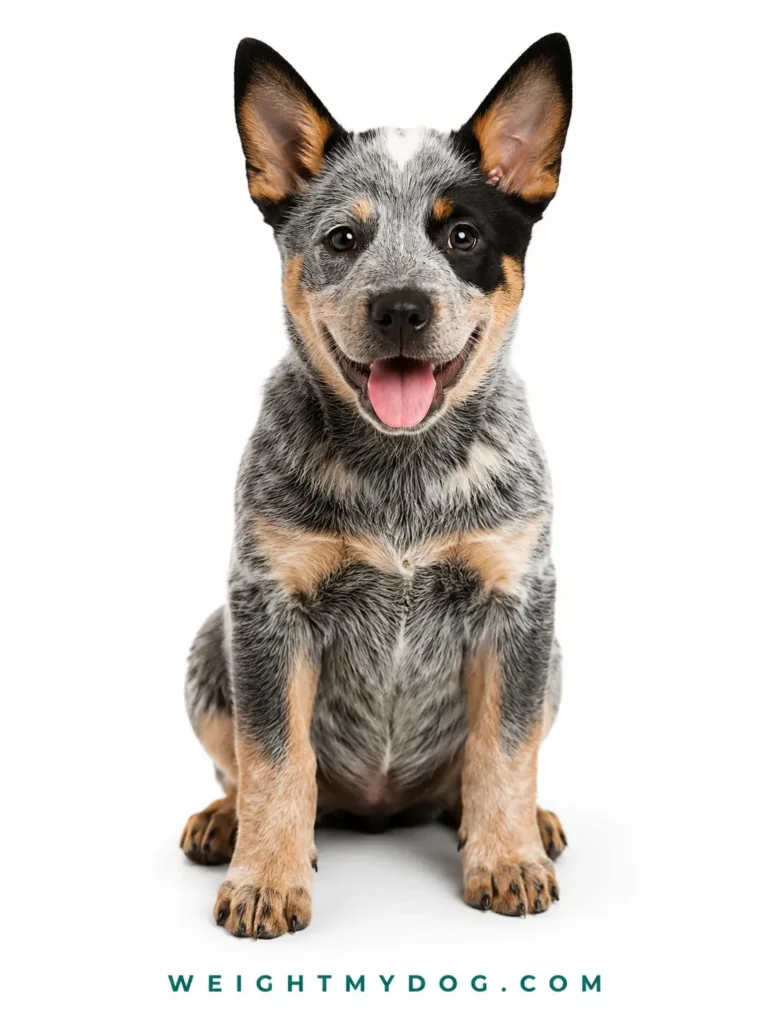
Australian Cattle Dog owners often wonder whether their Blue Heeler is growing at the right pace. Understanding adult weight, body condition, and growth stages helps pet parents make smarter decisions about nutrition and exercise from birth forward.
A weight calculator built around breed standard data gives owners a reliable starting point. Males and females differ in frame and muscle development, so tracking average weight by age ensures your ACD stays within a healthy weight range.
Australian Cattle Dogs were shaped by Australia’s rugged outback, where working dogs needed explosive stamina and lean muscle. That working heritage directly influences how body composition develops across the first year and into maturity.
Most breeders recommend comparing your puppy’s growth against a size chart rather than estimating by eye alone. Individual variation is real, and genetics, sex, and workload all shift where a dog lands within the 35 to 50 pounds adult range.
Health issues tied to skeletal development often appear when nutrition or activity is mismatched to growth rate. Knowing your ACD’s body-condition score at each stage protects joints, hips, and elbows during the most vulnerable development phases.
This guide blends breed expertise, veterinarian-sourced benchmarks, and real working experience so you can monitor every growth milestone with confidence, spot warning signs early, and raise a healthy, athletic Australian Cattle Dog.
Australian Cattle Dog Weight Calculator
| Age | ♂ Male (Expected) | ♀ Female (Expected) | Your Dog |
|---|
How to use the Australian Cattle Dog Weight Calculator
Get your Australian Cattle Dog's ideal weight in under 10 seconds. No account needed.
Enter your dog’s details
Enter your Australian Cattle Dog's current age, weight, and gender. Works in both lbs and kg — supports weeks, months, and years.
Get your instant weight results
See your Australian Cattle Dog's predicted adult weight range, current ideal weight, visual growth chart, and health status — instantly calculated.
Check your dog’s health status
Find out if your Australian Cattle Dog is underweight, ideal, or overweight based on breeder and parent-breed data — and get a personalised feeding guide.
Male Australian Cattle Dog Growth, Weight & Height Chart by Age
| Age | Male Weight | Male Height |
|---|---|---|
| 4 Weeks | 1 – 2 lbs (0.5 – 0.9 kg) | 3 – 4 in (8 – 10 cm) |
| 2 Months | 4 – 7 lbs (1.8 – 3.2 kg) | 8 – 10 in (20 – 25 cm) |
| 3 Months | 8 – 13 lbs (3.6 – 5.9 kg) | 10 – 13 in (25 – 33 cm) |
| 4 Months | 12 – 18 lbs (5.4 – 8.2 kg) | 12 – 15 in (30 – 38 cm) |
| 5 Months | 16 – 24 lbs (7.3 – 10.9 kg) | 14 – 16 in (36 – 41 cm) |
| 6 Months | 20 – 30 lbs (9.1 – 13.6 kg) | 15 – 17 in (38 – 43 cm) |
| 7 Months | 24 – 34 lbs (10.9 – 15.4 kg) | 16 – 18 in (41 – 46 cm) |
| 8 Months | 27 – 38 lbs (12.2 – 17.2 kg) | 17 – 19 in (43 – 48 cm) |
| 9 Months | 29 – 41 lbs (13.2 – 18.6 kg) | 17 – 19 in (43 – 48 cm) |
| 10 Months | 31 – 44 lbs (14.1 – 20.0 kg) | 17 – 20 in (43 – 51 cm) |
| 11 Months | 33 – 47 lbs (15.0 – 21.3 kg) | 18 – 20 in (46 – 51 cm) |
| 12 Months | 34 – 48 lbs (15.4 – 21.8 kg) | 18 – 20 in (46 – 51 cm) |
| 14 Months | 35 – 49 lbs (15.9 – 22.2 kg) | 18 – 20 in (46 – 51 cm) |
| 16 Months | 35 – 50 lbs (15.9 – 22.7 kg) | 18 – 20 in (46 – 51 cm) |
| 18 Months (Adult) | 35 – 50 lbs (15.9 – 22.7 kg) | 18 – 20 in (46 – 51 cm) |
Female Australian Cattle Dog Growth, Weight & Height Chart by Age
| Age | Female Weight | Female Height |
|---|---|---|
| 4 Weeks | 1 – 2 lbs (0.5 – 0.9 kg) | 3 – 4 in (8 – 10 cm) |
| 2 Months | 4 – 6 lbs (1.8 – 2.7 kg) | 7 – 9 in (18 – 23 cm) |
| 3 Months | 7 – 11 lbs (3.2 – 5.0 kg) | 9 – 12 in (23 – 30 cm) |
| 4 Months | 11 – 16 lbs (5.0 – 7.3 kg) | 11 – 14 in (28 – 36 cm) |
| 5 Months | 14 – 21 lbs (6.4 – 9.5 kg) | 13 – 15 in (33 – 38 cm) |
| 6 Months | 18 – 27 lbs (8.2 – 12.2 kg) | 14 – 16 in (36 – 41 cm) |
| 7 Months | 21 – 31 lbs (9.5 – 14.1 kg) | 15 – 17 in (38 – 43 cm) |
| 8 Months | 24 – 35 lbs (10.9 – 15.9 kg) | 16 – 18 in (41 – 46 cm) |
| 9 Months | 26 – 37 lbs (11.8 – 16.8 kg) | 16 – 18 in (41 – 46 cm) |
| 10 Months | 28 – 40 lbs (12.7 – 18.1 kg) | 17 – 19 in (43 – 48 cm) |
| 11 Months | 30 – 43 lbs (13.6 – 19.5 kg) | 17 – 19 in (43 – 48 cm) |
| 12 Months | 32 – 45 lbs (14.5 – 20.4 kg) | 17 – 19 in (43 – 48 cm) |
| 14 Months | 34 – 47 lbs (15.4 – 21.3 kg) | 17 – 19 in (43 – 48 cm) |
| 16 Months | 35 – 49 lbs (15.9 – 22.2 kg) | 17 – 19 in (43 – 48 cm) |
| 18 Months (Adult) | 35 – 50 lbs (15.9 – 22.7 kg) | 17 – 19 in (43 – 48 cm) |
Puppy Growth Chart And AKC Breed Weight Standard
| Breed Size | 8 Weeks | 3 Months | 4 Months | 6 Months | 1 Year |
|---|---|---|---|---|---|
| Toy | 0.9 – 1.8 kg | 1.4 – 2 kg | 2 – 2.5 kg | 2.5 – 3 kg | 3 – 5.5 kg |
| Small | 1.5 – 3 kg | 3 – 5 kg | 4 – 7 kg | 6 – 9 kg | 6 – 11 kg |
| Medium | 3 – 5 kg | 5 – 8 kg | 8 – 13 kg | 10 – 18 kg | 11 – 23 kg |
| Large | 5 – 9 kg | 9 – 12 kg | 12 – 20 kg | 18 – 30 kg | 23 – 45 kg |
| Giant | 7 – 12 kg | 12 – 18 kg | 18 – 28 kg | 28 – 40 kg | 45 – 70 kg |
Australian Cattle Dog Breed Overview
The Australian Cattle Dog descends from Australian Dingos crossed with Collies and other herding stock, forging a compact, muscular build designed for long distances and rugged farm terrain across Australia.
Breed identity centers on fierce devotion, extraordinary intelligence, and a high-energy drive to work. Blue Heeler and Red Heeler are color variants of the same breed, sharing identical Official Breed Standards for height and weight.
Breed temperament makes the ACD one of the most intelligent dogs ever recorded. The Guinness Book of World Records recognized Bluey, an Australian Cattle Dog, as the oldest living dog, surviving 29 years old — a testament to robust nature and breed resilience.
Medium-sized dogs with weather-resistant double coats, ACDs carry dense undercoats beneath straight outercoats, providing protection in hot climates and cold climates alike. Moderate to high shedding defines coat health through shedding season.
Breed group classification places the ACD firmly in the herding group alongside Collies and other working dogs. The American Kennel Club recognizes 17–20 inches for males and 17–19 inches for females as the accepted breed standard height range.
Queensland Heeler is another regional breed name used interchangeably across Australia. Despite breed confusion with Australian Shepherds, these are different breeds — not related beyond their shared herding function and high-energy personality.
How Big Do Blue Heelers Dogs Get?
Blue Heelers reach adult size within a medium-size category, typically standing 17–20 inches tall at the shoulder and weighing 35 to 50 pounds at full-grown status, though individual variation can shift those weight figures noticeably.
Males generally land between 38–50 lb and stand 18–20 inches, while smaller females typically measure 17–19 in and weigh 33–46 lb. Both sexes fall within the working weight range that supports their active lifestyle demands.
Compact frames with muscular thighs, deep chest, visible waist, and natural tuck define the ACD body condition. Unlike giant dog breeds or toy breeds, the heeler carries working muscle without extra bulk or bulky fat padding.
How big your Blue Heeler grows depends on genetics, sex, and feeding schedule consistency. Reviewing parents’ size and studying previous litters provides the most reliable predict adult size data available before full height is reached.
Average weight for medium-sized Australian Cattle Dogs sits around 35–48 lb once fully grown. Growth continues past the first birthday, with muscle and frame filling out between 18 and 24 months before reaching true maturity.
Adult size never accurately reflected until skeletal issues are ruled out and growth plate closure confirmed. Veterinarians routinely assess body condition at 12–15 months to confirm adult weight projections are tracking within a healthy and predictable size class.
Australian Cattle Dog Stats
Australian Cattle Dog Stats reveal a medium-sized working breed with tight breed standard measurements. Males stand 18–20 inches at the shoulder and weigh 38–50 lb; females measure 17–19 inches and weigh 33–46 lb at full-grown maturity.
Average weight kg for adult males runs 16–23 kg, while female weight averages 13.2–18.1 kg. Average height cm for males falls between 45.7–50.8 cm; female weight height typically measures 43.2–48.3 cm according to Official Breed Standards.
Body-condition score assessments show a healthy ACD with palpable but not visible ribs, a clear waist tuck, and lean muscle across the shoulders and thighs. Hard to feel ribs signal overweight status; too-visible ribs indicate underweight concerns.
Kilograms-based size chart data from breed registries confirms compact muscular build as the defining physical standard. Breed summary figures show Australian Cattle Dog heights consistently between 43–48 cm for females and 45.7–53.3 cm for males at peak maturity.
Average height inches for males typically falls 17–20 inches, with 18–20 in most common among working population dogs. Female average weight lbs sits near 35–48 lb, though active farm females occasionally fall slightly below that weight range.
Australian Cattle Dog Stats consistently reflect a breed built for efficiency, not size. Every pound of body weight serves a purpose — muscle for herding, stamina for long distances, and frame for durability across years of intense work ethic.
When Do Australian Cattle Dogs Stop Growing?
Australian Cattle Dogs reach full height around 12–15 months but continue gaining muscle and filling out through 18–24 months. Declaring a Blue Heeler fully grown before 2 years old risks underestimating their final adult weight and frame.
Growth plate closure in ACD puppies typically completes between 12 to 18 months, after which skeletal development stops. However, muscle fill out and body condition refinement continue for several months past that growth milestone.
Stop growing in terms of height happens earlier than stop growing in terms of weight. Most owners notice their heeler adding working muscle and lean condition between 14–24 months, gradually reaching the healthy adult weight range of 35–50 lb.
Done growing doesn’t mean maturity is complete. Behavioral maturity in Australian Cattle Dogs lags behind physical development, often taking 2 years or longer before impulse control and calm focus replace the high-energy chaos of adolescent puppy behavior.
Growth rate slows dramatically after the first birthday, but weight rises slightly as muscle density increases under consistent exercise and proper nutrition. A veterinarian can confirm growth plate closure with diagnostic tests if owners are uncertain about final size.
Unique pace means some Blue Heelers complete skeletal development earlier than others. Genetics, sex, and nutrition all affect growth timeline, so avoid comparing your ACD against a fixed age without accounting for individual variation across the breed.
How Big Should an Australian Cattle Dog Be at 6 Months?
At the six-month mark, a Blue Heeler puppy should weigh between 20–25 lbs and stand approximately 11–14 inches at the shoulder. This 6-month window represents rapid puppy growth before the growth rate begins to slow noticeably.
Medium-sized puppies at 6 months typically show oversized paws, a tuck forming at the waist, and ribs that remain feelable without being visible. Body condition at this age should reflect steady growth, not extra padding or visible signs of too little weight.
6–10 lb of weight gain between 4 to 6 months and the six-month mark is normal. Puppy weight consistency matters more than hitting exact pounds — a steady healthy trend on the weight chart outranks any single weight check snapshot.
How much bigger your ACD grows after 6 months depends on frame, genetics, and diet. Expect height to increase another 4–6 inches and weight to roughly double before the puppy approaches full-grown weight near 18–24 months.
ACD puppies at 6 months still carry a lighter puppy coat and haven’t fully developed the muscular build visible in adult Blue Heelers. Growth at this age prioritizes bone health and skeletal development over the lean muscle mass that builds later.
Puppy feeding at 6 months should follow two meals a day on a measured feeding schedule. Portions calibrated to puppy activity levels protect healthy cartilage and developing joints, preventing both under-fueling and overfeeding during this critical growth window.
How Much Bigger Will My Australian Cattle Dog Get?
Projecting full-grown size starts with reviewing both parents’ adult weight and height. Previous litters from the same breeding pair offer strong growth estimates, since genetics remains the single most reliable predictor of final size for Australian Cattle Dogs.
Paw size at 8 weeks gives a rough growth prediction signal — oversized paws relative to the body typically indicate more growth ahead. However, paw readings aren’t precise benchmarks; always pair them with a veterinarian’s growth monitoring assessment.
Weight by age tracking on a size chart reveals whether your ACD is following a healthy growth pace or diverging from breed averages. Growth monitoring every 4–6 weeks during the first year catches developmental delays before they become orthopedic concerns.
Filling out after 12 months means most weight gain reflects muscle rather than height. Australian Cattle Dog puppies that have completed full height still pack on compact muscle through 18–24 months, increasing body weight by 3–5 lbs in the final size phase.
Growth chart data suggests males top out closer to 50 pounds at full-grown weight, while females settle nearer 35–46 lb. Frame size inherited from parents determines where within that working weight range your individual Blue Heeler will ultimately land.
Three ways to estimate full-grown weight include parents’ size review, DNA test analysis for breed composition, and consistent weight calculator tracking from birth to adulthood. Combining all three gives new owners the most accurate adult weight projection available.
Australian Cattle Dog Growth Stages
Growth stages in Australian Cattle Dogs follow a predictable arc shaped by genetics, nutrition, and activity. From birth through 24+ months, each phase brings distinct physical development milestones that responsible owners should recognize and support with appropriate care.
Puppy development unfolds faster in the first year than most new owners anticipate. Weight can jump 1–2 lbs weekly during peak rapid growth phases, while height climbs steadily until growth plate closure signals the end of skeletal development around 12–15 months.
Each growth stage demands a different feeding schedule, exercise routine, and mental stimulation approach. Matching nutrition to development phases prevents nutritional deficiencies, protects developing joints, and supports the lean muscle growth that defines a healthy ACD through maturity.
Behavioral milestones track alongside physical development through every growth phase. Socialization, basic commands, and impulse control training introduced during the right growth stages build the foundation for a calm, confident working companion rather than a destructive high-energy adult.
Monitoring weight against breed-specific growth benchmarks at each stage catches orthopedic issues, nutritional deficiencies, and health conditions early. A veterinarian familiar with working dogs can interpret body-condition score data within the context of each developmental phase accurately.
Growth stages don’t operate in isolation — environment, training, and veterinarian supervision all influence how smoothly an ACD transitions between phases. Owners who understand the sequence of puppy development milestones consistently raise healthier, more predictable adult Australian Cattle Dogs.
Birth – 8 Weeks
Newborn ACD puppies weigh between 2.7–4.5 kg at birth, with individual variation appearing within days. Birth weight alone doesn’t predict full-grown size, but consistent weight gain through 6–8 weeks signals healthy puppy development and strong breed vitality.
Four weeks of age marks when puppy senses sharpen and socialization begins influencing personality. Puppy handling during this window by experienced breeders builds confidence and reduces stress responses that can otherwise persist into adult breed temperament.
Between four to eight weeks, deciduous teeth begin emerging, weight reaches 3.2–5.4 kg in healthy pups, and puppy coat shows the first hints of color development. This phase is entirely dependent on the mother and breeder supervision for safety and nutrition.
2 – 5 Months
Between 2–5 months, ACD puppies enter a phase of rapid skeletal development and weight gain averaging 0.9–1.8 kg per week. Puppy diet should prioritize high-quality animal proteins and calcium-to-phosphorus ratios aligned with AAFCO puppy formulas for medium-sized breeds.
Socialization windows are widest during 2–6 months, making early socialization with people, children, other animals, and environments critical. Puppy behavior shaped positively during this phase creates the calm, eager to please foundation every ACD needs for lifelong obedience training.
Baby teeth are fully present by 3 months, with chewing frequency increasing weekly. Providing puppy-safe chewing toys during this growth window redirects mouthy behavior, protects household items, and supports oral health without encouraging the nipping habits that adult Blue Heelers must overcome.
5 – 9 Months
From 5–9 months, ACD puppies experience their fastest height increases, often gaining 2–3 inches at the shoulder within weeks. Weight during 5–9 months jumps from roughly 11.3–15.9 kg range beginnings toward the 15.9–22.7 kg territory as muscle development accelerates.
High-impact activities should be avoided during 5–9 months because growth plates remain open and vulnerable. Stick to structured 5-to-10-minute sessions of basic obedience, leash skills, and socialization rather than jogging, jumping, or agility work that stresses developing joints.
Puppy ears begin standing up during this window for many Blue Heelers, though ear development timing varies by individual. Teething intensifies as permanent teeth replace deciduous teeth, making puppy-safe chewing toys and dental care even more critical between 6 to 9 months.
9 – 14 Months
Between 9–14 months, most Australian Cattle Dogs approach full height while muscle continues developing actively. Weight during this stage typically sits between 20.4–27.2 kg for males, with females ranging through 15.9–21.8 kg as body composition shifts from puppy to adult structure.
Growth plate closure begins around 9 months in lighter breeds but occurs later in medium-sized dogs. Veterinarians performing orthopedic evaluation during 9–14 months can confirm whether skeletal development is proceeding normally or whether hip dysplasia and elbow dysplasia symptoms are emerging.
Training intensity can increase during 9–14 months as impulse control improves and breed intelligence sharpens. Introducing agility foundations, advanced obedience commands, and canine sports preparation during this window capitalizes on the ACD’s rapidly maturing working intelligence and drive.
14 – 24 Months
From 14–24 months, Australian Cattle Dogs shift from skeletal development to muscle refinement and behavioral maturity. Weight during 14–24 months increases modestly — typically 1–2 lbs of additional lean muscle — as frames lock into their permanent position and adult size fully emerges.
Behavioral training during 14–24 months addresses the stubbornness and breed drive that intensifies as hormonal development peaks. Consistent training, positive reinforcement, and increasing workload challenges help channel high drive productively rather than allowing destructive behaviors and separation anxiety to escalate.
Joint supplements containing glucosamine and chondroitin become beneficial during 14–24 months for ACDs engaged in high-impact activities or farm work. Protecting mature joints during this final growth phase reduces long-term orthopedic concern and supports clean movement through adulthood.
24+ Months
After 24 months, the Australian Cattle Dog is considered fully grown in both frame and behavioral maturity. Body condition at 24+ months should reflect compact muscle, a visible waist, feelable ribs, and the athletic build that defines a healthy ACD in working condition.
Nutrition transitions from puppy formulas or life-stage food to a measured adult diet supporting energy expenditure without promoting obesity. Workload-matched feeding remains essential — active farm dogs need more calories than sedentary house pets at the same adult weight range.
Monitoring an ACD past 24 months means watching for early health issues like hip dysplasia, progressive retinal atrophy, and hypothyroidism that begin manifesting in young adults. Annual veterinarian check-ups, eye exams, and BAER hearing assessments keep adult Australian Cattle Dogs healthy through the full 12–16 years life span.
Signs Your Australian Cattle Dog Is Growing Well
Recognizing positive signs of healthy growth in your ACD requires daily awareness rather than occasional weight checks. A Blue Heeler growing well shows consistent energy, a clean gait, appropriate weight gain, and a body condition that falls within the breed standard range.
Growth monitoring through regular weight tracking on a size chart reveals whether your puppy follows a healthy trend between birth and maturity. Steady weight rises of 1–2 lbs weekly during rapid growth phases without sudden appetite dips or stool change indicate nutrition is perfectly matched to development phases.
A growing ACD in good shape will show a clear waist tuck, palpable ribs without fat covering, and thighs that carry lean muscle without appearing bulky. These body condition markers differ from giant breeds — the ACD’s compact frame should never look stocky or soft.
Clean movement without limping, bunny-hopping, or stair hesitation signals healthy joint development during growth stages. Gait quality is one of the most telling physical indicators owners can assess daily, particularly during 5–9 months when growth plate vulnerability peaks.
Positive signs also include consistent appetite, regular stool, appropriate chewing frequency, and socialization progress appropriate to age. An ACD puppy meeting basic obedience benchmarks on schedule while maintaining healthy body weight is developing exactly as breed genetics intend.
Tracking growth through regular vet check-ups every two to four months during the first year gives owners professional confirmation that nutrition, exercise, and behavioral training are collectively supporting optimal puppy development within breed-specific size chart expectations.
Positive Signs
Steady weight gain aligned with growth chart benchmarks, energetic play during appropriate activity windows, and eager appetite at each meal are the clearest positive signs an Australian Cattle Dog is developing on a healthy trajectory through every growth stage.
Bright eyes, a shiny coat, firm muscle across the shoulders and thighs, and natural nail wear from appropriate exercise indicate a thriving ACD puppy. These physical markers pair with behavioral signals like confidence around strangers and progress in basic obedience training.
Good feet, proper paw wear, and coordination improvements week over week confirm skeletal development is proceeding normally. ACD puppys demonstrating natural herding instinct behaviors and responding well to positive reinforcement during training show breed drive and working intelligence developing on schedule.
Worth Monitoring
Worth monitoring includes slower weight gain than growth chart norms, mild stiffness after exercise, or hesitation on stairs during peak growth phases. These signs don’t immediately signal health issues but warrant closer observation and a veterinarian conversation within several months if they persist.
Appetite fluctuations lasting more than two days, stool changes including persistent diarrhea, or lethargy replacing the typical high-energy puppy behavior are worth noting in a health log. ACD owners tracking these patterns provide veterinarians with valuable monitoring data during routine checkups.
Ear development timing in Blue Heeler puppies varies — ears not standing up by 5 months can be worth monitoring but rarely indicate a serious health condition. Similarly, teething discomfort causing temporary appetite reduction is normal but worth tracking to distinguish from nutritional deficiencies or health warning signs.
Warning Signs: Is Your Australian Cattle Dog Overweight or Underweight?
Both overweight and underweight conditions damage an ACD’s long-term joint health, stamina, and working performance. Identifying warning signs early requires owners to assess body condition regularly rather than relying solely on scale weight to evaluate their Blue Heeler’s health.
Overweight Australian Cattle Dogs develop accelerated joint wear, greater hip dysplasia risk, and reduced endurance that undermines their working capacity. Obesity in working breeds often develops silently through overfeeding, excessive training rewards, and treat calories that accumulate beyond the calorie management plan.
Underweight ACDs show poor recovery after normal work, muscle loss across the thighs and chest, and reduced drive during herding-style activity. Underfeeding working Australian Cattle Dogs impairs brain health, coat health, and bone health simultaneously, creating compounding health issues.
Body-condition score assessment is more reliable than scale weight alone because muscle weighs more than fat. A 55 lb ACD with excellent muscle condition may be healthier than a 30 lb heeler with poor body composition and nutritional deficiencies undermining breed fitness.
Fast weight gain outside normal growth stages or fast weight loss without dietary changes both require immediate veterinary alert. Either pattern may indicate genetic condition, hypothyroidism, cystinuria, or other health conditions that veterinarians must evaluate through bloodwork and diagnostic tests.
Developing an overweight assessment routine — running hands along the spine, checking the waist, and feeling ribs for fat covering — gives owners a reliable body condition snapshot between veterinarian visits and protects against the health issues both extremes impose on ACD joints and stamina.
Signs of Extra Weight
Signs of extra weight in an Australian Cattle Dog include ribs that are hard to feel beneath extra padding, a waist that disappears rather than showing a visible tuck, and thighs that appear bulky rather than muscular. Overweight ACDs also show reduced stamina and reluctance to work.
Weight gain beyond the 50 pounds upper breed standard limit should trigger a veterinarian review and calorie management adjustment. Reward calories from training treats are frequently the hidden driver — tiny rewards and toy rewards replace calorically dense treats without reducing training effectiveness.
Overweight signs also include unusual fatigue after moderate exercise, stiffness following routine physical activity, and appetite that seems insatiable despite adequate portions. Obesity compounds hip dysplasia, accelerates joint wear, and significantly shortens the 12–16 years life span typical of a healthy ACD.
Signs of Too Little Weight
Signs of too little weight include visible ribs without pressing, a waist that looks exaggerated rather than clean, and muscle loss along the thighs, chest, and shoulders. An underweight ACD will show poor recovery after exercise and may display reduced breed drive and energy during work.
Weight dropping below 30 lb in an adult Australian Cattle Dog is a serious concern requiring immediate veterinarian assessment. Underweight signs that persist after feeding adjustments may indicate parasites, metabolic disorders, dental issues causing appetite loss, or underlying genetic conditions affecting nutrient absorption.
Underweight Blue Heelers show coat deterioration, skin issues, and lethargy replacing the typical high-energy breed temperament. Nutritional deficiencies developed during growth stages can cause lasting skeletal issues that impair gait, clean movement, and joint health throughout an ACD’s adult life.
What Affects an Australian Cattle Dog’s Weight?
Multiple interconnected factors shape an Australian Cattle Dog’s adult weight beyond simple genetics. Workload, frame, feeding habits, health conditions, and even environmental factors all interact to push body weight higher or lower within the 35–50 lb breed standard range.
Sex is among the most consistent weight factors — males average 38–50 lb while females typically settle between 33–46 lb at healthy adult weight. This size difference stems from hormonal influences on muscle development rather than any fundamental difference in breed skeletal development or nutrition requirements.
Workload directly controls how many calories an ACD burns daily. A working cattle dog on a farm expends far more energy than an apartment living house pet, meaning portions must match food to work intensity to maintain a healthy weight without overweight or underweight outcomes.
Genetics and frame inherited from both parents set the ceiling and floor of an individual ACD’s adult weight potential. Breeders who perform health testing and breeding decisions based on breed standard produce more predictable size and body condition outcomes across litters than casual breeding operations.
Hip condition and elbow health significantly influence an ACD’s ability to maintain working muscle. Orthopedic concerns including hip dysplasia and elbow dysplasia reduce exercise capacity, leading to weight gain through reduced activity rather than overfeeding — making orthopedic health a key weight management factor.
Eye health and hearing status also affect weight indirectly by limiting activity in affected dogs. ACDs experiencing vision loss from progressive retinal atrophy or deafness from congenital deafness often become less active, requiring calorie management adjustments to prevent obesity as activity levels decline.
Work
Workload is the most dynamic weight variable in an Australian Cattle Dog’s life. Hard work weeks require calorically dense, high-quality dog food with elevated protein and essential fats to sustain stamina and prevent muscle loss during high-repetition work cycles in farm environments.
Under-exercised weeks — whether from weather, injury, or schedule — demand immediate meal adjustment to prevent weight gain from caloric surplus. Workload-matched feeding means owners actively adjust portions based on actual energy expenditure rather than following a fixed feeding schedule regardless of activity changes.
Recovery after work requires nutrient-dense diets and adequate hydration to repair sore muscles and restore energy levels. Feeding a full meal immediately after intense activity stresses the digestive system — the feed after cooldown rule protects working ACDs from vomiting and discomfort post-activity.
Frame
Frame size inherited from parents determines whether an ACD trends toward the lower working weight of 35 lb or the upper working weight ceiling of 50 pounds. Smaller females with finer frames carry healthy muscle at weights that appear low against average breed charts but fall within a healthy individual variation range.
Adult muscle development fills a frame that was set during skeletal development — you cannot change an ACD’s fundamental frame through nutrition or exercise alone. Breeders selecting for working condition prioritize compact frames that support agility, stamina, and joint health across long distances and high-impact activities.
Medium structure within the ACD breed means the frame must support a body capable of herding large livestock without being so large that joint protection becomes impossible. Frame assessment during puppy development — checking spine, hips, shoulders, and chest proportion — helps veterinarians project final adult size accurately.
Rewards
Training rewards are a frequently overlooked weight factor in Australian Cattle Dogs. ACDs receive high volumes of treat calories during training phases, and owners who don’t account for reward calories within the daily caloric intake plan consistently overfeed their heeler without realizing it.
Toy rewards and praise are more calorie-efficient training tools for ACDs than food-based treats. Because Australian Cattle Dogs possess extraordinary intelligence and high drive, positive reinforcement through play and verbal praise often motivates more effectively than calorically dense training treats during obedience training.
Treat calories should never exceed 10% of daily caloric intake during active training phases. Tiny rewards — pea-sized high-quality dry dog food pieces — satisfy the ACD’s eager to please response without meaningfully inflating daily meal totals or pushing body condition toward overweight territory during extended training periods.
Hips
Hip health shapes weight management for an Australian Cattle Dog across its entire adult life. Hip dysplasia — a hereditary malformation of the hip joint — reduces exercise capacity, causes significant pain, and forces owners to reduce workload to manage discomfort while preventing further joint wear.
PennHIP and OFA evaluations assess hips before breeding decisions are made. Breeders using hereditary disease testing and orthopedic evaluation reduce the genetic predisposition to hip dysplasia across litters, producing ACD puppies with stronger hip joint architecture and longer working lives.
Hip discomfort in adult Australian Cattle Dogs manifests as bunny-hopping during running, stiffness after rest, reluctance to work, and limping on hard surfaces. Joint supplements including glucosamine and chondroitin support hip joint integrity alongside veterinarian-prescribed medication and possible hip replacement surgery in severe hip dysplasia cases.
Eyes
Progressive retinal atrophy (PRA) affects vision gradually, beginning with night blindness and progressing toward complete vision loss in affected dogs. ACD owners watching for PRA symptoms should note dilated pupils in bright light, bumping objects in dim light, and navigation changes in familiar dark rooms.
Eye exams performed by a certified eye specialist are recommended annually for Australian Cattle Dogs over 3 years. Squinting, painful red eye, cloudy eye, tearing, and hazy eye appearances indicate eye disease requiring eye evaluation before vision loss becomes permanent or surgery is needed.
prcd-PRA testing through DNA test identifies genetic predisposition to progressive rod-cone degeneration before PRA symptoms manifest. Breeders using genetic tests for PRA and rcd4 PRA variants alongside other hereditary disease testing reduce the frequency of eye disorders in ACD litters significantly.
Hearing
Deafness in Australian Cattle Dogs is linked to the all-white coat genetics underlying speckled markings, making hearing screening essential for blue and red speckle Blue Heelers with heavy white coat coverage. BAER testing remains the gold standard for congenital deafness detection in ACD puppies.
Hearing loss signs at home include sleeping through noise, startling when touched, missed recalls outdoors, wrong direction to sound responses, and inconsistent response outdoors to commands previously mastered indoors. These deafness signs warrant an auditory evaluation before assuming training or behavioral issues are to blame.
Bilateral deafness — hearing loss affecting both ears — differs functionally from unilateral or one-sided deafness in how owners manage safety and training. BAER results guide breeders’ breeding decisions, help owners develop hand signals as primary communication, and determine whether veterinarian medication or specialized training age approaches are needed.
Common Health Issues Your Australian Cattle Dog Might Experience
Australian Cattle Dogs carry genetic predispositions to several hereditary health issues that owners should understand from the moment of adoption. Breed-specific health conditions including hip dysplasia, progressive retinal atrophy, and deafness can be mitigated through early screening, genetic tests, and preventive care protocols.
Breed health surveys show that hereditary disease rates are higher in ACDs sourced from breeders who skip health testing. Responsible adoption contracts include hereditary disease testing disclosures — ensuring new owners understand what genetic conditions their puppy may carry before committing to veterinary expenses.
Veterinarian familiarity with ACD-specific health issues significantly improves early diagnosis accuracy. Breed-aware veterinarians recognize subtle early signs of elbow dysplasia, cataracts, and hypothyroidism that generalist practitioners might miss during annual check-ups without specific breed context guiding their assessment.
Preventive care combining eye exams, BAER hearing tests, cardiac exam, orthopedic evaluation, and bloodwork creates a comprehensive health baseline for each ACD. These diagnostic tests catch health conditions before they become expensive surgical procedures requiring anesthesia, hospitalizations, and medication.
Pet insurance structured around an ACD-specific health insurance plan covering hereditary conditions provides the financial safety net essential for managing breed-specific veterinary expenses. Insurance plans that cover orthopedic surgery, eye surgery, and cancer treatment give owners access to specialty hospitals without financial planning paralysis.
Health testing before breeding decisions is the most powerful tool for reducing inherited health issues in the next generation of Australian Cattle Dogs. Breeders investing in PennHIP, BAER, prcd-PRA testing, cardiac exam, and bloodwork panels produce litters with measurably better long-term health outcomes and longer life span averages.
Hip Dysplasia
Hip dysplasia in Australian Cattle Dogs is a hereditary orthopedic concern where the hip joint develops abnormally, causing stiffness, limping, significant pain, and eventual arthritis. Health surveys indicate hip dysplasia affects a meaningful percentage of ACDs, with genetics from both parents contributing risk.
PennHIP per hip scoring identifies hip laxity early, allowing veterinarians to recommend joint supplements, activity modifications, and in severe cases hip replacement surgery. Early orthopedic evaluation before 18 months allows intervention before hip discomfort becomes significant pain that limits working capacity.
Signs of hip dysplasia include bunny-hopping during running, next-day stiffness after high-impact activities, stair hesitation, and reluctance to work after previously eager participation. Veterinarian diagnosis combining diagnostic tests and orthopedic evaluation determines whether medication, joint supplements, or surgical procedure intervention offers the best recovery path.
Elbow Dysplasia
Elbow dysplasia covers a spectrum of developmental orthopedic conditions affecting the elbows of growing ACDs. Genetic predisposition, rapid growth, and high-impact activities during puppy development all increase elbow discomfort risk in Australian Cattle Dogs predisposed through hereditary health conditions.
Signs include limping on a front leg, elbow swelling, stiffness after rest, and reluctance to put weight on the affected leg. Veterinarian orthopedic evaluation and diagnostic tests distinguish elbow dysplasia from other joint conditions, guiding surgery, medication, or structured rehabilitation recovery.
Elbow comfort screening through OFA elbow evaluation before breeding decisions reduces elbow dysplasia frequency in ACD litters. Owners managing elbow dysplasia should adjust exercise intensity, provide joint supplements, and follow veterinarian guidance on activity restrictions during post-activity recovery and physical recovery phases.
Progressive Retinal Atrophy (PRA)
Progressive retinal atrophy is an incurable, hereditary eye disease causing retinal degeneration that progresses from night-vision trouble to partial vision loss and ultimately complete vision loss in affected dogs. ACDs with prcd-PRA or rcd4 PRA variants are genetically predisposed to this eye disorder.
PRA symptoms follow a predictable progression — night blindness appears first, followed by dim light navigation difficulty, bumping objects, reflective eyes in bright light, and finally complete vision loss. Sudden vision change or vision confidence decline indoors are early PRA awareness signals for ACD owners to report to an eye specialist.
prcd-PRA testing identifies carriers and affected dogs before PRA symptoms manifest, giving breeders the data needed for responsible breeding decisions. Affected dogs can live full lives with owner supervision, vision accommodation strategies, and routine veterinarian eye evaluation to monitor retinal atrophy progression.
Deafness
Congenital deafness in Australian Cattle Dogs traces back to piebald coat genetics connected to all-white coat ancestry from early breeding with Dalmatians. ACDs born deaf may show bilateral or unilateral deafness, identifiable through BAER hearing test at four weeks of age or older.
Deafness signs include sleeping through noise, startling when touched, missed recalls, and inconsistent response outdoors that owners often misread as stubborn training resistance. BAER testing — brainstem auditory evoked response evaluation — provides definitive hearing status diagnosis and guides training adaptations and safety management.
One-sided deafness allows relatively normal functioning with modified training approaches emphasizing hand signals and visual communication. Bilateral deafness requires comprehensive training restructuring and heightened safety supervision outdoors. Breeders using BAER deafness screening before breeding decisions significantly reduce congenital deafness rates across generations of ACD litters.
Primary Lens Luxation
Primary lens luxation (PLL) is an inherited condition where the lens of the eye dislocates from its normal permanent position, causing painful red eye, eye pressure spikes, and if untreated, blindness. Anterior lens luxation is the most vision-threatening variant, requiring emergency surgery.
PLL signs include squinting, tearing, painful red eye, cloudy eye, and visible eye position changes. ACD owners noting eye discomfort or hazy eye appearance should seek eye specialist evaluation immediately — anterior lens luxation can progress to complete vision loss within hours without surgical intervention.
Genetic tests identifying PLL carrier status allow breeders to avoid affected breeding pairs and reduce PLL frequency in ACD litters. Affected dogs diagnosed early can undergo surgical procedure recovery successfully, preserving vision in some cases when surgery is performed before complete vision loss occurs.
Cataracts
Cataracts in Australian Cattle Dogs appear as clouded lenses that impair vision to varying degrees depending on size and location within the eye. Hereditary cataracts differ from age-related cataracts in onset timing — hereditary variants often manifest by 3 years in predisposed ACD lines.
Cataract signs include hazy eye, dilated pupils that don’t respond normally to bright light, bumping objects in familiar spaces, and night-vision trouble. Eye evaluation by a certified eye specialist using eye pressure testing distinguishes cataracts from PRA and PLL based on lens opacity characteristics.
Cataract surgery in dogs is available at specialty hospitals and offers strong vision restoration outcomes for affected ACDs. Pre-surgical prep including anesthesia assessment, cardiac exam, bloodwork, and eye pressure evaluation ensures surgical safety. Annual eye exams catch cataracts before they reach complete vision loss severity.
Hypothyroidism
Hypothyroidism occurs when the thyroid gland fails to produce adequate thyroid hormones, slowing metabolism and causing weight gain despite normal portions, lethargy, coat deterioration, and skin issues in Australian Cattle Dogs. Bloodwork testing thyroid levels confirms diagnosis.
ACDs developing hypothyroidism typically show unusual fatigue, weight gain despite calorie management efforts, coat thinning, and reduced tolerance for exercise. Veterinarian-prescribed medication — typically daily thyroid hormone replacement — restores energy levels, healthy weight, and coat health within several months of starting treatment.
Hypothyroidism is manageable but requires lifelong medication and twice a year bloodwork monitoring to ensure thyroid hormone levels remain within therapeutic ranges. ACD owners managing hypothyroidism must also adjust caloric intake and exercise routine to match the dog’s shifted metabolic rate and maintain healthy weight.
Cystinuria
Cystinuria is a hereditary metabolic disorder causing abnormal amino acid processing and urinary stones formation in the kidneys and bladder of affected Australian Cattle Dogs. Urinary stones create blockages requiring surgical procedure intervention and cause recurring urine abnormalities and significant pain.
Signs of cystinuria include straining to urinate, blood in urine, frequent accidents, and apparent discomfort during bathroom functions. Veterinarian diagnostic tests including urine analysis confirm urinary stones presence, while genetic tests identify cystinuria carrier status before breeding decisions are finalized.
Diet management using low-protein, specialized dry dog food and increased water intake reduces urinary stone formation risk in cystinuria-affected ACDs. Veterinarian-guided feeding schedule modifications combined with regular urine monitoring and check-ups manage cystinuria long-term, though surgical procedure remains necessary when blockages cause acute significant pain.
How to Feed an Australian Cattle Dog - Feeding Rules
Feeding an Australian Cattle Dog correctly demands understanding their working breed metabolism and resisting the temptation to apply giant breeds or couch potatoes feeding logic to a high-energy medium-sized working dog. Feeding rules built around workload, life stage, and body condition produce consistently healthier ACDs.
Meal frequency matters as much as caloric content for ACDs in active roles. Puppies under 4 months need three times a day feeding, transitioning to two meals a day by 6 months, and maintaining 2 feedings per day as adults to support stable energy levels and prevent digestive stress.
High-quality dry dog food with high-quality animal proteins as the first ingredient provides the protein, essential fats, and essential nutrients an ACD needs to maintain lean muscle and stamina through demanding work weeks. Breed-specific food formulations designed for herding breeds or working dogs often align best with ACD nutrition requirements.
Caloric density adjustments based on seasonal activity changes prevent the weight gain that ACD owners frequently report during quiet weeks when workload drops. Workload-matched feeding isn’t optional for working Australian Cattle Dogs — it’s the core feeding principle that separates healthy ACD management from chronic overweight or underweight cycling.
Life-stage food transitions — from puppy formulas to adult formula to senior formulations — must align with growth plate closure, maturity confirmation, and workload changes. Keeping a heeler on puppy food formula too long accelerates weight gain; switching too early denies growing joints and bones the nutrition they need.
Feeding guidelines printed on dry dog food packaging are starting points, not prescriptions. Veterinarian-guided calorie needs calculations based on body condition, workload, and age produce more accurate portion recommendations for individual ACDs than generic bag instructions calibrated for average medium-sized dogs rather than working breed athletes.
Match Food to Work
Match food to work is the guiding feeding principle for every Australian Cattle Dog in active or working roles. A farm ACD covering long distances herding livestock requires calorically dense, protein-rich nutrition that a house pet Blue Heeler doing light walks emphatically does not need.
Calorie needs calculations for working ACDs should factor duration, intensity, and environmental conditions — heat stress and cold climates both increase energy expenditure beyond what normal work demands. Feeding adjustments during hard work weeks protect against muscle loss and poor recovery that under-fueling causes.
Sedentary ACDs in apartment living scenarios need significantly reduced caloric intake relative to breed average portions. Owners who match food to work consistently find their heeler maintains a healthy weight naturally without complex weight plan interventions, because caloric content aligns with actual energy expenditure every day.
Keep Meals Measured
Meals measured using a calibrated cup or kitchen scale prevent the overfeeding that owners of enthusiastic ACDs fall into easily. Australian Cattle Dogs demonstrate intense appetite regardless of body condition, making measured portions non-negotiable for weight management across all activity levels.
Portion precision becomes critical during training reward heavy periods when treat calories can easily account for 20–30% of daily caloric intake without owners realizing the cumulative caloric density. Adjusting meal size downward on heavy training days compensates for elevated reward calories and maintains balanced daily nutrition.
Feeding schedule consistency through meals measured at the same times daily supports digestive health, stable energy levels, and behavioral predictability in ACDs. Dogs fed inconsistently show greater stress, appetite instability, and behavioral challenges that structured two meals a day routines reliably reduce.
Feed After Cooldown
Feed after cooldown protects working Australian Cattle Dogs from bloat and vomiting caused by eating immediately after intense physical activity. ACDs returning from farm work, agility training, or long distance running should rest at least 45 minutes before receiving a full meal.
Recovery physiology after high-impact activities redirects blood flow away from digestion, making feeding during this window genuinely dangerous. Feed after cooldown isn’t excessive caution — it’s a safety protocol that working dog handlers and breed experts have maintained as standard practice across generations of Australian Cattle Dog care.
Post-activity hydration comes before feeding — offering water immediately after work while delaying full meal timing protects gut health and supports normal recovery. Owners establishing feed after cooldown as a routine from puppy training age forward embed a safety habit that protects their ACD throughout years of active working life.
Use Life-Stage Food
Life-stage food formulations are engineered around the specific nutrition demands of each growth phase — puppy formulas deliver calcium-to-phosphorus ratios protecting developing joints, while adult formulas prioritize lean muscle maintenance and caloric density appropriate for working condition.
ACD puppies should remain on AAFCO-certified puppy food formula until growth plate closure is confirmed by a veterinarian, typically around 12–15 months. Switching to adult food prematurely denies growing bones and healthy cartilage the concentrated nutrition that life-stage food specifically provides.
Senior life-stage food transitions become relevant around 7–8 years for Australian Cattle Dogs, when joint wear, metabolism slowdown, and thyroid changes alter calorie needs and nutrient priorities. Veterinarian guidance on switching food timing ensures feeding transition occurs when body condition data genuinely supports the life stage change.
Hydrate During Work
Hydrate during work is especially critical for ACDs in hot climates or during high-repetition work sessions lasting longer than 30 minutes. Heat stress in working Australian Cattle Dogs develops rapidly, causing energy crashes, coordination failure, and in extreme cases collapse if water access is inadequate.
Water intake during work should be offered in short breaks rather than allowing ACDs to consume large volumes at once, which risks vomiting and digestive disruption during continued activity. Experienced working dog handlers routinely schedule hydration breaks every 15–20 minutes during intensive farm work or agility training sessions.
Recovery hydration after work replenishes fluid lost through stamina expenditure and supports muscle repair during post-activity cooldown. ACDs working in warm weather or hot climates need significantly more water than breed averages suggest — owners adjusting hydrate during work protocols seasonally protect their heeler’s brain health and physical recovery capacity.
Change Food Slowly
Change food slowly over 7–10 days to prevent digestive disruption when transitioning Australian Cattle Dogs between puppy formulas, adult formulas, or breed-specific food varieties. Abrupt switching food causes vomiting, persistent diarrhea, stool change, and appetite loss that owners sometimes mistake for health conditions.
Gradually increasing the proportion of new food while reducing old food allows the ACD’s digestive system to adapt without stress. Begin with 25% new food for two days, increase to 50% for two more, then 75% before completing the change food slowly transition to 100% new diet.
Meal changes during health conditions, medication protocols, or recovery phases require extra veterinarian oversight to ensure diet adjustments don’t mask stool or appetite symptoms that indicate treatment response. Breeders and breed experts universally recommend change food slowly as a core feeding rule protecting ACD digestive health across every life stage.
When Do Blue Heeler Puppies Get Their Color?
Blue Heeler puppies are born with a distinctive all-white coat that begins revealing its distinct color and speckled markings between three to six weeks of age. This color development process connects directly to the same white coat genetics linked to congenital deafness in ACD litters.
Color change continues gradually through the puppy coat phase, with blue or red speckle patterns deepening as the puppy matures. By 6–7 months, most Blue Heeler puppies display recognizable coat color patterns, though full color development intensity doesn’t finalize until adult double coat growth completes.
Red Heeler puppies follow the same color development timeline, transitioning from all-white coat at birth to red speckle patterns visible by four to eight weeks. The color variants — blue and red — represent the only coat difference between otherwise identically-structured ACD breed members.
Fluffier hair texture visible in young puppies gives way to the characteristic weather-resistant double coat with dense undercoats beneath straight outercoats as the Blue Heeler matures. Puppy coat texture transition happens gradually between 4–6 months, coinciding with seasonal shedding and permanent teeth development.
Coat color at birth provides no reliable color development prediction for adult markings beyond distinguishing blue from red lineage. Breed color development follows genetics from both parents, meaning litters can produce both Blue Heeler and Red Heeler puppies simultaneously from the same breeding pair.
Speckled markings intensity and pattern distribution are entirely genetic — owners cannot influence color development through nutrition, grooming, or environment. Breeders tracking color variants across previous litters can offer rough predictions about puppy coat color outcomes, but individual variation within each litter always applies.
Caring for Your Australian Cattle Dog
Caring for your Australian Cattle Dog requires understanding that this working breed needs more than daily exercise and feeding — it requires mental stimulation, consistent training, grooming routine maintenance, and a lifestyle that channels their high drive toward purposeful activity rather than destructive behaviors.
ACDs thrive when care routines mirror their working companion heritage. Owners who provide structured activity, canine sports participation, obedience training, and meaningful jobs raise calmer, healthier, more predictable house pets than those who attempt to manage high-energy breed temperament through restriction alone.
Grooming, training, exercise, and health monitoring form the four pillars of ACD care that breed experts and veterinarians consistently emphasize. Each pillar reinforces the others — a well-groomed, well-trained, adequately exercised Blue Heeler presents fewer health issues and requires less veterinary intervention across the full 12–16 years life span.
Family pet life for an ACD demands child safety awareness, because breed instinct includes heeling behavior — nipping at heels — that requires consistent training redirection from early puppy development. Small children and young children benefit from supervision during play until ACD impulse control is fully developed.
New owners underestimate how demanding ACD care truly is. Apartment living is possible but requires extraordinary commitment to daily exercise needs, mental stimulation, and separation anxiety management. ACDs left under-stimulated become mouthy, aggressive, and destructive — problems that proper care routines effectively prevent.
Pet parent success with an Australian Cattle Dog comes from matching lifestyle to breed requirements, not the reverse. Owners with active lifestyles, access to outdoor space, commitment to continuous training, and willingness to invest in veterinary expenses and preventive care raise the most balanced, healthy, loyal ACDs.
Grooming
Grooming an Australian Cattle Dog requires low-to-moderate effort relative to working breed standards. Daily brushing during shedding season manages moderate to high shedding, while weekly brushing maintains coat health between seasonal shedding peaks through the short, double-coated structure’s natural self-cleaning properties.
Bath frequency for ACDs remains low — baths every six to eight weeks or after mud exposure keeps the water-resistant coat clean without stripping natural oils. Professional groomer visits aren’t essential for ACDs due to their short-haired double coat, though some owners prefer bather services during heavy shedding season.
Nail care, ear care, and dental care complete the grooming routine that keeps Australian Cattle Dogs healthy beyond coat maintenance. Nail trims every 2–4 weeks, ear examinations monthly checking for ear infections, and daily brushing of teeth prevent the oral health and ear issues that ACDs develop when grooming is neglected.
Training
Training an Australian Cattle Dog requires consistency, patience, and respect for their working intelligence. ACDs learn basic commands like sit, stay, recall, and leash skills rapidly — their breed intelligence makes them capable of mastering obedience commands far beyond what basic obedience curriculums typically offer.
Positive reinforcement through toy rewards, praise, and carefully measured training treats outperforms punishment-based methods with ACDs. Breed drive responds best to training that mimics work — task completion, problem-solving challenges, and agility obstacles keep Australian Cattle Dogs sharply engaged where repetitive obedience drills lose their attention.
Nipping redirection and mouthy behavior management are the highest priority training challenges for new owners. ACD puppies carry herding instinct that expresses as nipping at heels and mouthy interaction with children. Consistent training using bite inhibition techniques and herd toys redirects this breed instinct safely from early age forward.
Exercise
Exercise for an Australian Cattle Dog should cover both physical and mental dimensions — running, fetch, frisbee, hiking, and jogging address body demands, while agility, canine sports, and problem-solve activities satisfy the breed’s powerful mental stimulation requirements simultaneously.
Daily exercise needs for an adult ACD average 45 minutes to two hours of structured activity, depending on workload and lifestyle. Under-exercised Australian Cattle Dogs develop separation anxiety, destructive behaviors, aggressive displays toward other animals, and bad habits that are significantly harder to reverse than prevent.
Exercise routine structure matters as much as duration. High-energy breed temperament responds better to varied activity — alternating running, fetch, frisbee, hikes, agility sessions, and structured obedience work — than monotonous daily walks alone. ACDs given frequent play sessions and canine sports participation maintain calmer indoors behavior consistently.
Behavior and Training Tips for Australian Cattle Dogs
Australian Cattle Dogs rank among the most intelligent dogs globally, which makes them simultaneously the most rewarding and demanding breed to train. Working intelligence without structured behavioral training produces a dog that problem-solves against you rather than with you — creating bad habits that escalate quickly.
Early socialization before 4 to 6 months shapes how an ACD relates to strangers, small children, other animals, and novel environments throughout its adult life. Puppies exposed widely during socialization windows become friendly, confident family dogs rather than protective and aggressive toward unfamiliar people.
Impulse control training distinguishes manageable ACDs from destructive ones. Breed drive creates intense energy that needs behavioral training channeling — crate training, crate-train protocols, and structured downtime teach ACDs that calm behavior generates praise and rewards just as reliably as active performance.
Herding instinct redirected through herd toys, agility, and structured herding-style activity prevents the breed behavior frustration that manifests as nipping at children’s heels, chasing other animals, and protective aggression when breed instinct has no sanctioned outlet.
Direct instruction using hand signals alongside verbal commands prepares ACDs for the hearing changes that deafness or hearing loss may introduce later in life. Working Australian Cattle Dogs trained on hand signals from early age maintain obedience functionality even when hearing awareness declines in senior years.
Separation anxiety management through progressive training — gradually extending alone time from 5-to-10-minute sessions to longer periods — reduces the destructive behaviors that ACDs exhibit when their high-energy companionship needs go unmet. Breed temperament requires consistent engagement; an ACD cannot be a house pet afterthought.
When Should My Australian Cattle Dog Be Spayed or Neutered?
Optimal timing for spay or neuter in Australian Cattle Dogs is debated, with most veterinarians recommending 12–15 months as the optimal time — after growth plate closure but before hormonal influences create behavioral challenges in intact adult dogs.
Early spaying before 6 months and early neutering carry growth effects including delayed growth plate closure, potential skeletal issues, and hormonal impact on muscle development. Breed experts increasingly favor waiting until the ACD approaches full height before scheduling reproductive surgery.
Hormonal maturity at 12–15 months means neutering or spaying at this age carries minimal growth effects while still providing reproductive health benefits and behavioral improvements. Veterinarian assessment of body condition, growth plate status, and behavioral training progress guides the most accurate optimal timing recommendation.
Spaying reduces reproductive health risks including uterine infections and certain cancers, while neutering decreases cancer risk and reduces territorial behavior in males. Pet insurance covering reproductive surgery makes spay and neuter procedure costs more manageable within the broader veterinary expenses budget.
Early neutering linked to hip dysplasia and elbow dysplasia increased risk has influenced breeding community recommendations toward later reproductive surgery timing. Breed-aware veterinarians weighing orthopedic concern against behavioral and reproductive health benefits produce the most balanced neutering timing guidance for individual ACDs.
Post-surgery recovery for ACDs requires activity restriction challenging for a high-energy working breed. Owners planning spay or neuter should arrange 2–4 weeks of managed calm, mental stimulation through brain health games, and veterinarian-approved recovery protocols before full exercise resumes
When Should My Australian Cattle Dog Stop Eating Puppy Food?
Switching food from puppy formulas to adult formula should occur when the ACD’s growth plate closure is confirmed and full height has stabilized — typically between 12–15 months for medium-sized dogs in the herding group according to breed-specific feeding guidelines.
Life-stage food transitions made too early deny developing joints the calcium-to-phosphorus ratios and nutrient-dense formulation that puppy food formula provides. Conversely, keeping an ACD on puppy formulas past 18 months introduces excess caloric density that promotes weight gain as growth energy demands drop.
Veterinarian confirmation of mature status at a 12 months old check-up is the most reliable signal to begin switching food. Body condition, growth rate data, and AAFCO-labeled adult formula suitability all factor into feeding transition timing beyond simple age thresholds.
Change food slowly when transitioning from puppy food formula to adult diet — abrupt switching food causes persistent diarrhea, stool change, and appetite disruption that owners sometimes interpret as health conditions rather than a normal digestive adjustment response.
Breed-specific food designed for herding breeds or working dogs in adult formulas provide the protein, essential fats, and amino acid profiles that ACDs need to maintain lean muscle and stamina after transitioning out of puppy formulas and into working adult life demands.
Puppy feeding cessation doesn’t mean feeding rules relax — adult diet management for ACDs requires the same workload-matched feeding, calorie management, and body-condition score monitoring that successful puppy nutrition demanded. Feeding rules evolve but never become optional for a high-energy working breed.
When Will My Australian Cattle Dog Start Losing Teeth?
Deciduous teeth in Australian Cattle Dog puppies begin loosening and falling out between 4–6 months of age, with most baby teeth replaced by permanent teeth by 6–7 months. This dental development timeline runs parallel to peak chewing frequency increases that owners sometimes mistake for destructive behaviors.
Teething in ACD puppies triggers intense mouthy behavior as deciduous teeth loosen and adult teeth push through. Providing puppy-safe chewing toys during this 3–6 month window redirects chewing toward appropriate safe toys and protects household items while supporting oral health and natural teeth loss progression.
Permanent teeth emerge in a predictable dental development sequence — incisors first, followed by canines and premolars, with adult teeth fully established by 7 months in most Blue Heeler puppies. Dental care established during teething — including brushing and dental check-ups — builds lifelong oral health habits.
Chewing frequency remains elevated for several months after teething completes, as ACD puppies explore breed instinct and brain health development through oral interaction. Distinguishing normal chewing from destructive behavior requiring behavioral training intervention helps owners respond appropriately without overcorrecting normal puppy development.
Dental issues including retained deciduous teeth — baby teeth that don’t fall out normally — require veterinarian intervention to prevent permanent teeth alignment problems. Veterinarian dental check-ups during routine visits at 4 to 6 months and 6–8 months catch dental development irregularities before they create lasting oral health complications.
Adult teeth fully set by 7 months are permanent — the Australian Cattle Dog will maintain this dental set through its full 12–16 years life span with proper dental care, regular brushing, and veterinarian check-ups addressing tartar, dental issues, and oral health concerns as they emerge.
Australian Cattle Dog Veterinary Costs
Veterinary expenses for Australian Cattle Dogs reflect the breed’s hereditary health issues and demanding working lifestyle. First-year veterinary costs including vaccinations, deworming, spay/neuter, BAER testing, prcd-PRA testing, and general health checks can exceed $3,000 depending on specialty hospital access and geographic location.
Covered veterinary costs through pet insurance dramatically reduce the financial impact of ACD-specific health conditions. Health insurance plans covering hereditary conditions — hip dysplasia, elbow dysplasia, progressive retinal atrophy, primary lens luxation, cataracts, and cystinuria — protect against expensive surgical procedure costs that can reach $7,000 or more per hip for hip replacement.
Routine annual check-ups for an adult ACD average $300–$500 without diagnostic tests, while bloodwork, eye exams, orthopedic evaluation, and BAER hearing assessment additions push check-up costs toward $1,000 annually. Twice a year veterinarian visits are recommended for ACDs over 7 years as health issues frequency increases.
Specialty hospital referrals for eye specialist consultations, orthopedic surgery, or cardiac exams represent the highest single veterinary expenses in an ACD’s life. Financial planning through pet insurance with broad hereditary condition coverage and a dedicated financial safety net fund makes these costs manageable without compromising care quality.
Medication ongoing costs for managed health conditions — hypothyroidism thyroid hormone supplementation, joint supplements, eye pressure drops for PLL, or urinary management for cystinuria — add $50–$200 monthly to veterinary expenses depending on treatment protocols. Pet insurance covering medication reduces this burden significantly.
Cost of care projections for an ACD across a 12–16 years life span typically range from $15,000–$35,000 in total veterinary expenses, excluding pet insurance premiums. Financial safety net preparation through insurance plan enrollment during puppyhood — before hereditary conditions manifest — ensures covered veterinary costs are available when health issues inevitably emerge.
What Health Tests Matter When Choosing an ACD Puppy?
Health testing before selecting an ACD puppy protects against inheriting expensive, incurable hereditary conditions. Breed-recommended diagnostic tests for breeding pairs include prcd-PRA testing, BAER deafness screening, PennHIP per hip orthopedic evaluation, cardiac exam, eye exams, and cystinuria genetic test panels.
Adoption contracts from responsible breeders disclose completed health testing results for both parents and offer breeding decision transparency. New owners requesting hereditary disease testing documentation before finalizing adoption demonstrate breed-aware purchasing that protects both puppy health and long-term veterinary expenses management.
Optional testing for elbow OFA evaluation, patellas orthopedic screening, and thyroid gland function baseline can supplement core health testing panels. Breed experts suggest that more comprehensive diagnostic tests from breeders indicate breeding decisions prioritizing ACD breed health over commercial litter production speed.
Genetic condition identification through DNA test panels gives new owners a realistic picture of their puppy’s inherited health risks before veterinary expenses accumulate. prcd-PRA, PLL, and cystinuria genetic tests are particularly valuable because these conditions have no early physical symptoms but benefit enormously from preventive care once genetic predisposition is known.
BAER testing at four weeks of age or later by breeders provides deafness status for each puppy before adoption. Hearing status knowledge allows new owners to prepare appropriate training approaches — hand signals, visual communication — and make informed lifestyle match decisions before bond formation makes puppy return emotionally impossible.
PennHIP scores from both parents provide the strongest available prediction of hip dysplasia risk in each puppy. Breeders with PennHIP results showing hips in the top 50% of breed population averages produce ACD litters with statistically better orthopedic health outcomes and reduced hip replacement surgery frequency across adult life.
What Is prcd-PRA Testing in Australian Cattle Dogs?
prcd-PRA testing identifies Australian Cattle Dogs carrying progressive rod-cone degeneration variants — the genetic mechanism underlying one form of progressive retinal atrophy that causes retinal degeneration and ultimately complete vision loss in affected dogs over several years.
DNA test results for prcd-PRA classify each ACD as Clear (no copies), Carrier (one copy, no PRA symptoms), or Affected (two copies, will develop progressive retinal atrophy). Carrier dogs can be bred safely to Clear partners without producing Affected offspring, guiding informed breeding decisions.
Eye specialist evaluation combined with prcd-PRA testing provides the most complete eye disease risk picture for an individual ACD. Genetic test results predict future risk while eye exams assess current retinal and lens health, creating a complementary screening system that protects vision proactively.
PRA symptoms in Affected Australian Cattle Dogs typically manifest between 3–8 years, beginning with night blindness and dim light navigation difficulty before progressing to complete vision loss. Early prcd-PRA testing identification allows owners to begin PRA awareness management strategies — vision safety modifications at home — before PRA symptoms significantly impact ACD quality of life.
Breeders using prcd-PRA testing alongside rcd4 PRA genetic tests cover both major PRA variants documented in Australian Cattle Dogs. 100% elimination of Affected offspring is achievable through diligent genetic test-guided breeding decisions — making prcd-PRA testing one of the highest-impact health testing investments breeders can make for breed health.
Pet insurance for ACDs identified as PRA Carriers through prcd-PRA testing should specifically cover eye surgery, eye specialist consultations, and vision aids. Financial planning around PRA management from puppyhood prevents the veterinary expenses surprise when progressive retinal atrophy manifests in a previously vision-confident adult Blue Heeler.
Why Does BAER Testing Matter for Australian Cattle Dogs?
BAER testing — brainstem auditory evoked response evaluation — measures hearing function by recording brainstem electrical responses to sound stimuli delivered through ear probes. For Australian Cattle Dogs, BAER provides definitive congenital deafness status impossible to determine reliably through observation alone.
Congenital deafness in ACDs traces to piebald genetics from Dalmatian crosses in early breed development. All-white coat coverage at birth correlates with higher deafness risk — BAER testing at four weeks of age identifies bilateral or unilateral hearing loss before puppies leave breeder care.
Deafness identification through BAER allows owners to develop appropriate hand signals training systems before bond formation masks inconsistent response outdoors as behavioral rather than hearing issues. Tuning fork tests used at home provide rough hearing awareness screening but cannot replace definitive BAER auditory evaluation accuracy.
One-sided deafness identified by BAER doesn’t prevent an ACD from living a full active lifestyle but requires safety modifications including supervised outdoor exposure and hand signals for recall commands. Bilateral deafness requires comprehensive training restructuring and elevated supervision to ensure child safety and other animals cohabitation safety.
Breeders withholding BAER testing results or declining to test puppies before adoption represent significant health testing gaps that prospective owners should treat as a warning sign about overall breeding decisions quality. Responsible ACD breeders consider BAER mandatory — not optional testing — given the breed’s documented congenital deafness prevalence.
BAER testing costs are modest relative to the financial and emotional value of hearing status knowledge. Breed organizations recommend BAER as standard puppy vet schedule inclusion for all ACD litters, with results documented in adoption contracts and shared with new owners as part of hereditary disease testing disclosure.
Recovery After Hard Activity
Recovery after hard activity determines how long an Australian Cattle Dog can sustain working performance over days, weeks, and seasons of farm work or canine sports participation. Poor recovery patterns — next-day stiffness, reluctance to work, appetite loss — signal over-exertion requiring workload reduction and recovery tracking.
Physical recovery in ACDs involves muscle repair, joint fluid restoration, and energy replenishment through nutrient-dense diets and adequate sleep. Work-related fatigue differs from normal recovery tiredness — unusual fatigue persisting beyond 24 hours after normal work intensity warrants veterinarian evaluation.
Recovery protocols for working Australian Cattle Dogs include post-activity hydration, feed after cooldown timing, joint supplements during intensive work periods, and enforced rest days between high-repetition work sessions. Breed experts recommend minimum one rest day per three high-impact work days for ACDs in farm roles.
Sore muscles after new activity types or significantly increased workload are normal during conditioning phases. However, repeated stiffness, limping, gait changes, or stair hesitation following activity indicates joint stress beyond normal recovery — requiring veterinarian orthopedic evaluation and exercise routine adjustment.
Quiet weeks of lower workload scheduled intentionally allow ACD bodies to perform deep recovery that prevents chronic musculoskeletal injuries from high-repetition work. Working dog handlers experienced with breed stamina patterns deliberately cycle intense work periods with reduced workload recovery phases.
Joint supplements containing glucosamine and chondroitin support recovery by maintaining healthy cartilage and mature joint fluid quality. ACDs in high-impact working roles benefit from joint supplement protocols started before joint wear becomes clinically significant — preventive supplementation from 18 months onward is increasingly recommended by veterinarians.
Fun Activities for Australian Cattle Dogs
Australian Cattle Dogs need fun activities that engage both their working intelligence and physical endurance. Frisbee, fetch, agility, hiking, and jogging all serve the ACD’s high degree of exercise requirement while building the strong bonds that make high-energy companionship between heeler and owner so uniquely rewarding.
Agility is arguably the perfect fun activity for ACDs — combining speed, problem-solving, obedience, clean movement, and bond reinforcement in sessions that satisfy both physical and mental stimulation needs simultaneously. Agility training at a canine sports club provides structured activity and socialization that isolated yard play cannot replicate.
Fetch and frisbee sessions in a safe yard or park deliver running exercise efficiently, allowing owners to provide high-intensity physical activity even during under-exercised weeks when farm work or hiking access is limited. ACDs with strong fetch drive can reach healthy daily exercise needs in 45 minutes of structured fetch.
Hikes combining elevation, terrain variation, and running satisfy the ACD’s stamina requirements while exposing them to strangers, other animals, and environmental challenges that strengthen socialization and behavioral confidence. Long distance hiking with an ACD is among the most complete fun activities available for active lifestyle owners.
Herding animals — whether herd cattle, livestock, or purpose-designed herd toys — fulfills the breed drive that no amount of fetch or jogging fully replaces. ACDs given legitimate herding outlets through herding training programs, herding-style activity, or herd toys display noticeably calmer home behavior and reduced destructive behaviors.
Canine sports enrollment — including obedience, tracking, agility show participation, and working cattle trials — gives Australian Cattle Dogs the job their breed instinct demands. Owners investing in canine sports participation find that breed drive directed toward structured competition produces the most calm, controlled, and genuinely satisfied ACD possible.
What Is the Difference Between a Blue Heeler and an Australian Cattle Dog?
Blue Heeler and Australian Cattle Dog are the same breed — the breed names refer to an identical dog distinguished only by coat color. Breed confusion stems from regional naming conventions: Australia historically used Queensland Heeler and Blue Heeler while American Kennel Club registration formalized Australian Cattle Dog as the breed name.
Breed identity for both Blue Heeler and Red Heeler falls under the unified Australian Cattle Dog breed standard — identical size, temperament, working instinct, health issues, and Official Breed Standards apply regardless of which regional breed name an owner uses to describe their dog.
Breed distinction between Blue Heeler and Red Heeler is purely coat color — blue or red speckle speckled markings on an otherwise identical compact, muscular build frame. Color variants represent the only meaningful physical coat difference between the two commonly discussed ACD color expressions.
Breed classification under the American Kennel Club herding group applies equally to Blue Heeler and Red Heeler ACDs. Breed registration documents list Australian Cattle Dog regardless of coat color — the breed names Blue Heeler and Red Heeler function as descriptive color labels within the unified breed classification.
Breed comparison across working dog history reveals that Blue Heeler entered popular usage because blue speckle patterns were more common in early Australian Cattle Dog populations. The red variant became equally recognized as the ACD breed standard was formalized — both are 100% same breed with zero structural or temperament differences.
New owners encountering breed names Blue Heeler, Red Heeler, Queensland Heeler, and Australian Cattle Dog in adoption listings should recognize all four as breed identity labels for the same dog. Breed registries, veterinarian records, and pet insurance policies all use Australian Cattle Dog as the official breed designation universally.
Are Australian Cattle Dogs the Same as Australian Shepherds?
Australian Cattle Dogs and Australian Shepherds are not related — they are different breeds with distinct breed identity, genetic lineage, size, coat structure, and working roles despite sharing Australia in their breed names. Breed confusion is common among new owners exploring herding breeds.
Australian Shepherds are actually American-developed working dogs with Basque Shepherd ancestry, not Australian-origin breeds. Australian Cattle Dogs trace directly to native Dingoes, Collies, and Dalmatian crosses developed specifically in Australia for cattle herding — creating entirely different genetic foundations.
Size difference is immediately visible — Australian Shepherds are taller and heavier, standing 18–23 inches and weighing 40–65 lb, while Australian Cattle Dogs remain in their compact 17–20 inches and 35–50 lb breed standard range. Fluffier hair, longer hair, and color patterns further distinguish Australian Shepherds visually.
Breed temperament differs meaningfully — Australian Shepherds trend slightly friendlier toward strangers while ACDs maintain protective, loyal breed wariness. Both are highly intelligent, high-energy herding breeds requiring mental stimulation and consistent training, but ACD drive and intense work ethic typically exceed Australian Shepherd intensity.
Coat difference is dramatic — Australian Shepherds carry fluffier hair with longer hair requiring significantly more grooming effort than the ACD’s low-to-moderate grooming short, double-coated weather-resistant double coat. Bath frequency and brushing requirements differ substantially between the breeds.
Breed activities overlap considerably — both excel at agility, obedience, fetch, and canine sports competition. However, ACDs are more commonly found in authentic livestock herding roles, herd cattle work, and working cattle environments where their native breed drive and working intelligence give them a performance edge over Australian Shepherds.
When Should My Australian Cattle Dog Be House Broken?
Housebreaking routine for Australian Cattle Dog puppies should begin between 8 weeks and 12 weeks of age, capitalizing on the ACD’s extraordinary intelligence and eager to please temperament to establish bathroom training foundations before bad habits become entrenched behavioral patterns.
Potty training success with ACD puppies hinges on consistency, supervision, and immediate positive reinforcement following successful bathroom events outdoors. Crate training and crate-train protocols support house training by leveraging the puppy’s natural den instinct to prevent accidents indoors during unsupervised moments.
Potty trained status — reliable bathroom behavior outdoors without accidents indoors — is achievable by 4–6 months for most Blue Heeler puppies following consistent training schedules. ACD puppy breed intelligence accelerates house training timelines relative to less intelligent breeds, but consistency remains the determining factor.
Bathroom training frequency during puppy development — every couple of hours during waking hours for young puppies, reducing gradually with age — prevents accidents before bladder control matures fully. Feeding schedule consistency supports housebreaking routine by making bathroom timing predictable for both puppy and owner.
Accidents during house training reflect developmental limitations rather than stubbornness — ACD puppy bladder control matures gradually and isn’t fully reliable until 4–5 months. Punishment following accidents undermines positive reinforcement-based house training and damages the bond that makes ACD obedience training so effective when approached correctly.
Housebreaking routine established through puppy training with consistency and positive reinforcement creates lifelong bathroom training reliability in Australian Cattle Dogs. Breed intelligence means ACDs generalize potty training rules rapidly once the pattern is established — making initial investment in consistent house training protocol among the highest-return behavioral training efforts available.
When Will My Australian Cattle Dog Start Showing Herding Instincts?
Herding instincts in Australian Cattle Dogs begin manifesting as early as 6–8 weeks of age, when puppies start chasing, nipping, and attempting to herd littermates, toys, and people during play. Early instincts this foundational reflect thousands of years of selective breeding for herding work.
Breed instinct expression intensifies between 2–5 months as ACD puppies gain coordination and confidence. Herding drive during this phase appears as heel nipping, circling behaviors, mouthy interactions, and chasing of children — all expressions of working instinct that behavioral training must redirect rather than suppress.
Herding behavior reaches its first recognizable adult form around 9–14 months, when ACDs show true breed drive organization — gathering, pushing, and controlling movement of people, other animals, or herd toys with deliberate working intention rather than purely playful breed instinct expression.
At what age herding instincts fully mature varies by individual — genetics, early socialization, training, and exposure to actual livestock all influence herding instinct development timeline. ACDs with strong herding parents typically show more defined herding behaviors earlier than lines selectively bred away from working roles toward house pets.
Herding abilities can be channeled from early age through herd toys — specially designed dog toys that trigger herding instinct responses without livestock access. ACD puppies given herd toys and herding-style activity during growth stages develop more controlled herding instinct expression by adulthood than those with no herding outlet.
When will herding instincts cause problems depends entirely on behavioral training commitment. Unmanaged herding instinct in an ACD living with small children creates genuine child safety concerns as nipping and chasing behaviors intensify. Early nipping redirection and herding-style activity alternatives are the most effective prevention tools owners have.
Key Takeaways
Australian Cattle Dogs reach 35–50 pounds and 17–20 inches at maturity, with males trending heavier than smaller females throughout growth stages from birth to 24+ months. Body-condition score monitoring at every age protects against overweight and underweight extremes.
Nutrition, exercise, behavioral training, and preventive care form the four cornerstones of healthy ACD development. Workload-matched feeding, life-stage food transitions, and veterinarian-guided calorie management keep body weight within the breed standard healthy weight range through every life stage.
Hereditary health issues including hip dysplasia, progressive retinal atrophy, deafness, and primary lens luxation are manageable when health testing before breeding decisions and preventive care protocols are followed diligently. Pet insurance enrollment during puppyhood makes veterinary expenses manageable across the full 12–16 years life span.
Grooming, training, and exercise demands make the ACD a breed suited for active lifestyle owners who can provide mental stimulation, consistent training, and daily exercise needs fulfilment. Apartment living is possible with extraordinary commitment but outdoor access and canine sports participation optimize ACD health outcomes.
Herding instincts, breed intelligence, and intense work ethic make Australian Cattle Dogs exceptional working companions and deeply loyal family dogs when early socialization, impulse control training, and nipping redirection are prioritized from the earliest puppy development stages forward.
Financial planning through pet insurance, financial safety net reserves, and informed breeding decisions review protects ACD owners from veterinary expenses surprises while ensuring their Blue Heeler receives the specialist care that hereditary health issues and an active lifestyle inevitably require over a full working lifetime.
Frequently Asked Questions — Australian Cattle Dog Weight
How Big Will My Australian Cattle Dog Puppy Get as an Adult?
Australian Cattle Dog puppies grow into medium-sized adults weighing 35–50 pounds and standing 17–20 inches tall. Males tend toward the upper working weight while smaller females settle closer to 35–46 lb, with genetics from both parents being the strongest full-grown size predictor available.
Growth continues beyond full height achievement at 12–15 months, with muscle and frame filling out through 18–24 months. Individual variation across ACD litters means final size can vary by 3–5 lbs even between puppies from the same parents, making weight calculator tracking more reliable than single-point weight estimates.
What Is a Healthy Adult Weight for an Australian Cattle Dog?
A healthy adult weight for an Australian Cattle Dog falls between 35–50 pounds, with body-condition score assessment more informative than scale weight alone. Males typically range 38–50 lb and females 33–46 lb — both within the breed standard that supports working stamina and joint health.
Ideal weight is reached when ribs are feelable but not visible, waist shows a clean tuck, and thighs carry compact muscle without extra padding. Veterinarian-assessed body condition at annual check-ups confirms whether your ACD maintains a healthy weight or requires calorie management and portion adjustments.
When Will My Australian Cattle Dog Stop Growing?
Australian Cattle Dogs reach full height around 12–15 months but continue gaining muscle and filling out through 18–24 months. Growth plate closure typically completes between 12 to 18 months, after which skeletal development stops and weight increases reflect lean muscle rather than structural growth.
Stop growing in behavioral terms takes even longer — ACD behavioral maturity often doesn’t solidify until 2 years old or beyond. Owners who consider their heeler done growing at 12 months may still experience adolescent high-energy behavior patterns for another 6–12 months as hormonal and neurological maturity completes.
How Much Should a 6-Month-Old Australian Cattle Dog Weigh?
At 6 months, a Blue Heeler puppy should weigh between 20–25 lbs and stand approximately 11–14 inches at the shoulder. This six-month mark represents significant puppy growth — roughly half of adult weight for most ACDs, with individual variation affecting where within the weight range any individual puppy falls.
Body condition at 6 months should show a clear waist tuck, feelable ribs without visible prominence, and energy appropriate for puppy age. Weight outside the 20–25 lbs range doesn’t automatically indicate a problem — frame size and sex both shift expected 6-month weight, making growth chart trend analysis more meaningful than single weight check snapshots.
Is Rapid Weight Gain Normal for My Australian Cattle Dog Puppy?
Rapid growth phases are normal during 2–5 months when ACD puppies can gain 0.9–1.8 kg weekly. Fast weight gain within breed benchmarks during puppy development reflects healthy skeletal development — however, weight gain exceeding breed-expected growth rate warrants veterinarian evaluation to rule out overfeeding or health conditions.
Weight gain that appears sudden after the first year is more concerning than puppy growth spurts. Post-growth plate closure weight gain in adult ACDs typically reflects extra padding rather than muscle, signaling calorie management adjustment needs. Tracking growth through regular weight checks separates normal puppy development weight rises from concerning overweight progression.
How Often Should I Feed My Growing Australian Cattle Dog Puppy?
Growing ACD puppies under 4 months need three times a day feeding to support rapid skeletal development and stable blood sugar levels. Meal frequency reduces to two meals a day by 6 months, maintaining this feeding schedule through adulthood to support digestion and consistent energy levels.
Portions at each meal should be calibrated to puppy body condition rather than bag instructions alone — veterinarian-guided calorie needs calculations accounting for growth rate, activity, and life-stage food type produce better healthy weight outcomes. Feeding schedule consistency also supports potty training by making bathroom timing predictable throughout puppy development.
Which Type of Diet Is Best for My Australian Cattle Dog’s Growth?
High-quality dry dog food with high-quality animal proteins as the primary ingredient and AAFCO-certified puppy formulas labeling provides the best nutrition foundation for growing ACDs. Breed-specific food formulations designed for herding breeds or medium-sized working dogs align most closely with ACD nutrition requirements during growth stages.
Calcium-to-phosphorus ratios in puppy food formula must be appropriate for medium-sized dogs — not giant breeds or toy breeds formulations. Excessive calcium from inappropriate puppy diet disrupts healthy cartilage development and accelerates growth plate vulnerability. Veterinarian guidance on diet selection at puppyhood vaccination visits ensures nutrition matches ACD growth rate demands accurately.
How Much Exercise Does My Growing Australian Cattle Dog Need?
Growing ACD puppies need 5-to-10-minute sessions of structured activity multiple times daily rather than extended high-impact activities that stress developing joints and growth plates. Exercise for puppies under 6 months should focus on socialization, basic obedience, leash skills, and play rather than running, jogging, or jumping.
Daily exercise needs increase as ACD puppies mature — adult Australian Cattle Dogs require 45 minutes to two hours of physical activity daily combining running, fetch, frisbee, hiking, and mental stimulation activities. Over-exercising young ACDs before growth plate closure at 12–15 months creates orthopedic concern that affects joint health across their full adult lifespan.
When Can I Start Agility Training with My Australian Cattle Dog Puppy?
Agility training foundational skills — tunnel introduction, contact awareness, and handling patterns — can begin around 6–8 months at low impact intensity. Full agility obstacle training with jumps at height and weave pole repetitions should wait until growth plate closure confirmation around 12–15 months to protect developing joints.
Agility readiness assessment by a veterinarian at 12–15 months confirms safe training age for full agility participation. ACD breed intelligence and drive make them natural agility performers — early foundation work during 6–12 months builds confidence, coordination, and handler bond that accelerates agility show progress once skeletal development completes.
How Do I Know if My Australian Cattle Dog Puppy Is the Right Weight?
Body-condition score assessment is the most reliable tool for determining whether an ACD puppy is at healthy weight. Run hands along the spine and rib cage — ribs should be feelable with light pressure but not visible, the waist should show a clear tuck behind the chest, and thighs should feel muscular without being bulky.
Growth chart comparison against breed-specific weight by age benchmarks adds objective context to physical body condition assessment. ACD puppies within the expected weight range for their age and showing consistent healthy trend upward on the size chart are typically at right weight — veterinarian check-ups every 2–3 months provide professional body condition confirmation throughout puppy development.
Is a 55 lb Australian Cattle Dog Overweight?
A 55 lb Australian Cattle Dog likely falls outside the breed standard healthy weight range of 35–50 lb, though body condition assessment determines whether excess pounds represent extra padding or legitimate lean muscle mass. Muscular working ACDs occasionally reach 50 pounds without being overweight if body composition is muscle-dominant.
Veterinarian overweight assessment combining body-condition score, ribs palpation, waist evaluation, and gait observation distinguishes genuine overweight from heavy muscle build in active Blue Heelers. If ribs are hard to feel and waist has disappeared, calorie management and portion reduction through workload-matched feeding adjustment is indicated.
Is a 30 lb Australian Cattle Dog Too Small?
A 30 lb Australian Cattle Dog sits below the breed standard healthy weight range but isn’t automatically underweight — smaller females with fine frames occasionally maintain healthy body condition at 30–33 lb. Body-condition score assessment determines whether 30 lb reflects appropriate lean condition or genuine underweight signs requiring nutrition intervention.
Veterinarian evaluation at 30 lb should assess ribs visibility, muscle tone across thighs and shoulders, coat quality, and energy levels. Underweight ACDs below healthy body condition need calorie management increases, high-quality animal proteins emphasis, and possible diagnostic tests to rule out parasites, hypothyroidism, or dental issues limiting appetite.
Can Training Rewards Make an ACD Overweight?
Training rewards are a documented overweight contributor in Australian Cattle Dogs undergoing intensive obedience training, agility preparation, or behavioral training programs. Treat calories from even tiny rewards accumulate significantly across multiple daily training sessions if daily meal portions aren’t adjusted downward to compensate.
Toy rewards and verbal praise as positive reinforcement alternatives eliminate reward calories entirely without reducing training effectiveness for drive-motivated ACDs. Owners committed to food-based training rewards should use pea-sized high-quality dry dog food pieces and subtract equivalent calories from daily meal portions to maintain body-condition score stability.
What PRA Signs Should Australian Cattle Dog Owners Track?
PRA symptoms to track at home include night blindness signs — hesitation in dim light, bumping objects in dark rooms, dilated pupils that don’t constrict normally in bright light, and reflective eyes at night. Navigation changes in familiar spaces and increased caution on stairs in dark conditions are early progressive retinal atrophy indicators.
PRA awareness at home should prompt eye evaluation by an eye specialist whenever vision confidence decline appears — particularly sudden vision change, squinting, painful red eye, or hazy eye development. Annual eye exams for ACDs over 3 years allow veterinarians to detect retinal degeneration before complete vision loss occurs and prcd-PRA testing results guide screening frequency.
What Hearing Signs Should I Track at Home?
Hearing changes to track at home include sleeping through noise that previously woke your ACD, startling when touched from behind without hearing your approach, missed recalls outdoors that were previously reliable, and inconsistent response outdoors to known commands. Tuning fork testing near each ear separately can reveal one-sided deafness.
Wrong direction to sound — your ACD turning away from rather than toward a sound source — is among the clearest home hearing assessment signals. Deafness signs appearing gradually in adult Australian Cattle Dogs may indicate acquired hearing loss rather than congenital deafness, requiring BAER auditory evaluation and veterinarian ear examination to distinguish deafness from ear infections or other ear conditions.
Can Neutering or Spaying Affect My Australian Cattle Dog’s Growth?
Early neutering or early spaying before 6 months can delay growth plate closure in Australian Cattle Dogs, resulting in taller frames than genetics intended and increased skeletal issues risk including orthopedic concerns like hip dysplasia and elbow dysplasia. Hormonal impact on growth is most significant when reproductive surgery occurs before 12 months.
Neutering or spaying after 12–15 months — post growth plate maturity — minimizes growth effects while providing reproductive health and behavioral benefits. Veterinarian timing recommendations based on ACD-specific orthopedic health data suggest waiting for full height confirmation before reproductive surgery to protect skeletal development and joint health outcomes.
Why Is My Australian Cattle Dog Puppy’s Excessive Chewing Related to Growth?
Chewing frequency spikes in ACD puppies during teething between 4–6 months as deciduous teeth loosen and permanent teeth emerge. Teething discomfort drives mouthy behavior, and the breed’s natural working instinct amplifies chewing as a problem-solving, stress-relief, and brain health development activity simultaneously.
Chewing also increases during adolescent growth stages as ACDs explore breed drive and working intelligence development through oral engagement. Puppy-safe chewing toys redirect this growth-driven chewing toward appropriate safe toys, protecting household items and supporting dental development while satisfying the ACD’s intense need for mental stimulation during active growth periods.
Why Are My Australian Cattle Dog Puppy’s Ears Not Standing Up Yet?
Puppy ears in Blue Heelers begin standing up between 5–8 months, with ear development timing varying by individual rather than following a fixed growth schedule. Teething during 4–6 months temporarily redirects calcium toward permanent teeth development, which can delay ear cartilage standing up — this is a normal puppy feature rather than a health condition.
Ears that haven’t achieved permanent position by 6–7 months are worth monitoring but rarely indicate a skeletal or nutritional problem in otherwise healthy ACD puppys. Veterinarian assessment at routine check-ups during this period can confirm whether ear development timing falls within normal individual variation or warrants diagnostic tests for underlying calcium or nutrition issues.
Why Does My Australian Cattle Dog Puppy Have So Much Energy?
ACD puppy high energy reflects breed heritage — Australian Cattle Dogs were developed through native Dingoes and working herding stock specifically to sustain stamina and drive through grueling farm work conditions. High-energy personality is not a behavioral problem; it’s the breed’s defining functional trait expressing itself during puppy development.
Energy fades appropriately as ACDs approach behavioral maturity around 2–3 years — but until then, high drive and energetic behavior are breed temperament realities requiring daily exercise needs fulfilment through structured activity, canine sports, fetch, frisbee, and mental stimulation rather than restriction. Under-exercised ACD puppies redirect high energy toward destructive behaviors when legitimate outlets are insufficient.
At What Age Will My Australian Cattle Dog Puppy Start to Show Herding Instincts?
Herding instincts emerge as early as 6–8 weeks in ACD puppies, expressing as chasing, circling, and nipping during play with littermates and people. Early instincts this foundational make nipping redirection training from the first week in a new home essential — breed instinct doesn’t wait for training schedules to begin.
Herding behavior organization — deliberate gathering, pushing, and controlling movement — typically develops between 9–14 months as working intelligence and physical coordination mature together. Owners providing herd toys, herding-style activity, and structured herding instinct outlets from early age raise ACDs with significantly more controlled and predictable breed drive expression in everyday family environments.
Is an Australian Cattle Dog a Good Family Dog?
Australian Cattle Dogs make exceptional family dogs for active lifestyle households that can meet their demanding exercise, mental stimulation, and consistent training requirements. Fierce devotion and loyalty to their people create strong bonds — ACDs are deeply protective of family members once bond formation is established through early socialization.
Child safety considerations are essential — breed instinct includes heel nipping that requires consistent training redirection from early age when young children and small children are in the home. Supervised play between ACD puppies and children during early socialization establishes the respectful cohabitation that makes Australian Cattle Dogs genuinely friendly, loyal family pets rather than management challenges.
Are Australian Cattle Dogs Smart?
Australian Cattle Dogs are ranked among the most intelligent dogs globally, with working intelligence, problem-solving capacity, and breed intelligence that allows rapid mastery of obedience commands, agility challenges, and complex herding tasks. Extraordinary intelligence is a defining breed characteristic recognized since ancient times in Australia.
Highly intelligent ACDs learn faster than most breeds — which means bad habits establish as quickly as good ones when training consistency lapses. Owners matching ACD brain health demands with mental stimulation, problem-solve challenges, canine sports, and genuine jobs channel breed intelligence productively rather than allowing it to become the driver of destructive behaviors.
What Are the Drawbacks of an Australian Cattle Dog?
Australian Cattle Dogs present significant drawbacks for new owners underestimating their exercise requirement, training demands, and breed independence. Apartment living without daily exercise outlets breeds destructive behaviors, separation anxiety, aggressive displays toward other animals, and mouthy interactions that make management genuinely difficult without consistent training.
Stubborn streak combined with extraordinary intelligence means ACDs who identify training inconsistencies exploit them reliably. Breed herding instinct — nipping, chasing, controlling movement — creates child safety and other animals management challenges requiring vigilant supervision and ongoing behavioral training investment that extends well beyond standard basic obedience curriculum completion.
What Do Australian Cattle Dogs Love to Do?
Australian Cattle Dogs love activities that combine physical demand and mental stimulation — agility, herding animals, fetch, frisbee, hiking, running, and canine sports participation all satisfy the breed drive that makes ACDs so high-energy and rewarding when properly channeled through structured outdoor activities.
Herd toys designed to trigger herding instinct responses bring deep breed satisfaction to ACDs without livestock access. Working Australian Cattle Dogs love having genuine jobs — farm work, obedience competition, agility show participation, or complex problem-solving tasks that allow extraordinary intelligence and intense work ethic to express fully in purposeful, rewarding activity.
When Should I Call the Vet About ACD Growth?
Call your veterinarian about ACD growth concerns when weight dropping occurs without dietary changes, fast weight gain exceeds breed growth rate benchmarks, limping or gait changes appear during or after activity, appetite loss persists beyond 48 hours, or stool change including persistent diarrhea or vomiting accompanies growth rate changes.
Health warning signs during growth stages also include developmental delays — puppy not meeting basic obedience milestone timing, ears not standing up by 7 months, or permanent teeth not replacing baby teeth on schedule. Veterinarian check-ups every 2–3 months during the first year catch these concerns early, but any warning sign between routine checkups warrants immediate veterinary alert.
How Often Should My Australian Cattle Dog Puppy Have Vet Check-Ups?
ACD puppies benefit from veterinarian visits every 6–8 weeks during the first year — aligning with vaccinations, deworming, general health checks, and growth monitoring appointments. Puppy vet schedule density during 6–8 weeks through 16 weeks is highest, tapering to twice a year visits as the ACD approaches adult maturity.
Annual check-ups suffice for healthy adults between 1–7 years, expanding to twice a year for ACDs over 7 years as hereditary health issues frequency increases with age. Veterinarian check-up timing for Australian Cattle Dogs should also include BAER hearing assessment, eye exams, orthopedic evaluation, and bloodwork screening annually once the ACD passes 3 years of age.
How Do I Ensure My Australian Cattle Dog’s Bones and Joints Are Healthy During Growth?
Bone health and joint health during ACD growth depend on appropriate nutrition — AAFCO-certified puppy food formula with correct calcium-to-phosphorus ratios for medium-sized dogs, high-quality animal proteins, and essential fats provides the foundation for healthy cartilage and skeletal development that protects joints through adulthood.
Developing joints require exercise management during growth stages — avoiding high-impact activities, jumping, and running on hard surfaces before growth plate closure at 12–15 months protects against orthopedic concerns. Joint supplements with glucosamine and chondroitin can begin around 14–18 months as a preventive measure, with veterinarian orthopedic evaluation confirming bone health status at annual check-ups.
Table of Contents
Toggle