
Bullmastiff Weight Calculator – Free Growth Chart & Average Weight by Age
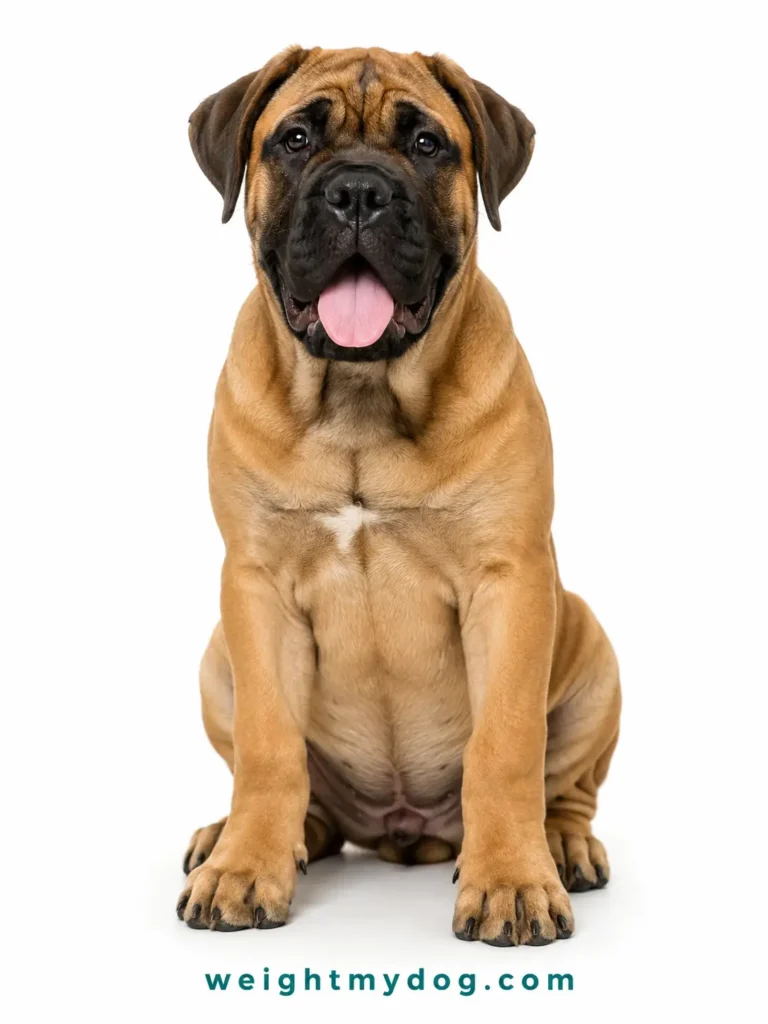
Many Bullmastiff owners wonder if their puppy is hitting the right weight at each age. A reliable calculator removes the guesswork and replaces anxiety with data-backed confidence throughout every growth milestone.
Understanding weight patterns matters more than most breed enthusiasts realize. The Bullmastiff doesn’t follow the same rates as smaller dogs, so breed-specific tools become genuinely important for accurate assessment.
Growth in this breed happens in sporadic spurts followed by slower consolidation phases. Recognizing whether your puppy is developing correctly requires knowing what typical monthly averages actually look like for each gender.
Every Bullmastiff puppy carries genetic potential shaped by parents, nutrition, and environment. Tracking current weight against established charts helps veterinarians and owners make informed decisions before problems arise.
Without consistent monitoring, it’s easy to overfeed or underfeed a growing giant breed. A structured weight guide aligned with vet check-ups keeps the development trajectory on course and health protected.
This database of breed-specific information transforms how Bullmastiff owners approach every feeding decision and exercise routine, making the entire growth journey measurable, manageable, and genuinely useful from birth onward.
Bullmastiff Weight Calculator
| Age | ♂ Male (Expected) | ♀ Female (Expected) | Your Dog |
|---|
How to use the Bullmastiff Weight Calculator
Get your Bullmastiff's ideal weight in under 10 seconds. No account needed.
Enter your dog’s details
Enter your Bullmastiff's current age, weight, and gender. Works in both lbs and kg — supports weeks, months, and years.
Get your instant weight results
See your Bullmastiff's predicted adult weight range, current ideal weight, visual growth chart, and health status — instantly calculated.
Check your dog’s health status
Find out if your Bullmastiff is underweight, ideal, or overweight based on AKC-verified breed standards — and get a personalised feeding guide.
Bullmastiff Breed Overview
The Bullmastiff emerged in 19th-century England as a formidable guard dog bred by crossing Mastiffs with Bulldogs. Gamekeepers needed a powerful, imposing, yet calm companion capable of stopping poachers without excessive aggression on estates.
Recognized by both the American Kennel Club and the Working Group, this breed blends courage with an affectionate disposition. Their loyal, gentle demeanor toward family makes them exceptional guardian dogs despite their impressive stature.
Males typically stand 25–29.5 inches at the shoulder, while females measure 24–27 inches. This size difference reflects natural gender variation within the breed standards maintained by the Kennel Club.
Adult male Bullmastiffs weigh between 110–130 lbs, whereas adult females range from 100–130 lbs. These ranges confirm the breed as a giant classification requiring breed-specific care and diet planning.
The breed’s statuesque presence comes from broad bones, dense muscle mass, and a well-balanced body structure. Their short coat, wrinkles, and prominent jowls give them an imposing look that historically protected English estates with quiet confidence.
Bullmastiffs are classified under the Large to Giant breed spectrum, sharing size traits with Great Danes and German Shepherd relatives. Understanding this classification helps owners apply appropriate nutrition and exercise guidelines effectively.
Male Bullmastiff Growth, Weight & Height Chart by Age
| Age | Male Weight | Male Height |
|---|---|---|
| Newborn (0 Months) | 1 – 2 lbs (0.5 – 0.9 kg) | 4 – 6 in (10 – 15 cm) |
| 1 Month | 9 – 12 lbs (4 – 5.4 kg) | 8 – 10 in (20 – 25 cm) |
| 2 Months | 34 – 36 lbs (15 – 16 kg) | 12 – 15 in (30 – 38 cm) |
| 3 Months | 37.6 – 42.9 lbs (17.1 – 19.5 kg) | 18.5 – 20 in (47 – 50.8 cm) |
| 4 Months | 48 – 55 lbs (21.8 – 24.9 kg) | 20 – 22 in (50.8 – 55.9 cm) |
| 5 Months | 58 – 66.3 lbs (26.3 – 30.1 kg) | 21 – 23 in (53.3 – 58.4 cm) |
| 6 Months | 69.5 – 77.3 lbs (31.5 – 35 kg) | 21.5 – 23.5 in (54.6 – 59.7 cm) |
| 7 Months | 74 – 85.5 lbs (33.5 – 38.8 kg) | 21.5 – 23.5 in (54.6 – 59.7 cm) |
| 8 Months | 82 – 93.4 lbs (37.2 – 42.4 kg) | 22 – 24 in (55.9 – 61 cm) |
| 9 Months | 89 – 98.6 lbs (40.4 – 44.7 kg) | 22.5 – 24.5 in (57.2 – 62.2 cm) |
| 10 Months | 92.3 – 104.8 lbs (41.9 – 47.5 kg) | 22.5 – 24.5 in (57.2 – 62.2 cm) |
| 11 Months | 97 – 111 lbs (44 – 50.3 kg) | 23 – 25 in (58.4 – 63.5 cm) |
| 12 Months | 102 – 118 lbs (46.3 – 53.5 kg) | 23.5 – 25.5 in (59.7 – 64.8 cm) |
| 18 Months | 106 – 124 lbs (48 – 56.2 kg) | 24.5 – 26.5 in (62.2 – 67.3 cm) |
| 24 Months (Adult) | 110 – 130 lbs (50 – 59 kg) | 25 – 27 in (63.5 – 68.6 cm) |
Female Bullmastiff Growth, Weight & Height Chart by Age
| Age | Female Weight | Female Height |
|---|---|---|
| Newborn (0 Months) | 1 – 1.5 lbs (0.5 – 0.7 kg) | 4 – 5 in (10 – 13 cm) |
| 1 Month | 9 – 12 lbs (4 – 5.4 kg) | 7 – 9 in (18 – 23 cm) |
| 2 Months | 30 – 32 lbs (13 – 14.5 kg) | 12 – 14 in (30 – 35 cm) |
| 3 Months | 34.4 – 40 lbs (15.6 – 18 kg) | 18.5 – 20 in (47 – 50.8 cm) |
| 4 Months | 44 – 52 lbs (20 – 23.5 kg) | 19 – 21 in (48.3 – 53.3 cm) |
| 5 Months | 54 – 62.5 lbs (24.5 – 28.3 kg) | 20 – 22 in (50.8 – 55.9 cm) |
| 6 Months | 63.8 – 74 lbs (29 – 33.6 kg) | 20.5 – 22.5 in (52.1 – 57.2 cm) |
| 7 Months | 68 – 82 lbs (30.8 – 37.2 kg) | 20.5 – 22.5 in (52.1 – 57.2 cm) |
| 8 Months | 75 – 87.8 lbs (34 – 39.8 kg) | 21 – 23 in (53.3 – 58.4 cm) |
| 9 Months | 80.4 – 92 lbs (36.5 – 41.7 kg) | 21.5 – 23.5 in (54.6 – 59.7 cm) |
| 10 Months | 84 – 99 lbs (38.1 – 44.9 kg) | 21.5 – 23.5 in (54.6 – 59.7 cm) |
| 11 Months | 88 – 104 lbs (39.9 – 47.2 kg) | 22 – 24 in (55.9 – 61 cm) |
| 12 Months | 93 – 110 lbs (42.2 – 49.9 kg) | 22.5 – 24.5 in (57.2 – 62.2 cm) |
| 18 Months | 96 – 115 lbs (43.5 – 52.2 kg) | 23.5 – 25.5 in (59.7 – 64.8 cm) |
| 24 Months (Adult) | 100 – 120 lbs (45.4 – 54.4 kg) | 24 – 26 in (61 – 66 cm) |
Puppy Growth Chart And AKC Breed Weight Standard
| Breed Size | 8 Weeks | 3 Months | 4 Months | 6 Months | 1 Year |
|---|---|---|---|---|---|
| Toy | 0.9 – 1.8 kg | 1.4 – 2 kg | 2 – 2.5 kg | 2.5 – 3 kg | 3 – 5.5 kg |
| Small | 1.5 – 3 kg | 3 – 5 kg | 4 – 7 kg | 6 – 9 kg | 6 – 11 kg |
| Medium | 3 – 5 kg | 5 – 8 kg | 8 – 13 kg | 10 – 18 kg | 11 – 23 kg |
| Large | 5 – 9 kg | 9 – 12 kg | 12 – 20 kg | 18 – 30 kg | 23 – 45 kg |
| Giant | 7 – 12 kg | 12 – 18 kg | 18 – 28 kg | 28 – 40 kg | 45 – 70 kg |
How Does a Bullmastiff Weight Calculator Work?
A Bullmastiff weight calculator uses your puppy’s current weight and age to estimate the final adult size. Most online calculators apply breed-specific formulas that account for gender, growth rates, and expected maturity timelines.
The most reliable online method involves entering current weight at a known month and letting the formula predict the adult weight using percentage-based growth progressions validated across multiple breeds.
Some calculators use a simple doubling formula — taking the puppy’s weight at a specific age and multiplying by a breed-appropriate factor. For giant breeds like the Bullmastiff, this factor varies significantly from small dog formulas.
Accurate predictions depend on combining calculator outputs with veterinarian assessments. No single tool confirms adult weight with 100% precision, but quality calculators narrow the estimate range considerably for Bullmastiff puppies.
Vet guidance remains the easiest complement to any digital estimator. Veterinarians can calculate expected growth using bone plates, X-rays, and physical metrics that no online tool can fully replicate on its own.
The calculation logic differs for male and female Bullmastiffs because gender influences maturity timing and final weight. Breed-specific formulas built into quality calculators adjust these predictions correctly to align with actual growth data.
Male Bullmastiff Weight Curve: Month-by-Month (2–23 Months)
Tracking a male Bullmastiff’s weight monthly reveals a fascinating growth curve. From Month 2 through Month 23, these dogs add significant mass in rapid early phases before growth steadily slows near maturity.
At Month 2, a male puppy typically weighs around 17.20 lbs (7.8 kg). By Month 3, this increases to approximately 30.20 lbs (13.7 kg), reflecting the rapid early growth rates characteristic of giant breed puppies.
Month 4 averages near 45.42 lbs (20.6 kg), and Month 5 reaches roughly 57.98 lbs (26.3 kg). These numbers confirm how quickly male Bullmastiff puppies grow during this particularly active early phase.
By Month 6, the average sits around 69.5 lbs (31.5 kg), with Month 7 reaching 78.93 lbs (35.8 kg). The growth rate begins tapering slightly here, though muscle and bone continue developing steadily.
Month 9 averages approximately 92.6 lbs (42 kg), and Month 12 reaches around 101.85 lbs (46.2 kg). This steady weight gain confirms the male Bullmastiff remains in a notable growth phase well into his first year.
By Month 18, males typically reach 119.93 lbs (54.4 kg), and Month 23 brings final adult weight near 130.07 lbs (59 kg). Full maturity arrives beyond the second year for most male Bullmastiffs.
Female Bullmastiff Weight Curve: Month-by-Month (2–23 Months)
Female Bullmastiff growth follows a parallel but lighter curve compared to males. Month-by-month tracking reveals consistent patterns that help owners confirm their puppy is developing within healthy expected ranges.
At Month 2, a female typically weighs around 17.86 lbs (8.1 kg). Month 3 brings her to approximately 31.31 lbs (14.2 kg), showing the same rapid early development seen in males, though slightly lighter throughout.
Month 4 averages near 34.72 lbs (15.8 kg), climbing to 50.04 lbs (22.7 kg) by Month 5. This period represents one of the most noticeable transformation windows in female Bullmastiff growth.
By Month 6, the average female reaches 63.8 lbs (28.9 kg), with Month 7 showing 73.6 lbs (33.4 kg). Growth continues steadily, though the rate slows compared to the earlier accelerated phase.
Month 9 places female Bullmastiffs at roughly 83.44 lbs (37.8 kg), rising to 90.17 lbs (40.9 kg) by Month 12. Females consistently mature earlier than males, reaching closer size stability around the 12-month mark.
Month 18 sees females average near 106.70 lbs (48.4 kg), with Month 23 bringing final weight to approximately 121.81 lbs (55.3 kg). Most female Bullmastiffs reach full adult weight by 18–24 months consistently.
Bullmastiff Growth Tips by Gender
Male and female Bullmastiffs require different growth strategies because their maturity timelines and final size vary meaningfully. Tailoring feeding, exercise, and vet check-up schedules to each gender produces genuinely better health outcomes.
Males grow longer and heavier, meaning their nutrition plan must support extended bone and muscle development beyond 18 months. Overfeeding during the adolescent phase increases obesity and joint risks significantly for male Bullmastiffs.
Females reach maturity earlier, making the transition from puppy to adult diet typically appropriate around 18 months. Monitoring weight weekly during months 6–12 helps owners detect early deviation from healthy female growth averages.
- Males: Transition diet closer to 24 months; monitor joint health and weight gain monthly beyond year one
- Females: Begin adult feeding schedules around 18 months; track weight and waist definition regularly
Both genders benefit from gentle exercise that avoids high-impact activities during critical bone plate development. Structured walks and supervised play remain the safest activities throughout the entire growing phase for this giant breed.
Veterinarian check-ups every 3–4 months help tailor diet and activity levels to each individual Bullmastiff’s growth progression. Combining gender-specific knowledge with professional advice removes the uncertainty that undermines many owner decisions during development.
Signs Your Bullmastiff Is Underweight
An underweight Bullmastiff shows visible ribs, a prominent hourglass shape at the waist, and obvious bone structure along the spine. These signs appear when underfeeding or illness disrupts normal weight gain during growth.
Lethargy, slow growth, and less muscle development compared to typical averages for the breed often confirm an underweight condition. Early vet intervention and diet adjustments resolve most cases before long-term health concerns develop.
A veterinarian assessment using growth charts and weight data quickly detects whether a puppy is falling below the healthy range. Balanced nutrition with high-quality proteins and measured calories typically restores normal development within weeks.
Signs Your Bullmastiff Is Overweight
An overweight Bullmastiff carries excessive fat over the ribs, making them difficult to feel even under gentle pressure. The waist loses definition, and the dog moves with noticeable difficulty and breathing concerns during exercise.
Obesity in a growing Bullmastiff creates strain on developing joints, accelerating hip and elbow dysplasia risks. Overfed puppies often face chronic health issues that persist well into adult life without early controlling intervention.
Vet check-ups that include weight monitoring help owners manage obesity before it becomes serious. Reducing calories, adjusting meal sizes, and increasing gentle exercise sessions are the first steps any veterinarian typically recommends for overweight Bullmastiffs.
Typical Adult Bullmastiff Size
Adult Bullmastiffs are among the most impressive giant breed dogs recognized by major Kennel Club standards. Their size places them firmly in the extra-large category alongside other Giants like Great Danes and large Mastiffs varieties.
Adult males stand 25–29.5 inches at the shoulder and weigh 110–130 lbs, while adult females measure 24–27 inches tall and range from 100–130 lbs. These are the breed standards maintained by the American Kennel Club and Working Group classifications.
Height and weight together define the Bullmastiff’s stature. A male with ideal body condition shows defined muscle mass, a strong back, and broad bones — not excessive fat — confirming healthy adult size is reached correctly.
Females present a slightly smaller but equally powerful structure. Comparing heights and weights against breed standards during annual vet checkups ensures each individual Bullmastiff maintains appropriate adult size without obesity or underweight concerns.
Typical adult size is rarely reached before 18–24 months even if weight plateaus earlier. Bone density, muscle maturity, and mental development continue consolidating well into the second year, confirming the Bullmastiff as a late-bloomer among giant breed dogs.
The Bullmastiff’s body size requires size-appropriate accessories like orthopaedic beds, harnesses, collars, and durable feeding gear to support long-term joint health. Proper sizing of lifestyle equipment contributes meaningfully to the adult dog’s comfort and health.
Puppy Growth Stages Explained
Bullmastiff growth unfolds across clearly defined stages, each demanding different nutrition, exercise, and monitoring approaches. Understanding these developmental windows helps owners make decisions that protect joint health and prevent problems that emerge from mismanaged growth.
Puppy growth stages are not arbitrary — they reflect biological changes in bone plates, muscle development, and hormonal patterns. Missing key milestones or ignoring stage-specific diet needs creates health risks that veterinarians later work hard to manage.
Each stage has typical weight ranges and height increases that owners should track using a growth chart or calculator. Deviations from expected averages within each phase warrant vet consultation before problems compound across subsequent stages.
Genetics inherited from parents significantly influence how a Bullmastiff moves through each growth stage. A puppy from larger parents typically grows faster and reaches greater final weight than one from smaller individuals within the same breed.
Nutrition adjustments across stages matter enormously. Feeding the wrong calories or protein levels for the current stage — whether newborn, early puppy, or adolescent — creates instability in growth rates and increases vulnerability to chronic developmental diseases.
Regular vet checkups aligned with stage transitions give owners the structured guidance needed to navigate every Bullmastiff growth phase confidently. These visits are the cornerstone of healthy development from birth through full adult maturity.
Newborn to 8 Weeks (Rapid Growth)
Newborn Bullmastiff puppies weigh between 1.4–3 lbs at birth and depend entirely on their mother for nutrition and warmth. During these 8 weeks, weight can double rapidly as puppies grow from fragile newborns to active small dogs.
Rapid growth during 0–8 weeks lays the bone and muscle foundations for the Bullmastiff’s giant adult structure. Any illness, parasites, or nutrition deficiency during this stage can interrupt development and create long-term health problems requiring veterinarian care.
Mother’s milk provides the ideal balanced nutrition in these early weeks. Weaning begins gradually, introducing soft puppy food around 3–4 weeks while immunisations and vet visits confirm the newborn Bullmastiff puppies are growing within healthy expected ranges.
2–6 Months (Major Size Changes)
The 2–6 month phase brings major size changes as Bullmastiff puppies soar from roughly 17 lbs to nearly 65–85 lbs in male pups. This rapid transformation is one of the most exciting yet demanding stages for owners.
Feeding during 2–6 months requires high-calorie, balanced puppy food designed for giant breeds. Overfeeding or using high-calorie food not formulated for large breeds can accelerate growth rates beyond safe levels, increasing joint and bone instability.
Socialization becomes critical during this phase alongside physical development. Introducing puppies to different environments, people, and gentle activities builds the mental foundation for a well-behaved adult Bullmastiff while keeping exercise appropriate and safe.
6–12 Months (Slowing Down)
Between 6–12 months, Bullmastiff growth rate slows noticeably compared to the earlier rapid phase. Weight increases become more gradual, though height may still lengthen as bone plates have not yet fully closed in this large breed.
Muscle development becomes the focus during 6–12 months as body mass fills out more than height increases. Feeding should transition toward controlled portions aligned with the dog’s current size and daily activity level to prevent obesity.
Joint health becomes a priority in this phase because growing bone plates remain fragile. High-impact exercise like jumping, stair climbing, and intense jogs should be avoided to protect developing joints from injuries that could create chronic problems.
12–24 Months (Final Growth Phase)
The 12–24 month phase represents the final growth window for Bullmastiffs, where weight increases become slow and subtle. Males typically continue adding muscle mass during this phase while height growth largely tapers off near 18 months.
Diet during 12–24 months should begin transitioning toward adult formulas as the puppy’s metabolism adjusts to slower growth rates. Feeding high-calorie puppy food beyond this window risks overfeeding a Bullmastiff whose calorie needs are reducing.
Vet check-ups every 3–4 months during this final phase help confirm whether the Bullmastiff is reaching expected adult weight and size. X-rays may be useful to assess bone plate closure and confirm when the dog has fully transitioned from puppy to adult.
Bullmastiffs as an Extra-Large/Giant Breed
Bullmastiffs are officially classified as an extra-large to giant breed by every major Kennel Club standard. This classification carries specific nutrition, exercise, and health monitoring responsibilities that differ fundamentally from medium or small breed guidelines.
Giant breed puppies like Bullmastiffs require giant-breed puppy food formulated with controlled calcium and phosphorus levels. Standard large or medium breed formulas do not support the unique developmental needs of a growing Bullmastiff correctly.
Being a giant breed means the Bullmastiff is more susceptible to hip dysplasia, elbow dysplasia, and joint conditions than smaller breeds. Breed-specific health monitoring from early puppyhood through adult life significantly reduces these inherent risks.
The Importance of a Bullmastiff Weight Calculator
A dedicated Bullmastiff weight calculator transforms growth monitoring from guesswork into evidence-based management. Owners gain a reliable tool that translates current weight and age into meaningful predictions about adult size and diet planning needs.
Breed-specific calculators are more accurate than generic puppy weight estimators because they incorporate giant breed growth patterns. Using a Bullmastiff-specific formula significantly improves prediction accuracy compared to calculators designed for medium or small breeds.
Beyond simple curiosity, weight calculators help owners make critical feeding decisions at each stage. Knowing the expected adult weight helps determine appropriate calorie intake and prevents the dangerous overfeeding that causes joint strain and obesity in this giant breed.
Veterinarians recommend using calculators alongside monthly check-up data to build a comprehensive growth picture. A single weight reading means little; consistent monthly data plotted against breed standards creates the reliable progression guide every Bullmastiff owner needs.
For prospective Bullmastiff owners, a calculator is an essential planning tool even before bringing a puppy home. Understanding expected adult size guides decisions about living space, feeding costs, bed sizing, and lifestyle adjustments well in advance.
The importance of these tools grows when puppies show deviations from typical growth curves. A calculator with breed-specific data quickly highlights whether a Bullmastiff is tracking above or below the healthy weight range for their age and gender.
Methods to Predict Your Bullmastiff’s Adult Weight
Predicting a Bullmastiff’s adult weight accurately requires combining multiple methods rather than relying on a single estimate. Each approach offers different insights, and together they build a more reliable picture of final size and maturity timing.
Owners who predict adult weight early make better decisions about feeding schedules, exercise routines, and health investments. Knowing a puppy may reach 110–140 lbs changes how you approach diet, gear, and veterinarian care planning significantly.
The best method combines online calculator estimates with vet guidance and parent weight data. Each individual method has limitations, but combining them produces predictions that are genuinely helpful for Bullmastiff owners navigating uncertain growth territory.
Breed standards provide a useful reference range when individual data is limited. Knowing male Bullmastiffs typically reach 110–130 lbs gives owners a baseline even without a specific calculator or parent weight information.
Genetic factors inherited from parents remain among the strongest predictors of adult size in any breed. A puppy from heavier parents will likely trend toward the larger end of the breed weight range, making parent data essential for accurate predictions.
No method offers exact certainty, but informed estimates from multiple sources give Bullmastiff owners the confidence to make proactive health and lifestyle decisions rather than reacting to weight concerns only after problems have already emerged.
Using a Puppy Weight Calculator (Best Online Method)
An online puppy weight calculator remains the easiest and most accessible method for Bullmastiff owners to predict adult size. Entering current weight and age in months generates an estimate grounded in breed-specific growth data.
Quality calculators use validated formulas accounting for giant breed growth patterns, producing predictions significantly more reliable than guesswork. The best online tools also display monthly growth charts so owners can visualize the entire Bullmastiff weight curve.
Accuracy improves when owners input consistent weekly or monthly weights rather than a single data point. The more growth data entered, the more accurately the calculator can adjust its estimate to reflect the individual Bullmastiff’s actual progression.
Breed Standards & Growth Percentages
Breed standards published by the American Kennel Club and other Kennel Club bodies provide the foundation for understanding Bullmastiff growth percentages. These standards define what healthy adult size looks like for both male and female individuals.
Growth percentage formulas use known adult weight ranges to back-calculate expected monthly weights at each age. Applying these percentages to a puppy’s current weight quickly generates a breed-appropriate estimate of final adult size.
Breed standards also define acceptable height ranges at the shoulder, which complement weight data when assessing growth progression. A Bullmastiff who hits weight targets but falls outside height ranges may warrant additional veterinarian assessment to rule out developmental concerns.
Looking at the Parents’ Weight
The father’s and mother’s weight are the most direct genetic indicators of a Bullmastiff puppy’s final adult size. Prospective owners should always ask the breeder for documented parent weights before selecting a puppy.
Inherited traits from both parents create a predictable weight range for each puppy. A puppy from a 130 lbs father and a 110 lbs mother will likely fall somewhere within that parent weight spectrum at full adult maturity.
Purebred Bullmastiff breeders who maintain registered records make this information easy to access. Comparing parent size against breed standards gives owners additional confidence that the puppy’s predicted adult weight aligns with typical Bullmastiff growth expectations.
Vet Guidance & Growth Monitoring
Veterinarian guidance transforms growth monitoring from passive observation into an active health management practice. Regular vet visits allow professionals to track weight, height, and bone development against breed-specific growth charts.
A trusted veterinarian also helps owners detect subtle signs of growth-related issues before they become chronic problems. Early identification of panosteitis, joint instability, or dysplasia during routine check-ups saves significant health costs long-term.
Monthly vet assessments during the first year are particularly important for giant breed puppies like the Bullmastiff. Veterinarians provide breed-specific advice on diet adjustments, exercise limits, and supplement timing that no online calculator or database can fully replicate.
Factors That Affect Bullmastiff Growth Rate
Genetics remain the dominant factor influencing Bullmastiff growth rate and final adult size. The genetic blueprint inherited from parents determines bone structure, muscle potential, and maturity timing more than any other individual variable.
Nutrition quality directly affects how a Bullmastiff puppy translates genetic potential into physical reality. Feeding high-quality, balanced giant-breed puppy food with the right proteins, fats, and carbohydrates is essential for healthy growth rates throughout every stage.
Exercise levels shape muscle development and bone density without directly controlling final weight. Too little exercise produces soft, underdeveloped muscle mass, while excessive high-impact activity damages growing bone plates and joint surfaces in this giant breed.
Health conditions including illnesses, worms, ticks, parasites, and chronic diseases significantly interrupt normal Bullmastiff growth rates. Puppies fighting illness during critical developmental windows often show weight deviations that require veterinarian intervention to correct.
Hormonal changes associated with spaying or neutering can influence growth rate and final size, particularly when desexing occurs before bone plates close. Veterinarians advise owners on optimal neutering timing to minimize hormonal impact on Bullmastiff development.
Environment and lifestyle also affect growth outcomes in subtle ways. Stress, poor sleeping conditions, inadequate socialization, and inconsistent feeding schedules all create instability in growth patterns that attentive owners and veterinarians must monitor and actively manage.
Health & Wellness for Bullmastiffs
Bullmastiff health management requires a proactive approach that begins in early puppyhood and extends throughout the dog’s lifespan. Giant breed dogs face a different set of health risks than smaller breeds, demanding breed-specific monitoring from a trusted veterinarian.
Hip dysplasia and elbow dysplasia are the most common health concerns for Bullmastiffs, with genetic predisposition playing a major role. Annual X-rays during adult life allow early detection and management before these conditions cause chronic pain or mobility problems.
Heart health deserves attention in Bullmastiffs because this breed shows elevated susceptibility to cardiac conditions as they age. Regular vet check-ups that include cardiac assessment alongside weight monitoring create a comprehensive health profile for every adult Bullmastiff.
Obesity represents one of the most manageable yet commonly overlooked health risks in adult Bullmastiffs. Controlling daily calories, avoiding overfeeding, and maintaining consistent exercise habits dramatically reduce obesity-related conditions including joint strain and breathing difficulties.
Skin and coat health in Bullmastiffs requires regular attention because their wrinkles and short coat create pockets where bacteria and moisture accumulate. Cleaning skin folds regularly alongside routine coat brushing prevents common dermatological conditions that affect this breed’s comfort.
Lifespan for the Bullmastiff averages 8–10 years, making long-term health planning essential from day one. Proactive vet visits, balanced nutrition, appropriate exercise, and early detection of breed-specific conditions together extend both quality and length of life for this loyal giant.
Nutrition Requirements for Bullmastiff Puppies
Bullmastiff puppies require giant-breed puppy food formulated with controlled calcium levels to support healthy bone development without accelerating growth rates beyond safe limits. Standard puppy formulas designed for small or medium breeds are inappropriate and potentially harmful.
Proteins are foundational to Bullmastiff puppy nutrition, with amino acids driving muscle development across every growth stage. Diets containing at least 22–26% high-quality protein from whole animal sources best support the impressive muscle mass this breed develops.
Fats, particularly omega fatty acids, support brain development, coat health, and joint lubrication in growing Bullmastiff puppies. Including appropriate fat levels in the diet contributes to the well-balanced physical and mental development this breed requires.
Carbohydrates provide the energy source Bullmastiff puppies need for daily activity and growth without contributing excessive calories. Choosing formulas with complex carbohydrates rather than fillers ensures steady energy levels without the weight gain associated with high-calorie feeding.
Vitamins and minerals including calcium-rich sources must be carefully balanced in a giant-breed diet. Supplementing vitamins beyond what the food provides without veterinarian guidance can disrupt mineral ratios and contribute to bone developmental problems in Bullmastiff puppies.
Feeding schedules for Bullmastiff puppies should include 3–4 meals daily during months 2–6, transitioning to twice daily servings from 6 months onward. Consistent meal timing supports stable metabolism, prevents ingestion issues, and maintains healthy weight gain throughout every developmental stage.
Exercise Guidelines for Bullmastiff Puppies
Exercise for Bullmastiff puppies must be carefully controlled to protect fragile bone plates and developing joints. Puppies of this giant breed should never be pushed through high-impact activities or long runs that exceed their physical capacity.
Short walks of 5 minutes per month of age represent the standard guideline for safe exercise in growing giant breed puppies. A four-month-old Bullmastiff should walk no more than 20 minutes in a single session to avoid joint strain.
Play sessions on soft surfaces provide mental stimulation and physical development without the impact risks of hard surfaces or rough terrain. Supervised play is always safer than unsupervised activity for a growing Bullmastiff puppy at any age.
Over-exercising a Bullmastiff puppy before bone plates close creates risks of torn ligaments, joint injuries, and chronic orthopedic problems that affect quality of life long into adult years. Gentle movement consistently outperforms intense exercise at every puppy stage.
Jumping, stair climbing, and running on hard surfaces should be actively avoided until the Bullmastiff reaches 12–18 months of age. These activities place excessive pressure on growing frames and increase the risk of developmental orthopedic diseases significantly.
Exercise routines should grow gradually as the Bullmastiff puppy matures, with longer walks and more structured activities introduced only after vet confirmation that bone plate closure is appropriate. Patience with exercise progression pays dividends in long-term joint health.
Grooming the Bullmastiff
The Bullmastiff’s short coat makes grooming one of the more manageable aspects of breed upkeep compared to longer-coated giant breeds. Regular brushing with a soft comb or rubber curry brush keeps shedding controlled and coat condition optimal.
Weekly brushing removes loose fur, distributes natural oils, and provides an opportunity to inspect skin condition beneath the Bullmastiff’s prominent wrinkles. This regular grooming routine doubles as a health check for skin infections, parasites, or lumps.
Wrinkle cleaning is a non-negotiable part of Bullmastiff grooming because moisture trapped in facial folds rapidly breeds bacteria. Using a soft, damp cloth to groom these areas daily prevents skin conditions that affect this breed disproportionately.
Nail clipping should occur every 3–4 weeks to prevent nails from growing long enough to alter the dog’s gait and joint alignment. Long nails on a giant breed like the Bullmastiff create pressure on legs and joints that compounds over time.
Baths every 6–8 weeks using breed-appropriate shampoo keep the Bullmastiff’s coat clean without stripping natural skin oils. Bathing more frequently than this dries the skin and can trigger coat shedding beyond the breed’s typical pattern.
Teeth cleaning and ear care round out a complete Bullmastiff grooming routine. Checking teeth regularly for tartar and cleaning ears weekly prevents common dental and auditory problems that affect this breed’s overall health and comfort as they age.
Training the Bullmastiff
Training a Bullmastiff requires consistency, patience, and an understanding of the breed’s confident yet gentle disposition. These dogs respond best to positive reinforcement-based obedience training begun in early puppyhood before bad habits become well-established patterns.
Socialization during the 2–6 month window is the most important training investment an owner can make. Exposing the Bullmastiff puppy to different people, dogs, environments, and surfaces builds the confident, well-behaved adult temperament the breed is known for.
Obedience training with a professional trainer is highly recommended for Bullmastiff owners given the breed’s eventual giant size. A dog this large that pulls on a harness or ignores boundaries presents real physical challenges for even experienced owners.
Housebreaking and crate training during puppyhood establish the structure and boundaries that Bullmastiffs thrive under as they grow. A crate provides a safe, comfortable space that supports mental stability and reduces behavioral problems during the adolescent phase.
Training sessions for Bullmastiff puppies should remain short — ideally 3–5 minutes — and frequent throughout the day rather than long and infrequent. This breed’s attention span and mental energy are best engaged through brief, rewarding interactions built into the daily routine.
Instilling boundaries early prevents the size-related problems that emerge when Bullmastiffs reach adult weight without proper training foundations. Well-behaved Bullmastiffs are a joy to manage; poorly trained ones become a significant challenge given their impressive strength and size.
When to Visit the Vet for Growth Check-Ups
Vet check-ups for Bullmastiff puppies should occur every 4–6 weeks during the first 6 months of life. This frequency ensures immunisations are current, weight gain is on track, and developmental issues are caught before they become serious problems.
From 6–12 months, monthly vet visits are ideal for a giant breed like the Bullmastiff. This period sees significant growth changes, and regular professional assessment ensures diet, exercise, and weight monitoring align with the puppy’s current developmental stage.
Annual check-ups become the standard once the Bullmastiff reaches adult maturity around 18–24 months. These visits should include weight assessment, joint evaluation, cardiac screening, and diet review to protect long-term health.
Specific vet visits are warranted whenever growth appears to deviate significantly from expected ranges for age and gender. Early vet intervention at these moments prevents minor variations from developing into chronic health conditions requiring expensive long-term care.
Check-up timing should also align with stage transitions — moving from puppy to adolescent feeding, from adolescent to adult diet, and from growth phase to maintenance phase. Veterinarians provide critical guidance at each of these transitions for Bullmastiff owners.
Growth check-ups are investments in long-term health rather than optional expenses. Bullmastiffs who receive regular vet monitoring throughout their growth journey consistently show better joint health, healthier adult weight, and longer life expectancy than those without structured veterinarian care.
More About Puppy Weight Gain (General)
Puppy weight gain across all breeds follows predictable patterns that reflect biological growth priorities. Bone and organ development comes first, followed by muscle mass accumulation and finally fat storage as the puppy approaches adult maturity.
Giant breed puppies like Bullmastiffs gain weight more rapidly in absolute terms than small breed puppies, but their growth period is proportionally longer. A Beagle may finish growing by 10–12 months; a Bullmastiff takes 18–24 months to approach full maturity.
Weight gain rates vary significantly by breed size classification — Toy, Small, Medium, Large, and Giant breeds each follow different growth curves. Understanding where the Bullmastiff sits within the Giant Class helps owners interpret weight data correctly.
Weekly weighing during the first 6 months provides the most useful data for tracking puppy weight gain. After 6 months, monthly weighing is sufficient for most giant breed puppies unless vet guidance suggests more frequent monitoring.
Healthy weight gain is steady rather than sporadic or rapid in ways that exceed breed averages consistently. Puppies who gain weight too quickly face joint risks; those who gain too slowly may have underlying nutrition or health concerns requiring veterinarian investigation.
Weight gain patterns across the puppy growth journey provide the most reliable indicator of overall health for a Bullmastiff. Owners who track weight consistently from birth through maturity build a database of growth data that makes every vet consultation more productive and evidence-based.
Key Takeaways
The Bullmastiff weight calculator is an essential tool for every owner navigating the complex growth journey of this giant breed. Combining calculator predictions with vet check-ups and breed standard data creates the most accurate weight monitoring system available.
Gender matters significantly in Bullmastiff growth — males grow longer and heavier, while females mature earlier. Tailoring nutrition, exercise, and vet visit timing to each gender ensures the best health outcomes for this remarkable breed.
Nutrition built around giant-breed formulas with appropriate proteins, fats, and carbohydrates gives the Bullmastiff puppy the foundation for healthy adult size. Overfeeding and underfeeding are equally dangerous in this breed and require consistent monitoring to prevent.
Exercise must remain gentle and age-appropriate throughout the growth phase to protect developing bone plates and joints. Patience with physical activity levels in a growing Bullmastiff prevents chronic orthopedic problems that reduce quality of life significantly.
Regular vet check-ups, consistent weight monitoring, and breed-specific health awareness are the three pillars of successful Bullmastiff growth management. Owners who commit to all three give their dog the best possible foundation for a healthy, happy adult life.
The Bullmastiff remains one of the most impressive giant breed dogs in the world — loyal, powerful, and affectionate when raised with care and knowledge. Understanding their weight journey from newborn to adult is the first and most important step every Bullmastiff owner should take.
Frequently Asked Questions — Bullmastiff Weight
How Big Will My Bullmastiff Puppy Get When Fully Grown?
Adult male Bullmastiffs typically reach 110–130 lbs and stand 25–29.5 inches tall, while females reach 100–130 lbs at 24–27 inches. Final size depends on genetics, nutrition, gender, and overall health throughout the growth journey.
Using a Bullmastiff weight calculator alongside parent weight data gives the most accurate estimate of final adult size. Vet check-ups at key growth milestones further confirm whether your puppy is on track for expected adult weight.
When Will My Bullmastiff Puppy Stop Growing?
Bullmastiff puppies typically stop growing in height around 18 months, though weight and muscle mass continue filling out until 24 months. Males generally take longer to reach full maturity than females due to their larger final size.
This makes the Bullmastiff a late-blooming giant breed compared to medium or small dogs that mature by 12 months. Tracking monthly weight through the second year using a calculator or chart helps confirm when growth has genuinely tapered to adult maintenance levels.
How Much Should I Feed My Growing Bullmastiff Puppy?
Feeding a growing Bullmastiff puppy correctly depends on age, current weight, gender, and the specific giant-breed puppy food brand being used. Most formulas recommend 3–4 meals daily for puppies under 6 months and twice daily after that.
Daily calorie needs shift as the puppy grows — overestimating calorie requirements leads to overfeeding and obesity risks in this breed. Veterinarian guidance on portion sizing based on current weight and activity level ensures feeding remains balanced at every stage.
What Growth-Related Health Concerns Are Common in Bullmastiffs?
Hip dysplasia, elbow dysplasia, and panosteitis are the most common growth-related health concerns in Bullmastiffs. These conditions are influenced by both genetic predisposition and nutrition choices during the critical puppy growth phase.
Overfeeding high-calorie food and allowing high-impact exercise too early both increase risk of these developmental problems. Regular vet checkups with X-rays during the first year help detect early signs of joint and bone issues before they become chronic.
Should I Be Concerned If My Bullmastiff’s Growth Rate Seems Fast?
Rapid growth that exceeds breed averages consistently warrants vet consultation rather than casual observation. Accelerated growth in a giant breed like the Bullmastiff increases strain on bone plates and joints that are still actively developing.
Overfeeding high-calorie or high-quality protein food beyond recommended levels is a common cause of faster-than-expected weight gain. A veterinarian can assess whether rapid growth reflects genetic potential or a diet issue needing immediate correction.
Are Bullmastiffs Late Bloomers in Terms of Growth?
Yes — Bullmastiffs are considered late bloomers compared to smaller breeds because they continue adding muscle mass and body condition well beyond 12 months. Most giant breed dogs do not reach full physical and mental maturity until 18–24 months of age.
This extended growth timeline means owners should maintain puppy-appropriate nutrition and exercise guidelines longer than they might expect. Transitioning to adult dog food too early risks missing key nutritional support during the final growth phase.
How Can I Ensure My Bullmastiff Has Strong Bones and Joints During Growth?
Feeding a giant-breed puppy formula with balanced calcium, phosphorus, and vitamins lays the foundation for strong bones and joints. Avoiding supplements beyond what a complete diet provides prevents mineral imbalances that damage bone development.
Gentle exercise on soft surfaces, avoiding jumping and intense activity, and regular vet check-ups all contribute to joint health during the Bullmastiff’s growth phase. Orthopaedic beds and appropriate accessories further support developing joints in this giant breed.
When Should I Switch From Puppy Food to Adult Dog Food?
Most veterinarians recommend transitioning a Bullmastiff from puppy food to adult dog food between 18–24 months depending on gender and individual maturity. Females often transition around 18 months; males may benefit from puppy formula closer to 24 months.
The transition should be gradual — mixing increasing amounts of adult food with puppy formula over 2–3 weeks prevents digestive issues. Vet guidance on the ideal timing and brand ensures the adult diet correctly supports the Bullmastiff’s mature metabolism and size.
How Can I Tell If My Bullmastiff Puppy Is Overweight?
An overweight Bullmastiff puppy shows reduced waist definition, ribs that are difficult to feel, and excessive fat filling the flanks. Weight above the typical range for age and gender on a breed chart is another clear indicator of excess weight.
Vet assessment using body condition scoring alongside a weight chart quickly confirms overweight status. Adjusting feeding portions, reducing calories, and increasing gentle exercise are the first steps any veterinarian recommends for an overweight growing Bullmastiff.
Are Bullmastiffs Prone to Obesity?
Bullmastiffs are prone to obesity because their calm, gentle demeanor means they often prefer rest over activity, especially as they age. Owners who overfeed without monitoring weight regularly quickly find their giant breed gaining excess fat.
Controlling meal sizes, using scheduled feeding rather than free feeding, and maintaining daily exercise routines are the most effective obesity prevention strategies. Regular vet check-ups that include weight monitoring keep obesity risks visible and manageable before they become chronic health problems.
What’s the Average Lifespan of a Bullmastiff?
The average lifespan of a Bullmastiff is 8–10 years, which is typical for giant breed dogs of their size and stature. Some individuals live beyond 10 years with excellent nutrition, regular vet care, and appropriate exercise throughout their life.
Genetics, diet quality, weight management, and health monitoring all influence life expectancy in this breed. Bullmastiffs who maintain healthy adult weight and receive regular vet check-ups consistently show better longevity and life quality than those with unmanaged health concerns.
How Often Should My Bullmastiff Puppy Be Exercised?
Bullmastiff puppies should be exercised gently and briefly — no more than 5 minutes per month of age per session. A 3-month-old puppy needs only 15 minutes of walking daily, split across 2–3 short sessions to prevent joint strain.
As the puppy grows through 6–12 months, exercise duration can increase gradually based on vet guidance. Free play in a safe, soft environment supplements structured walks and supports the mental and physical development every Bullmastiff puppy needs.
When Will My Bullmastiff Puppy Lose His Baby Teeth?
Bullmastiff puppies begin teething around 3–4 months of age as baby teeth are replaced by adult teeth. This process typically completes by 6–7 months, though individual timing varies between puppies within the breed.
Providing durable chew toys during teething prevents the puppy from targeting furniture and household items instead. Rubber and soft chew accessories are the safest options for a growing Bullmastiff going through this important developmental stage.
At What Age Is a Bullmastiff Considered an Adult?
Bullmastiffs are generally considered adult dogs at 18–24 months of age, though mental maturity may continue developing until the third year. Males typically reach full adult status closer to 24 months due to their larger final size.
Vet assessment at 18 months helps confirm whether bone plates have closed and whether adult feeding and exercise routines are now appropriate. Transitioning to adult lifestyle management at the right age supports better long-term health in this giant breed.
How Often Should I Take My Bullmastiff Puppy to the Vet for Growth Check-Ups?
During the first 6 months, vet visits every 3–4 weeks ensure immunisations, weight monitoring, and growth assessment stay on schedule. This frequency is important for giant breed puppies like the Bullmastiff where early developmental issues need rapid identification.
From 6–12 months, monthly check-ups remain valuable as significant growth changes continue occurring. After 12 months, check-ups every 3–4 months are typical until the Bullmastiff reaches full adult maturity at 18–24 months of age.
How Can I Prevent My Bullmastiff Puppy From Developing Behavioral Problems as He Grows?
Early socialization and consistent obedience training are the most effective tools for preventing behavioral problems in a growing Bullmastiff. Exposing puppies to diverse environments, people, and dogs during the 2–6 month window builds stable, confident adult behavior.
Housebreaking, crate training, and establishing clear boundaries early prevent the size-amplified behavioral issues that emerge when Bullmastiffs reach adult weight without proper obedience foundations. Short, frequent training sessions work better than long, infrequent ones for this breed.
My Bullmastiff Puppy Seems Taller/Shorter Than the Average. Should I Be Worried?
Height variations within the Bullmastiff breed are normal and influenced by genetics from both parents. A puppy who is slightly taller or shorter than typical averages is not automatically cause for concern if weight and health remain within healthy ranges.
Significant deviations from expected height ranges — particularly when accompanied by weight concerns or behavioral changes — warrant vet consultation. A professional growth assessment using charts and X-rays quickly confirms whether the variation is genetic or reflects an underlying developmental concern.
Can Neutering or Spaying Affect My Bullmastiff’s Growth?
Neutering or spaying before bone plates close can influence the Bullmastiff’s final height and weight. Desexing early may cause dogs to grow slightly taller and longer, as hormonal signals that normally trigger growth plate closure are removed.
Most veterinarians recommend waiting until 18–24 months before neutering or spaying a giant breed like the Bullmastiff. This timing allows bone plates to close naturally, preventing hormonal growth disruption and reducing the risk of joint instability associated with early desexing.
What Toys Are Suitable for My Growing Bullmastiff Puppy?
Durable rubber toys and size-appropriate chew accessories are the safest choices for a growing Bullmastiff puppy. Toys should be large enough to prevent ingestion risks but soft enough to protect developing teeth during the teething phase.
Interactive toys that support mental stimulation help channel the Bullmastiff’s curiosity and energy into constructive activity. Avoiding small toys that can be torn apart and swallowed prevents health emergencies common in large, powerful breed puppies.
Is Crate Training Recommended During My Bullmastiff’s Growth Period?
Crate training is highly recommended during the Bullmastiff’s growth period because it establishes structure, boundaries, and a safe personal space for the puppy. A crate becomes a comfortable bed and retreat that supports mental stability during the adolescent phase.
Size-appropriate crates that give the Bullmastiff room to stand, turn, and lie comfortably are essential as the puppy grows. Consistent crate training from early puppyhood prevents housebreaking problems and creates the well-behaved adult that owners expect from this breed.
Do Bullmastiff Puppies Have Growth Spurts?
Yes — Bullmastiff puppies experience noticeable growth spurts, particularly during 2–6 months when weight can increase dramatically week to week. These sporadic bursts of rapid growth are normal and reflect the biological demands of giant breed development.
Spurts typically slow after 6 months as the growth rate tapers toward more gradual monthly gains. Monitoring weight weekly during peak growth phases helps owners detect whether spurts are within healthy breed ranges or approaching concerning levels.
How Accurate Are Puppy Weight Calculators?
Puppy weight calculators are helpful tools that provide a reliable estimate rather than a guaranteed prediction of adult size. Breed-specific calculators designed for giant breeds like the Bullmastiff tend to be significantly more accurate than generic formulas.
Accuracy improves considerably when owners input consistent monthly weight data from early puppyhood. No calculator achieves 100% precision because genetics, nutrition, and individual health variations introduce factors no formula can fully account for without vet confirmation.
How Often Should I Weigh My Puppy?
Weekly weighing during the first 6 months provides the most useful growth data for Bullmastiff owners tracking development. This frequency captures rapid early growth changes and helps identify deviations from expected breed averages quickly.
From 6–12 months, monthly weighing is sufficient as growth rates slow and week-to-week changes become less dramatic. Consistent monthly records fed into a growth chart or calculator provide the longitudinal data most valuable at vet checkups.
Can a Puppy’s Paw Size Determine Their Final Size?
Paw size is a popular but rough indicator of a puppy’s final adult size rather than a precise predictor. Large, broad paws on a young Bullmastiff puppy typically suggest a larger adult size, but this method is far less reliable than breed standards or calculator formulas.
Using paw size as a sole predictor carries significant inaccuracy — genetics from parents and current weight data consistently outperform paw-based estimates. A breed-specific calculator and vet guidance remain the most accurate tools for predicting Bullmastiff adult size.
Do Mixed-Breed Puppies Grow Differently?
Mixed-breed puppies often grow differently from purebred Bullmastiffs because their genetics blend growth patterns from two or more breeds. Predicting adult size in a mixed-breed dog is inherently less reliable without clear parent weight data from both sides.
Generic puppy weight calculators work reasonably well for mixed-breed dogs when the breeds involved are known, but accuracy remains lower than breed-specific tools. Vet guidance and regular weight monitoring become even more important for mixed-breed Bullmastiff owners navigating uncertain growth predictions.
What Is the Typical Size of a Bullmastiff?
The typical adult Bullmastiff stands 24–27.5 inches at the shoulder and weighs between 100–130 lbs depending on gender. Males sit at the heavier end while females are slightly smaller but equally powerful within breed standards.
This size places the Bullmastiff firmly in the giant breed category, requiring lifestyle adjustments that accommodate a massive, imposing dog in everyday life. Understanding typical adult size early helps owners plan appropriately for space, equipment, and feeding costs from the start.
How Much Does a Bullmastiff Puppy Weigh at 2 Months?
At 2 months of age, a Bullmastiff puppy typically weighs between 15–20 lbs depending on gender and genetics. Males at 2 months average around 17.20 lbs, while females average closer to 17.86 lbs at the same age.
These early weights serve as the starting data point for growth calculators predicting final adult size. Consistent tracking from the 2-month milestone forward gives owners the most complete growth database for their Bullmastiff puppy.
Do Puppies Grow More in Height or Weight First?
Puppies generally grow height first in the early months, with long bones lengthening rapidly before muscle mass and weight fill in later. This explains why young Bullmastiff puppies often appear lanky before body mass catches up with their growing frames.
Weight accumulation — through muscle and appropriate fat — becomes the dominant growth expression in the second year of the Bullmastiff’s development. Understanding this sequence helps owners avoid concern when a puppy looks taller and leaner than expected before body mass fills out.
Is My Puppy Done Growing at 6 Months?
No — at 6 months, a Bullmastiff puppy is far from done growing and has only reached a fraction of adult size. Height continues increasing through 12–18 months, and weight continues accumulating well into the second year of life.
Transitioning to adult food or reducing nutrition quality at 6 months based on the assumption that growth is complete is a common mistake for new Bullmastiff owners. Maintaining giant-breed puppy nutrition through the appropriate age — guided by vet advice — protects the full growth journey.
Do Dogs Eat Less When They Stop Growing?
Yes — as Bullmastiffs transition from puppy to adult, their metabolism slows and calorie requirements reduce meaningfully. Continuing to feed at puppy growth levels after growth stops is one of the most common pathways to adult obesity in this breed.
Veterinarian guidance on transitioning calorie intake as growth tapers helps owners adjust feeding schedules appropriately. Monitoring weight monthly after growth concludes ensures diet adjustments keep pace with the Bullmastiff’s changing metabolic needs across adult life.
Table of Contents
Toggle