
English Springer Spaniel Weight Calculator — Free Puppy Growth Chart by Age
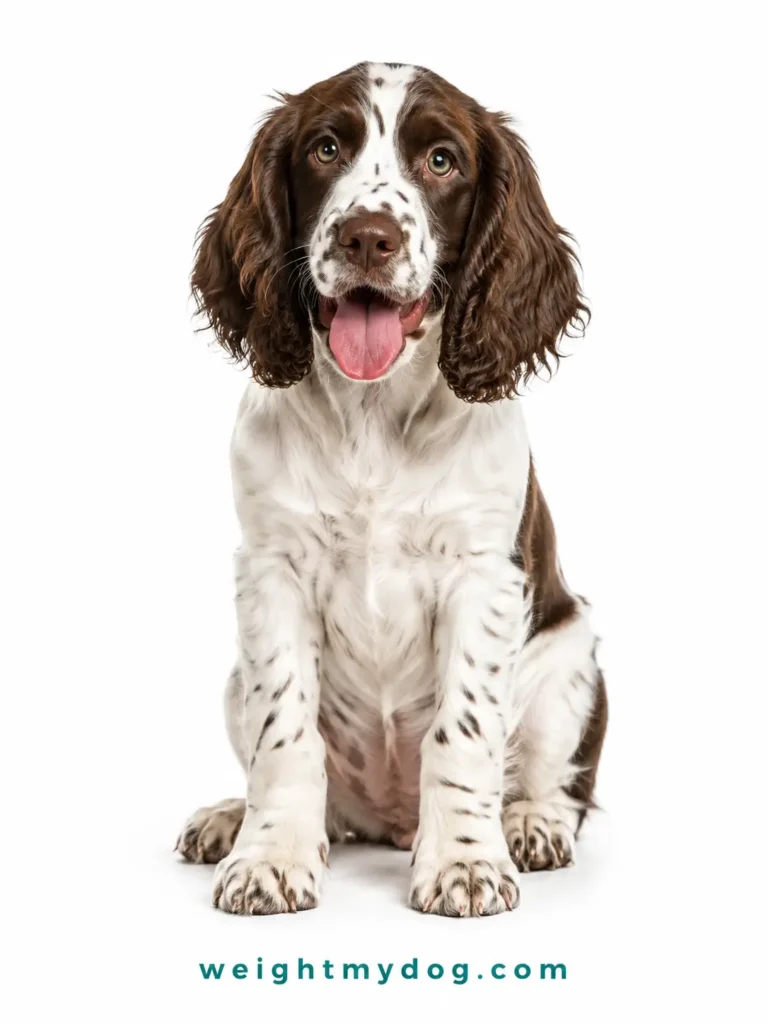
The English Springer Spaniel is a cheerful, affectionate, energetic breed that has captured hearts across households worldwide. Originally developed in England as a sporting gun dog, this medium-sized companion offers remarkable temperament alongside athletic ability.
What makes the Springer stand out among sporting dogs is its eagerness to work combined with deep loyalty. Spaniels of this breed demonstrate intelligent problem-solving and sociable tendencies, making them friendly family members in nearly every adult living situation encountered.
Field lines and bench lines represent two distinct breed categories within English Springer Spaniels. Field types appear leaner with sharper muscles, while bench varieties carry a fuller coat and rounder head, producing noticeably different physical profiles within the same registered breed classification.
The Kennel Club and AKC both recognize this breed under the Sporting group classification. Breed standards confirm that male Spaniels typically stand taller and weigh heavier than females, though both gender types share the same playful temperament and working intelligence.
Registered breeders familiar with Springer genetics know that parents heavily influence puppy size and growth trajectory. Reviewing photos of littermates and understanding litter history helps future owners predict approximate adult weight and height before purchasing a puppy.
Understanding your Springer’s development from puppyhood through maturity is critical. Using a reliable weight calculator or estimator early provides a baseline for monitoring growth milestones, ensuring your dog stays within healthy ranges throughout every life stage.
English Springer Spaniel Weight Calculator
| Age | ♂ Male (Expected) | ♀ Female (Expected) | Your Dog |
|---|
How to use the English Springer Spaniel Weight Calculator
Get your English Springer Spaniel's ideal weight in under 10 seconds. No account needed.
Enter your dog’s details
Enter your English Springer Spaniel's current age, weight, and gender. Works in both lbs and kg — supports weeks, months, and years.
Get your instant weight results
See your English Springer Spaniel's predicted adult weight range, current ideal weight, visual growth chart, and health status — instantly calculated.
Check your dog’s health status
Find out if your English Springer Spaniel is underweight, ideal, or overweight based on breeder and parent-breed data — and get a personalised feeding guide.
Male English Springer Spaniel Growth, Weight & Height Chart by Age
| Age | Male Weight | Male Height |
|---|---|---|
| Newborn | 1 – 2 lbs (0.5 – 0.9 kg) | 3 – 4 in (7.6 – 10.2 cm) |
| 1 Month | 5 – 7 lbs (2.3 – 3.2 kg) | 6 – 7 in (15.2 – 17.8 cm) |
| 2 Months | 10 – 12 lbs (4.5 – 5.4 kg) | 8 – 9 in (20.3 – 22.9 cm) |
| 3 Months | 15 – 18 lbs (6.8 – 8.2 kg) | 10 – 11 in (25.4 – 27.9 cm) |
| 4 Months | 20 – 24 lbs (9.1 – 10.9 kg) | 12 – 13 in (30.5 – 33.0 cm) |
| 5 Months | 25 – 29 lbs (11.3 – 13.2 kg) | 13 – 15 in (33.0 – 38.1 cm) |
| 6 Months | 30 – 35 lbs (13.6 – 15.9 kg) | 15 – 17 in (38.1 – 43.2 cm) |
| 7 Months | 32 – 37 lbs (14.5 – 16.8 kg) | 16 – 18 in (40.6 – 45.7 cm) |
| 8 Months | 35 – 40 lbs (15.9 – 18.1 kg) | 18 – 19 in (45.7 – 48.3 cm) |
| 9 Months | 37 – 42 lbs (16.8 – 19.1 kg) | 18 – 19 in (45.7 – 48.3 cm) |
| 10 Months | 40 – 45 lbs (18.1 – 20.4 kg) | 19 – 20 in (48.3 – 50.8 cm) |
| 11 Months | 42 – 47 lbs (19.1 – 21.3 kg) | 19 – 20 in (48.3 – 50.8 cm) |
| 12 Months | 45 – 50 lbs (20.4 – 22.7 kg) | 20 – 21 in (50.8 – 53.3 cm) |
| 14 Months | 46 – 51 lbs (20.9 – 23.1 kg) | 20 – 21 in (50.8 – 53.3 cm) |
| 16 Months | 47 – 52 lbs (21.3 – 23.6 kg) | 20 – 22 in (50.8 – 55.9 cm) |
| 18 Months (Adult) | 48 – 53 lbs (21.8 – 24.0 kg) | 20 – 22 in (50.8 – 55.9 cm) |
Female English Springer Spaniel Growth, Weight & Height Chart by Age
| Age | Female Weight | Female Height |
|---|---|---|
| Newborn | 1 – 2 lbs (0.5 – 0.9 kg) | 3 – 4 in (7.6 – 10.2 cm) |
| 1 Month | 4 – 6 lbs (1.8 – 2.7 kg) | 5 – 6 in (12.7 – 15.2 cm) |
| 2 Months | 8 – 10 lbs (3.6 – 4.5 kg) | 7 – 8 in (17.8 – 20.3 cm) |
| 3 Months | 12 – 16 lbs (5.4 – 7.3 kg) | 9 – 10 in (22.9 – 25.4 cm) |
| 4 Months | 18 – 22 lbs (8.2 – 10.0 kg) | 11 – 12 in (27.9 – 30.5 cm) |
| 5 Months | 21 – 25 lbs (9.5 – 11.3 kg) | 12 – 14 in (30.5 – 35.6 cm) |
| 6 Months | 25 – 30 lbs (11.3 – 13.6 kg) | 14 – 16 in (35.6 – 40.6 cm) |
| 7 Months | 27 – 32 lbs (12.2 – 14.5 kg) | 15 – 17 in (38.1 – 43.2 cm) |
| 8 Months | 30 – 35 lbs (13.6 – 15.9 kg) | 16 – 18 in (40.6 – 45.7 cm) |
| 9 Months | 31 – 36 lbs (14.1 – 16.3 kg) | 17 – 18 in (43.2 – 45.7 cm) |
| 10 Months | 33 – 38 lbs (15.0 – 17.2 kg) | 17 – 19 in (43.2 – 48.3 cm) |
| 11 Months | 34 – 39 lbs (15.4 – 17.7 kg) | 18 – 19 in (45.7 – 48.3 cm) |
| 12 Months | 35 – 40 lbs (15.9 – 18.1 kg) | 18 – 19 in (45.7 – 48.3 cm) |
| 14 Months | 36 – 41 lbs (16.3 – 18.6 kg) | 18 – 19 in (45.7 – 48.3 cm) |
| 16 Months | 37 – 42 lbs (16.8 – 19.1 kg) | 18 – 20 in (45.7 – 50.8 cm) |
| 18 Months (Adult) | 38 – 44 lbs (17.2 – 20.0 kg) | 18 – 20 in (45.7 – 50.8 cm) |
Puppy Growth Chart And AKC Breed Weight Standard
| Breed Size | 8 Weeks | 3 Months | 4 Months | 6 Months | 1 Year |
|---|---|---|---|---|---|
| Toy | 0.9 – 1.8 kg | 1.4 – 2 kg | 2 – 2.5 kg | 2.5 – 3 kg | 3 – 5.5 kg |
| Small | 1.5 – 3 kg | 3 – 5 kg | 4 – 7 kg | 6 – 9 kg | 6 – 11 kg |
| Medium | 3 – 5 kg | 5 – 8 kg | 8 – 13 kg | 10 – 18 kg | 11 – 23 kg |
| Large | 5 – 9 kg | 9 – 12 kg | 12 – 20 kg | 18 – 30 kg | 23 – 45 kg |
| Giant | 7 – 12 kg | 12 – 18 kg | 18 – 28 kg | 28 – 40 kg | 45 – 70 kg |
What Is the Ideal Weight & Height for a Springer Spaniel?
The ideal weight for an adult male English Springer Spaniel typically falls between 20–25 kg, while female adults range between 16–20 kg. These ranges reflect both field and bench line differences across registered breeds.
Height at the shoulder matters equally. Male Springers typically stand 48–56 cm tall, while females measure 45–51 cm. The AKC and Kennel Club both maintain breed standards confirming these shoulder height measurements as ideal benchmarks for adult Spaniels.
A qualified vet or experienced breeder can palpate your dog’s ribs and waist to assess body condition accurately. When ribs are easily felt but not visible, and a clear waistline exists behind the rib cage, your Springer likely sits within ideal weight criteria.
Comparison between your dog’s current weight and established breed chart data reveals important variation. Individual Springers may fall above or below typical ranges based on genetics, diet, exercise level, and whether the dog has been neutered or undergone spaying or desexing.
The difference between male and female Springer size is measurable but not extreme. Males typically carry larger frames and bigger muscles, while females present smaller, leaner bodies. Both require appropriate diet and daily exercise to maintain healthy adult weight throughout life.
Using an accurate weight estimator alongside monthly vet checks provides the most reliable prediction of whether your Springer is hitting ideal growth milestones. Never rely solely on calculator data without confirming through physical assessments by a qualified veterinarian who understands breed-specific conditions.
English Springer Spaniel Growth Stages by Age
Birth – 8 Weeks
Newborn Springer puppies begin life between 0.9–1.5 kg, with runt littermates sometimes weighing below 1 kg at birth. During these first 8 weeks, puppies grow rapidly through feeding and close contact with littermates for warmth and development.
By week 4, coordination improves noticeably as puppies wobble less and begin play behaviors. Mouth exploration and sniffing become active development tools. Weight typically doubles from birth to week 3, showing the fastest growth rate of any life stage.
Veterinary checkups during weeks 6–8 confirm healthy development and schedule first vaccination and immunisations. Breeders should weigh puppies weekly to catch any growth dips early, since this stage sets the baseline for future growth trajectory in each individual Springer.
2 – 5 Months
Between 2–5 months, English Springer Spaniel puppies begin socialization and early training. Weight climbs from roughly 3–7 kg depending on gender and litter size. Puppies show increased endurance and playful energy during outdoor exposure and daily walks.
Potty training, leash introduction, and obedience basics begin during this stage. Mental stimulation through puzzle games and recall training supports brain development alongside physical growth. Monthly vet visits ensure diet and meal portions remain appropriate for current size and activity level.
Feeding should involve 2–3 meals daily of high-quality puppy food rich in protein and nutrients. Avoid overfeeding and excess treats during this phase, as rapid weight gain strains developing joints and bones. A vet guide helps set appropriate portions for each individual puppy.
5 – 9 Months
The 5–9 month stage is marked by a teen phase where Springer Spaniels test boundaries and display mouthiness. Weight ranges from 9–16 kg across gender types. This teenage period requires consistent training and routine to prevent behavioral concerns from becoming chronic habits.
Muscles develop rapidly during this phase as puppies transition toward adult body frames. Exercise must remain moderate to prevent joint strain and injury, particularly around hip and elbow joints. Jumping and repetitive impact exercise should be minimized until growth plates close completely.
Monthly weigh-ins track growth accurately during this active development phase. Calculator tools using the doubling formula or growth curve data help owners estimate final adult weight. Staying consistent with vet routine checks ensures growth stays within breed-specific ranges.
9 – 14 Months
From 9–14 months, English Springer Spaniels approach full adult height at the shoulder while weight continues building through muscle and frame development. Males typically reach shoulder heights of 53–57 cm during this stage, with females slightly smaller at 48–54 cm.
Diet transitions from puppy food to adult food typically occur around 12 months, guided by vet recommendations and breed size. Balanced nutrition with appropriate protein and fats supports continued muscle growth without promoting obesity or excessive weight gain during this sensitive transition period.
Tracking monthly weight measurements against a breed chart during this stage confirms healthy development. Vet assessments should happen at least every 3 months to monitor joint health, coat condition, and body weight as your Springer approaches full adult size by 14 months.
14 – 18 Months
Between 14–18 months, most English Springer Spaniels reach full grown adult weight, though muscle mass may continue increasing until 24 months. Males typically weigh 22–25 kg by this point, while females reach 17.5–22.3 kg depending on genetics and activity level.
Field Springer types often remain leaner than bench types even at full maturity. Exercise habits, diet quality, and desexing decisions — including neutering or spaying — all influence final weight and body composition at 18 months. Vets may advise dietary adjustments at this stage.
By 18 months, growth slows significantly and weight stabilizes. Monthly weigh-ins can drop to quarterly checks if health milestones are consistently met. Continue monitoring ribs, waist, and belly appearance regularly to ensure adult weight stays within breed ideal ranges long-term.
Warning Signs: Is Your English Springer Spaniel Overweight or Underweight?
Signs of Extra Weight
An overweight Springer Spaniel often shows a sagging belly, invisible ribs, and a waist that has filled beyond the ideal frame. Lethargy, slow movement, and reduced eagerness for exercise are early behavioral indicators of excess weight and developing obesity concerns.
Difficulty breathing during moderate exercise, limping, and joint pain signal that weight has begun affecting mobility and health. Overfeeding and excessive treats beyond the daily calorie budget are the most common causes of weight gain in adult Springer Spaniels living in family settings.
Signs of Too Little Weight
An underweight Springer shows prominent ribs, a visible spine, and drops in muscle mass that make the dog appear small for its breed size and age. Lethargy, dull coat, and slow growth relative to breed chart ranges indicate underfeeding or underlying health issues.
Vomiting, diarrhea, ill appearance, and sudden weight drop require immediate vet contact. Worms, parasites, infections, and disease can suppress appetite and cause rapid weight loss in puppies and adult dogs alike. Never delay veterinary care when weight concerns appear serious.
How to Feed an English Springer Spaniel — Feeding Rules
Understanding feeding frequency and portion size is essential for maintaining a healthy Springer Spaniel throughout every growth stage. Puppies under 6 months need 3–4 meals daily, while adult dogs thrive on 2 structured meals per day using balanced, breed-appropriate food.
Protein should form the primary nutrient in every meal, supporting muscle development, coat health, and sustained energy levels. Choose dry kibble or wet food with named meat sources as the first ingredient, avoiding fatty fillers, excess compound fats, and artificial additives that reduce diet quality.
Treats should never exceed 10% of daily calorie intake. Avoid toxic items including chocolate, xylitol, and theobromine-containing foods, all of which are deadly and poisonous to dogs. Responsible feeding means knowing which food items are safe and which require emergency vet contact if gulping occurs.
Meal portions should vary based on age, weight, activity level, and size. An energetic field Springer burns significantly more calories than a bench Springer living indoors. Vet guidance on portion control helps prevent both overfeeding and underfeeding across different individual needs.
Bowls should be clean and filled with fresh water at all times. Gulping food too quickly causes digestive issues — use slow-feeder bowls to reduce intake speed. Monthly diet checks with a vet help confirm nutrition plans remain appropriate for your Springer’s current weight and development stage.
Vitamins, minerals, fatty acids, and proteins must be balanced within the diet to support joint health, skin condition, coat moisture, and long-term longevity. Avoid supplementing without vet guidance, as excessive certain nutrients can cause imbalances that interrupt normal growth and development in young Springers.
The Importance of a Dog Weight Calculator
A dog weight calculator designed for the English Springer Spaniel breed processes current weight, age, gender, and size data to estimate adult weight accurately. These tools remove guesswork and provide users with science-based prediction results based on breed-specific growth curve data.
The formula most calculators apply involves doubling puppy weight at 16 weeks or using growth chart comparison against established breed benchmarks. While not perfectly accurate for every individual, these estimator tools provide a reliable direction for monitoring development and identifying growth concerns early.
Tracking weight monthly using a calculator builds a growth trend over time that reveals whether your Springer is growing within expected ranges. A consistent upward curve during puppy development stages confirms healthy nutrition, exercise, and genetics are all functioning as expected for the breed.
Inaccurate input data produces inaccurate results, so always measure weight and height correctly before entering figures into any estimator. Weighing at the same time of day under the same conditions ensures consistent data that a calculator can reliably process into useful growth prediction outputs.
Calculators work best when paired with vet assessments and physical condition scoring. The tool identifies trends — the vet confirms whether those trends reflect healthy development or require diet, exercise, or medical intervention. Together they form a complete monitoring system for your Springer’s health.
For mixed-breed Springer crosses, calculator accuracy drops since genetic variation from a second breed introduces unpredictable size factors. Purebred English Springer Spaniels with known parent sizes produce the most reliable prediction results through any breed-specific weight estimator tool available online.
What Factors Affect Puppy Growth Rate?
Genetics represent the single largest influencing factor in Springer Spaniel growth rate. Puppy size at maturity is heavily inherited from parents, meaning larger parent dogs reliably predict bigger adult offspring across most breed lines and litter sizes.
Nutrition quality during early development directly impacts growth rate and final size. Puppies fed balanced diets with appropriate protein, vitamins, and minerals develop stronger bones, denser muscles, and healthier joints than those fed low-quality food with insufficient nutrients during critical growth stages.
Neutering, spaying, and desexing alter hormonal signals that regulate growth plate closure. Early desexing before 12 months can cause Springers to grow taller than typical breed ranges since hormonal changes slow the natural growth plate closure timeline in some individual dogs.
Exercise level and activity style shape muscle mass and body composition more than weight alone. A field Springer in active fieldwork or agility training develops differently from a bench Springer in a sedentary family home, even when both share identical genetics and diet plans.
Illness, disease, worms, and parasites can stunt growth significantly during puppy development if left untreated. Routine vet visits, vaccination, and parasite prevention keep health conditions from interrupting natural growth milestones in developing Springer puppies throughout the first 12 months of life.
Litter size and position also play a role. Runts from large litters often start smaller but can catch up through appropriate feeding and care. The smallest puppy in any litter deserves equal monitoring attention and monthly weigh-ins to confirm healthy development throughout puppyhood.
Health & Wellness
English Springer Spaniels are generally healthy dogs but carry breed-specific genetic risks including hip dysplasia, elbow dysplasia, PRA (Progressive Retinal Atrophy), and ear infections. Regular vet checkups and genetic screening from responsible breeders help prevent these conditions from becoming chronic issues.
Eye health monitoring is critical in Springers given their PRA risk. Progressive Retinal Atrophy causes gradual vision loss and is an inherited condition with no cure. Responsible breeding practices require testing both parents before breeding to reduce the risk of passing this deadly eye disease to puppies.
Ear health deserves weekly attention in Springer Spaniels due to their long, pendulous drop ear flap that traps moisture and creates a warm environment for infection. Foul odor, dark discharge, scratching, and head tilting are all signs of active ear infections requiring immediate vet care.
Joint health throughout life depends on maintaining ideal weight, providing appropriate exercise, and supplementing with vet-guided joint support nutrients. Obesity places excessive strain on hip and elbow joints, accelerating chronic dysplasia symptoms and causing painful lameness in older adult Springer Spaniels.
Dental health requires routine brushing and clean mouth maintenance to prevent compound bacteria buildup causing disease. Heart health, skin condition, and coat quality all reflect the underlying nutrition and wellness routines maintained by owners committed to responsible Springer care throughout every life stage.
Lifespan for the English Springer Spaniel typically spans 12–14 years when maintained at healthy weight with consistent vet care, balanced nutrition, and daily exercise. Longevity increases when owners stay ahead of health concerns through early detection, routine checks, and qualified veterinary guidance throughout the dog’s entire life.
Nutrition Requirements
English Springer Spaniels require high-quality nutrition that supports their energetic, athletic nature across every life stage. Adult Springers need diets rich in protein, healthy fats, fatty acids, vitamins, and minerals to maintain muscle mass, coat moisture, and sustained energy through daily exercise and play.
Puppy nutrition differs from adult diet in both nutrient density and portion size. Growing Springer Spaniels need calcium and phosphorus balanced carefully to support bone development without causing excessive growth rate that increases joint risk. Vet-guided puppy food selection ensures appropriate nutrient ratios for breed size.
Fatty acids like omega-3 support coat health, skin condition, and mental development in growing Springer puppies. Wet food provides additional moisture intake, supporting kidney health and hydration in active field Springers that work long distances in varied terrain and weather conditions.
Avoid feeding Springers human foods containing theobromine or xylitol, as these are poisonous and toxic to dogs regardless of size or breed. Chocolate remains one of the most deadly food hazards for dogs — even small amounts can trigger vomiting, diarrhea, and emergency vet situations requiring immediate contact and care.
Meal timing and frequency impact digestion and weight management. Adult Springers fed twice daily at consistent times maintain healthier weight and better digestion than those fed once or allowed free-choice feeding. Portions should reflect activity level, age, size, and whether the dog is neutered or intact.
Supplements including joint support, omega acids, and probiotics should only be introduced with vet guidance. Over-supplementing without qualified advice disrupts nutrient balance and can interrupt normal development in young Springers still progressing through critical growth stages toward full adult size.
Grooming
English Springer Spaniels carry a medium-length coat with feathering along the ears, chest, belly, and legs that requires consistent grooming routines to prevent matting and coat health issues. Weekly brushing with appropriate grooming gear keeps the outer coat and feathered sections clean and tangle-free.
Bathing should occur every 4–6 weeks using gentle dog-appropriate shampoo. Avoid over-bathing since it strips natural coat moisture and causes dry, irritated skin. After bathing, rinse gently and thoroughly to remove all shampoo residue from coat layers and sensitive ear areas that trap dirty water easily.
Ear care is the most critical grooming task for Springer Spaniels. Their long drop ear flap prevents air circulation, creating moisture buildup that leads to infections. Weekly ear checks, gentle cleaning, and ensuring ears are dry after swimming or baths significantly reduce infection risk and foul odor concerns.
Nail clipping every 3–4 weeks prevents overgrown nails from affecting paw placement and joint bearing direction during walks and runs. Dental care through daily or weekly mouth brushing using dog-safe products reduces disease risk and maintains clean teeth throughout the Springer’s entire lifespan.
Coat shedding occurs seasonally and requires increased brushing frequency during heavy shed periods. A dry coat with rough texture or visible skin dips may indicate nutrition deficiencies or underlying health concerns requiring vet assessment beyond standard grooming routine management practices.
The sun and outdoor terrain exposure can affect coat condition in field Springer Spaniels that work long days outside. Checking for ticks, worms, skin infections, and dirt after every outing is part of responsible Springer grooming and health maintenance that connects directly to long-term wellness.
Training
English Springer Spaniels are intelligent, obedient dogs with an enthusiastic eagerness to please that makes training particularly rewarding for experienced and new owners alike. Beginning obedience training early during the 2–5 month socialization window produces confident, well-directed adult dogs with strong listening skills.
Recall training is especially important for Springers given their instinct to sniff, flush, and pursue scent trails enthusiastically during outdoor play. A strong recall command ensures safety during off-leash sessions in parks and open fields where dogs may run and retrieve at high speed and distance.
Leash training reduces pulling behaviors that develop when energetic Springers outpace owners on walks. Using harnesses rather than collars distributes pressure more safely across the body, preventing neck strain during training sessions with active young Springers still developing leash manners and direction listening skills.
Positive reinforcement using rewards and treats within appropriate daily limits accelerates learning across obedience, agility, and fieldwork skills. Springers respond poorly to harsh correction but work enthusiastically for food rewards and praise, making reward-based training the most effective approach for this sporting breed class.
Mental stimulation through puzzle games, scent detection work, and varied training routines prevents boredom and behavioral concerns in indoor Springers. Dogs without adequate mental exercise develop repetitive habits and mouthiness that are slow to correct if training routines are not established early and maintained consistently.
Exercise
English Springer Spaniels require daily vigorous exercise to maintain physical health, mental wellness, and ideal weight. A minimum of 60–90 minutes of active exercise including walks, runs, swimming, and play sessions keeps adult Springers within healthy weight ranges and mentally balanced.
Swimming is an ideal low-impact exercise for Springers that builds endurance and muscle without placing excessive strain on joints. Field Springers bred for long distance retrieves and birdy terrain work have remarkable stamina and need activity that matches their breeding background and natural athletic capacity.
Agility training, sports trials, and structured fieldwork provide mental and physical challenge for working line Springers. Bench Springer types also benefit from agility classes and structured play in open parks that allow springing, jumping, and scent detection games that satisfy their sporting group instincts.
Puppies should follow age-appropriate exercise guidelines — the general rule suggests 5 minutes of structured exercise per month of age, twice daily. Overtired puppies show lethargy, wobble, and coordination problems after exercise. Ignoring exhaustion signs risks joint injury and growth plate damage in developing Springer puppies under 12 months.
Senior Springers need reduced exercise intensity but still benefit from daily gentle walks that support joint mobility and mental stimulation. Adjusting activity based on age, weight, and health condition prevents chronic injury and maintains quality of life during the later life stage of this energetic breed.
Rest and recovery between exercise sessions matter as much as the activity itself. Dogs need sleep, quiet beds, and calm doors-closed downtime to process mental stimulation and recover muscles after active outings. Balancing exercise and rest is a key component of responsible Springer care across all life stages.
Where English Springer Spaniels Come From
The English Springer Spaniel originated in England with roots tracing back to Land Spaniels used for hunting and gun dog work centuries ago. Their name derives from the springing action used to flush game birds from brush for waiting guns and hunters working varied field terrain.
British breeding records confirm the breed diverged from the Field Spaniel and Cocker Spaniel in the late 1800s. England’s Kennel Club first registered the English Springer Spaniel as a distinct breed in 1902, formalizing breed standards for both field and bench lines that breeders still follow today.
The American Kennel Club (AKC) recognized the breed in 1910, cementing its place within the Sporting group classification used across North America. Wikipedia and historical breed databases confirm the Springer’s long history as one of England’s most valued sporting dogs used across Hunt trials and working competitions.
Field lines and bench lines diverged significantly over the 20th century as breeding objectives separated. Field Springers were developed for speed, scent detection, and endurance over long distances. Bench Springers were bred to meet show standards emphasizing head shape, coat feathering, and size consistency for Kennel Club comparison events.
The West Highland Terrier and Labrador Retriever share the British Isle working dog heritage with the Springer Spaniel, though all three serve different sporting group functions. The Springer’s unique combination of scent ability, retrieve skill, and affectionate temperament made it one of England’s most purchased and registered gun dog breeds historically.
Today, English Springer Spaniels serve as detection dogs, hunt companions, agility athletes, and family pets across households worldwide. Their British breed roots and sporting heritage remain visible in their body build, coat style, ear structure, and instinctive enthusiasm for sniffing, swimming, and outdoor fieldwork activities.
Pair the Calculator with Regular Vet Care
Using a weight calculator alone provides directional guidance but cannot replace the qualified assessments a veterinarian delivers through physical examination. Vets palpate ribs, assess waistline, check joints, and review coat condition to build a complete health picture no digital tool can fully replicate.
Monthly vet visits during the first 12 months of puppy development ensure vaccinations, immunisations, parasite prevention, and growth milestones are all tracked correctly. After 12 months, routine checks every 6 months maintain baseline health data used to compare against breed chart ranges over the dog’s entire lifespan.
Combining calculator weight data with vet assessment creates a comprehensive monitoring system that catches concerns early. When the calculator shows a growth dip or unexpected weight gain, the vet can confirm whether the trend reflects normal variation or requires diet, exercise, or medical intervention.
Vet visits should include dental checks, ear inspections, eye assessments, and vaccination schedule reviews beyond simple weight monitoring. Springer Spaniels benefit most when owners treat vet care as an ongoing partnership rather than an emergency-only resource during illness or injury.
Budget for routine vet care proactively rather than reactively. Preventive health checks, vaccination updates, and qualified nutrition guidance cost significantly less than treating chronic disease, joint dysplasia, or obesity-related conditions discovered late due to insufficient monitoring and vet contact throughout the Springer’s life.
Responsible Springer owners maintain a written schedule of vet visits, weight measurements, and growth data over time. Sharing this tracking history with the vet enables more accurate assessment of health trends, identifies genetic concerns earlier, and ensures diet and exercise routines are guided by data rather than guesswork alone.
Why Does My Dog’s Weight Matter?
Your Springer Spaniel’s weight directly impacts joint health, heart function, mobility, and lifespan. Excess weight places strain on hip and elbow joints, increasing dysplasia risk and causing painful chronic lameness that reduces quality of life for both the dog and its family.
Obesity in dogs carries the same serious health risks as in humans — heart disease, diabetes, joint deterioration, and reduced lifespan. Adult Springer Spaniels maintained at ideal weight through balanced nutrition and daily exercise consistently demonstrate better health outcomes across every measured wellness indicator throughout their life span.
Underweight Springer Spaniels face equally serious risks including immune weakness, slow growth, muscle wasting, and vulnerability to illness and disease. Maintaining appropriate body weight within breed chart ranges supports optimal immunity, energy levels, coat quality, and overall physical and mental wellness.
Weight monitoring helps identify hidden health concerns before symptoms appear. Sudden weight gain or loss outside normal growth trend ranges often signals hormonal imbalance, disease, parasites, or diet issues that require immediate veterinary contact and assessment rather than watchful waiting.
Children in family households with Springer Spaniels often unknowingly contribute to weight gain through excessive treat sharing. Educating family members about portion control, toxic food hazards, and feeding routines protects the dog’s health and ensures everyone supports responsible nutrition and weight management consistently.
Key Takeaways
- English Springer Spaniels thrive at 20–25 kg (males) and 16–20 kg (females) with consistent diet and exercise
- Use a breed-specific weight calculator paired with monthly vet checks for reliable growth tracking
- Field and bench lines show different weight and size ranges — know your Springer’s breeding background
- Genetics, nutrition, exercise, and desexing all influence final adult weight significantly
- Early training, socialization, and routine vet care build the foundation for a healthy, long-lived Springer
- Monitor ribs, waist, and belly regularly — visible ribs or a sagging belly both signal weight concerns
- Toxic foods including chocolate, xylitol, and theobromine are deadly — prevent access completely
Frequently Asked Questions — English Springer Spaniel Weight
What Is the Average Weight of a Fully Grown Springer Spaniel?
A fully grown male English Springer Spaniel typically weighs 20–25 kg (44–55 lbs), standing 48–56 cm at the shoulder. Female Springers are slightly smaller, reaching 16–20 kg (35–44 lbs) at full adult maturity depending on genetics and breed line.
Field Springer lines tend to produce leaner, lighter adult dogs compared to bench lines which carry more substance and coat. Individual size variation across any litter means your Springer may fall slightly above or below average ranges while still being completely healthy and breed-appropriate.
When Do Springer Spaniels Stop Growing?
Most English Springer Spaniels reach full height by 12–14 months and full adult weight by 18–24 months. Muscle mass and body composition continue developing beyond 18 months, especially in male Springers that carry larger frames and denser muscles at full maturity.
Field line Springers may mature slightly faster than bench types due to differences in breeding selection priorities. Monthly weigh-ins alongside vet checks confirm when growth slows and weight stabilizes, signaling that your Springer has reached its final adult size and development stage.
How Much Should a Springer Spaniel Weigh at 3, 6, and 12 Months?
At 3 months, a Springer puppy typically weighs 5–9 kg depending on gender and litter size. At 6 months, weight climbs to 13–16 kg as growth accelerates through the teen stage. By 12 months, most Springers reach 18–22 kg, approaching full adult size.
These ranges are average estimates — individual Springer puppies may fall above or below depending on genetics, diet quality, and activity level. Using a breed-specific growth chart alongside monthly vet assessments provides the most accurate weight tracking for your specific puppy throughout development.
How Can I Tell If My Springer Spaniel Is Overweight or Underweight?
Palpating your Springer’s ribs is the most reliable physical check. Ribs should be easily felt but not visible through the coat. A clear waist behind the rib cage and a belly that tucks upward confirm your dog sits within ideal weight range for its height and breed size.
Visible ribs, a prominent spine, or a sagging belly all indicate weight concerns — whether underweight or overweight — that require vet assessment. A qualified veterinarian can score your Springer’s body condition accurately against breed standards and recommend diet or exercise adjustments as needed.
What Is the Ideal Height for a Springer Spaniel?
The ideal height for a male English Springer Spaniel is 48–56 cm measured at the shoulder. Female Springers should stand 45–51 cm at the shoulder under AKC and Kennel Club breed standards. These height ranges apply to both field and bench line registered Spaniels.
Height is measured from the ground to the shoulder blade (withers) using a flat surface and measuring tool. Dogs that fall significantly above or below these ranges may have mixed breed genetics, early desexing effects, or underlying growth condition concerns worth discussing with a qualified vet.
Do Male and Female Springer Spaniels Grow to the Same Size?
Male and female English Springer Spaniels do not grow to the same size. Males are consistently taller, heavier, and carry larger frames than females of the same breed line and litter. This sex difference is consistent across both field and bench lines registered under AKC and Kennel Club standards.
Female Spaniels are typically leaner with smaller shoulder height and lighter adult weight than males. Neutering and spaying can affect final size slightly in both genders, but the fundamental size difference between male and female Springers remains consistent regardless of desexing timing or diet management.
How Accurate Are Puppy Weight Calculators?
Puppy weight calculators are reasonably accurate for purebred English Springer Spaniels with known parent sizes, typically providing estimates within 10–15% of actual adult weight. Inaccurate input data or mixed breed genetics reduce prediction reliability significantly across any available estimator tool.
Calculators provide directional guidance — not guarantees. Individual growth variation, nutrition quality, exercise level, and desexing decisions all influence final adult weight in ways no formula fully captures. Use calculator results as a trend guide while relying on qualified vet assessments for accurate body condition scoring.
How Often Should I Weigh My Puppy?
Weighing your Springer puppy monthly during the first 12 months provides sufficient data to track growth trends and identify concerns early. During the first 8 weeks, weekly weigh-ins by your breeder or vet establish the baseline growth curve used to evaluate future development milestones.
After 12 months, monthly weigh-ins can drop to every 3 months as growth slows toward adult stabilization. Always weigh at the same time of day on the same scale for consistent data. Record results in a tracking log to share with your vet during routine checkups and health assessments.
What Factors Affect Puppy Growth Rate?
Genetics, nutrition quality, litter size, gender, and health status are the primary factors that influence Springer puppy growth rate. Puppies from larger parents consistently grow bigger than those from smaller parents, confirming that inherited genetics remain the strongest single predictor of final adult size.
Illness, parasites, worms, poor diet, and early desexing can all slow or alter normal growth rate. Routine vaccination, parasite prevention, and balanced nutrition provide the healthiest environment for natural growth. Monthly vet checks identify factors disrupting normal development before they cause long-term growth concerns.
Can a Puppy’s Paw Size Determine Their Final Size?
Paw size is a widely discussed but inaccurate predictor of final adult size in Springer Spaniels. While large paws on a puppy may suggest bigger adult size, this indicator is not reliable enough to use as a standalone prediction tool for breed-specific weight or height estimation.
Parent size, breed line, and growth chart data provide far more accurate prediction than paw size observation alone. Photos of parent dogs, litter records, and monthly weight measurements tracked against a Springer-specific growth chart give owners the most reliable view of expected final adult size.
Do Mixed-Breed Puppies Grow Differently?
Mixed-breed puppies with Springer Spaniel genetics grow differently from purebred Springers due to genetic variation introduced by the second breed. Size, weight, coat type, and growth rate all vary based on which parent breed traits dominate in any individual mixed puppy.
Breed-specific weight calculators are less reliable for mixed-breed dogs since formula inputs assume purebred growth curves. A qualified vet can provide more accurate growth assessment for mixed puppies by evaluating physical development directly rather than relying on breed-specific chart data or estimator tools alone.
Why Do Springer Owners Talk About Ears So Much?
Springer Spaniel ears receive constant attention from owners because their long, pendulous drop ear flap creates a warm, moist environment prone to infections, odor, and matting. Ear health is directly tied to grooming frequency — weekly ear checks and gentle cleaning are non-negotiable for this breed.
Foul odor, dark discharge, scratching, and head tilting after swimming or baths signal active ear infections in Springer Spaniels. Owners who neglect ear care routinely face chronic infection cycles requiring repeated vet visits and antibiotic treatment — making proactive ear grooming one of the most cost-effective health practices for this breed.
How Should I Use This Calculator for My Springer?
Input your Springer’s current age in months, current weight in kg or lbs, and gender into the calculator tool. The estimator uses your data against breed-specific growth curve formula to predict adult weight and compare it against established breed chart ranges for English Springer Spaniels.
Use calculator results as a guide — not a guarantee. Revisit the tool monthly as your puppy grows to confirm the growth trend aligns with breed expectations. Share calculator data with your vet during routine checkups to combine digital tracking with qualified physical assessment for the most complete Springer health monitoring possible.
Table of Contents
Toggle