
German Shorthaired Pointer Weight Calculator — Free Puppy Weight & Growth Chart
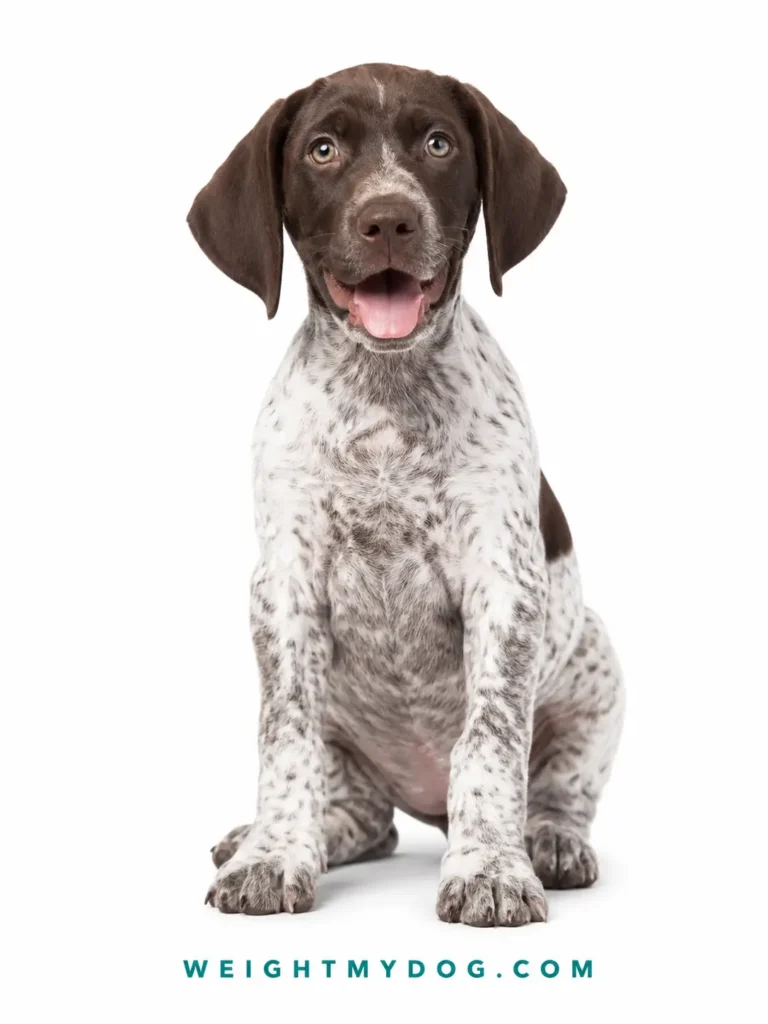
The German Shorthaired Pointer stands as a versatile hunting dog originating from 19th-century Germany, bred to excel across land and water. This athletic breed from the sporting group combines raw speed, endurance, and intelligence in one powerful frame.
Hunters recognized early that the GSP was no ordinary dog. Bred to hunt, this enthusiastic gundog demonstrates versatility across field events, dock diving, flyball competitions, and agility courses — truly a jack of all trades among dog breeds.
AKC breed standards classify the German Shorthaired Pointer as a medium-sized, high-energy breed. Male GSPs typically reach 60 to 70 lbs at full adult height, while females settle between 45 and 60 pounds at maturity.
Beyond the field, the GSP thrives as a family companion. Affectionate, good-natured, and companionable, these dogs become wonderful companions and devoted family dogs, especially for active families who match their high-energy disposition with proper exercise and mental stimulation.
First-time owners sometimes underestimate the high drive and zeal this breed carries. The German Shorthaired Pointer needs consistent boundaries, early socialization, and positive reinforcement to channel that intelligence productively, preventing boredom-driven destruction indoors.
Understanding growth rate, adult weight, and breed-specific development cycles is critical for every dog owner. This guide delivers useful information on monitoring growth, nutrition, vet care, and breed standards that shape a healthy adult German Shorthaired Pointer.
German Shorthaired Pointer Weight Calculator
| Age | ♂ Male (Expected) | ♀ Female (Expected) | Your Dog |
|---|
How to use the German Shorthaired Pointer weight calculator
Get your German Shorthaired Pointer's ideal weight in under 10 seconds. No account needed.
Enter your dog’s details
Enter your German Shorthaired Pointer's current age, weight, and gender. Works in both lbs and kg — supports weeks, months, and years.
Get your instant weight results
See your German Shorthaired Pointer's predicted adult weight range, current ideal weight, visual growth chart, and health status — instantly calculated.
Check your dog’s health status
Find out if your German Shorthaired Pointer is underweight, ideal, or overweight based on AKC-verified breed standards — and get a personalised feeding guide.
GSP Stats
The American Kennel Club places the German Shorthaired Pointer within the sporting group, recognizing males at 23 to 25 inches in height and 55 to 70 lbs, while females range 21 to 23 inches and 45 to 60 pounds.
Male dogs of this breed carry a chest built for stamina, legs designed for speed, and an abdomen that tucks neatly when viewed from the waist. The AKC adult weight range confirms these breed-specific benchmarks as reliable standard benchmarks for size assessment.
The GSP’s life expectancy falls between 12 and 14 years, with an average life expectancy of 12 to 14 years old. A healthy German Shorthaired Pointer that receives regular health checkups and proper balanced diet often lives toward the upper end of that typical lifespan.
Male German Shorthaired Pointer (GSP) Growth and Weight Chart by Age
| Age | Male Weight | Male Height |
|---|---|---|
| 4 Weeks (1 Month) | 2 – 4 lbs (0.91 – 1.81 kg) | 4 – 6 in (10.2 – 15.2 cm) |
| 2 Months (8 Weeks) | 5 – 9 lbs (2.27 – 4.08 kg) | 6 – 9 in (15.2 – 22.9 cm) |
| 3 Months | 11 – 17 lbs (4.99 – 7.71 kg) | 9 – 13 in (22.9 – 33.0 cm) |
| 4 Months | 18 – 26 lbs (8.16 – 11.79 kg) | 12 – 16 in (30.5 – 40.6 cm) |
| 5 Months | 24 – 34 lbs (10.89 – 15.42 kg) | 15 – 19 in (38.1 – 48.3 cm) |
| 6 Months | 28 – 40 lbs (12.70 – 18.14 kg) | 17 – 21 in (43.2 – 53.3 cm) |
| 7 Months | 33 – 46 lbs (14.97 – 20.87 kg) | 19 – 22 in (48.3 – 55.9 cm) |
| 8 Months | 37 – 52 lbs (16.78 – 23.59 kg) | 20 – 23 in (50.8 – 58.4 cm) |
| 9 Months | 41 – 57 lbs (18.60 – 25.85 kg) | 21 – 23 in (53.3 – 58.4 cm) |
| 10 Months | 45 – 62 lbs (20.41 – 28.12 kg) | 22 – 24 in (55.9 – 61.0 cm) |
| 11 Months | 49 – 66 lbs (22.23 – 29.94 kg) | 22 – 24 in (55.9 – 61.0 cm) |
| 12 Months (1 Year) | 51 – 68 lbs (23.13 – 30.84 kg) | 23 – 25 in (58.4 – 63.5 cm) |
| 18 Months (Adult) | 55 – 70 lbs (24.95 – 31.75 kg) | 23 – 25 in (58.4 – 63.5 cm) |
Female German Shorthaired Pointer (GSP) Growth and Weight Chart by Age
| Age | Female Weight | Female Height |
|---|---|---|
| 4 Weeks (1 Month) | 2 – 3 lbs (0.91 – 1.36 kg) | 4 – 5 in (10.2 – 12.7 cm) |
| 2 Months (8 Weeks) | 4 – 8 lbs (1.81 – 3.63 kg) | 6 – 8 in (15.2 – 20.3 cm) |
| 3 Months | 9 – 14 lbs (4.08 – 6.35 kg) | 8 – 11 in (20.3 – 27.9 cm) |
| 4 Months | 15 – 22 lbs (6.80 – 9.98 kg) | 11 – 14 in (27.9 – 35.6 cm) |
| 5 Months | 21 – 29 lbs (9.53 – 13.15 kg) | 13 – 17 in (33.0 – 43.2 cm) |
| 6 Months | 23 – 34 lbs (10.43 – 15.42 kg) | 16 – 20 in (40.6 – 50.8 cm) |
| 7 Months | 28 – 40 lbs (12.70 – 18.14 kg) | 18 – 21 in (45.7 – 53.3 cm) |
| 8 Months | 32 – 45 lbs (14.51 – 20.41 kg) | 19 – 22 in (48.3 – 55.9 cm) |
| 9 Months | 36 – 50 lbs (16.33 – 22.68 kg) | 20 – 22 in (50.8 – 55.9 cm) |
| 10 Months | 39 – 54 lbs (17.69 – 24.49 kg) | 20 – 23 in (50.8 – 58.4 cm) |
| 11 Months | 42 – 57 lbs (19.05 – 25.85 kg) | 21 – 23 in (53.3 – 58.4 cm) |
| 12 Months (1 Year) | 43 – 58 lbs (19.50 – 26.31 kg) | 21 – 23 in (53.3 – 58.4 cm) |
| 18 Months (Adult) | 45 – 60 lbs (20.41 – 27.22 kg) | 21 – 23 in (53.3 – 58.4 cm) |
Size, Development and Life Expectancy
The German Shorthaired Pointer experiences rapid growth during the first 6 months, making tracking size during formative months essential. Newborn GSP puppies begin at birth weight near 11 lbs combined across litters, then growth accelerates dramatically.
From birth through the two-week mark, puppies roughly doubles in weight. By 1 month, the puppy triples its birth weight. These key development stages reveal how the development cycle of a GSP operates at a faster growth rate than many large breed dogs.
The life span of 12 to 14 years depends heavily on nutrition, exercise, vet appointments, and avoiding obesity. Female dogs and male dogs follow similar growth charts but diverge in final adult size, with females completing full adult height slightly earlier around 18 months.
When Do German Shorthaired Pointers Stop Growing?
Most German Shorthaired Pointer puppies reach full height by their 12th month, though muscle mass and body fill out continues until 2 years old. Some males keep gaining muscle mass until they are 3 years old, adding heavier frame density gradually.
Spaying and neutering affect growth trajectory measurably. Early intervention before 9 months may extend bone growth phases, while post-adolescence procedures at 12 months generally allow the GSP to follow its genetically pre-determined size more predictably.
Watch for uneven growth between 7 months and 11 months, particularly in legs and chest. This phase of adolescence creates significant changes in proportion. The GSP may appear big-boned yet lanky before muscle development catches up by the 13th month of age.
What Size Should a 6-Month-Old German Shorthaired Pointer Be?
At 6 months, a male GSP should weigh approximately 40 to 50 lbs and stand near 20 to 22 inches at the shoulder. Female GSP puppies at this stage typically weigh 35 to 45 lbs with height near 19 to 21 inches.
The 6th month marks the end of the fastest growth rate window. After the 6 months milestone, growing rapidly slows to steady growth where the German Shorthaired Pointer begins fill out in chest depth and muscle rather than only gaining height and raw weight.
Breeders use the 6 months checkpoint against weight charts and growth chart data from previous litters to project whether a puppy tracks toward the larger or smaller end of the weight range. Consulting your vet at this stage provides breed-specific estimates for final size.
How Much Bigger Will My German Shorthaired Pointer Get?
A reliable method to project adult size is the puppy weight calculator approach: take the current weight at 4 months, then divide by the age in weeks and multiply by 52. This estimation gives a reasonable expected adult weight for your GSP.
Paw size serves as another estimation signal. GSP puppies with noticeably large paw size relative to their body often grow into heavier adult male or female builds. Breeders who track growth rates across litters confirm paw size correlates with final weight moderately well.
Your veterinarian can provide a project adult size assessment by reviewing parents’ recorded heights and weights, alongside the puppy’s growth chart from 3 months onward. Gender, sex, and individual dogs’ diet all influence whether the German Shorthaired Pointer reaches the expected adulthood age weight.
Is My German Shorthaired Pointer a Healthy Weight?
The body condition assessment for a GSP involves three key checks: ribs easily felt without pressing hard, a visible waist viewed from above, and a tucked abdomen when observed from the side. A prominent waist confirms healthy weight for most German Shorthaired Pointer adults.
An overweight GSP shows ribs hard to feel, no waist visible, and belly sags noticeably. An underweight dog reveals ribs visible sharply without touching, spine visible prominently, and a hollow abdomen. Both extremes signal the need for immediate vet review and calorie intake adjustment.
A thin layer of fat over easily feel-able ribs represents the ideal weight zone. Obese German Shorthaired Pointer dogs face elevated joint issues, hip dysplasia, elbow dysplasia, and bloat risk. Catching overweight trends early through regular vet checks prevents expensive vet bills and protects long-term health conditions.
Feeding Your German Shorthaired Pointer
Performance-grade kibble with real meat listed as the first ingredient delivers the high-quality animal protein a German Shorthaired Pointer requires. Protein content should ideally exceed 25%, supported by healthy fats and digestible carbohydrates for sustained energy during long exercise sessions.
A raw diet can work for some GSP owners, but requires careful plan nutrition to avoid stomach sensitivities or dry skin. High-quality animal protein sourced from real meat, combined with appropriate healthy fats, supports the muscle mass this athletic breed demands through daily physical stimulation.
How much to feed depends on age, activity level, sex, and weight. A GSP doing field events or sports burns significantly more calories than a family companion on light walks. Divide the daily feeding schedule into two meals, adjusting calorie intake based on body condition checks conducted once a week.
Joint-support supplements like glucosamine matter for German Shorthaired Pointer dogs beyond three years of development. Adding joint-support supplements to the feeding schedule helps prevent complications like hip dysplasia and elbow dysplasia. Discuss appropriate nutrition additions with your veterinarian during four times a year vet visits.
Puppies in the first weeks through 5 months need complete puppy formulas supporting healthy bone development. From 6 months to 12 months, transitioning to large breed puppy food controls rapid growth pace and joint stress, ensuring the German Shorthaired Pointer builds dense coats and muscle simultaneously.
Monitor calorie intake carefully around spaying or neutering time, as metabolic shifts cause weight to fluctuate significantly. Post-procedure GSP dogs may become obese if fed pre-surgery calorie levels. Adjust the feeding schedule and plan nutrition accordingly to maintain ideal adult weight range post-procedure.
Tips for Maintaining a Healthy German Shorthaired Pointer
Regular exercise is non-negotiable for the German Shorthaired Pointer. This high-energy breed requires physical stimulation daily, combining mental stimulation tasks like retrieve training or agility work with distance running. Boredom without adequate exercise leads to destructive behavior patterns quickly.
Monitor development quarterly through regularly scheduled vet appointments — ideally four times a year during the puppy phase. Track weight progressions against growth chart benchmarks using a puppy growth calculator and note any alarm-worthy significant changes in weight or height between visits.
Use pet insurance early to protect your wallet from unexpected health issues like bloat, hip dysplasia, or infections. The German Shorthaired Pointer is relatively low-maintenance medically, but breed-specific care means vet bills can accumulate fast without pet insurance covering breed-specific health conditions proactively.
Health & Wellness
Hip dysplasia and elbow dysplasia represent the most significant health issues facing the German Shorthaired Pointer. Regular health checkups with your veterinarian — four times a year during puppy stages — allow early intervention before joint issues compromise athleticism and endurance permanently.
Bloat poses a serious alarm for large breed hunting dogs like the German Shorthaired Pointer. Feeding two moderate weight meals daily rather than one large serving reduces bloat risk. Protect puppy digestive health by avoiding intense exercise within 30 minutes of feeding schedule completion.
Infections of the ear are common in GSP dogs given their activity level near water and dense brush. Routine ear cleaning after swimming sessions and regular vet checks help catch infections before they escalate. Regular health checkups remain the single most important investment for German Shorthaired Pointer life expectancy.
Grooming
The German Shorthaired Pointer carries a short, dense coat requiring moderate shedding management. A firm bristle brush used once a week removes loose hair effectively, while a rubber grooming mitt works beautifully during bathing sessions to loosen undercoat debris without irritating dry skin.
Bathing the GSP monthly or after heavy field events keeps the coat clean without stripping natural oils. Dense coats that brushed regularly stay healthier and shed less indoors. This low-maintenance grooming routine suits first-time owners who want a breed-specific care plan without complex requirements.
Daily tooth brushing protects the German Shorthaired Pointer from dental health issues that accelerate aging. Monthly nail cutting prevents joint stress caused by overgrown nails altering gait. These two grooming habits, combined with routine ear cleaning, complete the essential breed-specific care framework for a happy dog.
Training
The German Shorthaired Pointer is highly intelligent and enthusiastic during sessions, making training an enjoyable process for dedicated dog owners. Positive reinforcement techniques work far better than correction-based methods with this wily, stubborn streak that GSP dogs occasionally display during adolescence.
Early socialization shapes the GSP into a reliable playmate and family companion. Exposing puppies to varied environments, dog breeds, people, and sounds during the first 6 months builds the companionable temperament that makes this breed celebrated as both hunting dog and household partner.
Mental stimulation through retrieve drills, scent work, and puzzle feeders satisfies the German Shorthaired Pointer’s intelligence needs. High drive dogs without adequate mental stimulation become concerned parent-worthy problems. Short 15 minutes training sessions multiple times daily outperform single long sessions for GSP puppy focus retention.
Puppy Weight Calculator
The puppy weight calculator uses current weight, age, and gender to estimate expected adult weight for a German Shorthaired Pointer. Input the 3 months old puppy weight, divide by 3, then multiply by 12 to project the final weight at 12 months.
Growth chart tools available through AKC or breed-specific breeders provide standard benchmarks from birth through 2 years. Cross-referencing the puppy weight calculator output against these weight progressions and growth rates helps any dog owner determine whether their GSP tracks toward ideal weight comfortably.
The most useful information comes from combining calculator outputs with parents’ recorded adult weight data. Individual dogs vary, but when both parents fall within AKC breed standards, the puppy typically falls within 10% of the expected adult weight range by the 24 month maturity point.
Frequently Asked Questions — German Shorthaired Pointer Weight
How Big Does a German Shorthaired Pointer Get?
Male GSPs reach 23 to 25 inches in height and 55 to 70 pounds at full adult height. Female dogs achieve 21 to 23 inches and 45 to 60 lbs, making this a true medium-sized to large breed depending on gender.
AKC adult weight records confirm male dogs occasionally reach 80 lbs in heavily muscled working lines, while females in field events stay leaner at 50 to 55 pounds. Body composition matters as much as raw weight when assessing size class for this athletic breed.
When Does a German Shorthaired Pointer Stop Growing?
Most German Shorthaired Pointer puppies reach full height by 12 months, with body fill out continuing until two years old. Males may continue gaining muscle mass until 3 years old, while females typically complete development closer to 18 months of age.
Growth rate slows dramatically after the 9 months mark. From 9 months to 24 months, the GSP shifts from growing taller to building muscle width and chest depth, confirming the breed’s full size arrives in stages rather than one clear maturity moment.
How Much Should a German Shorthaired Pointer Puppy Weigh at 3 Months?
At 3 months, a male GSP puppy should weigh approximately 20 to 25 lbs, while female puppies typically fall between 17 and 22 lbs. These weight figures align with growth chart benchmarks used by breeders tracking healthy puppies across litters.
Falling outside this weight range at 3 months old doesn’t automatically signal concern, but warrants a vet review. Individual dogs grow at different growth rates, and diet, litters background, and parents’ size all influence whether the puppy runs slow or fast against the standard growth rates.
How Can I Tell if My German Shorthaired Pointer Is Overweight?
An overweight German Shorthaired Pointer shows ribs hard to feel, no waist visible viewed from above, and a belly that sags visibly. The abdomen lacks the tucked appearance characteristic of a healthy weight GSP in proper body condition.
If your GSP appears obese, with a rounded belly and no waist visible, reduce calorie intake immediately and consult your veterinarian. An overfed German Shorthaired Pointer faces joint issues, hip dysplasia, and reduced life expectancy. A body condition assessment every month keeps weight on track.
What Size Should a 6-Month-Old German Shorthaired Pointer Be?
At 6 months, male GSPs typically weigh 40 to 50 lbs and stand 20 to 22 inches tall. Female puppies at the 6th month checkpoint average 35 to 45 lbs and 19 to 21 inches in height at the shoulder.
This six months size window represents peak fastest growth rate territory. The German Shorthaired Pointer at 6 months has completed the bulk of height gain and now begins the steady growth phase where muscle and body fill out define development through 12 months.
How Do I Predict My GSP Puppy’s Adult Size?
Project adult size by multiplying your GSP puppy’s weight at 4 months by 2.5. This puppy weight calculator method provides a reasonable estimation for expected adult weight, particularly effective for medium-sized breed dogs with steady growth patterns like the German Shorthaired Pointer.
Cross-reference that estimation with parents’ adult weight records and AKC breed standards weight charts. If both parents are 55 to 65 lbs, the puppy will almost certainly fall within that weight range. Breeders tracking growth rates across previous litters provide the most accurate final size estimates available.
What Is the Life Expectancy of a German Shorthaired Pointer?
The German Shorthaired Pointer carries a typical lifespan of 12 to 14 years, with well-cared-for individuals reaching the 14 year upper boundary regularly. Regular health checkups, appropriate nutrition, exercise, and mental stimulation directly extend life expectancy for this energetic breed significantly.
Health issues like hip dysplasia, bloat, and recurring infections shorten life span when left unmanaged. Maintaining healthy weight, scheduling vet appointments four times a year during early years, and investing in pet insurance gives the German Shorthaired Pointer the best odds of reaching full life expectancy.
Table of Contents
Toggle