
Goldendoodle Weight Calculator — Free Puppy Growth Chart & Adult Size Predictor
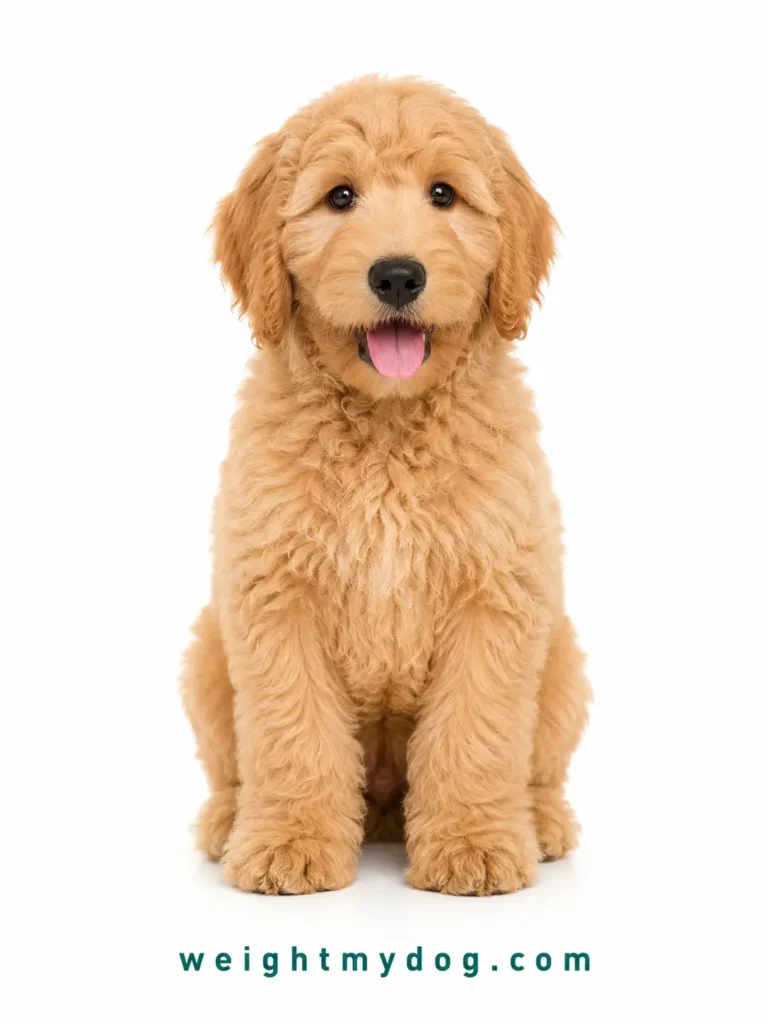
Every Goldendoodle owner eventually asks the same question: how big will my dog actually get? The answer involves genetics, parent weights, generation, and sometimes just a little educated guesstimate based on careful observation.
Breeders across the United States have spent decades refining growth charts and calculators to help pet parents navigate size uncertainty. These tools rely on breed-size multipliers and parent-based formula approaches proven across litters.
Prediction accuracy depends heavily on knowing your puppy’s generation — whether F1, F1B, F2, or Multigen — since each carries a different genetic makeup that directly shapes adult size.
The Goldendoodle is unique because it spans 10–90 pounds, making early calculation essential. Without a puppy weight estimate calculator, owners risk misjudging nutrition, exercise, and even living arrangements like apartments or spacious home setups.
From my own experience working with families, I’ve seen how a reliable growth calculator transforms anxiety into confidence. Knowing your dog’s predictable size range early allows smarter decisions around daily training, feeding schedules, and vet appointments.
This guide walks through every factor shaping your Goldendoodle’s final adult weight, using scientific methods, breeder data, and real puppy measurements to deliver the most accurate size estimates possible.
Goldendoodle Weight Calculator
| Age | ♂ Male (Expected) | ♀ Female (Expected) | Your Dog |
|---|
How to use the Goldendoodle weight calculator
Get your Goldendoodle's ideal weight in under 10 seconds. No account needed.
Enter your dog’s details
Enter your Goldendoodle's current age, weight, and gender. Works in both lbs and kg — supports weeks, months, and years.
Get your instant weight results
See your Goldendoodle's predicted adult weight range, current ideal weight, visual growth chart, and health status — instantly calculated.
Check your dog’s health status
Find out if your Goldendoodle is underweight, ideal, or overweight based on AKC-verified breed standards — and get a personalised feeding guide.
Standard Goldendoodles Male and Female Growth, Weight & Height Chart by Age
| Age | ♂ Male | ♀ Female | ||
|---|---|---|---|---|
| Weight (lbs / kg) | Height (in / cm) | Weight (lbs / kg) | Height (in / cm) | |
| 4 Weeks | 4–6 lbs 1.8–2.7 kg | 4–6 in 10–15 cm | 3–5 lbs 1.4–2.3 kg | 4–5 in 10–13 cm |
| 2 Months | 10–14 lbs 4.5–6.4 kg | 7–9 in 18–23 cm | 9–13 lbs 4.1–5.9 kg | 7–9 in 18–23 cm |
| 3 Months | 18–25 lbs 8.2–11.3 kg | 10–13 in 25–33 cm | 16–22 lbs 7.3–10.0 kg | 10–12 in 25–30 cm |
| 4 Months | 25–35 lbs 11.3–15.9 kg | 13–16 in 33–41 cm | 22–32 lbs 10.0–14.5 kg | 13–15 in 33–38 cm |
| 5 Months | 30–42 lbs 13.6–19.1 kg | 15–18 in 38–46 cm | 27–38 lbs 12.2–17.2 kg | 15–17 in 38–43 cm |
| 6 Months | 35–50 lbs 15.9–22.7 kg | 17–20 in 43–51 cm | 30–45 lbs 13.6–20.4 kg | 17–19 in 43–48 cm |
| 7 Months | 40–53 lbs 18.1–24.0 kg | 18–21 in 46–53 cm | 35–48 lbs 15.9–21.8 kg | 18–20 in 46–51 cm |
| 8 Months | 43–56 lbs 19.5–25.4 kg | 19–22 in 48–56 cm | 38–50 lbs 17.2–22.7 kg | 19–21 in 48–53 cm |
| 9 Months | 45–60 lbs 20.4–27.2 kg | 20–23 in 51–58 cm | 40–53 lbs 18.1–24.0 kg | 20–22 in 51–56 cm |
| 10 Months | 48–62 lbs 21.8–28.1 kg | 21–23 in 53–58 cm | 42–55 lbs 19.1–24.9 kg | 20–22 in 51–56 cm |
| 11 Months | 50–63 lbs 22.7–28.6 kg | 21–24 in 53–61 cm | 44–57 lbs 20.0–25.9 kg | 21–23 in 53–58 cm |
| 12 Months | 50–65 lbs 22.7–29.5 kg | 22–24 in 56–61 cm | 45–58 lbs 20.4–26.3 kg | 21–23 in 53–58 cm |
| 18 Months | 53–65 lbs 24.0–29.5 kg | 22–24 in 56–61 cm | 46–60 lbs 20.9–27.2 kg | 21–24 in 53–61 cm |
| 24 Months (Adult) | 55–65 lbs 24.9–29.5 kg | 22–24 in 56–61 cm | 48–60 lbs 21.8–27.2 kg | 21–24 in 53–61 cm |
Micro Goldendoodles Male and Female Growth, Weight & Height Chart by Age
| Age | ♂ Male | ♀ Female | ||
|---|---|---|---|---|
| Weight (lbs / kg) | Height (in / cm) | Weight (lbs / kg) | Height (in / cm) | |
| 4 Weeks | 0.5–1 lb 0.2–0.5 kg | 2–3 in 5–8 cm | 0.5–1 lb 0.2–0.5 kg | 2–3 in 5–8 cm |
| 2 Months | 1.5–3 lbs 0.7–1.4 kg | 3–5 in 8–13 cm | 1–2.5 lbs 0.5–1.1 kg | 3–4 in 8–10 cm |
| 3 Months | 2.5–4.5 lbs 1.1–2.0 kg | 4–6 in 10–15 cm | 2–4 lbs 0.9–1.8 kg | 4–6 in 10–15 cm |
| 4 Months | 3.5–6 lbs 1.6–2.7 kg | 5–7 in 13–18 cm | 3–5 lbs 1.4–2.3 kg | 5–7 in 13–18 cm |
| 5 Months | 4.5–7.5 lbs 2.0–3.4 kg | 6–8 in 15–20 cm | 4–6.5 lbs 1.8–2.9 kg | 6–8 in 15–20 cm |
| 6 Months | 5.5–9 lbs 2.5–4.1 kg | 7–9 in 18–23 cm | 5–8 lbs 2.3–3.6 kg | 6–8 in 15–20 cm |
| 7 Months | 6–10 lbs 2.7–4.5 kg | 7–9 in 18–23 cm | 5.5–9 lbs 2.5–4.1 kg | 7–9 in 18–23 cm |
| 8 Months | 6.5–11 lbs 2.9–5.0 kg | 8–10 in 20–25 cm | 6–10 lbs 2.7–4.5 kg | 7–9 in 18–23 cm |
| 9 Months | 7–11.5 lbs 3.2–5.2 kg | 8–10 in 20–25 cm | 6–10.5 lbs 2.7–4.8 kg | 7–10 in 18–25 cm |
| 10 Months | 7–12 lbs 3.2–5.4 kg | 8–10 in 20–25 cm | 6.5–11 lbs 2.9–5.0 kg | 7–10 in 18–25 cm |
| 11 Months | 7–12 lbs 3.2–5.4 kg | 8–10 in 20–25 cm | 6.5–11 lbs 2.9–5.0 kg | 7–10 in 18–25 cm |
| 12 Months | 7–12 lbs 3.2–5.4 kg | 8–10 in 20–25 cm | 6.5–11 lbs 2.9–5.0 kg | 7–10 in 18–25 cm |
| 18 Months | 7–13 lbs 3.2–5.9 kg | 8–10 in 20–25 cm | 6.5–11 lbs 2.9–5.0 kg | 7–10 in 18–25 cm |
| 24 Months (Adult) | 7–13 lbs 3.2–5.9 kg | 8–10 in 20–25 cm | 6–11 lbs 2.7–5.0 kg | 7–10 in 18–25 cm |
Mini Goldendoodles Male and Female Growth, Weight & Height Chart by Age
| Age | ♂ Male | ♀ Female | ||
|---|---|---|---|---|
| Weight (lbs / kg) | Height (in / cm) | Weight (lbs / kg) | Height (in / cm) | |
| 4 Weeks | 1–2 lbs 0.5–0.9 kg | 3–4 in 8–10 cm | 1–1.5 lbs 0.5–0.7 kg | 2–3 in 5–8 cm |
| 2 Months | 3–5 lbs 1.4–2.3 kg | 5–7 in 13–18 cm | 2.5–4.5 lbs 1.1–2.0 kg | 4–6 in 10–15 cm |
| 3 Months | 5–9 lbs 2.3–4.1 kg | 7–9 in 18–23 cm | 4.5–8 lbs 2.0–3.6 kg | 6–8 in 15–20 cm |
| 4 Months | 7–13 lbs 3.2–5.9 kg | 8–11 in 20–28 cm | 6–11 lbs 2.7–5.0 kg | 8–10 in 20–25 cm |
| 5 Months | 9–16 lbs 4.1–7.3 kg | 9–12 in 23–30 cm | 8–14 lbs 3.6–6.4 kg | 9–12 in 23–30 cm |
| 6 Months | 11–19 lbs 5.0–8.6 kg | 10–13 in 25–33 cm | 10–17 lbs 4.5–7.7 kg | 10–13 in 25–33 cm |
| 7 Months | 13–22 lbs 5.9–10.0 kg | 11–14 in 28–36 cm | 11–19 lbs 5.0–8.6 kg | 10–13 in 25–33 cm |
| 8 Months | 14–24 lbs 6.4–10.9 kg | 11–15 in 28–38 cm | 12–21 lbs 5.4–9.5 kg | 11–14 in 28–36 cm |
| 9 Months | 15–26 lbs 6.8–11.8 kg | 12–15 in 30–38 cm | 13–23 lbs 5.9–10.4 kg | 11–14 in 28–36 cm |
| 10 Months | 15–27 lbs 6.8–12.2 kg | 12–16 in 30–41 cm | 13–24 lbs 5.9–10.9 kg | 11–15 in 28–38 cm |
| 11 Months | 15–28 lbs 6.8–12.7 kg | 12–16 in 30–41 cm | 13–25 lbs 5.9–11.3 kg | 11–15 in 28–38 cm |
| 12 Months | 15–28 lbs 6.8–12.7 kg | 13–17 in 33–43 cm | 13–25 lbs 5.9–11.3 kg | 12–16 in 30–41 cm |
| 18 Months | 16–30 lbs 7.3–13.6 kg | 13–17 in 33–43 cm | 14–26 lbs 6.4–11.8 kg | 12–16 in 30–41 cm |
| 24 Months (Adult) | 16–35 lbs 7.3–15.9 kg | 13–17 in 33–43 cm | 15–30 lbs 6.8–13.6 kg | 12–16 in 30–41 cm |
Medium Goldendoodles Male and Female Growth, Weight & Height Chart by Age
| Age | ♂ Male | ♀ Female | ||
|---|---|---|---|---|
| Weight (lbs / kg) | Height (in / cm) | Weight (lbs / kg) | Height (in / cm) | |
| 4 Weeks | 2–4 lbs 0.9–1.8 kg | 3–5 in 8–13 cm | 2–3 lbs 0.9–1.4 kg | 3–4 in 8–10 cm |
| 2 Months | 7–10 lbs 3.2–4.5 kg | 6–8 in 15–20 cm | 6–9 lbs 2.7–4.1 kg | 6–7 in 15–18 cm |
| 3 Months | 12–18 lbs 5.4–8.2 kg | 9–11 in 23–28 cm | 10–16 lbs 4.5–7.3 kg | 8–10 in 20–25 cm |
| 4 Months | 16–23 lbs 7.3–10.4 kg | 11–14 in 28–36 cm | 14–20 lbs 6.4–9.1 kg | 10–13 in 25–33 cm |
| 5 Months | 20–28 lbs 9.1–12.7 kg | 13–16 in 33–41 cm | 17–25 lbs 7.7–11.3 kg | 12–15 in 30–38 cm |
| 6 Months | 23–32 lbs 10.4–14.5 kg | 14–17 in 36–43 cm | 20–28 lbs 9.1–12.7 kg | 13–16 in 33–41 cm |
| 7 Months | 25–35 lbs 11.3–15.9 kg | 15–18 in 38–46 cm | 22–31 lbs 10.0–14.1 kg | 14–17 in 36–43 cm |
| 8 Months | 27–37 lbs 12.2–16.8 kg | 16–19 in 41–48 cm | 24–33 lbs 10.9–15.0 kg | 15–18 in 38–46 cm |
| 9 Months | 28–39 lbs 12.7–17.7 kg | 16–19 in 41–48 cm | 25–35 lbs 11.3–15.9 kg | 15–18 in 38–46 cm |
| 10 Months | 29–41 lbs 13.2–18.6 kg | 17–20 in 43–51 cm | 26–36 lbs 11.8–16.3 kg | 16–19 in 41–48 cm |
| 11 Months | 30–43 lbs 13.6–19.5 kg | 17–20 in 43–51 cm | 27–38 lbs 12.2–17.2 kg | 16–19 in 41–48 cm |
| 12 Months | 30–45 lbs 13.6–20.4 kg | 17–21 in 43–53 cm | 27–40 lbs 12.2–18.1 kg | 16–20 in 41–51 cm |
| 18 Months | 32–45 lbs 14.5–20.4 kg | 17–21 in 43–53 cm | 28–40 lbs 12.7–18.1 kg | 16–20 in 41–51 cm |
| 24 Months (Adult) | 35–45 lbs 15.9–20.4 kg | 17–21 in 43–53 cm | 30–40 lbs 13.6–18.1 kg | 16–20 in 41–51 cm |
Large Standard Goldendoodles Male and Female Growth, Weight & Height Chart by Age
| Age | ♂ Male | ♀ Female | ||
|---|---|---|---|---|
| Weight (lbs / kg) | Height (in / cm) | Weight (lbs / kg) | Height (in / cm) | |
| 4 Weeks | 5–8 lbs 2.3–3.6 kg | 4–6 in 10–15 cm | 4–7 lbs 1.8–3.2 kg | 4–6 in 10–15 cm |
| 2 Months | 12–18 lbs 5.4–8.2 kg | 8–10 in 20–25 cm | 10–16 lbs 4.5–7.3 kg | 7–9 in 18–23 cm |
| 3 Months | 22–32 lbs 10.0–14.5 kg | 12–15 in 30–38 cm | 19–28 lbs 8.6–12.7 kg | 11–14 in 28–36 cm |
| 4 Months | 30–43 lbs 13.6–19.5 kg | 14–18 in 36–46 cm | 26–38 lbs 11.8–17.2 kg | 13–17 in 33–43 cm |
| 5 Months | 38–53 lbs 17.2–24.0 kg | 16–20 in 41–51 cm | 33–47 lbs 15.0–21.3 kg | 15–19 in 38–48 cm |
| 6 Months | 45–62 lbs 20.4–28.1 kg | 18–22 in 46–56 cm | 39–55 lbs 17.7–24.9 kg | 17–21 in 43–53 cm |
| 7 Months | 52–68 lbs 23.6–30.8 kg | 20–24 in 51–61 cm | 45–60 lbs 20.4–27.2 kg | 19–23 in 48–58 cm |
| 8 Months | 57–73 lbs 25.9–33.1 kg | 21–25 in 53–64 cm | 50–65 lbs 22.7–29.5 kg | 20–24 in 51–61 cm |
| 9 Months | 61–77 lbs 27.7–34.9 kg | 22–25 in 56–64 cm | 53–68 lbs 24.0–30.8 kg | 21–24 in 53–61 cm |
| 10 Months | 63–80 lbs 28.6–36.3 kg | 22–26 in 56–66 cm | 55–70 lbs 24.9–31.8 kg | 21–25 in 53–64 cm |
| 11 Months | 65–83 lbs 29.5–37.6 kg | 23–26 in 58–66 cm | 57–73 lbs 25.9–33.1 kg | 22–25 in 56–64 cm |
| 12 Months | 66–85 lbs 29.9–38.6 kg | 23–27 in 58–69 cm | 58–75 lbs 26.3–34.0 kg | 22–26 in 56–66 cm |
| 18 Months | 68–90 lbs 30.8–40.8 kg | 24–28 in 61–71 cm | 60–80 lbs 27.2–36.3 kg | 23–26 in 58–66 cm |
| 24 Months (Adult) | 70–90 lbs 31.8–40.8 kg | 24–28 in 61–71 cm | 60–80 lbs 27.2–36.3 kg | 23–26 in 58–66 cm |
Goldendoodle Size Chart by Generation
| Generation | Size | Adult Weight | Adult Height | ||
|---|---|---|---|---|---|
| lbs | kg | inches | cm | ||
| F1 50% Golden 50% Poodle | Standard | 50–90 lbs | 22.7–40.8 kg | 22–26 in | 56–66 cm |
| Medium | 35–50 lbs | 15.9–22.7 kg | 18–21 in | 46–53 cm | |
| Mini | 20–35 lbs | 9.1–15.9 kg | 14–17 in | 36–43 cm | |
| Toy | 12–22 lbs | 5.4–10.0 kg | 12–15 in | 30–38 cm | |
| F1B 25% Golden 75% Poodle | Standard | 50–85 lbs | 22.7–38.6 kg | 21–25 in | 53–64 cm |
| Medium | 30–45 lbs | 13.6–20.4 kg | 17–20 in | 43–51 cm | |
| Mini | 15–25 lbs | 6.8–11.3 kg | 13–15 in | 33–38 cm | |
| Toy | 10–20 lbs | 4.5–9.1 kg | 12–14 in | 30–36 cm | |
| F1BB 12.5% Golden 87.5% Poodle | Standard | 45–80 lbs | 20.4–36.3 kg | 21–25 in | 53–64 cm |
| Medium | 30–40 lbs | 13.6–18.1 kg | 17–20 in | 43–51 cm | |
| Mini | 13–22 lbs | 5.9–10.0 kg | 12–15 in | 30–38 cm | |
| Toy | 10–18 lbs | 4.5–8.2 kg | 11–13 in | 28–33 cm | |
| F2 50% Golden 50% Poodle | Standard | 50–90 lbs | 22.7–40.8 kg | 22–26 in | 56–66 cm |
| Medium | 35–50 lbs | 15.9–22.7 kg | 18–21 in | 46–53 cm | |
| Mini | 18–28 lbs | 8.2–12.7 kg | 13–16 in | 33–41 cm | |
| Toy | 12–20 lbs | 5.4–9.1 kg | 11–14 in | 28–36 cm | |
| Multigen Varies by Program | Standard | 50–90 lbs | 22.7–40.8 kg | 22–26 in | 56–66 cm |
| Medium | 30–45 lbs | 13.6–20.4 kg | 17–20 in | 43–51 cm | |
| Mini | 15–25 lbs | 6.8–11.3 kg | 13–15 in | 33–38 cm | |
| Toy | 10–20 lbs | 4.5–9.1 kg | 12–14 in | 30–36 cm | |
Puppy Growth Chart And AKC Breed Weight Standard
| Breed Size | 8 Weeks | 3 Months | 4 Months | 6 Months | 1 Year |
|---|---|---|---|---|---|
| Toy | 0.9 – 1.8 kg | 1.4 – 2 kg | 2 – 2.5 kg | 2.5 – 3 kg | 3 – 5.5 kg |
| Small | 1.5 – 3 kg | 3 – 5 kg | 4 – 7 kg | 6 – 9 kg | 6 – 11 kg |
| Medium | 3 – 5 kg | 5 – 8 kg | 8 – 13 kg | 10 – 18 kg | 11 – 23 kg |
| Large | 5 – 9 kg | 9 – 12 kg | 12 – 20 kg | 18 – 30 kg | 23 – 45 kg |
| Giant | 7 – 12 kg | 12 – 18 kg | 18 – 28 kg | 28 – 40 kg | 45 – 70 kg |
Goldendoodle Breed Overview
The Goldendoodle emerged as one of America’s most popular family pets, combining the Golden Retriever’s warmth with the Poodle’s legendary intelligence. This hybrid breed quickly became celebrated for its charming personality and hypoallergenic coat.
Developed initially in America during the 1990s, the crossbreed was designed to offer best of both worlds — the affectionate, friendly, sociable temperament of the Golden Retriever with the non-shedding coats and obedience of the Standard Poodle.
Today, Goldendoodles come in four sizes: Toy, Mini, Medium, and Standard, each suited to different living situations from urban living apartments to spacious home environments with a large yard.
Their temperament blends loyal, playful, gentle, and active traits seamlessly. Families with children and other pets consistently rank them among the most adaptable, lively, family-oriented companions available in popular breeds today.
The Golden Retriever parent contributes flowing coats, heartwarming sociable behavior, and a natural couch potato side, while the Poodle parent adds athletic refinement, intelligence, and that signature refined build many owners adore.
Understanding breed origins matters because pedigrees, parent-breed standards, and AKC standards all influence size, coat type, coat thickness, and health outcomes — making breed knowledge foundational to any serious Goldendoodle size prediction discussion.
How Big Will My Goldendoodle Get?
Determining adult size in a Goldendoodle requires combining parent sizes, generation, gender, and a reliable formula. No single indicator predicts final size perfectly, but together these factors create a solid estimate.
The parent-based formula remains the most trusted approach among veterinarians and breeders. By averaging parent weights and applying breed-size multipliers, owners can predict adult weight with roughly 84% to 90% accuracy under normal conditions.
Males typically run heavier and taller than females within the same litter. This gender difference represents roughly a 5% increase for males versus a 5% decrease for females when adjusting base estimates using a gender multiplier.
Generation plays a significant role too. An F1B carries 75% Poodle genetics, pushing the dog toward the Poodle side in both size and coat. An F1 sits at 50%, while Multigen outcomes become more unpredictable depending on individual genes.
From reviewing breeder data and previous litters, I’ve found that puppy measurements at 8 weeks and 16 weeks provide the most reliable growth track. These two data points together yield a strong future size guesstimate without overcomplicating the calculation.
Growth charts developed from 500 or more litters suggest that a Goldendoodle puppy typically reaches 50–70% adult weight by six months. Using a calculator at this stage produces accurate projections within a ±15% variation window.
Goldendoodle Sizes: Mini, Medium, Standard (& Toy/Micro)
Goldendoodle sizes span a remarkable range, from 10–90 pounds, making size classification essential for owners choosing living situations, exercise routines, and appropriate nutrition. Understanding each size label prevents confusion across various sizes.
The four primary Goldendoodle sizes — Toy, Mini, Medium, and Standard — each reflect different Poodle parent contributions. Micros and Toy Goldendoodles trace their compact body size to the Toy Poodle, while Standards lean on the Standard Poodle.
Size categories aren’t officially recognized by the AKC, but reputable Goldendoodle programs across the United States and Texas use consistent size requirements and weight ranges derived from AKC parent-breed standards and breeder consensus.
Each size category carries distinct health profiles, lifespan expectations, and grooming upkeep demands. Smaller-sized Goldendoodles often enjoy a 12–15 years lifespan, while large dogs within the Standard category may face a shorter lifespan due to size-related health issues.
Height classification uses shoulder measurement as the standard reference. Toy Goldendoodles measure 10–15 inches at the shoulder, while Standard Goldendoodles can reach 22–26 inches — a dramatic height spectrum reflecting the breed’s extraordinary size diversity.
Understanding four sizes helps owners match their lifestyle to a size that genuinely fits. Apartment dwellers thrive with Micros and Minis, while families in spacious home settings find Standard Goldendoodles or Large Standard Goldendoodles better matches for their active lives.
Mini Goldendoodles
Mini Goldendoodles are created by crossing a Golden Retriever with a Miniature Poodle, producing compact dogs weighing 15–35 pounds at adult size. Their manageable size makes them ideal for smaller living spaces and urban living.
Standing 13–17 inches at the shoulder, Mini Goldendoodles fit comfortably in apartments and townhouses without sacrificing the breed’s signature affectionate, friendly temperament. They remain portable enough for traveling while being sturdy enough for outdoor activities.
Mini Goldendoodle adult weight typically falls between 15–35 pounds, though F1b Mini Goldendoodle crosses and F1B variants may lean lighter toward 10–25 pounds depending on the Miniature Poodle parent’s size.
Medium Goldendoodles
Medium Goldendoodles occupy the sweet spot in the Goldendoodle size range, typically weighing 30–45 pounds and standing 17–21 inches at the shoulder. They suit families wanting a mid-sized, adaptable companion.
Medium Goldendoodle weight often surprises owners because larger Mediums can approach 50–65 lbs, especially in males. The Moyen Poodle parent — popular in Medium breeding programs — contributes significantly to this moderate size weight range.
Medium Goldendoodles thrive across diverse living situations, from townhouses to spacious home environments. Their weight range of 30–45 pounds means they’re large enough for outdoor activities yet compact enough for indoor comfort and apartment living.
Standard Goldendoodles
Standard Goldendoodles represent the breed’s largest common size, typically weighing 50–90 pounds and standing 20–26 inches at the shoulder. These large dogs require spacious home environments and significant exercise commitment.
Most Standard Goldendoodle adults settle between 50–90 lbs, though genetics from a particularly large Golden Retriever grandparent or oversized Standard Poodle can push weight toward the upper end of this weight range.
The Standard Goldendoodle carries an impressive size combined with the breed’s trademark intelligent, sociable, affectionate personality. Families consistently choose Standards for their loyal, active nature and their natural ease with children and other pets.
Toy Goldendoodle
Toy Goldendoodles are the result of pairing a Golden Retriever with a Toy Poodle, producing exceptionally small dogs typically weighing 10–25 pounds and standing 10–15 inches at the shoulder.
Their compact frame makes them perfect lap dogs for limited space living. Despite their smaller body size, Toy Goldendoodles inherit the same intelligent, playful, affectionate traits that make Goldendoodles among the most beloved family pets in the United States.
The Toy Goldendoodle often suits seniors and individuals in apartments seeking cozy surroundings with a portable, interactive, lively companion. Their weight range rarely exceeds 10–25 pounds even at full adult size.
Large Standard Goldendoodles
The Large Standard Goldendoodle exceeds typical Standard measurements, with males sometimes reaching the 70-pound mark or beyond. These dogs reflect genetics from particularly big-boned Golden Retriever or oversized Standard Poodle lineage.
Large Standard Goldendoodles can weigh up to 50–90 pounds or occasionally heavier, standing near 22–26 inches at shoulder height. Their impressive size requires structured exercise, high-quality food, and plenty of space to prevent joint problems and obesity.
XXL Goldendoodle labels sometimes describe these dogs, though no formal breed standard defines the category. Breeders in Texas and other states occasionally advertise Large Standard Goldendoodle puppies specifically for families seeking a true large family dogs experience.
Predict Your Goldendoodle’s Adult Weight (Formulas)
The most widely used formula for adult weight prediction divides your puppy’s current weight by its age in weeks, then multiplies by 52 weeks. This gives a rough adult weight estimate that works reasonably well during the rapid phase of puppyhood.
For Mini Goldendoodles, the 4-month weight multiplied by 2× provides a reliable estimate. Standard Goldendoodles use a different multiplier: current weight at 16 weeks multiplied by 2× to get estimated adult weight within a ±15% accuracy window.
Breed-size multipliers refine raw calculations significantly. Minis use a 2.5× multiplier at 14 weeks, while Standards apply a 0.95 multiplier or 1.05 multiplier depending on gender. These adjustments improve prediction accuracy from 84% to near 90%.
The 4× growth method works specifically at 6 weeks: multiply the puppy’s raw weight by 4× to project adult weight. The 2.5× at 14 weeks and 2× at 16 weeks methods serve as breed-specific refinements developed from tracking 500 real litters through complete growth curves.
Parent-based formula approaches average parent weights directly. Take average parent weight, apply breed-size multipliers, and adjust by gender multiplier (males add 5% increase, females apply 5% decrease). This method achieves 90% accuracy when both parent sizes are known precisely.
Calculator estimates should always be treated as general reference guides with a ±20% margin. No formula delivers exact science because individual genes, nutrition, neuter timing, and growth plate closure timing all introduce variation that even the best estimator cannot fully eliminate.
At What Age Are Goldendoodles Full-Grown?
Goldendoodles follow a growth timeline that varies dramatically by size. Toy and Mini varieties typically reach full-grown status by 7–11 months, while Standard Goldendoodles continue growing until 12–18 months or occasionally 16–18 months for particularly large individuals.
Growth plate closure marks the biological end of skeletal lengthening. In small dogs, plates close around 8–10 months. Large dogs experience growth plate closure much later — sometimes not until 14–16 months — which explains why Standards remain lanky well into their second year.
Growth slows dramatically after the rapid phase ends around 6 months. By 9–12 months, most Goldendoodles have reached 93% of their final height, though muscle mass, chest depth, and overall body fill out continues through 12–15 months.
Females generally stop growing slightly earlier than males within the same size category. This gender difference in skeletal maturity timing is well-documented and explains why females often appear fully grown at 11–13 months while males are still growing past 12–13 months.
By month 18, virtually all Goldendoodles — regardless of size — have completed their frame growth. After this point, weight changes reflect fat gain, muscle mass development, or body condition shifts rather than true skeletal growth.
First birthday serves as a practical checkpoint for most pet parents. At 12 months, comparing your dog’s current weight against established growth charts gives a reliable read on whether development is proceeding at a healthy rate or if a vet consultation is warranted.
Factors Affecting Goldendoodle Adult Size
Genetics remains the single most powerful deciding factor in Goldendoodle adult size. Parent sizes, generation, and individual genes inherited from both the Golden Retriever and Poodle sides collectively form a body size blueprint that no nutrition or environment can fully override.
Generation significantly shapes size outcomes. An F1B Goldendoodle carrying 75% Poodle genetics typically runs smaller and lighter than an F1 of the same size category. F2 and Multigen crosses introduce more variation, making prediction less definitive across individuals.
Gender creates consistent size differences within litters. Males trend heavier and taller, while females remain lighter and shorter. This gender factor alone accounts for a measurable percentage of weight range variation in growth charts across breed categories.
Nutrition during critical growth periods profoundly affects whether a puppy reaches its genetic potential. Underfeeding causes slow growth, while overfeeding drives fat gain rather than proper muscle mass development, ultimately distorting body condition without changing skeletal final size.
Neutering and spaying introduce a modest effect on adult size through alteration of sex hormones that regulate growth plate closure. Early spay or neuter at a younger age may delay plate closure, allowing slightly increased growth in height — a phenomenon noted by orthopedic surgeons and documented in the Journal of Nutrition.
Health issues, parasite loads, chronic illness, and medical conditions like kidney disorders or liver disorders can significantly alter growth trajectories during puppyhood. A puppy free from worms and parasites and supported by proper nutrition consistently achieves growth outcomes closest to its genetic body size blueprint.
Goldendoodle Growth Phases
Goldendoodle puppies move through three distinct growth phases: a rapid phase of explosive development, a slowdown phase of decelerating gains, and a finishing phase of subtle fill out and muscle mass consolidation. Each phase demands different nutrition and exercise management.
Understanding these growth stages helps owners adjust calories, daily training, and vet check-ups at the right intervals. Missing the signals of each growth phase transition often leads to overfeeding, under-exercising, or unnecessary worry about slow growth that is actually developmentally normal.
Growth rate across all three phases follows a predictable growth curve in healthy dogs. Weekly growth data collected by breeders and veterinarians across thousands of litters confirms that deviations from the expected growth track often signal health issues, nutritional deficiencies, or parasite involvement.
Genetics determines the ceiling of each growth phase, but nutrition, exercise, and sleep determine how closely a puppy approaches that ceiling. High-quality food, adequate nutrition, and proper rest collectively optimize each growth phase outcome without forcing overgrowth or stunted growth.
From direct observation with Standard Goldendoodles and Mini Goldendoodles through multiple growth phases, I’ve noticed that puppies hitting their growth track benchmarks at 8 weeks, 12 weeks, and 16 weeks consistently reach adult size projections with the highest accuracy.
Diet, activity, and mental health all interact with growth phases in meaningful ways. Puppies with enrichment, puzzle toys, and structured exercise tend to develop superior muscle mass and body condition compared to sedentary dogs on identical calorie intakes throughout puppyhood.
The Rapid Phase (8 Weeks to 6 Months)
Between 8 weeks and 6 months, Goldendoodle puppies experience their maximal growth rate, sometimes gaining significant weight week-to-week. This rapid growth period is when bones, joints, and muscle mass develop most aggressively, requiring careful nutrition management.
During this rapid phase, puppies can double their 8-week weight by 12 weeks and may reach half adult weight by four months. Overfeeding during this window accelerates fat gain without proportionally improving skeletal development, increasing risk of joint problems and hip dysplasia.
Calories, amino acids, and fatty acids are the three most critical nutritional inputs during this rapid phase. High-quality food specifically formulated for puppy growth supports bone growth plates without promoting the excess weight that burdens developing joints during this explosive growth period.
The Slowdown Phase (6–12 Months)
Between 6–12 months, growth slows noticeably as the adolescent feature of the lanky teenager stage appears. Goldendoodles look gangly and unfinished during this slowdown phase, with legs appearing disproportionately long relative to body size.
Weekly growth gains become smaller and less dramatic during six to twelve months. Weight may seem to plateau temporarily, causing concern for pet parents who don’t recognize this as a normal growth deceleration pattern documented consistently across hybrid dogs and mixed breed growth charts.
The slowdown phase requires adjusting calories downward relative to the rapid phase to prevent fat gain on a slowing metabolism. Veterinarians recommend transitioning toward measured meals and monitoring body condition score closely during this six to eight months to 9–12 months growth window.
The Finishing Phase (12–18 Months)
The finishing phase spans roughly 12–18 months, during which Goldendoodles complete frame growth and begin genuine fill out of chest depth, muscle mass, and overall body proportion. This phase transforms the lanky look into a well-grown Goldendoodle.
During 14–18 months, weight gains shift from skeletal expansion to muscle mass accumulation and chest drop deepening. Hip bones, shoulder bones, and hindquarters fill in progressively, giving the dog its mature adult shape and impressive size appropriate to its breed size category.
By month 18, the finishing phase concludes for virtually all Goldendoodles. Body condition score at this stage should reflect a healthy lean frame with a visible waist tuck, defined waist, and a thin layer of fat covering the ribs — the hallmarks of a properly developed adult dog.
How to Tell How Big a Puppy Will Get
Several physical characteristics give early clues about Goldendoodle adult size. Paw size, large paws, oversized paws, and chest depth at 8 weeks all correlate — though imperfectly — with final size and adult height predictions made by experienced breeders.
Oversized paws relative to current body size suggest a puppy still has significant growth remaining. While paw size is not a definitive predictor, it serves as one of many physical traits that orthopedic surgeons and experienced veterinarians use during veterinary assessment to estimate future size.
Chest depth and shoulder width at 14 weeks offer more reliable cues than paw size alone. Puppies with notably deep chest depth and wide shoulder measurements at this age often develop into heavier, more muscular adults within their size category.
Parent weights remain the most accurate indicators of adult size. Knowing both parents’ weight and height at shoulder allows breeders and pet parents to apply parent-based formula calculations with the highest confidence level for predicting final size.
Breed standards provide structural context for interpreting physical traits. Cross-referencing your puppy’s early measurements against AKC parent-breed standards and Miniature Poodle or Standard Poodle size benchmarks adds an evidence-based layer to any prediction effort.
DNA testing through services like Embark can reveal individual genes influencing body size beyond what physical traits alone suggest. Canine genetic testing panels identify size-related genetic markers that, when combined with parent sizes and physical characteristics, produce among the most accurate adult size projections available today.
Breed Standards
Breed standards from the American Kennel Club provide foundational size benchmarks for both Golden Retriever and Poodle parent lines. Understanding these AKC standards gives Goldendoodle owners a structural framework for interpreting puppy growth data meaningfully.
Golden Retriever AKC standards specify males at 65–75 lbs and 23–24 inches, while females measure 55–65 lbs and 21.5–22.5 inches. Standard Poodle standards similarly define height and weight parameters that directly influence Standard Goldendoodle adult size expectations.
Miniature Poodle standards specify height of 10–15 inches, directly shaping Mini Goldendoodle size outcomes. When both pedigrees are known and traced against AKC parent-breed standards, prediction accuracy for Goldendoodle adult size improves substantially over estimates based on generation alone.
Genetics
Genetics governs everything from coat type to final height in Goldendoodles. The individual genes inherited from the Golden Retriever and Poodle sides interact in complex ways that even experienced breeders with extensive pedigrees cannot predict with complete accuracy.
Multigenerational breeding reduces genetic variation in size outcomes compared to first-generation F1 crosses. Multigen Goldendoodles bred from carefully selected parent sizes consistently produce more predictable size range outcomes, which is why reputable Goldendoodle programs prefer Multigen lines for size guarantee promises.
Canine genetic testing through companies like Embark now maps specific individual genes linked to body size, coat, intelligence, health issues, and temperament. A comprehensive genetic panel combined with parent sizes data represents the current gold standard for adult size prediction in crossbreed dogs.
Physical Traits
Physical traits observable at 8 weeks include paw size, leg length, shoulder width, and body proportions — all of which carry predictive value when interpreted by experienced breeders familiar with Goldendoodle growth trajectories across multiple litters.
Large paws relative to body size in a young puppy suggest substantial growth potential ahead. Leg length and shoulder bone structure at 14 weeks are particularly accurate indicators used by veterinarians for professional evaluation of final size and skeletal development trajectory.
Chest depth deepens progressively through the finishing phase, while hip bones and hindquarters fill in during 14–16 months. Monitoring these physical characteristics at each vet visit provides pet parents with a continuous visual change log that confirms healthy growth progression toward expected adult size.
Proper Nutrition for Growing Goldendoodles
Proper nutrition is the most controllable factor in supporting optimal Goldendoodle growth. High-quality food rich in amino acids, fatty acids, and breed-appropriate calories provides the raw materials developing joints, bones, and muscle mass require during every growth phase.
Puppy food specifically formulated for large dogs or medium dogs contains calibrated calcium and phosphorus ratios that support bone growth plates without accelerating fat gain. Feeding the wrong formula — particularly giant breeds food to a Mini Goldendoodle — can disrupt normal growth curve progression.
Twice daily measured meals replace free-feeding as the most recommended approach by veterinarians for growing Goldendoodles. Consistent portion sizes prevent the overfeeding that causes excess weight and the underfeeding that leads to nutritional deficiencies and slow growth during critical growth periods.
Fatty acids — particularly omega-3s — support joint health, coat quality, and mental health during puppyhood. Food quality directly impacts coat thickness, skin condition, and overall energy levels, making ingredient quality as important as calorie quantity for well-grown Goldendoodle outcomes.
Vet appointments should include nutrition reviews at 8 weeks, 12 weeks, 16 weeks, and 6 months to verify proper weight gain is occurring at a healthy rate. Veterinarians use body condition score and weight tracking to confirm adequate nutrition is supporting growth rather than driving fat gain or stunted growth.
Enrichment, puzzle toys, daily training, and outdoor activities complement nutrition by stimulating healthy appetite, supporting mental stimulation, and building genuine muscle mass rather than passive fat deposits. Pet parents who combine high-quality food with structured activity consistently report better growth outcomes than those focusing on nutrition alone.
Causes for Stunted Growth in Puppies
Stunted growth in Goldendoodle puppies has several common causes, the most prevalent being nutritional deficiencies, parasites, and undiagnosed medical conditions. Early identification through vet check-ups is critical for preventing permanent irregular growth outcomes.
Roundworms and hookworms are the most frequently implicated parasites in puppy slow growth cases. These worms compete directly with the puppy by siphoning calories from digested food, leaving developing joints and bones without sufficient amino acids and fatty acids for normal growth.
Chronic illness — including heart disease, liver disorders, and kidney disorders — significantly disrupts growth by redirecting the body’s resources away from skeletal development. Puppies affected by these medical conditions often show irregular growth, losing energy, reluctance to exercise, and a pot-bellied, bloated appearance.
Underfeeding and nutritional deficiencies cause measurable stunted growth even in otherwise healthy puppies. Inadequate calories, poor food quality, and missing fatty acids or amino acids in puppy food all compound to produce slow growth that can permanently alter final size if not corrected during critical growth periods.
Skeletal trauma from over-exercising, overexercising developing dogs, or breakage injuries can damage bone growth plates, leading to skeletal deformities and irregular growth. Orthopedic surgeons consistently caution against stairs, high-impact fetch, and agility training in puppies before growth plate closure is confirmed.
Stress, inadequate sleep, and poor mental health during puppyhood also contribute to slow growth by elevating cortisol levels that suppress normal growth hormone activity. Enrichment, cozy surroundings, puzzle toys, and consistent daily training reduce stress and support the steady hormonal environment puppies need for optimal growth rate expression.
Does Neutering Stunt Growth?
Neutering and spaying alter sex hormones that directly regulate growth plate closure timing in Goldendoodles. Research confirms that early spay or neuter before 12 months can delay skeletal maturity, allowing bones to continue lengthening and resulting in taller, leaner dogs with subtly altered body proportions.
Studies published in the Journal of Nutrition and reviewed by veterinarians indicate that neutered dogs may experience a modest effect of increased growth in leg length and height when altered before growth plate closure. This effect is completely distinct from stunted growth — it actually produces slightly taller individuals rather than smaller ones.
Orthopedic surgeons have raised concerns about how early neuter timing affects joint alignment, hip dysplasia risk, and elbow problems in large dogs. Growth plates left open longer due to absent sex hormones in neutered dogs may increase vulnerability to skeletal deformities and joint issue complications later in life.
The modest effect of spaying on females follows a similar pattern — spayed females before 6 months often develop taller frames than intact counterparts. This neuter timing consideration is particularly relevant for Standard Goldendoodles and Large Standard Goldendoodle owners concerned about hip problems and joint longevity.
Breeders of reputable Goldendoodle programs increasingly recommend waiting until at least 12 months — and preferably 14–16 months for Standard Goldendoodles — before performing spay or neuter procedures. This neuter timing approach protects growth plates and developing joints while supporting optimal growth rate completion.
The size impact of neutering is real but modest. Pet parents should discuss neuter timing with their veterinarian and weigh size and joint considerations against other health factors. Neutering provides genuine health benefits but works best when timed to respect the individual Goldendoodle’s skeletal maturity milestones.
Is My Puppy Overweight / Underweight? (Body Condition Scoring)
Body condition score is the veterinary standard for assessing whether a Goldendoodle is at ideal weight, overweight, or underweight. Unlike raw weight numbers, body condition scoring evaluates ribs, waist, hip bones, and overall body proportion to produce a score 5 ideal rating.
A healthy Goldendoodle at ideal weight should have ribs that are easily felt but not clearly visible, a visible waist tuck when viewed from above, and a defined waist from the side. Hip bones should not protrude excessively, and the lower back should appear level rather than sagging waist or pot-bellied.
Obese Goldendoodles show fat deposits over the ribs, spine, and hindquarters that make ribs difficult to feel. A bloated, pot-bellied appearance from the side, sagging waist from above, and excess weight through the chest depth area all indicate a body condition score well above the healthy range.
Underweight dogs display ribs that are clearly visible, hip bones and shoulder bones that protrude prominently, and a dramatic weight loss appearance even in young puppies. An underweight Goldendoodle typically shows spine and hip bones with minimal muscle mass covering and a lack of normal body fill out.
Pet parents can perform a simple body condition check at home by running hands firmly along the ribs — a thin layer of fat covering ribs that you can feel easily indicates healthy weight, while difficulty feeling ribs signals obese status and difficulty seeing a waist suggests excess weight concerns.
Vet appointments every few months during puppyhood allow professional evaluation of body condition score trends over time. Veterinarians using body condition scoring alongside weight tracking can identify overweight or underweight trajectories early — well before dramatic weight loss or serious obesity develops into a genuine health crisis.
Health Risks Associated with Excess Weight
Excess weight in Goldendoodles dramatically increases risk of hip dysplasia, arthritis, joint problems, and elbow problems — particularly in large dogs and Standard Goldendoodles where body mass already stresses developing joints and mature skeletal structures significantly.
Obesity in Goldendoodles has been directly linked to heart disease, diabetes, cancer, liver disorders, and kidney disorders in long-term studies. Veterinarians report that obese Goldendoodle patients show early-onset versions of these conditions compared to healthy weight counterparts maintaining ideal weight throughout life.
Joint deterioration accelerates dramatically in overweight dogs. The additional excess weight placed on hip bones, shoulder, and spine by obesity compresses joint cartilage progressively, driving chronic illness cycles of pain, reluctance to exercise, losing energy, and further weight gain that compounds joint damage continuously.
Shorter lifespan is a well-documented consequence of obesity in dogs. Researchers have found that overweight dogs live significantly fewer years than lean counterparts — a sobering reality for Goldendoodle owners who associate snuggling a heavier dog with expressions of love rather than health risks.
Siphoning calories from fatty foods without corresponding exercise creates the fat gain pattern most damaging to Goldendoodle health. Overfeeding even high-quality food beyond measured meals levels pushes excess weight accumulation that veterinarians consistently identify as the leading cause of chronic illness in dogs across the United States.
Mental health also suffers in obese Goldendoodles. Excess weight reduces energy, limits outdoor activities, diminishes interest in puzzle toys and interactive play, and creates a couch potato lifestyle that further erodes quality of life. Pet parents committed to healthy body condition invest equally in exercise routines and measured meals.
When to Call Your Vet About Your Puppy’s Growth
Vet appointments should occur beyond routine schedules if your Goldendoodle puppy shows slow growth, dramatic weight loss, stunted growth, or irregular growth patterns that deviate significantly from established growth charts for its size category and age.
A puppy that is constantly hungry despite adequate measured meals warrants immediate veterinary assessment for parasites like roundworms and hookworms, which are common causes of siphoning calories and resulting nutritional deficiencies in young puppies during critical growth periods.
Limping, reluctance to bear weight on legs, joint swelling, or visible skeletal deformities demand urgent vet check-ups. These symptoms may indicate skeletal trauma, bone growth plates damage, or early hip dysplasia — all conditions where early warning system detection dramatically improves long-term quality of life outcomes.
A bloated, pot-bellied appearance combined with slow growth and losing energy in an otherwise voracious, eating well puppy is a classic presentation of heavy parasite burden. This specific combination of signs should trigger immediate veterinarian consultation and disease tests for worms and other internal parasites.
Weight plateaued unexpectedly before expected skeletal maturity age — particularly in Standard Goldendoodles before 12–13 months — may signal chronic illness, dietary change needs, or health issues requiring veterinarian intervention. Breeders and vets agree that weight stagnation before full size should never be dismissed without professional evaluation.
The early warning system that vet check-ups provide is simply irreplaceable for growing Goldendoodles. Veterinarians track growth curve data across visits, identify deviation from expected growth percentages, and intervene before common causes of stunted growth or irregular growth produce permanent consequences on final size and quality of life.
DNA Testing for Puppy Size Prediction
DNA testing through services like Embark has transformed puppy size prediction from pure guesstimate into a scientific process grounded in individual genes analysis. A simple cheek swab provides enough genetic material for a comprehensive canine genetic testing panel covering size, coat, health issues, and temperament.
Genetic tests identify specific individual genes correlated with adult size, body type, height, and muscle mass potential. Combined with parent sizes and generation data, DNA testing elevates prediction accuracy well beyond what growth charts or calculator tools achieve independently.
Embark and similar genetic company services analyze hundreds of genetic markers associated with body size in dogs. These trait tests and disease tests panels reveal not only size potential but also health issues like hip dysplasia predisposition, heart disease risk factors, and cancer susceptibility that informed pet parents use for proactive health management.
Canine genetic testing results integrate seamlessly with breeder data to produce size projections that account for generation-specific genetic makeup variations. An F1B result showing high Poodle genetics concentration predicts smaller, more refined build outcomes compared to an F1 with more balanced Golden Retriever genetic contribution.
Researchers continue refining genetic size prediction models as data from tens of thousands of tested dogs accumulates. Current canine genetic testing achieves approximately 90% or higher accuracy for breed-specific size outcomes — making it the most reliable individual prediction tool available for Goldendoodle adult size today.
Pet parents investing in DNA testing gain not only size prediction benefits but also a complete health profile that shapes vet appointments, diet, exercise routines, and enrichment strategies. The $2 to $3 per genetic marker cost makes comprehensive canine genetic testing increasingly accessible to mainstream dog owners seeking definitive answers about their Goldendoodle’s future size and health.
Origin of Goldendoodles
The Goldendoodle story began in America during the early 1990s when breeders sought to combine the Golden Retriever’s beloved temperament with the Poodle’s non-shedding coats and intelligence. This crossbreed experiment produced a hybrid breed that rapidly became one of the most popular family dogs in the United States.
Multigenerational breeding refined the original crossbreed concept significantly. Early F1 litters showed variation in size, coat, and temperament, prompting breeders to develop F1B, F2, F2b, F1BB, and Multigen programs designed to produce more consistent, predictable size range outcomes across litters.
The Golden Retriever and Poodle pairing became popular because it reliably combined best traits from both breeds — affectionate family-oriented sociable behavior from one parent and hypoallergenic, intelligent, easy to train qualities from the other. This combination created a hybrid breed with genuine best of both worlds appeal.
Origin research confirms the first documented Goldendoodle breeding program operated with deliberate size and temperament goals, not accidental pairing. Breeders in Australia and the United States simultaneously developed the crossbreed, with Texas and other American states quickly becoming major Goldendoodle breeding centers.
Today, Goldendoodles rank among the United States’ most searched dog breeds, reflecting decades of refinement across Multigen breeding programs. Their intelligent, adaptable, lively personalities combined with various sizes ranging from 10–90 pounds make them genuinely popular family pets across dramatically different lifestyle and living situations.
The mystery of the Goldendoodle’s enduring popularity lies in what researchers describe as hybrid vigor — the tendency of crossbreed dogs to exhibit enhanced health, longevity, and temperament compared to either parent purebred dog. This combination of Golden Retriever warmth and Poodle intelligence continues to define the Goldendoodle’s origin story.
Golden Retriever Traits
The Golden Retriever contributes the heartwarming, affectionate, gentle, loyal family-oriented temperament that makes Goldendoodles so universally loved. Golden Retriever genetics introduce flowing coats, a natural tendency toward snuggling, and an innate friendly disposition toward children, other pets, and strangers alike.
Size-wise, the Golden Retriever parent typically weighs 55–75 lbs depending on gender, contributing significantly to Standard Goldendoodle adult size outcomes. Golden Retriever grandparent influence persists even in F1B lines, shaping body size, coat type, and shoulder structure in ways that Poodle genetics alone cannot fully override.
Health considerations from the Golden Retriever side include predispositions to cancer, hip dysplasia, and heart disease — realities that DNA testing panels now screen for proactively. Golden Retriever genetics also contribute the couch potato tendency and appetite voraciousness that Goldendoodle owners frequently describe as endearing adolescent feature behaviors.
Poodle Traits
The Poodle parent — whether Toy Poodle, Miniature Poodle, or Standard Poodle — contributes the non-shedding coats, curlier coat texture, and intelligence that make Goldendoodles so practically appealing. Poodle genetics are the primary driver of hypoallergenic coat characteristics and shedding reduction in Goldendoodle litters.
75% Poodle Goldendoodles from F1B breeding show markedly curlier, more hypoallergenic coat characteristics than F1 counterparts. The Poodle side also introduces athletic, active, agility training-ready temperament traits and the refined build and lean muscular body type that distinguish Goldendoodles from heavier Golden Retriever-dominant crosses.
Standard Poodle contributions specifically shape large Goldendoodle size outcomes, with Standard Poodle genetics producing the taller, more athletic frame of Standard Goldendoodles. Miniature Poodle and Toy Poodle parent contributions shift outcomes toward compact, smaller sizes — the foundation of Mini and Toy Goldendoodle size categories respectively.
Where Can I Find an XXL Goldendoodle? (Breeders Note)
XXL Goldendoodle dogs aren’t a formally recognized size category, but breeders across Texas, Dallas, and other United States regions do specialize in producing exceptionally large Standard Goldendoodles that exceed typical 50–90 pounds weight ranges. These impressive size dogs require specific breeding program approaches.
Reputable Goldendoodle programs producing XXL dogs typically select Standard Poodle parents from the upper end of AKC standards and pair them with larger Golden Retriever males to maximize genetic size expression. Size guarantee promises from such breeders require reviewing previous litters and parent sizes documentation carefully.
Breeder promises about XXL or Large Standard Goldendoodle size should always be verified through parent sizes, pedigrees, and growth charts from previous litters. Size claims without breeder data supporting them are often misleading — a reality experienced dog owners and pet parents learn through breeders’ litter history review.
Finding reputable XXL Goldendoodle breeders requires researching specific mixes and breeding program designs carefully. Breeders with documented size histories from 500 or more litters offer more credible size guarantee assurances than those relying on anecdotal estimates or unverified breeder promises about final size outcomes.
Health tests, genetic tests, trait tests, and disease tests are non-negotiable requirements when sourcing an XXL Goldendoodle. Larger body size correlates with elevated joint issue, hip dysplasia, heart disease, and shorter lifespan risks — making thorough health screening essential for families choosing impressive size over typical size category selection.
The best XXL Goldendoodle breeders combine size ambitions with serious health protocols, documenting vet appointments, DNA testing results, and growth charts for every puppy in every litter. Pet parents willing to invest research time into identifying these reputable Goldendoodle programs are far more likely to bring home a genuinely healthy, well-grown Goldendoodle that fulfills both size and temperament expectations.
Frequently Asked Questions — Goldendoodle Weight
How Big Will My Goldendoodle Get?
Your Goldendoodle’s adult size depends primarily on parent sizes, generation, and gender. Using a parent-based formula or puppy weight estimate calculator with your 8-week weight data gives a reliable estimate within a ±15% accuracy margin for most size categories.
Mini Goldendoodles typically reach 15–35 pounds, Medium Goldendoodles reach 30–45 pounds, and Standard Goldendoodles reach 50–90 pounds at full-grown status. Toy Goldendoodles remain under 10–25 pounds, while Micro Goldendoodles represent the smallest category at roughly 5–10 lbs at adult size.
How Much Should a Goldendoodle Puppy Weigh at 8 Weeks?
8-week weight varies significantly by size category. Micro and Toy Goldendoodle puppies typically weigh 1.5–3.5 lbs at 8 weeks, while Mini puppies weigh 4–8 lbs, Medium puppies range 7–13 lbs, and Standard Goldendoodle puppies often fall in the 8–10 lb range or even heavier for Large Standard Goldendoodle lines.
8-week weight serves as the foundational data point for all subsequent growth chart tracking and formula-based prediction. Breeders weigh puppies at 8 weeks precisely because this is the most reliable early indicator of growth track trajectory and eventual adult weight when multiplied using breed-size multipliers.
What Is the Average Standard Goldendoodle Size (Weight and Height)?
The average Standard Goldendoodle weighs 50–90 pounds and stands 20–26 inches at the shoulder when fully mature. Males trend toward 50–90 lbs and 22–26 inches, while females typically settle between 45–80 lbs and 21–24 inches depending on parent sizes and generation.
Standard Goldendoodles bred from Standard Poodle and full-sized Golden Retriever parents consistently occupy this weight range. Growth charts confirm that Standards reach full size between 12–18 months, with most achieving close to final height by 12 months and completing fill out through the finishing phase by 16–18 months.
How Large Do Mini Goldendoodles Grow (Pounds and Inches)?
Mini Goldendoodles typically weigh 15–35 pounds and stand 13–17 inches at the shoulder at adult size. F1b Mini Goldendoodle crosses using a Miniature Poodle parent often produce Minis on the lighter, smaller end of this weight range, around 15–25 lbs and 13–15 inches in height.
Mini growth completes earlier than Standards, with most Mini Goldendoodles reaching full size by 7–11 months. Using the 2× multiplier on 4-month weight gives parents a fast estimate of adult weight for Mini varieties — an approach that delivers reasonable accuracy within the ±13% variation typical for smaller Goldendoodle sizes.
What About Toy Goldendoodle Size — How Small Can They Be?
Toy Goldendoodles can weigh as little as 5–10 lbs and stand as short as 10–14 inches at adult size. Micro Goldendoodles — sometimes called Micros — push even smaller, with some individuals weighing under 5 lbs at full size depending on the 75% Toy Poodle genetic contribution from an F1B or F1BB breeding program.
Toy Goldendoodle size requires Toy Poodle parentage with confirmed size documentation from previous litters. Without verified parent sizes and generation records, Toy size claims risk being misleading — a significant concern for pet parents seeking genuinely compact, portable lap dogs within limited space living situations.
Does the Generation (F1, F1B, F2, Multigen) Change Goldendoodle Size?
Generation absolutely influences Goldendoodle size. An F1B carrying 75% Poodle genetics typically runs lighter and more compact than an F1 of the same size label. F2 and Multigen outcomes vary most widely, reflecting complex individual genes interactions that make prediction less definitive without DNA testing support.
F1BB crosses with 87.5% Poodle genetics lean toward the smallest expression within each size category. Multigen lines from reputable Goldendoodle programs with documented previous litters data produce the most consistent, predictable size range outcomes — one reason experienced pet parents often prefer Multigen Goldendoodles when size consistency is a deciding factor.
Can You Predict Goldendoodle Size Before They Grow Up?
Size prediction before full-grown status is absolutely possible using parent sizes, generation, 8-week weight, and breed-size multipliers. Growth charts built from 500 documented litters confirm that prediction at 16 weeks achieves 84% to 90% accuracy for most Goldendoodle size categories.
DNA testing through canine genetic testing services adds another layer of accuracy beyond formula-based estimator tools. Combining genetic data with physical traits and parent sizes produces the most reliable adult size prediction available — though no method achieves 100% definitive certainty given the inherent variation in crossbreed genetics.
At What Age Is a Goldendoodle Fully Grown?
Toy and Mini Goldendoodles are typically fully grown by 7–11 months. Medium Goldendoodles complete growth around 11–13 months, while Standard Goldendoodles continue growing until 12–18 months — with Large Standard Goldendoodle individuals occasionally still filling out through 16–18 months.
Growth plate closure marks skeletal completion, but body fill out, muscle mass accumulation, and chest depth deepening continue beyond this point. Most Goldendoodles reach near-final height by their first birthday but don’t achieve complete adult body proportion and mature appearance until the finishing phase concludes around month 18.
Can I Predict My Goldendoodle’s Adult Size from Their Paw Size?
Paw size offers a rough indicator of remaining growth potential but is not an accurate standalone prediction tool. Oversized paws relative to current body size suggest significant growth ahead, while paws proportional to current body indicate the puppy is closer to full-grown status on its individual growth track.
Experienced breeders and veterinarians use paw size as one of several physical traits — alongside chest depth, shoulder width, and leg length — to make growth projections. Paw size alone has only modest accuracy without supporting parent sizes, generation data, and actual weight measurements from established growth charts.
Will My Goldendoodle Get Bigger if I Feed Them More?
Overfeeding does not increase a Goldendoodle’s final size — it increases fat gain and obesity risk without changing skeletal dimensions or final height. Genetics and growth plate closure timing set the absolute ceiling on frame growth, and no amount of additional calories overrides this body size blueprint.
Excess weight from overfeeding actually harms growth by stressing developing joints, accelerating hip dysplasia progression, and creating health risks that can reduce quality of life significantly. Measured meals calibrated to breed/size-appropriate calorie targets support optimal growth rate without driving the fat gain that burdens young puppies’ still-growing skeletal systems.
My Puppy Weighs More Than the Chart Shows. Should I Be Worried?
A puppy weighing 10–15% above growth chart averages doesn’t automatically indicate a problem — individual genes and parent sizes naturally produce weight variation across litters. However, 10% overweight or more warrants a body condition score assessment by a veterinarian to determine whether the excess reflects healthy development or fat gain.
If ribs are difficult to feel, the waist is sagging from above, and your Goldendoodle appears pot-bellied, a veterinarian consultation is genuinely warranted. Breeders and vets agree that early identification of overweight trends through growth charts and body condition score comparison prevents the long-term health risks associated with obesity in dogs.
Does Spaying or Neutering Affect How Big My Goldendoodle Gets?
Spaying and neutering have a modest effect on final size by altering sex hormones that regulate growth plate closure. Neutered or spayed dogs may grow slightly taller than intact dogs when altered before skeletal maturity — particularly in large dogs like Standard Goldendoodles where growth plate closure occurs latest.
The size impact of neutering or spaying is real but not dramatic. The more significant consideration for pet parents is the joint health implications — early spay or neuter correlates with elevated hip dysplasia and elbow problems risk in large Goldendoodles. Discussing neuter timing with your veterinarian ensures decisions balance health and size considerations appropriately.
How Do I Best Support My Puppy’s Growth?
Supporting Goldendoodle growth optimally requires high-quality food with adequate nutrition, twice daily measured meals, age-appropriate exercise using the 5-minute rule per month of age, and consistent vet check-ups to monitor body condition score and weight progression through each growth phase.
Enrichment through puzzle toys, daily training, and mental stimulation complements physical nutrition by supporting mental health, building real muscle mass, and preventing the stress that suppresses normal growth hormone function. Fatty acids, amino acids, and high-quality food combined with structured activity produce the most consistently well-grown Goldendoodle outcomes.
When Do Goldendoodle Puppies Stop Growing?
Toy and Mini Goldendoodle puppies typically stop growing between 7–11 months. Medium Goldendoodles complete frame growth around 11–13 months, and Standard Goldendoodles continue growing until 12–18 months. Large Standard Goldendoodle individuals may not fully complete finishing phase fill out until close to 16–18 months.
Growth plate closure is the biological milestone that ends skeletal lengthening, but weight and body fill out continue modestly beyond this point. Pet parents can confirm their Goldendoodle has stopped growing through vet imaging that verifies plate closure in the long bones — the most definitive method beyond simply monitoring week-to-week weight stability.
How Accurate Are Weight Prediction Formulas?
Weight prediction formulas achieve between 84% and 93% accuracy for Goldendoodles when parent sizes, generation, and 8-week weight data are all available. The ±15% to ±20% variation window reflects genuine individual genes unpredictable differences that no formula can fully eliminate from estimates.
Accuracy improves significantly when formula calculations incorporate breed-size multipliers, gender multiplier adjustments, and generation-specific correction factors. Calculator tools built on data from 500 or more real litters achieve the highest accuracy — making them meaningfully more reliable than informal guesstimate approaches or simple puppy weight estimate calculator tools lacking sufficient breeder data backing.
What Causes Stunted Growth in Puppies?
Stunted growth in Goldendoodle puppies most commonly results from parasites like roundworms and hookworms, nutritional deficiencies from poor food quality or underfeeding, and chronic illness including kidney disorders, liver disorders, or heart disease that divert resources from skeletal development during critical growth periods.
Skeletal trauma from over-exercising on developing joints, breakage injuries to bone growth plates, overexercising puppies before growth plate closure, and stress-induced slow growth round out the common causes of irregular growth. Vet check-ups with disease tests for worms and comprehensive health screening are the most effective early warning system for identifying and reversing stunted growth before it permanently impacts final size.
Table of Contents
Toggle