
Hanoverian Scenthound Weight Calculator — Free Age & Growth Chart for Your Dog or Puppy
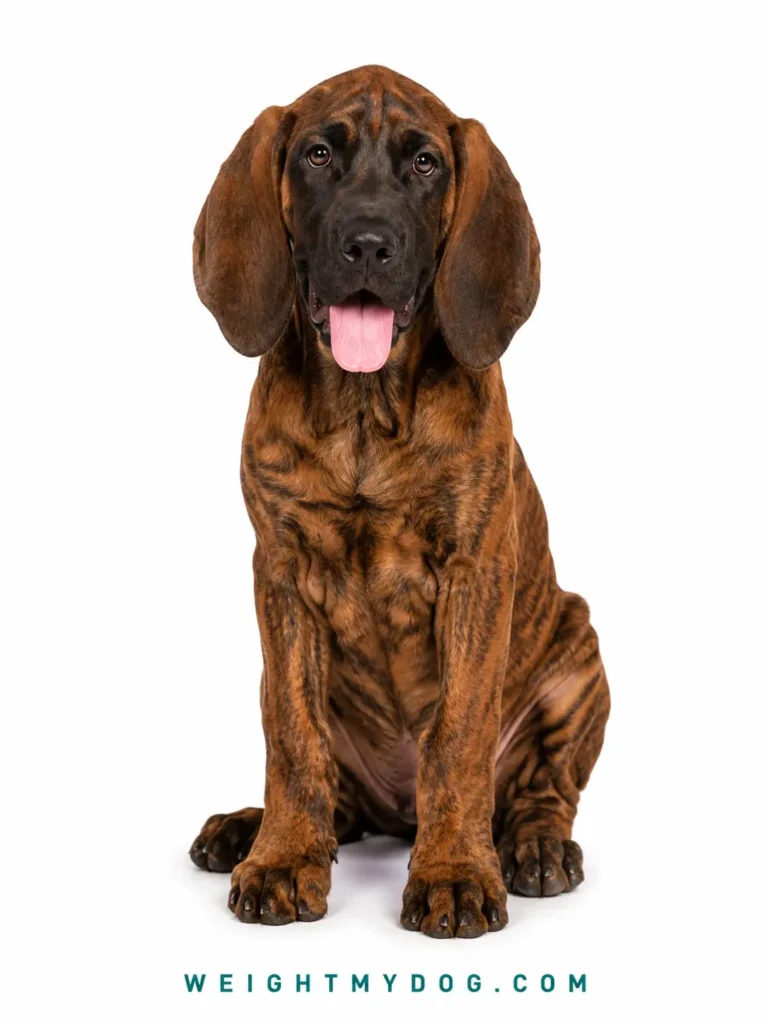
The Hanoverian Scenthound carries a weight that surprises many first-time owners. Adult working dogs of this breed fall into a large size category, demanding structured tracking from early puppy stages through skeletal maturity to maintain peak condition.
Growth in this hunting lineage doesn’t follow a single formula. Unlike toy or small breeds, Hanoverian Scenthounds develop along extended timelines, where body weight and height shift dramatically between eight weeks and eighteen months of age.
Most owners underestimate how a balanced diet shapes development. Proteins, fats, vitamins, and minerals don’t just fuel energy — they govern bone growth plates, joint formation, and the dog’s eventual adult size ceiling throughout monthly tracking windows.
Understanding breed standards set by the American Kennel Club gives owners a measurable range. Weight targets at sixteen weeks serve as reliable predictors, while genetics and parent size ultimately define the largest possible outcome for any individual pup.
A reliable puppy weight calculator factors in current age, measured in weeks or months, alongside current weight in pounds or kg. This equation — puppy weight divided by puppy age in weeks, multiplied by 52 — estimates mature adult weight accurately.
Many practitioners underestimate individual variation. Mixed breed Hanoverian crosses introduce size traits from multiple background lines, expanding range predictions. Purebred puppies follow tighter growth patterns, making early vet assessments and calculator inputs far more reliable for nutrition planning.
Hanoverian Scenthound Weight Calculator
| Age | ♂ Male (Expected) | ♀ Female (Expected) | Your Dog |
|---|
How to use the Hanoverian Scenthound weight calculator
Get your Hanoverian Scenthound's ideal weight in under 10 seconds. No account needed.
Enter your dog’s details
Enter your Hanoverian Scenthound's current age, weight, and gender. Works in both lbs and kg — supports weeks, months, and years.
Get your instant weight results
See your Hanoverian Scenthound's predicted adult weight range, current ideal weight, visual growth chart, and health status — instantly calculated.
Check your dog’s health status
Find out if your Hanoverian Scenthound is underweight, ideal, or overweight based on UKC-verified breed standards — and get a personalised feeding guide.
Hanoverian Scenthound Breed Info
The Hanoverian Scenthound is no casual companion — it is a large working breed developed for endurance tracking across rugged terrain. Breed specific grooming needs are minimal, as its short, smooth coat requires little intervention beyond weekly brushing.
Male dogs of this breed typically measure taller and heavier than female counterparts — a size difference more prominent in large breeds than in small ones. This gender distinction influences how owners should approach feeding and exercise planning from early puppy stages.
Genetics from both parents define the adult size ceiling. When the largest parent weighs over 100 lbs, offspring predictably reach giant thresholds. Reviewing background traits and inheritance patterns gives owners realistic expectations around weight, height, and musculature at full maturity.
Desexing timing matters deeply for this breed. Spaying or neutering before skeletal maturity can delay bone growth plates, occasionally producing dogs that grow taller with joint alignment concerns — particularly orthopedic disease risks flagged in large dog research and hormonal development studies.
Exercise habits shape the breed’s physical trajectory. Hanoverian Scenthounds need activity matched to age and breed appropriate intensity — short spurts early on protect joints and muscles, while long runs suit adults whose bones are fully hardened past twelve to eighteen months.
Health issues like chronic illnesses, parasites such as hookworms and roundworms, and genetic conditions can cause stunted growth by siphoning calories away from development. Early vet visits remain non-negotiable for catching interrupted healthy rate growth before it compounds.
Hanoverian Scenthound Adult Weight Estimates
Estimating adult weight for a Hanoverian Scenthound relies on a core equation: divide current weight by puppy age in weeks, then multiply by 52. This formula consistently outperforms guesswork, especially when applied at 14 to 16 weeks when growth patterns become reliably established.
At 8 weeks, most large breed pups weigh between 5 and 9 kg. By six months, that range shifts to 18–30 kg, reflecting the dramatic growth typical in the first six months where body weight increases by 13 to 17 percent per week in some studies.
Giant and large breed dogs continue growing past twelve months — often reaching final size between 15 and 18 months, or as late as 24 months for heaviest individuals. The growth slows progressively, with most weight gain tapering as skeletal maturity approaches and bone plates close.
Overfeeding accelerates growth rate beyond safe thresholds. Maximal growth rate in large dogs correlates with skeletal deformities, hip dysplasia, and shortened lifespan. A steady, slow, optimal growth rate through a balanced diet protects joint integrity and overall health across a dog’s life span.
A body condition score assessment complements any weight calculator. If ribs are buried under a thick layer of fat, or spine, hip bones, and shoulder bones protrude visibly, the dog sits outside healthy weight bounds — regardless of what breed standards list as the acceptable range.
For purebred puppies, American Kennel Club breed standards set expected height and weight ranges precisely. A well-managed Hanoverian Scenthound reaching adult size around 12 to 18 months should land confidently within these targets when nutrition, vet monitoring, and exercise remain consistently appropriate throughout development.
Hanoverian Scenthound Growth Chart & Weight Ranges
Male Hanoverian Scenthound Weight & Height Chart
| Age | Male Weight | Male Height |
|---|---|---|
| 4 Weeks | 1.5 – 2.5 kg | 10 – 14 cm |
| 2 Months | 4 – 6 kg | 20 – 26 cm |
| 3 Months | 7 – 10 kg | 28 – 34 cm |
| 4 Months | 10 – 14 kg | 34 – 40 cm |
| 5 Months | 13 – 18 kg | 38 – 44 cm |
| 6 Months | 16 – 22 kg | 41 – 47 cm |
| 7 Months | 19 – 25 kg | 44 – 49 cm |
| 8 Months | 21 – 28 kg | 46 – 51 cm |
| 9 Months | 23 – 30 kg | 47 – 52 cm |
| 10 Months | 25 – 33 kg | 48 – 53 cm |
| 11 Months | 27 – 35 kg | 49 – 54 cm |
| 12 Months | 28 – 36 kg | 49.5 – 54.5 cm |
| 18 Months | 29 – 38 kg | 50 – 55 cm |
| 24 Months (Adult) | 30 – 40 kg | 50 – 55 cm |
Female Hanoverian Scenthound Weight & Height Chart
| Age | Female Weight | Female Height |
|---|---|---|
| 4 Weeks | 1.2 – 2.0 kg | 9 – 13 cm |
| 2 Months | 3.5 – 5.0 kg | 18 – 24 cm |
| 3 Months | 6 – 8.5 kg | 26 – 32 cm |
| 4 Months | 8.5 – 12 kg | 32 – 38 cm |
| 5 Months | 11 – 15 kg | 36 – 42 cm |
| 6 Months | 13 – 18 kg | 39 – 45 cm |
| 7 Months | 15 – 21 kg | 42 – 47 cm |
| 8 Months | 17 – 24 kg | 44 – 49 cm |
| 9 Months | 19 – 26 kg | 45 – 50 cm |
| 10 Months | 21 – 28 kg | 46 – 51 cm |
| 11 Months | 22 – 30 kg | 47 – 52 cm |
| 12 Months | 23 – 32 kg | 47.5 – 52.5 cm |
| 18 Months | 24 – 34 kg | 48 – 53 cm |
| 24 Months (Adult) | 25 – 35 kg | 48 – 53 cm |
Puppy Growth Chart And AKC Breed Weight Standard
| Breed Size | 8 Weeks | 3 Months | 4 Months | 6 Months | 1 Year |
|---|---|---|---|---|---|
| Toy | 0.9 – 1.8 kg | 1.4 – 2 kg | 2 – 2.5 kg | 2.5 – 3 kg | 3 – 5.5 kg |
| Small | 1.5 – 3 kg | 3 – 5 kg | 4 – 7 kg | 6 – 9 kg | 6 – 11 kg |
| Medium | 3 – 5 kg | 5 – 8 kg | 8 – 13 kg | 10 – 18 kg | 11 – 23 kg |
| Large | 5 – 9 kg | 9 – 12 kg | 12 – 20 kg | 18 – 30 kg | 23 – 45 kg |
| Giant | 7 – 12 kg | 12 – 18 kg | 18 – 28 kg | 28 – 40 kg | 45 – 70 kg |
Factors That Impact Puppy Growth and Development
Parents
Two dogs from the same lineage rarely produce identical litters — but parental size does establish a biological ceiling for how large a Hanoverian Scenthound puppy will ultimately grow, shaping every developmental phase ahead.
Experienced breeders examine both parents before predicting adult weight. When both parents share consistent build and bone density, offspring trends become far more predictable — yet individual variation across litters still keeps every puppy genuinely surprising.
Gender
Among breeds like the Hanoverian Scenthound, the size difference between males and females remains minimal but present. As a general rule, males trend slightly heavier, though this gap rarely influences overall development timelines significantly.
Gender-linked growth patterns are real yet often overstated. What matters far more is monitoring each puppy individually, since behavioral temperament, appetite variation, and bone structure contribute to final adult size beyond any single-sex rule alone.
Desexing/Neutering
Early spay or neuter procedures — especially before six months — carry a real risk of skeletal overgrowth. Delayed growth plate closure can cause limb elongation and structural problems that affect a Hanoverian Scenthound’s long-term joint health significantly.
Practitioners debate optimal timing constantly. Waiting until physical maturity reduces hormonal disruption during bone development. Consulting your vet about breed-specific timing matters enormously — what works for smaller dogs may create compounding structural problems for scenthound builds.
Nutrition/Diet
Both overfeeding and underfeeding directly stunt or distort a Hanoverian Scenthound’s growth curve. Excess fatty foods elevate inflammation and joint load, while deficient nutrients compromise bone density long before inadequate intake becomes visually obvious to most owners.
Balanced macro nutrients distributed across age-appropriate meal schedules support lean, athletic development. Puppies fed quality protein without excessive fatty filler consistently show better muscle definition and healthier skeletal proportions — a measurable difference experienced breeders notice immediately during routine weight assessments.
Health Issues
Parasites like ticks and internal worms silently redirect essential nutrition away from growth. A puppy managing a parasitic load cannot invest full caloric energy into skeletal or muscular development, making parasite control a non-negotiable foundation.
Illness recovery periods introduce unpredictable growth pauses that many owners misread as permanent stunting. In reality, Hanoverian Scenthound puppies typically resume normal growth trajectories post-recovery — provided veterinary intervention happened early and nutritional support remained consistent throughout.
Exercise
Premature intense training disrupts joint coordination and places dangerous strain on developing growth plates. Hanoverian Scenthound puppies need appropriate activity volumes — structured movement that builds muscle memory without overloading skeletal systems not yet ready for sustained pace demands.
Reading your puppy’s natural pace reveals more than any rigid schedule. Short exploratory sessions build coordination gradually while protecting cartilage. Intense strain applied too early does lasting damage — but thoughtfully appropriate training progressions create the athletic, well-proportioned adults this breed is genuinely built to become.
How to Tell How Big a Puppy Will Get
Breed Standards
Experienced breeders rely on breed standards as a foundational compass — not a guarantee. The Hanoverian Scenthound’s weight range, height measured at the withers, and coat type all signal what adult size a puppy should reach.
Germany established these breed benchmarks with purpose-driven precision. A loyal, calm, independent scenthound bred for game tracking carries pounds and kilograms specifications that breeders in North America now reference during every early puppy growth assessment.
Genetics
Parents reveal the most honest ceiling for puppy growth. Same litters can still show diverging patterns — a female averaging 38 kg against a male averaging 44 kg reflects real hormonal and structural differences baked into genetics.
Gender plays a role, though the difference stays minimal as a general rule. Studying growth patterns from 79 to 99 pounds across the Hanoverian Mountain Hound line reveals that accurate adult size estimate hinges entirely on parental weight predictor data.
Physical Traits
A puppy’s physical structure — paw size, bone density, and early weight estimates — offers a rough indicator of fully grown size, though it is not always the case that large paws mean a large dog.
Coordination, pace, and muscular strain during movement expose developmental signals no chart alone captures. Watching a Hanoverian Scenthound puppy’s size class progression — from under 10 lbs to the 25 in tall medium frame — gives practitioners a practical, observable estimate.
Use a Puppy Growth Chart
A puppy growth chart organizes ranges by breed size class — toy, small, medium, large, giant — giving you an estimated range rather than a single fixed number. The expected full adult weight slows as months pass and specific guidance sharpens.
Tracking a Hanoverian Scenthound puppy from 12 weeks through 16 months using a structured predictor program shows when growth rate slows and mature adults stabilize. Smaller breeds plateau around 8 months; larger breeds push toward 16 months before reaching stable weight.
How Accurate Are Puppy Weight Calculators?
Working with Hanoverian Scenthound litters over the years, I’ve found that puppy weight calculators serve as a remarkably helpful guide — yet no tool is 100 percent accurate when accounting for individual variations in genetics and environment.
Most calculators apply a standard formula — some triple or double a pup’s early reading — but these methods produce estimates, not guarantees. A calculator’s value lies in trend tracking, not pinpoint prediction of a specific dog’s outcome.
Real results depend on how consistently you collect data. Weekly monitoring, paired with a check-up from your vet during early visits, transforms calculator output into genuinely actionable insight for your growing puppy.
When Do Puppies Grow the Most?
The first 6 to 12 weeks represent the most dramatic surge in puppy development. During this window, the tracking of weight becomes a milestone ritual — gains can appear almost weekly, reshaping a pup’s frame rapidly.
Between months 6 and 8, growth begins tapering in smaller breeds, while larger breeds continue expanding through 16 months. This divergence makes size class essential context for interpreting any growth chart or predictor tool.
By 12 months for medium dogs and up to 18–24 months for giant varieties, the rate slows noticeably. Watching immunisations milestone dates alongside weight logs gives a fuller picture of healthy development.
When Do Dogs Stop Growing?
Toy and small breeds typically reach mature adults status between 4 and 6 months, sometimes 6 to 8 months depending on lineage. Their compact frames finish forming well before their larger cousins even hit adolescence.
Medium breeds generally stop primary growth around 8 to 10 months, though muscle filling continues. Large breeds commonly finish skeletal development between 10 and 12 months, with conditioning extending further into the year.
Giant breeds are the exception — full structural development may span 12 to 18 months or beyond. Using a specific guidance program calibrated to your dog’s sex and breed sharpens these estimates considerably for mixed breeds too.
Is My Puppy Overweight? How to Tell if My Dog Is Fat
Research suggests roughly 18.9 percent of dogs assessed globally are clinically obese, with another 10 percent sitting firmly in the overweight category. These numbers align with rising veterinary costs and expanding enrollment in pet insurance plans tied to weight-related symptoms.
A visible waist viewed from above and ribs detectable under light pressure signal healthy proportion. When neither applies, diagnosis often points toward excess weight — a leading contributor to heart disease, diabetes, arthritis, and certain cancer disorders in companion animals.
Kidney and liver function, quality of movement, and everyday enjoyment of activity all reflect body condition. Excess fat represents a genuine threat to well-being, reducing a dog’s capacity for the exercise and active life they deserve.
How to Tell if My Dog Is Underweight
An underweight dog often displays symptoms before a scale confirms concern — visible spine ridging, hip bones protruding sharply, and ribs showing without any applied pressure suggest caloric intake is critically insufficient for their lifestyle.
Underfeeding can stunt muscular development even when skeletal growth appears normal. Poor nutrition choices — low-nutrient foods lacking adequate fatty acids — quietly compromise a dog’s recovery capacity, immune resilience, and long-term vitality in measurable ways.
A practical daily portion calibration, factoring treats and whether your dog is light, active, or an athlete in training, corrects drift quickly. Reassess diet amount every 10 percent of body weight change for best results.
Health Risks Associated with Excess Weight
Carrying excess weight silently stresses your Hanoverian Scenthound’s joints, heart, and metabolic system. I’ve watched dogs shift from struggling to walk properly to barely tolerating short trails — all because their owners underestimated fat deposits accumulating near the lower back and hips.
A dog that’s obese — yes, much like the 55.8 percent of dogs recorded across the United States — faces compounding complications. You’ll notice sagging stomach lines, thickened legs, and reduced drive. The tail carriage drops. Side breathing becomes labored, and the dog breathes with visible effort.
Watch for little energy during field work, reluctance toward walking, and an overall assessment that screams “too heavy.” Visible excess around the hips and back signals danger. A proper obese dog cannot sustain scent trails — their stamina collapses under compounded physical strain.
How Often Should I Weigh My Puppy?
Consistent weighing gives you a live monthly guide to your Hanoverian puppy’s normal developmental arc. Early research confirms that unique growth patterns emerge per individual dog — purebreds tend to follow tighter curves while mixed litters show wider variation.
Weigh every two weeks until six months, then shift to monthly assessment. If growth appears unusually slow or fast, don’t wait — that’s when developmental red flags need your vet’s trained eye, not just a predictor app giving you a single number.
From personal tracking of working scenthounds, I’ve seen decrease in weight velocity signal illness before visible symptoms appeared. Finished growth phases deserve confirmation too. Study your dog’s per-week gains; abrupt flattening or unique spikes deserve accurate attention beyond what estimates alone can tell you.
Feeding Calculator
A reliable feeding calculator accounts for your dog’s sex, current pounds, breed-specific metabolism, and age in weeks. Mature adults need fewer calories per pound than growing puppies — something generic charts consistently miss without specific guidance.
Smaller breeds typically reach full size by 8 months, while larger breeds may not stabilize until 16 months. Feeding programs built around this timeline use estimated range data to adjust inputs dynamically — accounting for variation, class, mixed breeds, and expected developmental pace across a year.
Cross-reference your calculator outputs with a number from your vet and double-check against breed-specific charts. Predicted mature weight shapes every portion decision. Without class-level guidance, you’re guessing — and guessing with a Hanoverian’s appetite means variation compounds fast into weight problems.
Frequently Asked Questions — Hanoverian Scenthound Weight
How Accurate Are Puppy Weight Calculators?
Puppy weight calculators offer helpful ballpark estimates, but no single tool captures every individual dog’s journey. Accuracy depends on how well the predictor accounts for breed-specific data, variation in growth, and the young puppy’s current stage.
From experience, these tools handle sizes and growth windows reasonably well for purebreds, yet individual quirks reduce predictions to educated guesses. Accurate results emerge only when owners treat variations as expected, not exceptional.
How Often Should I Weigh My Puppy Using a Puppy Size Calculator?
Weigh your puppy based on dog size — smaller breeds need more frequent checks during the first few months. Using a calculator weekly during rapid growth phases gives you the clearest developmental picture available.
Track weight with a consistent scale and log results monthly. Larger breeds develop more slowly, so spacing weigh-ins to every two weeks after month 1 prevents unnecessary anxiety over normal fluctuation.
How Big Will My Puppy Get?
A puppy growth chart offers ranges based on average developmental data across breed class. At 3 months, toy breeds typically weigh 1.4–3 lbs, while medium dogs sit between 5–9 lbs depending on parentage and nutrition.
By 6 months, large dogs reach 18–30 lbs, and giants hit 28–40 lbs. Final adult weight by 1 year varies: mediums land 11–23 lbs; giants peak near 45–70 lbs across different chart ranges.
What Factors Affect Puppy Growth Rate?
Parents from the same litters set the ceiling for growth potential. Gender shows minimal difference as a general rule, though males in large breeds tend to gain mass slightly longer than females during adolescent phases.
Desexing matters — early spay or neuter before six months can trigger overgrowth of long bones, creating joint problems later. Ticks, worms, and slow recovery from illness disrupt nutrient absorption, stunting development significantly regardless of diet quality.
Can a Puppy’s Paw Size Determine Their Final Size?
Oversized paws on an adolescent puppy are a widely cited indicator, but experienced breeders treat this as a rough guide only. Disproportionate legs alongside paw size together give a more reliable read than either signal alone.
For purebred dogs, comparing physical traits against breed standards narrows the guesswork considerably. Mixed parentage introduces variation, so no single physical marker — paw or otherwise — functions as a definitive specific indicator of adult size.
Do Mixed-Breed Puppies Grow Differently?
Mixed breeds show far greater variation in growth curves than purebreds. Without a known lineage, specific guidance from charts becomes limited, and owners must rely on the predictor tools that factor class size estimations from visible physical traits.
Litters from mixed parentage can produce puppies that mature at wildly different rates. Some finish growth at 8 months like smaller breeds; others continue developing for 16 months like larger breeds, making single-number estimates unreliable for this group.
When Do Puppies Stop Growing?
Chihuahuas and other toy breeds are finished growing by nine to twelve months, often reaching a stable weight as early as six to eight months old. This compressed timeline surprises many first-time owners used to tracking longer growth windows.
Giant breeds don’t finish until 9–11 months of age at minimum, with some hitting stable adult mass only at 52 weeks or beyond. Half the time, owners misread adolescent lankiness as being underweight during this extended developmental year.
How Big Will My Puppy Grow if They Are 9 lbs at 12 Weeks?
A puppy weighing 9 lbs at 12 weeks typically falls into the medium-to-large class based on size calculator predictions. Using a standard doubling program, adults of this starting weight commonly reach 25–50 lbs by their first year of age.
Cross-reference against a growth chart with monthly average data for the closest breed group. A number of specific calculators use the weeks-based predictor formula, giving owners a reliable weight range for normal developmental benchmarks at each stage.
How Do I Calculate Dog Size?
Calculating dog size accurately means combining current weight with age in weeks and matching to a breed class chart. Most program tools for adults use a straightforward formula: divide current weight by age in weeks, then multiply by 52.
The number you get approximates the expected adult weight. For specific breeds, cross-referencing inputs with established growth charts adds precision. Unique variables — nutrition, genetics, health — mean no formula replaces consistent monthly monitoring and veterinary guidance.
How Big Is a 30lb Dog?
A 30 lb dog sits comfortably in the medium class, typically standing around 18–25 inches at the shoulder. At this weight, a dog is fully grown if it’s a medium breed, though it may still be an adolescent in a larger breed class.
This size range is one of the most typical for family dogs. The max weight for medium dogs extends to about 50 lbs, with the 30 lb mark representing a healthy, stable midpoint in standard dog weight categories.
When Should I Ask My Vet Instead of Using a Calculator?
Calculators cannot flag health concerns the way a trained eye can. If your puppy constantly inhales food, shows lack of energy, or stops gaining weight on a consistent daily diet, a veterinary consultation is non-negotiable, not optional.
Weight issues tied to worms, illness, or recovery complications require clinical guidance, not a predictor tool. Pet insurance with early enrollment helps offset veterinary costs related to growth problems — a practical reality many owners overlook until too late.
Does Neutering Stunt Growth?
Early neuter or spay before six months alters hormone signaling that normally regulates bone plate closure. Research per published study data confirms this can cause overgrowth of long bones, affecting coordination and joint pace in larger breeds particularly.
Intense training before skeletal maturity compounds this risk. An appropriate program delays desexing until after growth stops in bigger dogs — purebreds with known genetic ceilings benefit most from this timed, specific guidance from a licensed veterinarian.
Is my Hanoverian Scenthound the right weight?
You can tell if your Hanoverian Scenthound is at a healthy weight by feeling their ribs — they should be palpable without pressing hard but not visibly prominent.
A rounder midsection, reluctance to exercise, and reduced energy are signs of excess weight, while a tucked abdomen with visible hip bones may indicate being underweight. Comparing monthly against a breed-appropriate growth chart gives the most reliable ongoing assessment.
What should I feed my Hanoverian Scenthound puppy?
No fixed recipe applies universally to Hanoverian Scenthound puppies. A balanced raw or mixed daily diet should be tailored based on activity level, age, and current body condition.
Rotating between proteins like chicken, beef, fish, and ocean-sourced options provides balanced amino acids. Underweight dogs need caloric density, not just volume. Track daily food portions weekly to catch imbalances before they require veterinary intervention.
How do I groom a Hanoverian Scenthound?
Grooming a Hanoverian Scenthound is straightforward thanks to their short, dense coat. Step-by-step charts and full-color grooming posters make the process approachable even for first-time owners.
Professional groomers recommend following breed-specific instructions to identify coat condition issues early. Without professional oversight, subtle skin problems beneath the coat can go undetected, making regular at-home grooming checks an important part of routine care.
Table of Contents
Toggle