
Free Newfoundland Weight Calculator – Male & Female Growth Chart by Age
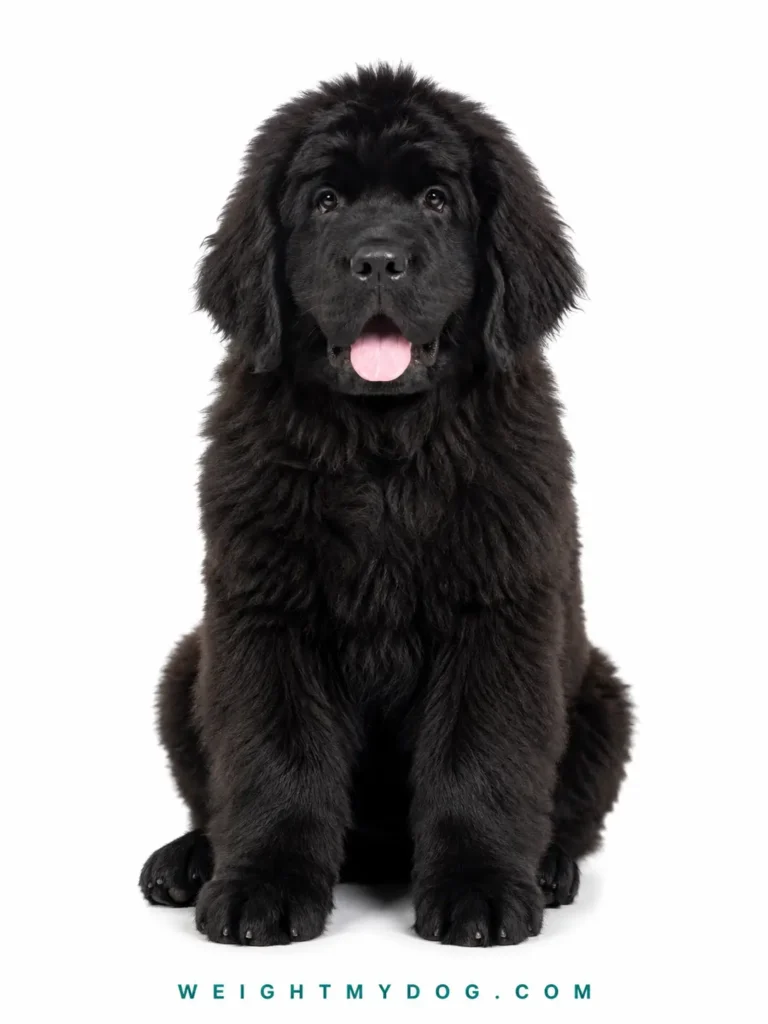
A Newfoundland pup rarely arrives with a magic crystal ball attached, so most new owners lean on a growth chart the moment the 8-10 week-old puppy waddles through the door. Watching weight climb week over week becomes a small ritual of its own.
Because every litter carries its own ancestral lineage, an accurate estimate is never a promise — it is a basic guide built from thousands of past litters. Owners quickly learn that patience matters more than any single number on a bathroom scale.
Some pups thicken out early, others take their own pace, and that variance is exactly why a precise estimate stays elusive. What a calculator offers instead is estimation grounded in real estimates gathered across the breed group.
I’ve watched Newfoundland puppies swing from lean to oversized and back within a season, which is why tracking skeletal development alongside weight tells a fuller story than the scale alone ever could.
The goal isn’t obsession — it’s routine care. A monthly check, a note on the progression guide, and a little praise for a happy pup does more for long-term health than chasing perfection.
By the time your Newfie pup reaches 12 months, you’ll have a running record that beats guesswork, and that record is the real value behind every Newfoundland Weight Calculator.
Newfoundland Weight Calculator
| Age | ♂ Male (Expected) | ♀ Female (Expected) | Your Dog |
|---|
How to use the Newfoundland Weight Calculator
Get your Newfoundland's ideal weight in under 10 seconds. No account needed.
Enter your dog’s details
Enter your Newfoundland's current age, weight, and gender. Works in both lbs and kg — supports weeks, months, and years.
Get your instant weight results
See your Newfoundland's predicted adult weight range, current ideal weight, visual growth chart, and health status — instantly calculated.
Check your dog’s health status
Find out if your Newfoundland is underweight, ideal, or overweight based on AKC-verified breed standards — and get a personalised feeding guide.
Male Newfoundland Growth, Weights & Heights Chart by Age
| Age | Male Weight | Male Height |
|---|---|---|
| 4 Weeks (1 Month) | 10 – 15 lbs (4.54 – 6.80 kg) | 8 – 10 in (20.3 – 25.4 cm) |
| 2 Months (8 Weeks) | 25 – 35 lbs (11.34 – 15.88 kg) | 12 – 16 in (30.5 – 40.6 cm) |
| 3 Months | 40 – 50 lbs (18.14 – 22.68 kg) | 16 – 20 in (40.6 – 50.8 cm) |
| 4 Months | 50 – 70 lbs (22.68 – 31.75 kg) | 20 – 24 in (50.8 – 61.0 cm) |
| 5 Months | 65 – 85 lbs (29.48 – 38.56 kg) | 23 – 27 in (58.4 – 68.6 cm) |
| 6 Months | 75 – 100 lbs (34.02 – 45.36 kg) | 25 – 29 in (63.5 – 73.7 cm) |
| 7 Months | 85 – 110 lbs (38.56 – 49.90 kg) | 26 – 30 in (66.0 – 76.2 cm) |
| 8 Months | 95 – 120 lbs (43.09 – 54.43 kg) | 27 – 31 in (68.6 – 78.7 cm) |
| 9 Months | 100 – 130 lbs (45.36 – 58.97 kg) | 28 – 32 in (71.1 – 81.3 cm) |
| 10 Months | 105 – 135 lbs (47.63 – 61.24 kg) | 28 – 33 in (71.1 – 83.8 cm) |
| 11 Months | 110 – 140 lbs (49.90 – 63.50 kg) | 29 – 33 in (73.7 – 83.8 cm) |
| 12 Months | 115 – 145 lbs (52.16 – 65.77 kg) | 30 – 34 in (76.2 – 86.4 cm) |
| 18 Months (Adult) | 118 – 150 lbs (53.52 – 68.04 kg) | 30 – 34 in (76.2 – 86.4 cm) |
| 24 Months (Full Grown) | 120 – 160 lbs (54.43 – 72.57 kg) | 31 – 35 in (78.7 – 88.9 cm) |
Female Newfoundland Growth, Weights & Heights Chart by Age
| Age | Female Weight | Female Height |
|---|---|---|
| 4 Weeks (1 Month) | 8 – 12 lbs (3.63 – 5.44 kg) | 7 – 9 in (17.8 – 22.9 cm) |
| 2 Months (8 Weeks) | 18 – 26 lbs (8.16 – 11.79 kg) | 10 – 13 in (25.4 – 33.0 cm) |
| 3 Months | 30 – 38 lbs (13.61 – 17.24 kg) | 13 – 17 in (33.0 – 43.2 cm) |
| 4 Months | 38 – 52 lbs (17.24 – 23.59 kg) | 17 – 20 in (43.2 – 50.8 cm) |
| 5 Months | 48 – 62 lbs (21.77 – 28.12 kg) | 19 – 22 in (48.3 – 55.9 cm) |
| 6 Months | 58 – 74 lbs (26.31 – 33.57 kg) | 21 – 24 in (53.3 – 61.0 cm) |
| 7 Months | 65 – 80 lbs (29.48 – 36.29 kg) | 22 – 25 in (55.9 – 63.5 cm) |
| 8 Months | 72 – 88 lbs (32.66 – 39.92 kg) | 22 – 25 in (55.9 – 63.5 cm) |
| 9 Months | 78 – 94 lbs (35.38 – 42.64 kg) | 23 – 26 in (58.4 – 66.0 cm) |
| 10 Months | 82 – 98 lbs (37.19 – 44.45 kg) | 23 – 26 in (58.4 – 66.0 cm) |
| 11 Months | 86 – 102 lbs (39.01 – 46.27 kg) | 23 – 26 in (58.4 – 66.0 cm) |
| 12 Months | 90 – 106 lbs (40.82 – 48.08 kg) | 24 – 26 in (61.0 – 66.0 cm) |
| 18 Months (Adult) | 95 – 112 lbs (43.09 – 50.80 kg) | 24 – 26 in (61.0 – 66.0 cm) |
| 24 Months (Full Grown) | 100 – 120 lbs (45.36 – 54.43 kg) | 24 – 26 in (61.0 – 66.0 cm) |
Dog Growth Chart And Official AKC Breed Weight Standard
| Breed Size | 8 Weeks | 3 Months | 4 Months | 6 Months | 1 Year |
|---|---|---|---|---|---|
| Toy | 0.9 – 1.8 kg | 1.4 – 2 kg | 2 – 2.5 kg | 2.5 – 3 kg | 3 – 5.5 kg |
| Small | 1.5 – 3 kg | 3 – 5 kg | 4 – 7 kg | 6 – 9 kg | 6 – 11 kg |
| Medium | 3 – 5 kg | 5 – 8 kg | 8 – 13 kg | 10 – 18 kg | 11 – 23 kg |
| Large | 5 – 9 kg | 9 – 12 kg | 12 – 20 kg | 18 – 30 kg | 23 – 45 kg |
| Giant | 7 – 12 kg | 12 – 18 kg | 18 – 28 kg | 28 – 40 kg | 45 – 70 kg |
Newfoundland Breed Overview
Long before kennel clubs existed, fishermen along North Atlantic waters relied on this giant breed for hauling nets and hauling themselves out of icy waters when things went wrong.
Historians trace the breed to Newfoundland Canada, with theories reaching back toward Vikings who may have brought working dogs across from Europe as early as 1000 A.D.
15th-century settlers from France, Italy, and beyond crossed paths with native dog breeds, and out of that crossing came a dog prized for strength, endurance, and deep loyalty.
The American Kennel Club formally recognized the breed, and the Newfoundland Club of America was founded in 1886, cementing the official breed standards still used to judge Newfoundlands today.
Their water-resistant double coats, webbed feet, and massive size made them natural water rescue dogs, a role that earns them the nickname loving giants among modern pet parent communities.
Today’s Newfs still carry working roots — pulling carts, swimming after drowning swimmers in training drills, and generally proving that a gentle giant can also be hardworking.
When Will My Newfoundland Stop Growing?
Most Newfoundland puppies reach full height before they reach full size, meaning your dog can look fully grown in the shoulder while still needing months to fill out in the chest.
Typically, skeletal development slows around 18 months, but true maximum height often locks in closer to two years. Filling out muscle and frame can continue throughout life in small ways.
A six-month-old Newf is usually significant growing in height, while a one-year-old male puppy shifts focus toward filling out — thickening the chest, shoulders, and legs.
Female Newfoundlands frequently stop growing a touch earlier than males, another reason gender belongs on any growth chart you’re using to judge whether your pup is still growing.
Genetics set the ceiling, but nutrition and appropriate exercise decide how smoothly a pup reaches it — rushed high-impact activities can strain growing joints long before the skeletal issues show up.
By 24 months, nearly every Newfoundland dog has reached adult size, though some sturdier, bigger frame individuals keep bulking up subtly for another year of steady growth.
What Is The Size Of A Full-Grown Newfoundland?
A full-grown Newfoundland is unmistakably large — this is a giant dog breed built for cold waters, not a lapdog scaled up. Owners often underestimate just how big their pup will become.
Adult male Newfs typically stand 26-28 inches at the withers, while an adult female measures closer to 24-26 inches, giving the breed a noticeably taller, robust silhouette.
Mature Newfoundland dog weight ranges widely by male average versus female average, but the AKC accepted weight range gives owners a dependable basic guide for spotting a dog that’s grown oversized or overfed.
Compared with Saint Bernards and other giant dog breeds, Newfs carry a heavy boned frame, broad shoulders, and a thick coat that visually adds to their extra large presence.
A 200-pound Newfoundland isn’t unusual among male Newfoundlands, though 130-150 pounds is a more common adult size for many purebred dogs raised on balanced portions.
Newfoundland Stats
Male weight: 130-150 lbs, standing 28 inches tall at the shoulder, with a male average landing near 130 lb 1 oz for many lines.
Female weight trends lighter, often 100-120 pounds, with female average height closer to 26 inches, reflecting the smaller frame typical of female Newfoundland dogs.
Both sexes share the same double coat, webbed feet, and body structure, but size class differences remain worth tracking on any honest growth chart.
How Much Bigger Will My Newfoundland Get?
Predicting how big a pup will grow means watching three threads together: age, paws, and genetics — none of them tell the full story alone, but combined they narrow the guesswork considerably.
Owners chasing an exact weight often forget that estimates shift as a dog moves through each stage, from 8-10 week-old puppy to adult Newfie, so revisit your growth chart monthly rather than once.
A pup that seems smaller frame at 3 months can still land in 100-120 pounds territory by two years old, especially if both parents carried bigger builds themselves.
Age
Early months bring rapid height gains, while later months shift toward filling out — this split roughly divides less than a year old growth from the slower thickening out phase after.
By 9-10 years, growth has long stopped, but tracking age against a progression guide during the first 24 months remains the single most useful habit for a new Newfie owner.
Every 6 months, weigh and measure again; the basic guide works best as a rolling comparison rather than a one-time snapshot taken at 8 months old.
Paws
Paws that look oversized on a 2-month-old puppy are a classic tell — guardians often notice webbed feet looking disproportionately big long before the rest of the body catches up.
Large paws relative to legs and shoulders usually hint at a bigger frame ahead, a rough but genuinely useful basic guide passed down among longtime breeders.
Watch how the paws compare to withers height at 6 months old — a wide gap often signals more significant growing still to come.
Genetics
Genetics decide the ceiling more than diet ever will; parents with a bigger frame typically produce puppies that land toward the top of the AKC accepted weight range.
Hereditary conditions aside, genetic health problems like hip dysplasia and elbow dysplasia are worth discussing with any breeder before bringing home a Newfoundland puppy.
Reputable breeders run dog x-rays on both hips of breeding parents, since genetics behind skeletal issues can shape a pup’s lifelong development.
How Much Do Newfoundland Puppies Weigh?
At 1 month old, a Newfoundland puppy might weigh only 7-11 lb, a far cry from the giant it becomes, but the trajectory from here is famously steady growth.
By 2 months old, expect roughly 15-22 lb; by 3 months, closer to 30-42 lbs, with estimates climbing fast enough that owners often reach for a dog scales at home.
4 months old typically brings 38-50 lbs, and 5 months old often lands near 45-56 lb, though every litter varies with bone structure and gender.
At 6-month-old puppy stage, many Newfs weigh 58-74 lbs, while 7 months pushes toward 65-75 lbs as the giant breed puppy formula diet supports rapid weight gain.
8 months old often means 75-85 lbs, 9 months old near 85-95 lbs, and by 10 months old, many pups approach 91-100 lbs on their way to full size.
11 months old frequently brings 93-110 lbs, and by 12 months old, 100-120 lbs is common — though this is still shy of the mature Newfoundland dog weight reached near two years.
Factors Affecting Newfoundland Weight
Bone structure varies between lines — a heavy boned pup will outweigh a lean littermate at the same age even on identical kibble portions, so don’t panic over small gaps.
Gender plays a steady role too: male Newfoundlands generally outweigh females by 10 pounds per month during peak growing phases, narrowing again once both reach adult size.
Genetics ultimately anchors the range — parents’ own mature Newfoundland dog weight is often the single best predictor of where your pup will land.
How Big Should A 6-Month-Old Newfoundland Be?
A typical six-month-old sits between 58-74 lbs, standing roughly 19-21 inches to 21-24 inches at the withers, though bigger frame individuals can run higher without concern.
This is a period of significant growing — muscle, bone development, and joints are all working overtime, which is why low-impact play matters more now than at any later stage.
Some 6-month-old puppy owners panic over a plateau week, but growth rarely moves in a straight line; a pause followed by a jump is completely healthy.
Compare your pup against the growth chart for gender and litter size rather than a single outside number — a smaller frame six-month-old may simply mature slower and still finish big.
If your six months old pup is well below 38-46 lb, or well above 85-95 lbs, a veterinarian visit is a smart, low-cost way to rule out health problems early.
Feel ribs with light pressure rather than sight alone; at this stage, a thick coat hides shape, and touch remains the most accurate estimate you have at home.
How To Weigh Your Newfoundland
A standard bathroom scale works for smaller pups — hold the puppy, weigh yourself with them, then subtract your own weight for a workable home estimation.
Once your Newf reaches giant proportions, most household scales max out, so many owners switch to a veterinarian’s clinic visit, where proper pet scales give a genuinely precise estimate.
Weigh frequently during the first 12 months, then shift to periodic vet checkups once growing appropriately slows — twice a week is excessive after the first year.
Track results on a progression guide alongside notes about diet, appropriate exercise, and any discomfort, since a single number rarely tells the whole health story alone.
Scheduled check-ups double as a chance to compare your home numbers against clinical dog scales, catching drift before it becomes a real overweight problem.
Consistency matters most: weigh regularly, same time of day, same conditions, and you’ll spot rapid weight gain or stalled growth long before it becomes serious.
An Overweight Newfie Is An Unhealthy Newfie
Because Newfs are naturally big, owners sometimes miss early signs of obesity hiding under a thick coat and heavy boned frame — extra fat blends in easily on a giant breed.
Carrying oversized weight strains already vulnerable joints, raising heightened risk for hip dysplasia, elbow dysplasia, and arthritis well before 9-10 years of age.
An overfed pup also faces greater odds of heart problems, wobbler syndrome, and other long-term negative health effects that shorten an otherwise generous life span.
Feel ribs without heavy pressure — if you can’t, maintain weight goals need adjusting, and type of food or portion size is usually the first place to look.
Bulk up muscle through gentle exercise, not extra kibble; a lean, strong Newf ages far better than a fat one, even at the same overall size.
Left unmanaged, rapid weight gain compounds year over year, turning a manageable issue at 6 months into a genuine crisis by two years old.
How Do I Make Sure My Newfoundland Is Healthy?
Start with routine veterinary care — scheduled check-ups, dental cleanings, and periodic vet checkups catch small issues, like early cataracts or joint discomfort, before they become expensive vet bill territory.
Watch for fear-related behaviors, lame steps, or a wobbly gait, all of which can point toward hip dysplasia, wobbler syndrome, or other orthopedic issues common in giant breeds.
Weigh regularly, feel ribs, and compare against your growth chart — a pup that’s still growing appropriately rarely deviates far from expected estimates for its age and gender.
Keep essential needs covered: drinking water, appropriate exercise, a proper type of food, and enough space to move without straining developing joints.
Rescue dogs and rescue water dogs may need extra patience, since past litters and unknown genetics make an accurate estimate of baseline health harder to pin down.
A happy life comes from consistency: same routine care, same attentive primary caregiver, and quick action whenever something about your Newfie pup feels off.
Newfoundland Veterinary Costs
Veterinary expenses for a giant breed run higher than average, partly because surgery, dental cleanings, and hip dysplasia surgery all scale with body size and dog x-rays complexity.
Rising costs mean many owners now treat pet insurance or wellness plans as a genuine financial safety net rather than an optional extra for their Newfoundland puppy.
Out-of-pocket bills for hip dysplasia surgery alone can reach thousands of dollars, especially when it’s needed on both hips rather than just per affected hip.
Resources like Pawlicy Advisor and A-Z Animals help compare reimbursement rates, eligible conditions, and veterinary advances across plans built for giant dogs specifically.
Routine costs — spaying, neutering, ear cleaning, nail cutting — stay modest, but reproductive cancers and skeletal issues later in life can push totals into real $14, $7, $1 ranges of monthly premiums.
Budgeting early, before health problems appear, keeps a safety net in place so veterinary expenses never force a rushed decision about your Newfie’s care.
Nutrition Requirements
A growing Newfoundland puppy needs a giant breed puppy formula, feeding 2 meals daily to 3-4 smaller meals rather than one large sitting, which eases pressure on developing bowels.
Expect roughly 8-12 cups of kibble per day for an adult male, adjusted for appropriate exercise, age, and current type of food quality.
Calcium supplements should only be added under veterinarian guidance — over-supplementing during rapid bone development can actually worsen skeletal issues rather than prevent them.
Watch portion size closely once your pup nears adult size; overfeeding at this stage is the fastest route to oversized, overweight outcomes later in life span.
Drinking water access should be constant, especially after prolonged runs or swimming, since giant dogs dehydrate faster than smaller canines relative to their body mass.
Adjust diet again as adults, since a mature Newfoundland dog weight needs fewer calories per pound than a still growing six-month-old burning energy on bone development.
Grooming
That famous double coat and water-resistant coat need brushed attention at least twice a week, more during year-round shedding, using slicker brushes or wide-tooth combs to prevent mats.
Baths should stay occasional — the natural water-resistant oils in a thick coat protect skin health, and over-bathing strips exactly what makes this breed suited to North Atlantic waters.
Nail cutting and ear cleaning round out routine grooming, both easier to manage if introduced during early training rather than forced on an already giant adult Newfie.
Expect real shedding volume from this breed — a fluffy Newfie drops undercoat seasonally, and daily attention during heavy periods keeps mats from forming near the chest and legs.
Grooming sessions double as health checks: run hands along shoulders, legs, and paws, feeling for lumps, discomfort, or early skin health concerns.
Keep tools dedicated to your Newf’s thick coat — regular combs and slicker brushes designed for giant breeds outperform generic tools built for smaller canines.
Training & Exercise
Early training matters enormously for a breed this powerful — a one-year-old male puppy already outweighs most adult humans in leverage, so manners need to start young.
Favor low-impact activity like walks and swimming over high-impact activities, especially before skeletal development finishes, to protect growing joints from unnecessary hereditary conditions risk.
20 minutes of gentle exercise a few times daily beats one long, prolonged runs session — Newfs are hardworking dogs, but puppies especially need appropriate exercise, not marathon effort.
Socialisation during the early socialization period shapes temperament for life; expose your Newfoundland puppy to stairs, children, and new space gradually rather than all at once.
Their natural love of water makes swimming an ideal, low-impact outlet — an exceptional swimmer by instinct, most Newfs take to cold waters with real bravery.
Praise-based methods suit their sweet-natured, affectionate personality far better than harsh correction; this working dog wants to please, not to be forced.
When Should My Newfoundland Be Spayed Or Neutered?
Spay and neuter timing for giant breed dog lines runs later than for smaller canines, since early surgery can interfere with bone development still underway near skeletal development’s peak.
Most veterinarian guidance now favors waiting until closer to 18 months, sometimes 1 year old at the earliest, letting hip dysplasia risk factors settle before preventing litters surgically.
Female dogs face their own timing questions tied to reproductive cancers risk versus bone development, so this decision deserves a dedicated conversation with your veterinarian’s clinic.
Neutering too early has been linked in some studies to elevated osteochondritis dissecans and panosteitis rates, reinforcing why giant dog breeds get different advice than smaller canines.
Rescue organizations sometimes spay or neuter younger out of necessity for preventing litters, which is worth discussing openly if you’re adopting rather than working with a breeder.
Whatever the timing, routine veterinary care afterward — watching the surgery site and maintain weight during recovery — matters just as much as the procedure itself.
When Should I Potty Train My Newfoundland?
Start potty training as soon as you’re bringing home your 8-10 week-old puppy — young Newfoundland puppies have small bladders and need frequent trips bathroom outside.
Consistency beats intensity: take your pup out after meals, naps, and play, using praise every time, and puppy pads only as a temporary bridge indoors.
By 3 months old, most Newfies show real progress, though full reliability often waits until closer to six months old as bowels and bladder control mature alongside bone development.
A deterrent for accidents indoors matters less than early training habits — punishment rarely works on this sweet-natured breed, but calm redirection does.
Remember that a giant breed puppy takes longer than a smaller canine to hold it through the night, so patience during less than a year old stages is completely normal.
Celebrate small wins with genuine praise and affection — a happy pup learns faster, and this breed’s deep loyalty responds best to encouragement over correction.
Key Takeaways
Raising a Newfoundland well means balancing growth chart tracking with real-world patience, since no magic crystal ball replaces steady observation over throughout life.
- Genetics, gender, and bone structure shape the estimates, but daily routine care shapes the outcome.
- Weigh regularly, feel ribs, and compare against estimates for age and litter to judge healthy development.
- Budget early for veterinary expenses, since giant dogs carry real out-of-pocket risk tied to hip dysplasia and skeletal issues.
- Grooming, appropriate exercise, and a proper giant breed puppy formula diet all protect a wonderful breed built for North America’s northern climates.
Whether you’re raising a purebred dogs show prospect or adopting from rescue, the same essential needs apply: dignity, routine care, and consistent attention.
In the end, a healthy Newfie isn’t defined by hitting an exact weight — it’s defined by charming, calm temperament, sound joints, and a pet parent who stays engaged for the long haul.
Frequently Asked Questions — Newfoundland Weight
How much should a Newfoundland weigh at 6 months?
Most 6-month-old puppy Newfs land between 58-74 lbs, though gender and bone structure shift that range meaningfully across different litter lines and breeders.
Compare your pup against a trusted growth chart rather than a single fixed target, since smaller frame and bigger frame puppies both fall within healthy territory at this stage.
At what age is a Newfoundland fully grown?
Most reach full height by 18 months, but true full size and mature Newfoundland dog weight often aren’t reached until closer to two years old.
Filling out continues subtly even after 24 months for some sturdier lines, so treat two years as a reasonable benchmark rather than an absolute cutoff.
How accurate is a Newfoundland puppy weight calculator?
A calculator offers a solid accurate estimate, built from thousands of past litters, but it remains an estimation tool rather than a guaranteed precise estimate.
Genetics, diet, and appropriate exercise all sway real results, so treat the output as a basic guide alongside periodic vet checkups, not a replacement for them.
How big do Newfoundland dogs get?
Adult male Newfs typically reach 26-28 inches and 130-150 pounds, while adult female Newfoundlands run closer to 24-26 inches and 100-120 pounds on average.
Some bigger frame individuals exceed 200 pounds, especially male Newfoundlands from heavy boned, giant dog breeds lines with strong ancestral lineage.
How much do Newfoundland puppies weigh at 8 weeks?
An 8-10 week-old puppy typically weighs around 17-27 lb, though this varies with litter size, parents’ bone structure, and overall genetics.
Weigh frequently during these early weeks using a home bathroom scale, and log results on a progression guide for easy comparison later.
What factors affect a Newfoundland’s adult weight?
Genetics, gender, bone structure, diet, and appropriate exercise all combine to shape final adult size, with parents’ own mature Newfoundland dog weight as the strongest single predictor.
Neutering timing and overall routine care during the early socialization period also play a measurable role in how a pup will grow.
Is a 200-pound Newfoundland healthy?
A 200-pound Newfoundland can be perfectly healthy if the weight is lean muscle rather than fat — feel ribs to judge condition, not the number alone.
If that weight comes with discomfort, lame steps, or a wobbly gait, a veterinarian visit is warranted to rule out hip dysplasia or other orthopedic issues.
What are the most common health issues in Newfoundlands?
Hip dysplasia, elbow dysplasia, wobbler syndrome, aortic stenosis, and reproductive cancers rank among the most frequent concerns for this giant breed.
Osteochondritis dissecans, panosteitis, and cataracts also appear often enough that routine veterinary care and dog x-rays are worth budgeting for early.
When should my Newfoundland stop eating puppy food?
Most Newfoundland puppies transition off giant breed puppy formula around 12 months, though some sturdier lines benefit from staying on it slightly longer.
Ask your veterinarian to confirm based on skeletal development progress rather than age alone, since giant breeds mature on their own pace.
How can I tell if my Newfoundland is overweight?
If you can’t easily feel ribs, or your pup shows a wobbly gait and reduced stamina, obesity may already be straining the joints.
Compare current weight against AKC accepted weight range figures for age and gender, and consult a veterinarian if the gap looks significant.
Table of Contents
Toggle