
Papillon Weight Calculator — Free Puppy Growth Chart & Adult Size Predictor
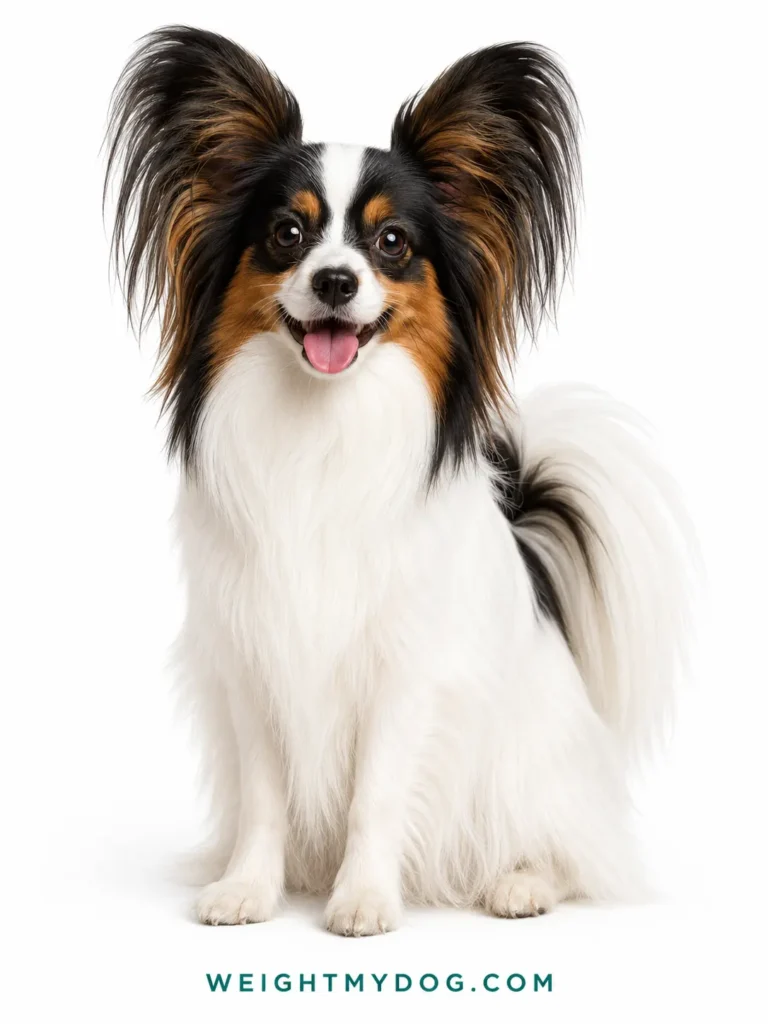
Papillon dogs have fascinated breed enthusiasts for centuries, tracing roots through European courts where nobles and royalty admired these butterfly-eared companions. Understanding their growth trajectory helps owners make smarter health decisions early.
My personal experience working with toy breeds confirmed that Papillon puppy development follows surprisingly consistent patterns when nutrition and care align properly with breed-specific standards and timelines.
Every Papillon puppy deserves high-quality food, regular vet visits, and a balanced diet that supports healthy bones, muscle, and coat development throughout each stage of growth.
Genetics, gender, and environment collectively shape each individual Papillon’s size and weight. Understanding these factors early prevents overweight outcomes and supports ideal developmental health across all age groups.
Owners who monitor weight regularly and consult a veterinarian during key developmental months give their Papillon the best foundation for a long, healthy, active life.
A reliable growth curve and calculator can guide feeding portions, exercise levels, and training timing, making Papillon puppy care more straightforward and enjoyable from day one.
Papillon Weight Calculator
| Age | ♂ Male (Expected) | ♀ Female (Expected) | Your Dog |
|---|
How to use the Papillon weight calculator
Get your Papillon's ideal weight in under 10 seconds. No account needed.
Enter your dog’s details
Enter your Papillon's current age, weight, and gender. Works in both lbs and kg — supports weeks, months, and years.
Get your instant weight results
See your Papillon's predicted adult weight range, current ideal weight, visual growth chart, and health status — instantly calculated.
Check your dog’s health status
Find out if your Papillon is underweight, ideal, or overweight based on AKC-verified breed standards — and get a personalised feeding guide.
Male Papillon Weights & Heights Chart by Age
| Age | Male Weight | Male Height |
|---|---|---|
| 0 Month (Newborn) | 1.0 – 1.5 lbs (0.45 – 0.68 kg) | 2 – 3 in (5 – 7.6 cm) |
| 1 Month | 2.0 – 3.0 lbs (0.9 – 1.36 kg) | 4 – 5 in (10 – 12.7 cm) |
| 2 Months | 3.0 – 5.0 lbs (1.36 – 2.27 kg) | 5 – 6 in (12.7 – 15.2 cm) |
| 3 Months | 4.0 – 6.0 lbs (1.81 – 2.72 kg) | 6 – 7 in (15.2 – 17.8 cm) |
| 4 Months | 5.0 – 7.0 lbs (2.27 – 3.18 kg) | 7 – 8 in (17.8 – 20.3 cm) |
| 5 Months | 6.0 – 8.0 lbs (2.72 – 3.63 kg) | 7.5 – 8.5 in (19 – 21.6 cm) |
| 6 Months | 6.5 – 9.0 lbs (2.95 – 4.08 kg) | 8 – 9 in (20.3 – 22.9 cm) |
| 7 Months | 7.0 – 10.0 lbs (3.18 – 4.54 kg) | 8.5 – 9.5 in (21.6 – 24.1 cm) |
| 8 Months | 7.5 – 10.5 lbs (3.4 – 4.76 kg) | 8.5 – 10 in (21.6 – 25.4 cm) |
| 9 Months | 7.5 – 11.0 lbs (3.4 – 4.99 kg) | 9 – 10 in (22.9 – 25.4 cm) |
| 10 Months | 8.0 – 11.5 lbs (3.63 – 5.22 kg) | 9 – 10.5 in (22.9 – 26.7 cm) |
| 11 Months | 8.0 – 12.0 lbs (3.63 – 5.44 kg) | 9 – 10.5 in (22.9 – 26.7 cm) |
| 12 Months (Adult) | 8.0 – 12.5 lbs (3.63 – 5.67 kg) | 9 – 11 in (22.9 – 27.9 cm) |
| 2 Years | 8.0 – 12.5 lbs (3.63 – 5.67 kg) | 9 – 11 in (22.9 – 27.9 cm) |
| 3 Years | 8.0 – 12.5 lbs (3.63 – 5.67 kg) | 9 – 11 in (22.9 – 27.9 cm) |
Female Papillon Weights & Heights Chart by Age
| Age | Female Weight | Female Height |
|---|---|---|
| 0 Month (Newborn) | 1.0 – 1.3 lbs (0.45 – 0.59 kg) | 2 – 3 in (5 – 7.6 cm) |
| 1 Month | 1.5 – 2.5 lbs (0.68 – 1.13 kg) | 3.5 – 4.5 in (8.9 – 11.4 cm) |
| 2 Months | 2.5 – 4.0 lbs (1.13 – 1.81 kg) | 4.5 – 5.5 in (11.4 – 14 cm) |
| 3 Months | 3.0 – 5.0 lbs (1.36 – 2.27 kg) | 5 – 6 in (12.7 – 15.2 cm) |
| 4 Months | 4.0 – 6.0 lbs (1.81 – 2.72 kg) | 6 – 7 in (15.2 – 17.8 cm) |
| 5 Months | 4.5 – 7.0 lbs (2.04 – 3.18 kg) | 6.5 – 7.5 in (16.5 – 19 cm) |
| 6 Months | 5.0 – 8.0 lbs (2.27 – 3.63 kg) | 7 – 8 in (17.8 – 20.3 cm) |
| 7 Months | 5.5 – 8.5 lbs (2.5 – 3.86 kg) | 7.5 – 8.5 in (19 – 21.6 cm) |
| 8 Months | 6.0 – 9.0 lbs (2.72 – 4.08 kg) | 7.5 – 9 in (19 – 22.9 cm) |
| 9 Months | 6.0 – 9.5 lbs (2.72 – 4.31 kg) | 8 – 9 in (20.3 – 22.9 cm) |
| 10 Months | 6.5 – 10.0 lbs (2.95 – 4.54 kg) | 8 – 9.5 in (20.3 – 24.1 cm) |
| 11 Months | 6.5 – 10.5 lbs (2.95 – 4.76 kg) | 8 – 10 in (20.3 – 25.4 cm) |
| 12 Months (Adult) | 7.0 – 11.0 lbs (3.18 – 4.99 kg) | 8 – 10 in (20.3 – 25.4 cm) |
| 2 Years | 7.0 – 11.0 lbs (3.18 – 4.99 kg) | 8 – 10 in (20.3 – 25.4 cm) |
| 3 Years | 7.0 – 11.0 lbs (3.18 – 4.99 kg) | 8 – 10 in (20.3 – 25.4 cm) |
Puppy Growth Chart And Official AKC Breed Weight Standard
| Breed Size | 8 Weeks | 3 Months | 4 Months | 6 Months | 1 Year |
|---|---|---|---|---|---|
| Toy | 0.9 – 1.8 kg | 1.4 – 2 kg | 2 – 2.5 kg | 2.5 – 3 kg | 3 – 5.5 kg |
| Small | 1.5 – 3 kg | 3 – 5 kg | 4 – 7 kg | 6 – 9 kg | 6 – 11 kg |
| Medium | 3 – 5 kg | 5 – 8 kg | 8 – 13 kg | 10 – 18 kg | 11 – 23 kg |
| Large | 5 – 9 kg | 9 – 12 kg | 12 – 20 kg | 18 – 30 kg | 23 – 45 kg |
| Giant | 7 – 12 kg | 12 – 18 kg | 18 – 28 kg | 28 – 40 kg | 45 – 70 kg |
Papillon Breed Overview
The Papillon is a toy breed recognized by the AKC and celebrated for its wing-shaped, butterfly-like ears that earned its French name meaning butterfly. Alert, elegant, and intelligent, the Papillon carries a regal appearance that once charmed European monarchy.
Spain, Italy, and France shaped the breed’s history through Renaissance portraits by Rembrandt and Madame Pompadour’s clientele. King Louis XIV and Marie Antoinette both admired these fluffy, captivating companion dogs of nobility.
The Phalene variety features downward-growing, droopy ears, while the standard Papillon displays upward, feathered, wing-shaped ear structure. Both share identical breed standards across size, weight, and temperament classifications.
Breed standards set by the American Kennel Club define the Papillon as a small, friendly, loyal, devoted, affectionate, and lively companion suited for urban and rural living environments and apartments.
This breed appears worldwide and maintains popularity among families, agility training enthusiasts, and companion dog owners. The Papillon’s sporty yet refined demeanor makes it uniquely well-trained and responsive to commands.
Breed characteristics include a lightweight body, feathered coat, and confident, proud spirit. Despite its petite stature, the Papillon is physically energetic, playful, and mentally stimulated by agility, play, and socialization.
When Does a Papillon Stop Growing?
Most Papillon puppies reach full adult size between 9 and 12 months of age, though some individuals may continue filling out until month 11 or slightly beyond depending on genetics and nutrition provided.
Male and female Papillons follow similar growth curves, though females may mature faster while males sometimes grow slower into adulthood. Tracking weight monthly helps owners detect when development begins to slow or slows noticeably.
By month 8, most toy breed puppies experience a rapid growth phase that dissipates into a gradual plateau. The Papillon typically stops growing in height by 9 months and in weight by 12 months of age.
Breed-specific growth stages reveal that Papillon development during weeks 1 through 8 is most rapid. Between months 3 and 6, growth rates begin slowing, and by month 10, most structural development is essentially complete.
Working with breeders over several years, I noticed Papillon puppies who received well-balanced nutrition consistently hit developmental milestones earlier than those relying on poor or inconsistent diet habits during key months.
Vet check-ups during the growth period help confirm normal development, rule out stunted growth conditions, and guide appropriate diet transitions as the puppy stage gives way to adult life.
How Big Will My Papillon Be When Fully Grown?
Fully grown Papillons typically weigh between 5 and 10 lbs (2.27 to 4.54 kg) and stand 8 to 11 inches (20.3 to 27.9 cm) tall at the shoulder, making them one of the smallest toy breed dogs globally.
Male Papillons commonly weigh 7 to 10 lbs (3.18 to 4.54 kg) while females are slightly smaller at 5 to 9 lbs (2.27 to 4.08 kg). These weight ranges reflect AKC breed standards for adult size and height.
Height at shoulder for adult Papillons ranges from 8 to 11 inches (20.3 to 27.9 cm). Unlike large breeds like the Saint Bernard, Great Dane, or Mastiff, Papillons reach adult size in under one year of age.
Prediction of final adult size uses a formula: take current weight at 8 weeks, double it, then double again. This mathematical estimator predicts adult weight with reasonable accuracy but remains an estimate rather than a guaranteed standard.
Growth curves specific to toy breeds suggest that a Papillon puppy weighing 1.36 kg (3 lbs) at 8 weeks will likely reach 4.5 to 5.5 lbs (2.04 to 2.5 kg) fully grown, depending on individual genetics.
Comparing size metrics between parents gives a clearer insight into expected final size. A puppy’s mother and father weight combined, divided by two, often predicts adult size more accurately than any calculator formula alone.
Factors Affecting the Size / Weight of a Papillon
Genetics play the most pivotal role in determining a Papillon’s final size and weight. Inherited traits from parents influence height, bone structure, and muscle mass more than any other individual factor does.
Gender significantly affects Papillon size, with males typically larger and heavier than females. This sex-based variation in weight and height is normal across all toy breed dogs including the Papillon breed.
Diet and nutrition directly influence growth rates in Papillon puppies. Overfeeding encourages fat gain over muscle development, while underfeeding risks stunted growth, weakened bones, and poor nutrient absorption during key developmental stages.
Exercise levels shape body composition significantly. Papillons are active dogs that benefit from daily walks, play sessions, and agility training, which support healthy muscle development and prevent obesity or overweight conditions from developing.
Environmental conditions including stress, illness, parasites like ticks and worms, and pre-existing conditions can delay or interrupt growth. Chronic health problems during developmental months sometimes cause permanent size variations in toy breed puppies.
Breeding history and whether the Papillon is a purebred or crossbreed also affect size predictions. Mixed-breed puppies may develop differently, often growing faster or slower than breed-specific growth chart standards would suggest.
Ideal Diet for Maintaining a Healthy Weight
Papillons are carnivores requiring high-quality, animal-based protein as the primary ingredient in their daily diet. Dry food with real protein sources listed first on packaging provides the balanced nutrition these toy breed dogs need.
Calorie intake must match activity levels precisely. Adult Papillons typically need ¼ to ½ cup of dry food per day, split across two meals. Puppies require small, frequent meals — ideally three times daily — during active growth phases.
Avoid junk food, human scraps, and fatty treats that contribute to obesity. Snacks should represent no more than 10 percent of daily calorie intake. Overfeeding with supplements or human food disrupts proper nutrient balance and causes weight fluctuations.
Vitamins, minerals, omega fatty acids, and proper carbohydrates round out a well-balanced Papillon diet. Calcium and phosphorus support bone development, while protein builds muscle and fats fuel the Papillon’s energetic, active lifestyle effectively.
Life stage nutrition matters enormously. Puppy food contains higher calorie density and nutrients to support rapid growth, while adult diet formulas adjust for maintenance. Switching at the right timing prevents overweight gain during post-growth months.
Consult a veterinarian to tailor a diet plan specific to your Papillon’s age, weight, activity level, and health conditions. Breed-specific recommendations from your vet outperform generic database instructions found on forums or food packaging alone.
How to Measure / Weigh Your Papillon
Weighing your Papillon correctly requires a digital scale accurate to 0.1 kg increments. Place your dog on the scale and record weight in both lbs and kg to maintain consistent metrics for growth tracking purposes.
For height, use a tape measure from the floor to the shoulder blade (withers) while your Papillon stands on a flat surface. This shoulder height measurement in cm or inches reflects the breed standard for size assessment.
Monitor weight weekly during the first 12 months, then monthly as an adult. Consistent measurement at the same time of day — ideally morning before meals — ensures accurate, comparable data for your vet check-up discussions.
Body condition assessment involves checking rib visibility and waist definition. Ribs should be palpable but not visible. A discernible waist above the hip region and visible waist tuck when viewed from above indicate ideal body condition.
Use a collar or harness measurement to track neck circumference as well. Accessories like well-fit collars and harnesses should not strain. Tracking these metrics alongside weight gives owners more complete insight into Papillon growth and health trends.
Vet visits offer professional assessment that supplements home monitoring. A veterinarian can detect subtle developmental concerns invisible at home and recommend diet or exercise adjustments based on body condition score and growth curve data.
The Importance of a Dog Weight Calculator
A Papillon weight calculator uses current puppy weight and age to predict final adult size using breed-specific mathematical models. These digital tools offer helpful estimates that guide early feeding, health, and development planning.
Calculator accuracy depends on inputting current weight in kg or lbs alongside age in weeks or months. The formula then generates a growth curve prediction that informs owners about expected final weight and size ranges.
Growth curve models are breed-specific and most reliable when used for purebred Papillons with known parent sizes. Mixed-breed calculators introduce additional variation that reduces prediction accuracy significantly beyond general estimator ranges.
These tools help owners make responsible decisions about diet portions, exercise routines, and vet visit timing. When weight deviates significantly from predicted growth curves, it signals potential health concerns requiring veterinary attention promptly.
Dog-specific calculators built on large databases of breed growth data are more reliable than generic puppy estimators. The AKC and Kennel Club registered breed growth standards inform the best calculator models available.
Using a weight calculator alongside regular vet check-ups creates a comprehensive monitoring system. Owners who combine digital tools with professional veterinary assessment make better dietary and lifestyle decisions for their Papillon throughout every life stage.
How Accurate Are Puppy Weight Calculators?
Puppy weight calculators offer reasonable accuracy for purebred toy breeds like the Papillon when current weight and age data are entered correctly. Estimates typically fall within 10 to 15 percent of actual adult weight for most individuals.
Accuracy decreases for mixed-breed puppies where unknown parent genetics introduce variation beyond what standard breed curves can predict. Without breeder insight into parent size, calculator estimates become less reliable as a prediction tool.
Environmental factors like diet quality, illness history, exercise levels, and hormonal conditions mean actual growth may vary from predicted curves. Calculators provide helpful starting guide points but should never replace regular vet assessment.
The doubling formula — doubling current weight at 6 to 8 weeks — remains a fast, straightforward predictor for small breed puppies. For Papillons, this math suffices as an early estimate before breed-specific curve data becomes available.
Science has refined puppy weight prediction considerably, with modern models factoring in gender, breed, genetics, and developmental stage. Still, these remain estimates — even the most accurate calculator cannot account for every individual variation.
Owners should treat calculator outputs as planning tools rather than definitive predictions. Combining estimates with monthly weigh-ins and vet consultation creates a far more accurate picture of your Papillon’s growth trajectory than any formula alone.
When Should My Papillon Be Spayed or Neutered?
Veterinarians generally recommend spaying or neutering a Papillon between 6 and 9 months of age. This timing balances reproductive health benefits with allowing sufficient growth development before the desexing procedure is performed.
Early neutering before 6 months may affect hormone levels that influence bone growth and joint development. Hormones secreted before and during puberty play a role in structural maturity, so timing the operation correctly matters significantly.
Spaying females before their first heat cycle, typically around 6 months, offers health benefits including reduced risk of mammary cancer and uterine infections. Desexing also eliminates accidental pregnancies and unwanted reproduction in female Papillons.
Neutering males around 9 months reduces aggression, roaming tendencies, and certain health risks. However, timing surgery too early before growth plates close can cause structural issues or slow muscle development in toy breed dogs.
Consult your vet about individual timing based on your Papillon’s health, size, weight, and developmental stage. Some veterinarians recommend waiting until month 12 for very small toy breeds to ensure growth is complete before the procedure.
Personal experience with Papillon owners showed that dogs spayed at appropriate timing maintained healthier weight long-term. Desexing changes calorie needs, so adjusting diet portions post-operation prevents unwanted weight gain in neutered or spayed Papillons.
When Should My Papillon Stop Eating Puppy Food?
Papillon puppies should transition from puppy food to adult food around 9 to 12 months of age. Since toy breeds grow faster than large breeds, this transition timing comes sooner than for Labrador or Golden Retriever breeds.
Switching too early deprives puppies of the calorie density and nutrients required for complete development. Switching too late risks overfeeding with puppy food’s high calorie content, causing excessive weight gain in nearly-adult Papillons.
Gradual transition over 1 to 2 weeks prevents digestive upset. Start by mixing 25 percent adult food with puppy food, then gradually increase the adult portion until the switch is complete by day 14 of the transition period.
High-quality adult food formulas for small breed dogs contain appropriate protein, fat, carbohydrate, vitamin, and mineral levels for Papillon maintenance. Breed-specific small breed adult food is ideal for maintaining healthy weight post-transition.
Monitor weight closely during the transition period. Some Papillons gain weight during switching phases because their calorie intake does not adjust to match reduced activity levels as growth slows in adulthood.
Vet guidance on when to switch based on your individual Papillon’s development stage is always recommended. Breed-specific food packaging instructions provide general guide timelines, but veterinarian recommendations better address your dog’s specific dietary needs.
When Will My Papillon Start Losing Teeth?
Papillon puppies begin losing their baby teeth around 3 to 4 months of age, with the full adult teeth set typically complete by month 6 or 7. This dental development timeline mirrors other toy breed dogs in size category.
Baby teeth — also called deciduous teeth — number 28 in puppies. These fall out progressively as adult teeth emerge from the gum. Toy breed dogs like the Papillon sometimes experience overcrowding where baby teeth don’t fall before adult teeth come in.
Overcrowding issues in Papillons may require vet intervention since impacted teeth can cause dental problems, pain, and difficulty chewing. A veterinarian should check teeth development during routine check-ups at months 4, 5, and 6.
Chewing behavior increases dramatically during teething months. Provide safe chew toys to relieve dental discomfort and protect furniture. Chews designed for small breed puppies prevent injury to the Papillon’s lightweight jaw and developing adult teeth.
Introduce a toothbrush and toothpaste during teething to build lifelong toothbrushing habits. Regular dental care with breed-appropriate toothbrush sizes reduces tartar buildup and supports long-term dental health in Papillons throughout adulthood.
Tooth loss timing rarely causes concern unless teeth are slow to fall, teeth appear flat or impacted, or the puppy shows pain while chewing food. Routine vet dental check-up at 6 months confirms adult teeth are developing normally.
When Should I Start Training My Papillon?
Training a Papillon should start as early as 8 weeks of age when puppies first come home. This breed is highly intelligent and alert, making early socialization and command learning both effective and enjoyable from day one.
Positive reinforcement using treats, praise, and reward systems works best for Papillon training. This breed responds poorly to punishing or fear-driven methods, becoming anxious, distracted, and fearful if training relies on negative techniques or aggression.
Housebreaking and potty training should begin immediately when the puppy arrives home. Consistent bathroom routines, crate training, and reward-based positive reinforcement teach Papillons bathroom habits that stay consistent throughout adult life.
Papillons learn basic commands quickly given their intelligent, curious, and energetic nature. Sit, lie down, come, heel, stay, and obey are foundational cues that build confidence and mental stimulation across developmental months.
Sessions should remain short — 5 to 10 minutes per session — to maintain attention and prevent boredom. Papillons become bored and distracted quickly, so fun, variety, and playful training environments outperform long repetitive sessions every day.
Leash training using harnesses rather than collars protects the Papillon’s sensitive trachea and neck joints. Practice walks on leash in dog-friendly environments, gradually introducing new people, places, and sounds to build a well-behaved, confident companion.
When Should I Start Training My Papillon?
Sit, lie down, come, and stay form the essential foundation of Papillon training. These four commands establish obey behavior and safety boundaries that protect your dog during walks, play, and socialization with people and other dogs.
Heel and leash walking cues prevent accidental jumping, biting, and aggression during outdoor movements. Teaching heel early gives owners control during daily walks and helps Papillons stay calm and focused rather than hyperactive or restless.
Reward each correct response with treats and praise immediately. Timing of reinforcement is crucial — positive reward delivered within two seconds of correct behavior strengthens learning far more effectively than delayed reinforcement does.
When Will My Papillon Calm Down?
Papillons are hyperactive, energetic puppies during their first 12 to 18 months. Their exuberance and restless energy levels are normal for this breed and typically begin to calm noticeably after month 18 as adulthood settles in.
Mental stimulation through training, agility, toys, and puzzle play helps channel energy productively. Papillons without sufficient daily stimulation become bored, hyperactive, and potentially destructive — targeting furniture, beds, and couch items indoors.
Exercise plays a pivotal role in helping Papillons calm down. Daily walks and play sessions lasting 20 to 30 minutes provide the physical outlet that reduces restless behavior significantly and encourages calmer demeanor by evening.
Socialization with people, children, and friendly dogs during developmental months reduces anxious or fear-driven behavior in adult Papillons. Dogs who develop strong social bonds early demonstrate calmer, more confident personalities as they age.
Spaying or neutering at appropriate timing also reduces hormone-driven hyperactive behavior in both male and female Papillons. Post-desexing, many owners report noticeable improvements in calm temperament and reduced restless energy levels.
As Papillons enter their third year, most owners report a natural calm transition. Adult Papillons remain active and playful but show greater patience, attention, and consistent obey behavior compared to their fast-moving, energetic puppy stage earlier.
Common Health Issues Your Papillon Might Experience
Patellar luxation — where the kneecap slips out of position — is the most common joint issue in Papillons. This progressive condition causes pain, limping, and joint strain that worsens over time without appropriate vet treatment or surgery.
Progressive retinal atrophy is an incurable eye condition with genetic predisposition in Papillons. Regular eye check-ups help detect early signs before vision loss becomes significant. Breeding from tested parents reduces inherited risk of this incurable condition.
Portosystemic shunt — a liver condition where toxins bypass the liver and enter the bloodstream — affects some Papillons. Symptoms include slow development, small stature, seizures, and poor growth that may indicate this serious medical condition.
Collapsing trachea is a structural condition where the trachea rings weaken and collapse during breathing. Toy breeds including Papillons are prone to this condition, making harnesses over collars essential for preventing further injury and discomfort.
Hypoglycemia — low blood sugar — affects small breed puppies who skip meals or overeat junk food. Papillon puppies need consistent, regular small meals to maintain stable blood sugar and avoid dangerous hypoglycemia episodes during growth stages.
Dental problems including overcrowding, tooth decay, and gum disease are common in toy breed dogs with small mouths. Regular toothbrushing, dental chews, and routine vet dental check-up visits form the core dental care plan for Papillons.
Papillon Life Expectancy & Size Summary
Papillons enjoy one of the longest life expectancy rates among dog breeds, with an average life span of 13 to 17 years. Their small size, lightweight body, and active lifestyle contribute to exceptional longevity compared to large breed dogs.
Adult Papillons weigh 5 to 10 lbs (2.27 to 4.54 kg) and stand 8 to 11 inches (20.3 to 27.9 cm) at the shoulder. These size standards reflect breed characteristics established by the AKC and international Kennel Club breed registrations.
Health directly impacts life expectancy. Papillons maintained on high-quality diet, regular exercise, routine vet visits, and proper dental care consistently live longer, healthier lives than those with poor nutrition and inconsistent care habits.
Size at adulthood remains stable after 12 months for most Papillons. Weight fluctuations beyond 1 to 2 lbs in adult dogs signal dietary imbalance or health conditions that warrant immediate veterinary attention and diet plan adjustment.
Comparing Papillon life expectancy to large breeds like the Mastiff (6 to 10 years) or Saint Bernard (8 to 10 years) highlights the dramatic longevity advantage of small toy breeds. Size and life expectancy share an inverse relationship across dog breeds broadly.
This summary confirms that Papillons are long-lived, petite, healthy companion dogs when properly cared for. Owners who monitor size, weight, nutrition, and health consistently throughout all life stages give their Papillon the best chance at reaching its full life expectancy.
Controlling Your Papillon’s Weight
Controlling Papillon weight requires consistent monitoring, portion control, and regular exercise. Obese or overweight Papillons face serious health risks including diabetes, joint problems, patellar luxation, and reduced life expectancy if weight issues go unaddressed.
Portion control using measured cups prevents overfeeding. Adult Papillons typically need ¼ to ½ cup of high-quality dry food daily, split into two meals. Adjust portions based on activity level, age, and vet recommendations to maintain ideal weight.
Eliminate excessive treats, junk snacks, and table scraps that add unnecessary calories. Healthy treat alternatives including small pieces of lean protein or breed-approved vegetables provide reward without causing unhealthy weight gain.
Daily exercise through walks, agility, play sessions, and indoor toys burns calories and maintains muscle mass. Papillons in apartments benefit from short but frequent play sessions that keep their energetic nature satisfied without causing joint injuries.
Monitor body condition score monthly by checking rib palpability and waist definition. If ribs become invisible under fat layers or the waist loses its discernible shape, reduce calorie intake and increase exercise immediately with vet guidance.
Obesity in Papillons is largely preventable through responsible ownership, balanced diet, and consistent activity. Owners who track weight monthly, adjust diet gradually, and consult their vet regularly give their Papillon the best chance of maintaining a healthy, comfortable weight throughout life.
Frequently Asked Questions — Papillon Weight
How Accurate Are Puppy/Pomeranian Weight Calculators?
Pomeranian weight calculator tools are approximately 75% to 90% accurate within ±2 lbs for most toy breed puppies. Genetic variation, throwback Pomeranians genetics, and health conditions represent the most common sources of deviation from predicted adult weights. Using multiple data points from consistent monthly weights improves accuracy significantly.
No size predictor is 100% accurate because natural variation across litters and individual variations make exact science impossible. Puppy dog weight calculator results should be understood as estimate ranges with ±2 lbs tolerance. Combining calculator final estimates with parents’ adult weight history and vet consultation produces the most reliable projections.
How Often Should I Weigh My Pomeranian?
Weigh monthly from birth through 12 months to capture a complete growth curve for your Pomeranian. During the first few weeks, breeders typically record weight per day due to the rapid changes occurring. After 12 months, monthly weight recording remains useful for weight management through adulthood.
Consistent schedule weighing — same day, same time, same scale — produces the most comparable data points over time. Weight monthly tracking combined with vet checkup visits creates a comprehensive growth tracking record. Annual vet checkups provide professional body condition score evaluation to contextualize your home weight records.
How big will my Papillon get when fully grown?
Fully grown Papillons typically weigh 5 to 10 lbs (2.27 to 4.54 kg) and stand 8 to 11 inches (20.3 to 27.9 cm) tall. Males trend toward the larger end while females remain slightly smaller in both weight and height.
Breed standards set by the AKC guide expected adult size. Genetics from both parents remain the most reliable predictor of your individual Papillon’s final adult size and weight range.
When will my Papillon puppy reach its full size?
Most Papillons reach full adult size by 9 to 12 months of age. Toy breeds mature faster than large breeds, meaning growth slows significantly by month 10 and is essentially complete by the one-year mark.
Monthly weight monitoring helps owners track when growth curves flatten, indicating full maturity has been reached. A vet check-up at 12 months confirms complete adult development for your Papillon.
Are Papillon puppies slow or fast growers?
Papillon puppies are fast growers during the first 8 weeks, experiencing rapid development that slows after month 3. Compared to large breeds, toy breed Papillons reach adult size much faster — within 12 months rather than 18 to 24.
Growth rates vary by individual genetics and diet quality. Some Papillons show growth spurts between months 4 and 6 before development gradually plateaus toward mature adult weight and height.
Is it possible for my Papillon to have a growth spurt?
Yes, Papillon puppies experience notable growth spurts between months 3 and 6, where weight and height increase rapidly over short durations. These spurts are normal developmental phases within the breed’s typical growth curve.
Monitoring weight during spurt phases ensures diet portions adjust appropriately to support rapid growth without causing overfeeding. Vet consultation during these active development periods helps owners navigate nutritional adjustments correctly.
How do I know if my Papillon’s growth is stunted?
Stunted growth in Papillons shows as consistently smaller size than breed-expected ranges for age. A Papillon puppy significantly below the normal weight curve at months 4, 6, or 8 may have underlying health or nutritional issues.
Common causes include poor diet, parasites, illnesses, or genetic conditions like portosystemic shunt. Consult a veterinarian immediately if growth appears stunted, as early treatment significantly improves developmental outcomes for affected Papillons.
My Papillon puppy seems smaller than its littermates. Should I be concerned?
Small size relative to littermates is common in Papillon litters due to natural genetic variation. The smallest puppy in a litter often catches up in weight by months 3 to 4 without any intervention required.
Concern is warranted if the puppy consistently fails to gain weight, eats poorly, or shows health symptoms. Vet assessment at 8 to 10 weeks provides accurate insight into whether size difference reflects normal variation or genuine developmental delay.
Can I predict my Papillon’s adult size based on its puppy size?
Yes, predicting adult size uses the doubling formula: take current weight at 8 weeks and double it twice for a rough adult weight estimate. This math works reasonably well for purebred toy breed dogs like the Papillon.
Parent size remains the most reliable predictor. A Papillon puppy’s mother and father weights combined and divided by two gives a strong estimate of final adult size, supplementing calculator formula predictions.
How big will my puppy get?
Puppy size predictions depend on breed, genetics, and current weight at key age milestones. For Papillons, the expected adult range is 5 to 10 lbs, with breed-specific calculators offering the most accurate estimates for individual growth trajectories.
Consulting a breeder or veterinarian with parent size data provides better prediction than generic puppy weight tools. Tracking monthly weight gains against breed growth curves informs better dietary and health decisions.
Do Mixed-Breed Puppies Grow Differently?
Mixed-breed puppies often grow differently than purebred Papillons because unknown genetic contributions from multiple breeds influence final size. A Papillon crossbreed may grow larger or smaller than standard breed ranges suggest.
Growth rates in mixed-breed dogs are less predictable, making breed-specific calculators less reliable. Vet monitoring and regular weigh-ins provide better trajectory insight when parent breed genetics are unknown or partially known.
Do Papillons have different growth rates compared to other toy breeds?
Papillons grow at rates similar to other toy breeds like the Chihuahua, Pomeranian, Yorkie, and Dwarf Spaniel. All reach adult size by 9 to 12 months, faster than medium breeds like the Beagle or Corgi or large breeds like the German Shepherd.
Breed comparison reveals Papillons are among the faster maturing toy breeds due to their small genetic stature. Growth curve data from the AKC confirms Papillon development follows patterns nearly identical to other recognized toy breed dogs.
How much should my Papillon puppy eat?
Papillon puppies need three small meals daily during the first 6 months, transitioning to two meals per day after month 6. Portions depend on body weight and food calorie density — typically ¼ to ½ cup of dry puppy food daily.
High-quality puppy food provides the protein, fat, vitamins, and minerals required for healthy development. Follow packaging instructions as a baseline and adjust portions based on vet recommendations and monthly weight monitoring.
How often should I feed my Papillon puppy?
Feed Papillon puppies three times daily during months 2 through 6 to prevent hypoglycemia and support rapid growth. By month 6, reduce feedings to twice daily as growth slows and calorie requirements stabilize into adult maintenance levels.
Consistent feeding schedule with meals at the same time each day supports digestive health and routine bathroom habits. Avoid free feeding which encourages overeating and makes weight monitoring significantly more difficult for owners.
When should I switch from puppy food to adult dog food?
Switch your Papillon from puppy food to adult food at 9 to 12 months of age. Toy breeds mature faster, so this transition timing comes earlier than for medium or large breed dogs like the Labrador or Husky.
Gradual switching over 7 to 14 days prevents digestive upset. Mix increasing portions of adult food with decreasing puppy food daily until the transition is complete. Monitor weight throughout to ensure calorie intake remains appropriate.
Can human food supplements help my puppy’s growth?
Human food supplements are generally unnecessary if your Papillon eats high-quality, well-balanced puppy food. Introducing human scraps risks nutrient imbalance, digestive issues, and overfeeding that disrupts proper growth development in toy breed puppies.
Certain vet-approved supplements like omega fatty acids or calcium may benefit development under specific conditions. Always consult a veterinarian before adding any supplements to your Papillon puppy’s diet to avoid accidental nutrient overdose.
How do I know if my Papillon puppy is overweight?
An overweight Papillon puppy has invisible ribs under fat layers, no discernible waist tuck when viewed from above, and may appear round rather than athletic. A palpable rib with minimal fat covering indicates healthy body weight.
Regular weigh-ins against breed-specific growth curves reveal overweight trends early. If your Papillon puppy’s weight consistently exceeds expected ranges, consult your vet to adjust diet portions and increase appropriate exercise levels.
How Accurate Are Puppy Weight Calculators?
Puppy weight calculators are reasonably accurate for purebred toy breeds, typically predicting within 10 to 15 percent of actual adult weight. Accuracy is highest when current weight and age data are entered precisely and breed is correctly specified.
Mixed-breed or crossbreed puppies show greater variation from predicted results. No calculator accounts for every environmental, dietary, or health factor — use estimates as general guides and supplement with regular vet assessment for best results.
How Often Should I Weigh My Puppy?
Weigh your Papillon puppy weekly during the first 6 months of growth to monitor development accurately. Between months 6 and 12, monthly weigh-ins suffice as growth slows. Adult Papillons benefit from quarterly weight checks alongside vet visits.
Consistent weighing at the same day and time each week eliminates natural fluctuations and provides accurate trend data. Record results in a growth chart to share with your veterinarian during regular check-up appointments.
What Factors Affect Puppy Growth Rate?
Genetics, diet quality, exercise levels, gender, and health conditions are the primary factors affecting Papillon puppy growth rate. Inherited traits from parents set the foundation, while nutrition and care habits determine whether that potential is fully realized.
Environmental factors including stress, illness, parasites, and living conditions also influence growth rates significantly. Puppies raised in stable, loving, stimulated environments with consistent diet and regular vet care consistently grow into healthier adults.
What is the average lifespan of a Papillon dog?
The average Papillon life expectancy is 13 to 17 years, making this toy breed one of the longest-lived dog breeds worldwide. Some individuals live beyond 17 years with exceptional care, proper nutrition, regular exercise, and routine vet check-ups.
Small size correlates with longer life span across dog breeds. The Papillon’s lightweight build places less strain on organs, joints, and the cardiovascular system, contributing significantly to this breed’s impressive longevity and health expectancy.
Are there growth-specific health concerns for Papillons?
Yes, Papillons face growth-specific health concerns including patellar luxation, hypoglycemia, and portosystemic shunt that manifest during developmental months. Early detection through regular vet check-ups significantly improves treatment outcomes for affected puppies.
Dental overcrowding during baby teeth to adult teeth transition is another common growth-phase concern. Progressive retinal atrophy with genetic predisposition in the breed also requires monitoring from an early age through regular eye examinations.
How do I ensure healthy bone development in my Papillon?
Healthy bone development in Papillons requires calcium-rich high-quality puppy food, appropriate exercise, and avoiding excessive jumping that strains developing joints. Supplement only under vet guidance — excess calcium in toy breeds can cause structural damage.
Avoid rough play and high-impact activities during early developmental months when growth plates remain open. Safe floor surfaces, appropriate toys, and padded beds protect developing bones and joints throughout the Papillon’s critical growth period.
Can environmental factors affect my Papillon puppy’s growth?
Yes, environmental factors including stress, poor living conditions, lack of socialization, and inconsistent care routines can delay or disrupt Papillon puppy growth. Puppies in stable, loving homes consistently show better developmental outcomes than those in stressful settings.
Urban versus rural living environments influence exercise opportunities and stress levels. Indoor Papillons in apartments need dedicated daily walks and play to compensate for limited outdoor activity, ensuring growth and health development remain on normal track.
Can a Puppy’s Paw Size Determine Their Final Size?
Paw size is a popular but unreliable predictor of adult size in toy breed dogs like Papillons. Unlike large breeds such as the Labrador or German Shepherd, Papillon paws show minimal discernible correlation with final adult weight or height.
Breed standards and parent size are far more accurate predictors than paw size for Papillons. Using a breed-specific weight calculator alongside current weight data provides better size prediction than relying on paw size as a growth indicator.
Will neutering or spaying my Papillon affect its growth?
Neutering or spaying before growth plates close can affect bone development and joint health in Papillons. Hormones produced before sexual maturity influence structural growth, so timing the procedure after sufficient development reduces potential negative impacts on size.
Post-desexing, Papillons often gain weight due to reduced hormone levels affecting metabolism. Adjusting calorie intake and increasing exercise after spaying or neutering prevents obesity and helps maintain ideal adult weight throughout life.
When will my Papillon puppy’s adult teeth come in?
Adult teeth begin emerging in Papillon puppies around months 3 to 4, with the complete set of 42 permanent teeth fully in by month 6 to 7. Toy breed dogs sometimes experience delayed or impacted adult teeth that require vet intervention.
Monitor teeth development during monthly check-ups and look for signs of overcrowding, pain, or reluctance to chew. Early dental vet check-up at months 5 and 6 confirms adult teeth are coming in correctly and baby teeth have fallen properly.
Is it normal for my Papillon puppy’s ears to droop?
Yes, many Papillon puppies have floppy, droopy ears that gradually rise into their characteristic upward wing-shaped position as cartilage develops. This transition typically completes by months 3 to 5 as ear muscles and cartilage mature properly.
The Phalene variety maintains downward-falling ears permanently as a breed standard characteristic. If your Papillon’s ears remain floppy beyond month 6, consult your breeder or vet to determine if this reflects Phalene genetics or developmental concern.
How much exercise does my Papillon puppy need?
Papillon puppies need 20 to 30 minutes of moderate exercise daily, split across two or three sessions. Short walks, indoor play, and agility activities suit this toy breed’s energy levels without causing joint strain on developing bones.
Avoid excessive jumping, long distance walks, and high-impact play during the first 9 months when growth plates remain open. Leash walks in dog-friendly routes and indoor toy play suffice for maintaining healthy activity levels in young Papillons.
How can I ensure my Papillon’s coat grows healthy?
A healthy Papillon coat depends on high-quality diet rich in omega fatty acids, protein, vitamins, and minerals. Nutritional deficiencies cause dull, itchy, rough coat conditions — allergen exposure and pollen sensitivity can trigger itchiness and skin problems too.
Regular grooming including brushing, baths with breed-appropriate shampoo, and coat maintenance supports shiny, feathered growth. Brushed regularly, the Papillon’s coat stays mold-free, skin remains healthy, and allergen buildup on skin and coat is minimized effectively.
How much does a Papillon puppy weigh at 2 months?
A Papillon puppy at 2 months (8 weeks) typically weighs between 0.45 and 0.9 kg (1 to 2 lbs). Newborn Papillons weigh approximately 0 to 0.45 kg at birth, with weight nearly doubling weekly during the first 8 weeks of life.
Birth weight and 8-week weight together predict adult size using the doubling formula. A puppy weighing 1 lb (0.45 kg) at 8 weeks will likely reach 4 to 5 lbs (1.81 to 2.27 kg) as a fully grown adult Papillon.
Table of Contents
Toggle