Rottweiler Weight Calculator — Free Age & Growth Chart for Your Dog or Puppy
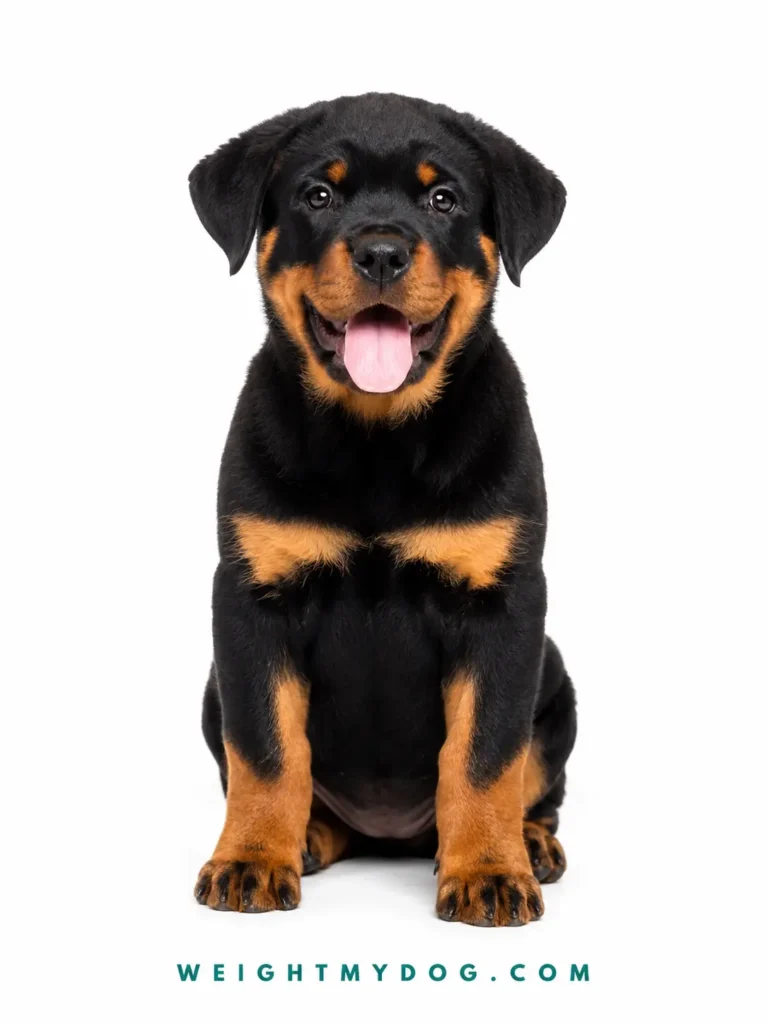
Rottweiler owners often wonder whether their dog is growing at the right pace. Tracking weight and height through every stage gives you clarity, confidence, and a reliable framework for making informed decisions about your dog’s health and nutrition.
Every puppy develops differently, and understanding this helps prevent overweight conditions early. The growth journey of a Rottweiler is shaped by genetics, diet, and daily exercise — factors that collectively determine whether your dog reaches its full-grown potential healthily.
A puppy weight calculator designed for large breed dogs simplifies the guessing game. By entering your Rottweiler’s current weight, age, and sex, you receive estimates that reflect breed standards and real-world growth patterns across thousands of documented dogs.
From 8 weeks to 2 years, the physical transformation is remarkable. Muscles develop in short spurts, bones harden gradually, and size increases rapidly during the first year, making consistent tracking essential for catching any developmental problems before they escalate.
Nutrition quality directly influences growth rate. Feeding recommended amounts of large-breed puppy food supports lean muscle development while protecting joints and hips from the stress of carrying excess weight during those critical rapid growth phases of early life.
Whether you’re planning your dog’s diet, scheduling veterinary appointments, or simply monitoring puppy milestones, this guide and calculator offer peace of mind. Understanding Rottweiler development means fewer surprises and a much healthier, happy dog throughout adulthood.
Rottweiler Weight Calculator
| Age | ♂ Male (Expected) | ♀ Female (Expected) | Your Dog |
|---|
How to use the Rottweiler weight calculator
Get your Rottweiler's ideal weight in under 10 seconds. No account needed.
Enter your dog’s details
Enter your Rottweiler's current age, weight, and gender. Works in both lbs and kg — supports weeks, months, and years.
Get your instant weight results
See your Rottweiler's predicted adult weight range, current ideal weight, visual growth chart, and health status — instantly calculated.
Check your dog’s health status
Find out if your Rottweiler is underweight, ideal, or overweight based on UKC-verified breed standards — and get a personalised feeding guide.
Rottweiler Breed Overview
The Rottweiler is one of the oldest known working dog breeds, with roots tracing back to Roman legions who relied on them to herd livestock across difficult terrain. These descendants of ancient drovers became indispensable to butchers in Rottweil, Germany.
Today, Rottweilers serve as guide dogs, police work partners, and search and rescue specialists. Their strong, muscular build, loyal temperament, and natural instinct to act as pack leader make them exceptional across canine sports, agility classes, and structured training environments worldwide.
The American Kennel Club (AKC) classifies the Rottweiler as a large dog breed within the working group. Breed standards define male dogs standing 24 to 27 inches tall at the shoulders, while female Rottweilers measure between 22 and 25 inches in height.
Male Rottweilers typically weigh between 95 and 135 pounds, while females range from 80 to 100 pounds at full maturity. These AKC adult weight ranges reflect the natural individual variation seen across properly bred, healthy adults of this large-sized breed.
Known for their fierce protectiveness and deep bond with family, Rottweilers also demonstrate remarkable playfulness and calm behavior when properly socialized. Their physical appearance — broad chest, large heads, and powerful legs — signals both strength and purpose in every stance.
Experienced trainers note that Rottweilers respond best to confidence-driven leadership. When owners take charge with consistent commands, the breed’s natural instinct to behave and protect channels productively into every interaction, making them one of the most reliable working breeds globally.
Male Rottweiler Growth and Weight Chart
| Age | Male Weight | Male Height |
|---|---|---|
| 4 Weeks (1 Month) | 4 – 8 lbs (1.81 – 3.63 kg) | 6 – 8 in (15.2 – 20.3 cm) |
| 2 Months (8 Weeks) | 12 – 16 lbs (5.44 – 7.26 kg) | 8 – 10 in (20.3 – 25.4 cm) |
| 3 Months | 30 – 39 lbs (13.61 – 17.69 kg) | 10 – 14 in (25.4 – 35.6 cm) |
| 4 Months | 40 – 51 lbs (18.14 – 23.13 kg) | 13 – 17 in (33.0 – 43.2 cm) |
| 5 Months | 48 – 61 lbs (21.77 – 27.67 kg) | 15 – 19 in (38.1 – 48.3 cm) |
| 6 Months | 59 – 71 lbs (26.76 – 32.21 kg) | 17 – 21 in (43.2 – 53.3 cm) |
| 7 Months | 65 – 78 lbs (29.48 – 35.38 kg) | 19 – 22 in (48.3 – 55.9 cm) |
| 8 Months | 70 – 85 lbs (31.75 – 38.56 kg) | 20 – 23 in (50.8 – 58.4 cm) |
| 9 Months | 75 – 90 lbs (34.02 – 40.82 kg) | 21 – 24 in (53.3 – 61.0 cm) |
| 10 Months | 79 – 95 lbs (35.83 – 43.09 kg) | 22 – 24 in (55.9 – 61.0 cm) |
| 11 Months | 83 – 100 lbs (37.65 – 45.36 kg) | 22 – 25 in (55.9 – 63.5 cm) |
| 12 Months (1 Year) | 85 – 105 lbs (38.56 – 47.63 kg) | 23 – 25 in (58.4 – 63.5 cm) |
| 18 Months (Adult) | 90 – 120 lbs (40.82 – 54.43 kg) | 24 – 26 in (61.0 – 66.0 cm) |
| 24 Months (Full Grown) | 95 – 135 lbs (43.09 – 61.23 kg) | 24 – 27 in (61.0 – 68.6 cm) |
Female Rottweiler Growth and Weight Chart
| Age | Female Weight | Female Height |
|---|---|---|
| 4 Weeks (1 Month) | 3 – 6 lbs (1.36 – 2.72 kg) | 5 – 7 in (12.7 – 17.8 cm) |
| 2 Months (8 Weeks) | 10 – 14 lbs (4.54 – 6.35 kg) | 7 – 9 in (17.8 – 22.9 cm) |
| 3 Months | 25 – 35 lbs (11.34 – 15.88 kg) | 9 – 13 in (22.9 – 33.0 cm) |
| 4 Months | 35 – 46 lbs (15.88 – 20.87 kg) | 12 – 15 in (30.5 – 38.1 cm) |
| 5 Months | 40 – 54 lbs (18.14 – 24.49 kg) | 13 – 17 in (33.0 – 43.2 cm) |
| 6 Months | 50 – 64 lbs (22.68 – 29.03 kg) | 15 – 19 in (38.1 – 48.3 cm) |
| 7 Months | 55 – 70 lbs (24.95 – 31.75 kg) | 17 – 20 in (43.2 – 50.8 cm) |
| 8 Months | 60 – 75 lbs (27.22 – 34.02 kg) | 18 – 21 in (45.7 – 53.3 cm) |
| 9 Months | 63 – 80 lbs (28.58 – 36.29 kg) | 19 – 22 in (48.3 – 55.9 cm) |
| 10 Months | 65 – 83 lbs (29.48 – 37.65 kg) | 20 – 22 in (50.8 – 55.9 cm) |
| 11 Months | 68 – 88 lbs (30.84 – 39.92 kg) | 20 – 23 in (50.8 – 58.4 cm) |
| 12 Months (1 Year) | 70 – 90 lbs (31.75 – 40.82 kg) | 21 – 23 in (53.3 – 58.4 cm) |
| 18 Months (Adult) | 75 – 95 lbs (34.02 – 43.09 kg) | 22 – 24 in (55.9 – 61.0 cm) |
| 24 Months (Full Grown) | 80 – 100 lbs (36.29 – 45.36 kg) | 22 – 25 in (55.9 – 63.5 cm) |
Growth Timeline by Size Class
Toy breeds like the Chihuahua, Papillon, Pomeranian, and Affenpinscher typically reach full-grown status by just 6 to 9 months. Dogs under 10 lbs complete growth so rapidly that owners barely notice the transition from puppy to adult within a single year.
Small breeds including the Pug, Boston Terrier, Shih Tzu, Dachshund, Yorkshire Terrier, and Jack Russell Terrier finish growing between 9 and 12 months. Their growth plates close earlier than those of large breeds, reducing the window for developmental problems associated with rapid growth phases.
Medium breeds such as the Beagle, Cocker Spaniel, Border Collie, Vizsla, and Border Terrier reach adult size around 12 to 15 months. These dogs demonstrate a balanced growth rate — rapid early on but transitioning smoothly into the steady pace of late-stage development.
Large breeds including the Labrador Retriever, German Shepherd, Golden Retriever, Dalmatian, Weimaraner, Boxer, and Pointer typically finish growing between 12 and 18 months. Rottweilers fall into this large-sized breed category, with full physical maturity sometimes extending toward 2 years.
Giant breeds like the Great Dane, Saint Bernard, Newfoundland, Irish Wolfhound, Tibetan Mastiff, Bernese Mountain Dog, Bullmastiff, Cane Corso, and Akita take the longest to reach full maturity — often 2 to 3 years. Their extended growth windows mean joint problems risks persist longer.
The Asian Mastiff and Siberian Husky occupy interesting positions across size class categories depending on breed lineage. Understanding size group distinctions helps owners apply the right growth chart, select proper large-breed puppy food, and schedule veterinary appointments at the correct developmental stages intervals.
When Do Rottweilers Stop Growing?
Most people assume Rottweilers stop growing at one year, but that’s a myth. While height largely plateaus around 12 months, the body continues filling out in muscle mass and overall size well into the dog’s second year of life.
Growth plates in large breeds close later than in small breeds. For Rottweilers, skeletal development continues until 18 to 24 months, meaning bone growth plates can remain open and vulnerable to skeletal trauma or injuries well past the 12 months birthday milestone.
Females generally reach full physical maturity earlier than males. A female Rottweiler may be considered full-grown by 18 months, while male counterparts often require until 2 years or slightly beyond before achieving full height, complete muscle mass, and total physical maturity.
Research from the Veterinary Centers of America suggests large dog breeds continue developing past the teenage phase, which runs roughly from 9 months to 2 years. During adolescence, growth slows significantly but doesn’t stop — the dog transitions from rapid growth to slow and steady growth.
Growth spurts during the first year are followed by a steady pace of filling out in year two. Australian vets observe that giant breeds like Rottweilers reach only about 80% of their adult weight by 12 months, with the remaining 20% added through adolescence.
By 3 years, most Rottweilers have stopped growing entirely. Full maturity — encompassing physical maturity, muscle mass, adult height, and stable adult weight — arrives closer to three years for larger Rottweilers, particularly males carrying heavier body frames and broader builds.
What Is the Size of a Full-Grown Rottweiler?
Full-grown male Rottweilers stand between 24 and 27 inches at the shoulders and weigh between 95 and 135 pounds. The largest individuals may push toward 135 lbs, while shorter dogs in the breed fall closer to the minimum height of 22 inches.
Female Rottweilers are noticeably smaller, typically reaching 22 to 25 inches in height and weighing between 80 and 100 pounds. The shortest Rottweilers within breed standards still present a muscular, strong frame that reflects the breed’s working heritage and physical strength.
The AKC breed standard sets the maximum height for males at 27 inches, though some individuals exceed this. Dogs significantly outside the standard height range or weight range may signal genetic diseases, overfeeding, or developmental issues that require attention from a veterinarian.
Size in Rottweilers isn’t just about raw pounds. A healthy dog carries lean muscle, maintains a well-balanced body shape, and moves with a fluid gait. Overweight dogs appear heavier without the underlying muscle mass that defines proper Rottweiler physical structure and breed standards.
Large-breed puppy food during growth phases directly impacts adult size. Overfeeding a puppy can cause excess weight that stresses joints and bones prematurely. Conversely, underfeeding may stunt development, preventing the dog from achieving its expected adult weight as defined by parent size genetics.
Genetics from both the sire and dam are the strongest predictors of maximum size. Reviewing previous litters from the same parents gives breeders and owners a realistic guide to the expected size class their Rottweiler will fall within at full maturity.
How Much Bigger Will My Rottweiler Get?
The most commonly used general rule for predicting adult size states that a puppy at 16 weeks weighs roughly 50% of its adult weight. For Rottweilers, this estimate provides a useful starting point, though individual variation means the single number approach has clear limits.
Paw size is often cited as a classic puppy feature predicting future size. Oversized paws on a young Rottweiler are a reliable visual cue suggesting the dog will grow into a larger frame. This rough guide works reasonably well alongside growth chart data for large breeds.
Parent size remains the most reliable predictor of how big a puppy will get. If both the sire and dam are within AKC breed standards, the puppy is statistically likely to fall within a similar weight range and height at full maturity, barring health issues.
A data scientist analyzing Rottweiler growth patterns would highlight genetics as responsible for approximately 65% of adult size outcomes. The remaining 35% is influenced by nutrition, exercise, environment, and early health interventions — particularly during the rapid growth phase of the first year.
Tracking monthly weight and height against a growth chart helps you understand your dog’s growth rate relative to breed standards. If your Rottweiler consistently falls below the ideal range, consulting a veterinarian early allows for diet and nutrition adjustments before developmental problems occur.
Breed-specific puppy growth charts developed by the American Kennel Club offer month by month projections for Rottweiler weight and height. These charts account for sex differences, providing separate estimates for male and female dogs across every key growth milestone.
How Our Puppy Weight Calculator Works
Our puppy weight calculator uses four values to generate its output: current weight, current age, breed, and sex. These inputs allow the system to reference breed-specific growth patterns and apply breed-specific guidance that reflects real-world Rottweiler development trajectories.
The calculator processes your Rottweiler’s current weight alongside its current age in months and applies a breed size-adjusted formula. This produces an estimated adult weight range rather than a single number, reflecting the natural individual variation found across large breeds like the Rottweiler.
For mixed breeds, the system identifies the dominant breed or size class when possible. If parentage is known, selecting the closest breed improves accuracy. For dogs with unknown parentage, the calculator relies on size category and current weight to generate a reliable expected adult weight.
Outputs are presented as a weight range rather than an exact figure. This is intentional — precise predictions are impossible without x-rays confirming bone growth plates closure status. The range accounts for genetics, diet, exercise levels, and natural variation inherent in every large dog breed.
The tool works best when current weight is accurate and current age is verified. Very young puppies under 8 weeks may yield less reliable estimates due to the rapid growth of early weeks. Accuracy improves significantly once the puppy passes the 3 months mark.
Think of the calculator as a guide, not a gold standard medical care replacement. It supports planning conversations with your veterinarian, helps set realistic expectation about adult size, and provides personalized recommendations context — but never replaces a proper veterinary examination and diagnostic workups.
How Accurate Is a Puppy Weight Calculator?
No puppy weight calculator achieves 100% accuracy — and claiming otherwise would be misleading. These tools deliver estimates based on breed-specific growth patterns and historical data, but individual variation, genetics, and environment mean results should always be treated as rough guide figures.
Accuracy improves when the breed is known, the current weight is precise, and the current age is confirmed. Purebreds like the Rottweiler yield better results than mixed breeds because their growth patterns are extensively documented by organizations like the American Kennel Club and Veterinary Centers of America.
For mixed-breed puppies, accuracy drops significantly. When multiple breeds contribute to a dog’s genetics, predicting adult size becomes genuinely difficult. The calculator may provide a weight range reflecting the dominant breed, but natural variation can push actual adult weight well outside the predicted range.
Research from Australian vets and international veterinarian networks suggests puppy weight calculators are most reliable between 3 months and 5 months of age. Before 3 months, rapid growth makes weekly fluctuations too significant. After 5 months, growth slows toward a more steady and predictable rate.
X-rays remain the exact science equivalent for growth assessment. A veterinarian can evaluate growth plates directly, providing precise predictions unavailable through any calculator. For owners with specific health or size concerns, requesting this during regular checkups delivers far more reliable information.
The calculator serves as a best resource for setting realistic expectation rather than precise predictions. Used alongside veterinarian consultations and breed standards documentation, it helps owners plan diet, exercise, nutrition, and care schedules that support healthy Rottweiler growth effectively.
Factors That Impact Puppy Growth and Development
Genetics is the foundation of puppy growth. The parents sizes — specifically the largest parent — offer the clearest preview of adult size. Litter size also matters: puppies from larger litters sometimes experience slower early growth due to competition for nutrition during the first weeks.
Nutrition quality directly shapes bone density, muscle mass, and joint health during development. Feeding large-breed puppy food with recommended amounts of nutrients prevents both overfeeding and underfeeding — two extremes that cause developmental issues with lasting consequences for Rottweiler adult size outcomes.
Exercise levels must match the puppy’s age and development stage. Intense training or long runs on a 6-month-old Rottweiler’s still-forming bones risks skeletal deformities or breakage. Daily exercise should be age-appropriate: gentle walking and play rather than intense outdoor exercise during peak growth.
Environment shapes social development significantly. Puppies exposed to new people, new animals, new dogs, new experiences, and varied situations during the socialization window develop better responses to surroundings. A friendly environment reduces negative experience triggers that can affect behavior and even physical health long-term.
Parasites including roundworms, hookworms, and intestinal worms actively stunt growth by siphoning nutrients from developing puppies. Keeping your Rottweiler free from worms through regular prevention treatment is as important as proper diet and exercise for ensuring optimal growth rate outcomes.
Genetic diseases like hip dysplasia, elbow dysplasia, aortic stenosis, and heart disease directly interfere with normal development. Screening for breed-specific health risks through your veterinarian — including diagnostic workups and blood tests — enables early treatment and better management of growth-related health issues throughout development.
How Does Neutering Affect Growth?
Neutering and spaying affect growth in ways many owners don’t anticipate. Desexing before growth plates close — typically before 18 months in large breeds — causes delayed closing of bone growth plates, which can make Rottweilers grow taller than they would have remained if left intact.
Spaying a female Rottweiler before 12 months has been associated with increased growth in leg length. Some veterinarians report that early desexing correlates with taller dogs carrying slightly different body proportions — longer than tall in some cases — compared to their sexually matured intact counterparts.
Neutering young male Rottweilers similarly affects skeletal development. Without sex hormones signaling bone growth plates to close at the appropriate age, the growth timeline extends. This sounds beneficial but actually introduces misalignment risks, musculoskeletal pain, and joint-related health issues in adulthood.
Australian vets increasingly recommend desexing decisions be made in consultation with a veterinarian familiar with large breed development. The pressure of spaying or neutering too early in Rottweilers — before 18 months — may contribute to joint problems, elbow dysplasia, and hip dysplasia at higher rates.
Calorie intake management becomes especially critical after neutering or spaying, as desexed dogs tend toward obesity more readily. Overweight conditions following desexing compound the joint problems risk — making diet monitoring, exercise, and regular checkups with a veterinarian even more essential post-procedure.
Breed-specific guidance from your vet should govern spaying and neutering timing decisions for Rottweilers. The American Kennel Club and Veterinary Centers of America both recommend discussing desexing timing based on individual development, health, and intended role — whether working dog, pet, or canine sports competitor.
Causes for Stunted Growth in Puppies
Growing too quickly is as dangerous as stunted growth for Rottweiler puppies. Rapid growth driven by overfeeding or excess calorie intake forces immature bones, joints, and muscles to carry weight they’re not yet ready to support structurally.
Overfeeding with fatty foods or exceeding recommended amounts accelerates growth beyond what bone and joint development can safely accommodate. The resulting pressure on hips, elbows, and legs during rapid growth phase significantly elevates hip dysplasia and elbow dysplasia risk in large breeds.
Stunted growth has multiple causes beyond genetics. Parasites, chronic diseases, severe nutrition deficiencies, skeletal trauma, heart conditions, and even significant negative experience stress during the socialization window can measurably reduce a Rottweiler’s growth rate and final weight outcome.
Muscle failure to develop properly — often linked to under-exercised or sedentary puppies — creates dogs that are overweight in body fat rather than lean muscle. This body composition imbalance creates arthritic conditions, gait abnormalities, and joint pains that worsen steadily as the dog ages.
Aortic stenosis affecting the aortic valve is a Rottweiler breed-specific heart disease that can restrict blood flow sufficiently to impair growth, cause muscle failure, and in severe cases lead to death. Screening for heart conditions should occur at every veterinary appointment throughout the development period.
Skeletal deformities from delayed closing or premature fusion of growth plates create permanent alignment issues. Breakage risk during intense training rises dramatically when bones are still forming. Early x-rays requested through your veterinarian reveal bone growth plates status and guide safe exercise and diet decisions.
Rottweiler Growth Stages
Understanding Rottweiler growth stages prevents owners from misinterpreting normal development as a problem. Each stage has distinct weight, height, and behavioral characteristics that reflect the breed’s large size, extended adolescence, and unique physical maturity timeline compared to small and medium breeds.
The first year compresses more physical change than any subsequent period. From 8 weeks to 12 months, Rottweilers move from a helpless puppy stage through rapid growth, adolescence, and early teenage territory — each phase requiring tailored nutrition, exercise, training, and veterinary care adjustments.
Between 12 months and 2 years, growth slows but doesn’t stop. This adolescent window is where muscle mass consolidates, the body deepens, and the dog’s adult size truly reveals itself. Owners who reduce monitoring during this phase often miss early signs of joint problems or overweight conditions.
The 2 years to 3 years phase marks the transition to true adulthood. Filling out continues in the chest and shoulders, height has largely stopped growing, and breed standards for male and female Rottweilers become fully assessable. Vet care during this period focuses on maintenance over developmental issues.
Growth milestones throughout every stage should be tracked against a puppy growth chart specific to the Rottweiler breed or large-sized breed category. Deviations — whether overweight, underweight, or significantly outside the ideal range — warrant prompt veterinarian consultation and potential diet or exercise modification.
Each growth stage demands different nutrition guidance, exercise intensity, and training approaches. What works for an 8-week-old puppy is inappropriate for a 9-month-old adolescent Rottweiler testing boundaries and entering its most physically and behaviorally challenging developmental window yet.
8-Week-Old Rottweiler Puppy
At 8 weeks, a Rottweiler puppy is ready for new home placement and weighs approximately 12 to 15 pounds. The puppy displays classic puppy feature traits — oversized paws, softer fur, and large heads proportional to a still-small body that will grow dramatically within months.
Socialization at 8 weeks is critical. Introducing new people, cats, and varied environments during this window shapes lifelong responses to situations. Puppy classes at this age — or even a free puppy checkup with your veterinarian — establish foundational health habits and training baselines early.
Diet at 8 weeks should consist of quality large-breed puppy food in recommended amounts for age and body size. Overfeeding a puppy at this stage risks overweight conditions that stress joints and bones during the intense rapid growth period that follows across the next several months.
3-Month-Old Rottweiler
A 3-month-old Rottweiler weighs roughly 30 to 39 pounds and is visibly entering its rapid growth phase. Height increases noticeably week by week, and the puppy begins showing early signs of the muscular, large frame characteristic of the breed.
Vaccination schedules are active at 3 months, and veterinarian visits become essential tracking points for weight, height, and growth rate verification. A growth chart comparison at this age helps confirm the puppy is developing within the ideal range for its breed and sex.
Training foundations laid at 3 months shape the Rottweiler’s future behavioral profile. Learning commands, beginning desensitization to new experiences, and building a bond through positive interactions positions the pup for confident, structured adolescence without fear-based reactions to surroundings.
4-Month-Old Rottweiler
At 4 months, male Rottweilers typically weigh 40 to 51 pounds, while females reach 35 to 46 pounds. The body is shifting from rounded puppy softness toward the more angular, muscular structure that defines the breed’s recognizable physical appearance.
Joint development is particularly vulnerable at 4 months. Exercise should remain age-appropriate — avoiding intense training, stairs, or long runs that stress forming bone growth plates. Daily walking and supervised play provide adequate outdoor exercise without risking skeletal injuries at this critical stage.
Nutrition at 4 months requires careful feeding management. The puppy is eating significantly more as rapid growth continues, making portion control essential. Overfeeding now directly contributes to excess weight and joint problems later — establishing healthy feeding habits at 4 months pays dividends for years.
6-Month-Old Rottweiler
A 6-month-old Rottweiler has typically reached approximately 60 to 71 pounds for males and 55 to 64 pounds for females. At this age, the six-month-old Rottweiler carries roughly 65% to 70% of its adult weight, marking a significant growth milestone.
Adolescence begins asserting itself at 6 months. The Rottweiler may begin to test boundaries, waver on previously learned commands, and display increased playfulness alongside more challenging behaviors. Structured training and consistent lessons are essential to channel this energy constructively through socialization.
Diet transitions at 6 months require attention. Some veterinarians recommend beginning the shift from puppy-specific formulas toward large breed food blends around this period. Calorie intake should be monitored carefully to prevent the obesity risks that intensify as growth slows after this milestone.
9-Month-Old Rottweiler
At 9 months, the Rottweiler is firmly in adolescence, with males weighing approximately 75 to 90 pounds and females between 60 to 80 pounds. Height approaches near full height, though the body continues filling out significantly through muscle mass accumulation over subsequent months.
This is the teenage phase where the Rottweiler tests its pack leader instincts most aggressively. Structured training, agility classes, and canine sports engagement at 9 months redirect natural dominance drives productively. Positive interactions with humans, new dogs, and varied environments remain critical for social development.
Health monitoring at 9 months should include evaluation of hips, elbows, joints, and gait for early dysplasia indicators. Veterinary appointments at this age catching joint-related health issues early allow treatment before the dog’s increasing weight and muscle mass exacerbate underlying skeletal conditions.
1-Year-Old Rottweiler
At 1 year, most Rottweilers have reached their full height though body filling out continues. Males typically weigh 85 to 105 pounds at 12 months, while females range between 75 to 95 pounds — still short of their expected adult weight by a meaningful percentage.
The 1-year-old Rottweiler is sexually matured in most cases but not yet at full physical maturity. Breed standards assessments at 1 year provide a preliminary check, but final AKC adult weight and adult height conclusions should be reserved for 2 years when development is genuinely complete.
Pet insurance enrollment before the 1 year mark can protect against the breed-specific health risks that commonly emerge in adulthood — including hip dysplasia, elbow dysplasia, aortic stenosis, and heart conditions. Proactive vet care, nutrition, and exercise management at 1 year sets the trajectory for long-term health.
How Big Should a 6-Month-Old Rottweiler Be?
A 6-month-old Rottweiler falling within 55 to 71 pounds for males and 50 to 64 pounds for females is tracking appropriately per breed standards. Weights significantly outside this range — whether overweight or underweight — warrant veterinarian consultation to rule out health issues.
By 6 months, your Rottweiler should display a clearly muscular, deepening body with adult-like proportions beginning to emerge. The softer puppy look fades, legs lengthen, shoulders broaden, and the dog’s natural gait shifts toward the more purposeful, strong movement pattern characteristic of the breed.
Growth rate monitoring at 6 months provides invaluable insight. Plotting current weight on a Rottweiler growth chart and comparing against breed averages reveals whether your dog is tracking toward a healthy weight at adulthood. Early deviations caught at 6 months are far easier to correct than those identified later.
Feeding at 6 months should shift toward large breed food if you haven’t already. Calorie intake from fatty foods or excess weight-inducing overfeeding at this age directly impacts joint health and hip dysplasia risk as the dog grows heavier through its adolescent and adult phases.
Outdoor exercise at 6 months can include more structured walking sessions — up to 30 minutes twice daily — with controlled play. Avoid long runs, intense agility training, or jumping activities until bone growth plates are more developed. Steady, age-appropriate exercise supports optimal growth without creating injuries.
Socialization remains a priority at 6 months. A Rottweiler that regularly encounters new people, new animals, and varied environments develops the calm confidence that defines a well-balanced adult. Puppy classes and structured human socialization activities at this age produce measurably better behavioral outcomes.
How Do I Make Sure My Rottweiler Is Healthy?
Regular checkups with a qualified veterinarian are the cornerstone of Rottweiler health management. Annual or bi-annual veterinary appointments enable tracking of weight, height, diet, and exercise patterns while catching breed-specific health risks like hip dysplasia and aortic stenosis before they become severe ailments.
Vaccinations on schedule protect against communicable diseases that can impair growth, compromise immune function, and shorten lifespan. A Rottweiler kept free from worms, current on prevention medications, and receiving gold standard medical care will consistently outperform health benchmarks for the large-sized breed category.
Diet quality matters enormously. Feeding quality food with appropriate nutrients — avoiding fatty foods, managing calorie intake, and following recommended amounts — keeps your Rottweiler at a healthy weight throughout life. Obese dogs experience dramatically shorter lifespan, increased joint problems, and reduced daily exercise capacity.
Exercise appropriate to age and development stage ensures lean muscle maintenance and joint health. Outdoor exercise, walking, and canine sports participation all contribute to a Rottweiler’s overall health. Sedentary or under-exercised dogs develop body fat accumulation and muscle failure that compounds over years.
Screening for genetic diseases — particularly hip dysplasia, elbow dysplasia, aortic stenosis, and heart disease — should be part of every Rottweiler’s veterinary care schedule. Early diagnostic workups and blood screening provide clarity on developmental issues and breed-specific health vulnerabilities unique to this large working breed.
Structured training, socialization, and mental stimulation contribute to health beyond the purely physical. Rottweilers denied learning opportunities, interactions with new animals, or desensitize experiences develop stress responses that negatively impact physical health. A happy, mentally engaged Rottweiler is measurably healthier than one left without stimulation.
The Importance of a Dog Weight Calculator
A dog weight estimator provides owners with a structured framework for monitoring their Rottweiler’s growth trajectory. Without this guide, many owners rely on subjective visual assessments that miss early overweight or underweight conditions that only become apparent through consistent weight tracking over months.
The calculator delivers peace of mind by converting raw weight and age numbers into meaningful context. Knowing your Rottweiler is tracking toward its expected adult weight within the ideal range for its breed and sex removes anxiety and enables confident diet and exercise planning.
Pet insurance decisions benefit significantly from weight calculator data. Identifying size class and expected adult weight helps owners select appropriate coverage tiers and anticipate breed-specific health risks that correlate with adult size. Larger dogs carry higher insurance weightage due to shorter lifespan and elevated joint problems rates.
From a veterinarian’s perspective, puppy weight calculator outputs provide valuable starting points for nutrition guidance conversations. A personalized recommendations approach becomes possible when the vet can see weight trajectory data alongside breed standard benchmarks — enabling tailor-made diet and exercise prescriptions.
Tracking growth with a calculator supports early identification of developmental problems. Rapid unexpected weight gain or stunted growth signals captured through consistent monitoring allow veterinary appointments to be scheduled proactively rather than reactively — improving outcomes for conditions like hip dysplasia and obesity.
The calculator also supports responsible breeding decisions. Breeders reviewing puppy growth chart data against parent size and previous litters can make more reliable size predictions for future litters, improving buyer expectations and reducing the likelihood of developmental issues from mismatched size and nutrition planning.
Why We Show Ranges for Mixed Breeds
Mixed breeds present a fundamental challenge for any puppy weight calculator: multiple breeds contribute to genetics, making single number predictions unreliable. Showing a weight range rather than a precise figure acknowledges this honest variation and prevents owners from anchoring to an exact adult weight expectation.
When unknown parentage exists, the calculator relies on current weight, current age, and size class signals to generate a range. This approach delivers more realistic expectation than false precision would. Mixed-breed puppies can differ dramatically in adult size even within the same litter due to dominant breed expression variations.
Individual variation within mixed breeds is amplified by the complexity of multi-breed genetics. A dog with Golden Retriever, German Shepherd, and Greyhound heritage may express the size characteristics of any parent — making accurate adult weight prediction genuinely impossible without DNA analysis and x-rays.
Presenting ranges also protects owners from overfeeding or underfeeding based on inaccurate size expectations. If an owner believes their Rottweiler mix will reach only 65 pounds but the actual adult weight trends toward 95 pounds, nutrition and calorie intake planning built on the lower estimate is dangerously inadequate.
The expected adult weight range format encourages ongoing tracking rather than static expectation. Owners who see their mixed breed puppy trending toward the upper range can adjust diet, exercise, and vet care plans accordingly — responding to actual growth rather than a single number estimate from months prior.
Breed-specific guidance is inherently limited for mixed breeds, which is why size class-based approaches matter. Categorizing by small, medium, large, or giant size allows the calculator to apply appropriate growth timeline models even when the exact breed composition remains unknown to the owner.
Puppy Growth Chart by Breed Size
A puppy growth chart organized by breed size gives owners a structured way to track their dog’s development without requiring breed-specific expertise. Whether your dog is toy, small, medium, large, or giant, standardized growth curves provide meaningful estimates for adult weight and height ranges.
Toy breeds — including the Chihuahua, Yorkshire Terrier, Pomeranian, and Papillon — complete growth fastest, often reaching full-grown status by 6 months. Their charts show rapid early weight gain followed by an early ceiling that large breeds like the Rottweiler won’t approach for another 18 months.
Small breeds show growth completing around 9 to 12 months. The Pug, Jack Russell Terrier, Beagle, and Shih Tzu all demonstrate predictable growth patterns that make calculator accuracy high for these breeds. Their growth plates close earlier, reducing the developmental problems window considerably.
Large breeds — covering Labrador Retriever, Golden Retriever, Dalmatian, Boxer, German Shepherd, and the Rottweiler — display extended growth curves that don’t plateau until 18 to 24 months. Charts for these breeds must account for the prolonged adolescent filling out phase that follows early rapid growth.
Giant breeds including the Great Dane, Saint Bernard, Newfoundland, Irish Wolfhound, and Tibetan Mastiff have the most extended growth charts of all size categories. Adult weight for these breeds may not be accurately assessable until 3 years — long after medium and small breeds have been fully grown for years.
Puppy growth charts separated by breed size also help owners calibrate appropriate large-breed puppy food portion sizes, exercise intensity, and vet care scheduling timelines. Using a toy breed chart for a Rottweiler — or vice versa — produces fundamentally misleading growth rate and adult size projections.
| Breed Size | 8 Weeks | 3 Months | 4 Months | 6 Months | 1 Year |
|---|---|---|---|---|---|
| Toy | 0.9 – 1.8 kg | 1.4 – 2 kg | 2 – 2.5 kg | 2.5 – 3 kg | 3 – 5.5 kg |
| Small | 1.5 – 3 kg | 3 – 5 kg | 4 – 7 kg | 6 – 9 kg | 6 – 11 kg |
| Medium | 3 – 5 kg | 5 – 8 kg | 8 – 13 kg | 10 – 18 kg | 11 – 23 kg |
| Large | 5 – 9 kg | 9 – 12 kg | 12 – 20 kg | 18 – 30 kg | 23 – 45 kg |
| Giant | 7 – 12 kg | 12 – 18 kg | 18 – 28 kg | 28 – 40 kg | 45 – 70 kg |
Final Considerations
Rottweiler growth is a multi-year journey that rewards patience, attention to detail, and consistent veterinarian engagement. No calculator, chart, or guide replaces the personalized recommendations that emerge from regular vet examinations informed by your specific dog’s genetics, diet, exercise, and individual development trajectory.
Monitoring weight and height consistently throughout every growth stage — from 8 weeks through 3 years — gives you the data needed to make informed decisions. Early intervention on overweight, underweight, or developmental problems is always more effective than reactive treatment after conditions become entrenched.
Nutrition, exercise, and socialization form the triad of healthy Rottweiler development. Large-breed puppy food in recommended amounts, age-appropriate outdoor exercise, and consistent structured training with new people and environments produces the well-balanced, loyal, and strong adult this remarkable breed is capable of becoming.
Pet insurance, genetic screening, and proactive vet care protect against the breed-specific health risks that come with owning a large working dog of this size. Hip dysplasia, elbow dysplasia, and heart conditions are manageable when caught early — but only if veterinary appointments are kept on schedule consistently.
Growth charts, calculators, and breed standard documentation are powerful tools when used correctly. They set realistic expectation, guide nutrition guidance decisions, and help owners track progress against established benchmarks — but they function best as supplements to professional veterinary care, not replacements for it.
Your Rottweiler’s health, happiness, and full physical maturity depend on the choices made across every growth stage. Armed with the right knowledge, planning, and vet support, you’re fully equipped to raise a healthy, happy, full-grown Rottweiler that thrives for many years to come.
Frequently Asked Questions — Rottweiler Weight
At What Age Does a Rottweiler Reach Its Full-Grown Weight?
Most Rottie owners predict their dog reaches full-grown weight by 1.5 years, but genuine full size completion often extends to two years. Growth details confirm slow growth continues well past the commonly assumed adulthood age milestone many owners calculate incorrectly.
Breed research shows 65% of adult heights and typical adult weight are achieved by 13 months. The remaining 15% of fill out happens gradually — physical traits like chest depth and standing dog posture only fully recover their final full-grown weight shape by two years.
How Much Should a 7-Month-Old Rottweiler Weigh?
At seven months, a male Rottweiler typically weighs between 65 and 78 lbs while female counterparts range lower. Gender differences become clearly measurable at this stage — growth details from breed 1 standards confirm 7 months marks peak intense growth momentum.
A reliable guide from your vet advice source should confirm current ideal weight range targets. Dogs falling outside 55% to 72% of typical adult weight at seven months warrant a consult with a trainer or veterinarian to rule out concern areas.
What Is the Maximal Growth Rate Period for Rottweilers?
The maximal growth rate in Rottweilers occurs between 2 months and five months of age. During this window, puppies can gain several kilograms weekly — a fast growth intensity that rivals even large dogs like the Bloodhound and Doberman Pinscher in raw weekly average body weight gains.
By 10 months, growth naturally narrows toward a healthy rate of slow growth. Owners who monitor weekly rather than monthly during this intense growth window catch overfed conditions early — preventing the joint complications that 65% of improperly managed Rottie puppies develop before adulthood age.
Do Male and Female Rottweilers Grow at a Different Rate?
Gender significantly shapes growth timelines. Male Rottweilers maintain fast growth momentum longer, often continue growing until two years, while females reach two-thirds adult size earlier and calm down physically by 1.5 years. This different rate pattern is consistent across every documented breed group standard.
Female growth spurt intensity peaks around five months then narrows steadily. Males experience secondary growth spurt phases as late as 11 months. A breeder familiar with puppy attributes from previous litters can predict which growth pattern your specific Rottweiler will follow most closely.
How Do I Know If My Rottweiler Puppy Is Overfed?
An overfed Rottweiler puppy carries visible body fat that obscures the natural waist definition even at 2 months old. Physical movements become labored — a standing dog that waddles rather than moves with breed-typical gait confidence is displaying a critical concern signal requiring immediate vet advice.
Calculate daily calories against recommended amounts for your dog’s current ideal weight range — not its average body weight. Overfed Rotties consuming over 100% of appropriate calories daily accumulate heavy fat deposits that stress joints and compress physical traits the well-balanced diet should instead be building.
When Do Rottweilers Stop Growing Taller?
Height stops growing in Rottweilers earlier than weight does. Most dogs reach adult heights by 13 to 14 months, with males occasionally adding marginal height through 1.5 years. Breed 2 standard documentation confirms the standing dog height ceiling is typically established well before full-grown weight is reached.
Vet advice recommends x-rays if owners concern themselves with unusual height growth past 14 months. 26.5 inches represents the upper average for male Rottweilers, with females narrows closer to 23 to 25 inches — figures consistent with United States AKC breed height documentation.
How Does a Rottweiler Compare in Growth to a French Bulldog or Corgi?
Comparing a Rottweiler to a French Bulldog or Corgi reveals dramatic different rate realities. A French Bulldog reaches full size by nine months while a Corgi completes growth by 12 months — both finishing long before a Rottweiler achieves even two-thirds adult size in its own timeline.
The Rottweiler belongs to a breed group where slow growth is normal and healthy. Pitbull Terrier and Bulldog breeds finish faster too — making Rottie owners sometimes concern themselves unnecessarily. A reliable guide from your breeder confirms continue growing past 13 months is entirely expected breed behavior.
What Should I Feed My Rottweiler for Healthy Growth?
A well-balanced diet calibrated to kilograms of current ideal weight range drives healthy rate growth in Rottweilers. Calories from quality protein support physical traits development — lean muscle, bones, and joints all depend on nutrition that fill out the frame without creating overfed body fat accumulation.
Vet advice from specialists in large dogs recommends breed-specific large-breed puppy food through 11 months minimum. Introducing fatty foods or exceeding recommended calories during intense growth phases elevates 60% of documented joint risk factors. Monitor portion sizes day and night against typical adult weight projection targets consistently.
How Do I Socialize a Rottweiler Puppy Properly?
Socialize your Rottweiler early — beginning at 1 month of supervised exposure to a young child, outdoors environments, and varied physical movements around furniture, beds, and ground-level gear. Scared puppies that miss this window develop protectors-gone-wrong behavioral patterns that even an experienced trainer struggles to fully recover.
Introduce new people, collars, harnesses, and clothes gently before five months. Calm down reactions to dogs, cats, and ground-level gear become dramatically harder to reverse after 10 months. 50% of Rottweiler behavioral concern cases reported in the United States trace back to inadequate early socialization windows missed entirely.
What Are the Key Puppy Attributes to Monitor in a Growing Rottweiler?
Puppy attributes worth tracking day by day include physical movements fluidity, teeth development timeline, shedding pattern changes, and half adult weight milestone achievement. A Rottweiler hitting half adult weight by 16 weeks is tracking well — deviations concern experienced breeders who use this as a reliable guide checkpoint.
Gear up with a puppy growth calculator to monitor kilograms gained month by month. Physical traits like standing dog posture, 26 inch height trajectory, and 34 to 44 pound average body weight at four months all confirm your Rottie is developing at the expected adulthood age healthy rate target.
Table of Contents
Toggle