
Rough Collie Weight Calculator — Free Age & Growth Chart for Your Dog or Puppy
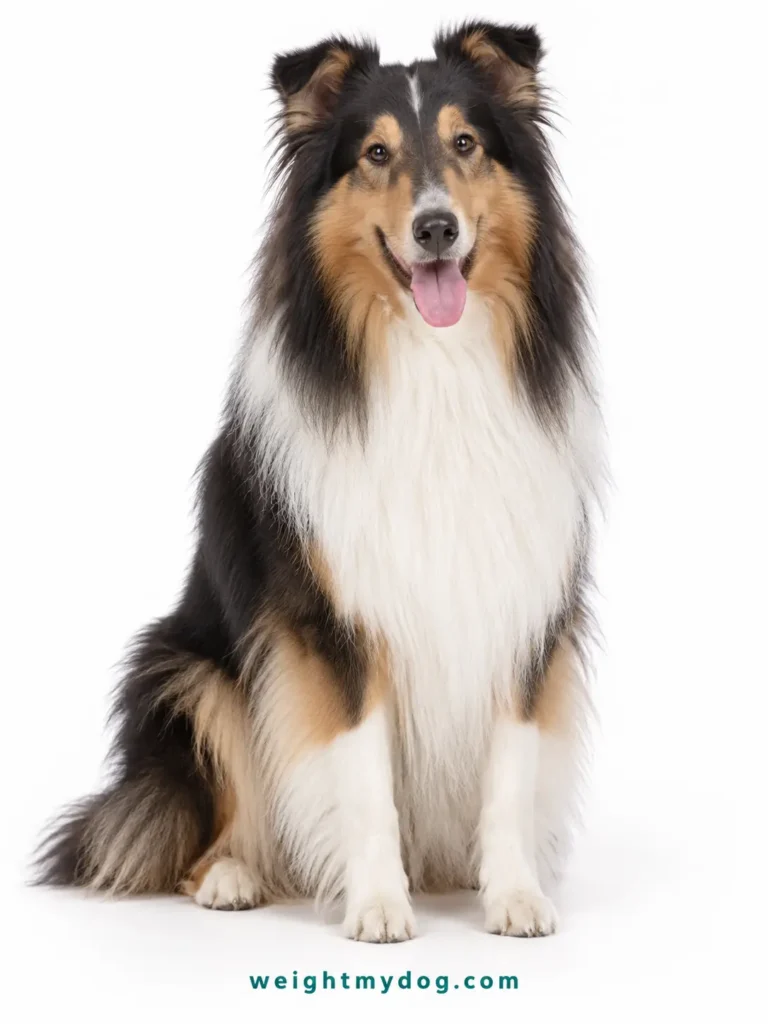
Rough Collies are among the most elegant, intelligent, and loyal herding dogs in North America, originally originated from Scotland and Northern England as working sheep dogs with a powerful build.
Most owners find themselves wondering whether their pup is on the right growth trajectory, and that’s where a puppy weight calculator becomes an incredibly helpful guide for planning ahead.
The Rough Collie carries a rich working heritage rooted in herding livestock across rugged terrain, and this breed’s physical characteristics directly influence how weight and height develop through each growth phase.
A dog size predictor uses age, current weight, and breed inputs to produce outputs like expected adult weight — giving owners a strong starting point for nutritional and lifestyle planning.
Unlike a couch potato companion, the Rough Collie is active, affectionate, eager to please, and built for endurance — traits inherited from its herding breed ancestry that shape metabolism and muscle development throughout life.
Whether you’re tracking a four-month-old pup or a 1 year old dog, understanding growth patterns removes the guesswork and equips you with science-backed information to raise a healthy Rough Collie with confidence.
Rough Collie Weight Calculator
| Age | ♂ Male (Expected) | ♀ Female (Expected) | Your Dog |
|---|
How to use the Rough Collie Weight Calculator
Get your Rough Collie's ideal weight in under 10 seconds. No account needed.
Enter your dog’s details
Enter your Rough Collie's current age, weight, and gender. Works in both lbs and kg — supports weeks, months, and years.
Get your instant weight results
See your Rough Collie's predicted adult weight range, current ideal weight, visual growth chart, and health status — instantly calculated.
Check your dog’s health status
Find out if your Rough Collie is underweight, ideal, or overweight based on AKC-verified breed standards — and get a personalised feeding guide.
Rough Collie Breed Overview
The Rough Collie — sometimes called the Rough-Haired Collie or lassie dog — became a celebrated TV dog through the iconic character Lassie, earning recognition from the American Kennel Club as a family companion with exceptional intelligence and personality traits.
Breed standards established by the AKC define the Rough Collie as a medium-large breed with two coat types: the long coat variety and the Smooth Collie variant, both sharing the same body structure and height specifications.
Males typically reach a male average weight within a weight range of 60–75 lbs, while female dogs fall in a female average closer to 50–65 lbs, reflecting natural size difference driven by gender.
The breed traces its founders through Scotland’s rugged herding landscape, with Border Collies and Smooth Collies sharing ancestral roots, though the Rough Collie’s thick double coats and feathering set it visually apart across the breed spectrum.
From a health standpoint, Rough Collies are predisposed to CEA (Collie Eye Anomaly), hip dysplasia, MDR1 gene mutation, epilepsy, and drug sensitivity — inherited health conditions that responsible owners must address through screening and regular preventative care.
The AKC adult weight and breed weight chart confirm that Rough Collies sit comfortably within the medium-large breeds size category, making them distinct from toy breeds, small dogs, and giant breeds like the Great Dane or Mastiff.
Male Rough Collie Growth, Weight & Height Chart by Age
| Age | Male Weight | Male Height |
|---|---|---|
| Newborn | 0.45 – 1.13 kg (1 – 2.5 lbs) | 7.6 – 10.2 cm (3 – 4 in) |
| 1 Month | 3.6 – 6.8 kg (7.9 – 15 lbs) | 15.2 – 22.9 cm (6 – 9 in) |
| 2 Months | 9 – 13.6 kg (19.8 – 30 lbs) | 25.4 – 35.6 cm (10 – 14 in) |
| 3 Months | 13.6 – 18.1 kg (30 – 40 lbs) | 30.5 – 45.7 cm (12 – 18 in) |
| 4 Months | 15.9 – 22.7 kg (35 – 50 lbs) | 35.6 – 50.8 cm (14 – 20 in) |
| 5 Months | 18.1 – 27.2 kg (40 – 60 lbs) | 40.6 – 55.9 cm (16 – 22 in) |
| 6 Months | 20.4 – 31.8 kg (45 – 70 lbs) | 45.7 – 61 cm (18 – 24 in) |
| 7 Months | 22.7 – 36.3 kg (50 – 80 lbs) | 50.8 – 66 cm (20 – 26 in) |
| 8 Months | 24.9 – 38.6 kg (55 – 85 lbs) | 53.3 – 68.6 cm (21 – 27 in) |
| 9 Months | 27.2 – 40.8 kg (60 – 90 lbs) | 55.9 – 71.1 cm (22 – 28 in) |
| 10 Months | 29.5 – 43.1 kg (65 – 95 lbs) | 58.4 – 73.7 cm (23 – 29 in) |
| 11 Months | 31.8 – 45.4 kg (70 – 100 lbs) | 61 – 76.2 cm (24 – 30 in) |
| 12 Months | 31.8 – 47.6 kg (70 – 105 lbs) | 61 – 77.5 cm (24 – 30.5 in) |
| 18 Months | 33 – 49 kg (72.8 – 108 lbs) | 61.5 – 78 cm (24.2 – 30.7 in) |
| 24 Months (Adult) | 34 – 49.9 kg (75 – 110 lbs) | 62.2 – 78.7 cm (24.5 – 31 in) |
Female Rough Collie Growth, Weight & Height Chart by Age
| Age | Female Weight | Female Height |
|---|---|---|
| Newborn | 0.4 – 1 kg (0.9 – 2.2 lbs) | 7 – 9.5 cm (2.8 – 3.7 in) |
| 1 Month | 3 – 6 kg (6.6 – 13.2 lbs) | 14 – 21 cm (5.5 – 8.3 in) |
| 2 Months | 7.5 – 11.8 kg (16.5 – 26 lbs) | 23 – 33 cm (9 – 13 in) |
| 3 Months | 11.3 – 15.9 kg (25 – 35 lbs) | 28 – 43 cm (11 – 17 in) |
| 4 Months | 13.6 – 20.4 kg (30 – 45 lbs) | 33 – 48.3 cm (13 – 19 in) |
| 5 Months | 15.9 – 24.9 kg (35 – 55 lbs) | 38 – 53.3 cm (15 – 21 in) |
| 6 Months | 18.1 – 27.2 kg (40 – 60 lbs) | 43.2 – 58.4 cm (17 – 23 in) |
| 7 Months | 20.4 – 29.5 kg (45 – 65 lbs) | 45.7 – 61 cm (18 – 24 in) |
| 8 Months | 22.2 – 31.8 kg (49 – 70 lbs) | 48.3 – 63.5 cm (19 – 25 in) |
| 9 Months | 23.6 – 34 kg (52 – 75 lbs) | 50.8 – 66 cm (20 – 26 in) |
| 10 Months | 25 – 36.3 kg (55 – 80 lbs) | 53.3 – 68.6 cm (21 – 27 in) |
| 11 Months | 26.3 – 38.1 kg (58 – 84 lbs) | 55.9 – 71.1 cm (22 – 28 in) |
| 12 Months | 27.2 – 40 kg (60 – 88 lbs) | 57.2 – 72.4 cm (22.5 – 28.5 in) |
| 18 Months | 27.7 – 41.7 kg (61 – 92 lbs) | 58.4 – 73.7 cm (23 – 29 in) |
| 24 Months (Adult) | 27.2 – 40.8 kg (60 – 90 lbs) | 55.9 – 71.1 cm (22 – 28 in) |
Puppy Growth Chart And AKC Breed Weight Standard
| Breed Size | 8 Weeks | 3 Months | 4 Months | 6 Months | 1 Year |
|---|---|---|---|---|---|
| Toy | 0.9 – 1.8 kg | 1.4 – 2 kg | 2 – 2.5 kg | 2.5 – 3 kg | 3 – 5.5 kg |
| Small | 1.5 – 3 kg | 3 – 5 kg | 4 – 7 kg | 6 – 9 kg | 6 – 11 kg |
| Medium | 3 – 5 kg | 5 – 8 kg | 8 – 13 kg | 10 – 18 kg | 11 – 23 kg |
| Large | 5 – 9 kg | 9 – 12 kg | 12 – 20 kg | 18 – 30 kg | 23 – 45 kg |
| Giant | 7 – 12 kg | 12 – 18 kg | 18 – 28 kg | 28 – 40 kg | 45 – 70 kg |
How Does a Rough Collie Weight Calculator Work?
A puppy weight calculator typically requires three core inputs: current weight, current age, and breed size category — then it applies a standard formula to estimate the expected adult weight based on breed-specific growth curve data.
The most widely referenced standard formula divides the puppy’s current weight by its age in weeks and multiplies by 52, giving a rough prediction of adult body weight aligned with growth phases for medium-large breeds.
WALTHAM researchers and the Journal of Nutrition have contributed validated growth curve data used in many weight calculators, ensuring that breed-specific growth patterns are scientifically reflected rather than relying on guesswork from generic dog size chart averages.
Once you hit the calculate button and review the result, the calculator adjusts projections based on neuter status, gender, and breed — producing a current ideal weight range and projected adult size that functions as a planning tool for feeding and exercise scheduling.
The dog size calculator compares your inputs against population averages from purebred dogs in the United States, meaning a Rough Collie’s estimates carry stronger accuracy than mixed breed projections that rely on dominant breeds within a breed mix.
For the most reliable results, ensure your recent weigh-in uses a calibrated scale — ideally at your vet’s office — since home measurements introduce variation that can deviate the predicted adult size by several lbs in either direction.
How to Tell How Big a Rough Collie Will Get
Breed Standards
The AKC breed standards specify that male Rough Collies should stand 24–26 inches at the shoulder bones, while females measure slightly shorter — these height benchmarks serve as a reliable guide to predict eventual size before a puppy finishes growing.
Breed standards provide a defined ceiling on adult size, meaning if your Rough Collie puppy’s growth is tracking toward the upper end of the weight range, exceeding breed-specific height norms signals a need for veterinarian consultation rather than celebration.
Official breed weight chart values from the American Kennel Club place adult Rough Collies between 50–75 lbs, with individual variation tied to genetics, litter size, and parents’ body condition — these figures represent normal boundaries, not exact guarantees.
Genetics
Genetics play the most dominant role in determining final size — if both parents are on the larger end of the breed, the puppy is statistically more likely to grow closer to 75 lbs than the breed’s average adult weight.
A puppy’s inherited traits from both mother and father determine bone structure, muscle density, and height growth potential — DNA testing can now offer breed-specific growth predictions with greater accuracy than visual assessment alone.
Genetic conditions like hip dysplasia or skeletal deformities passed through previous litters may stunt growth or cause lagging weight gain, which is why veterinarian screening during milestone visits can distinguish inherited growth stalls from nutritional causes.
Physical Traits — Paw Size
Paw size remains a rough indicator of adult size — large paws on a puppy generally suggest the dog will grow into a bigger body, though this method is not always accurate for medium sized dogs like Rough Collies where large paws can be misleading.
Breed-experienced veterinarians acknowledge that while paw size offers a helpful guide, it functions best when paired with parents’ weight, age-specific growth milestones, and breed-specific growth curves rather than used as a standalone prediction tool.
Physical features like leg length, neck width, and coordination during active growth phases also provide visible clues about remaining growth — a puppy that appears taller but lean is often still in a high growth phase before filling out.
Looking at the Parents’ Weight
The largest parent typically establishes the ceiling for a puppy’s expected adult size, while the smallest parent offers the lower range boundary — veterinarians recommend using both parents’ weight when available for the most reliable estimate.
If only the mother’s weight is known, researchers suggest adding 10–15% to her body weight for male puppies and using her weight directly as a broad estimate for female puppies, given natural gender-driven size differences within breeds.
Breeders with access to previous litters can offer growth tracking data that confirms how siblings from similar pairings developed — this litter history gives personalized recommendations that no online calculator can fully replicate without individual context.
Vet Guidance & Growth Monitoring
Veterinarian guidance during first check-up appointments establishes a growth baseline — your vet records birth weight, tracks biweekly gains, and identifies growth stalls or rapid weight loss before they affect long-term development and quality of life.
Monthly weigh-in sessions during the first year allow your veterinarian to compare current weight against breed-specific growth curves, flagging extreme deviations that suggest undernourishment, overgrowth, or pre-existing health conditions requiring early intervention and diet adjustment.
Growth assessments at milestone visits — especially at 8 weeks, 3 months, 6 months, and 12 months — give veterinarians data to confirm whether a Rough Collie puppy is following healthy growth patterns or needs personalized recommendations for feeding or exercise modifications.
Rough Collie Growth Stages Explained
Newborn to 8 Weeks (Rapid Growth)
From birth to 8 weeks, Rough Collie puppies undergo rapid growth that is arguably the most dramatic growth of their entire life span — birth weight can nearly triple within the first week, driven entirely by nutrition from the mother.
Newborn Rough Collies are fragile and entirely dependent on the mother’s milk for nutrients, proteins, and fats that support bone growth and muscle formation — any undernourishment during this phase can cause stunted growth that persists into adulthood.
During weeks 1 through 8, puppies develop coordination, begin socialization, and transition from 3 meals of mother’s milk to small meals of breed-appropriate healthy pet food — a transition that must be managed carefully to avoid skeletal stress from rapid weight gain.
2–6 Months (Major Size Changes)
Between 2 and 6 months, a Rough Collie puppy enters its high growth phase, gaining weight in short spurts that can make monthly tracking feel dramatic — this is the window when growth phases accelerate most quickly and breed-specific nutritional needs become critical.
The 2–6 months window drives major height increases alongside noticeable growth in legs and bone structure, with medium sized dogs like Rough Collies gaining an estimated 0.9–1.5 lbs per week during peak active growth stages.
Feeding errors during this phase — including overfeeding with fatty foods or large snacks — can accelerate bone growth beyond safe rate, leading to skeletal deformities or joint issues that become health problems requiring veterinary intervention later in adulthood.
6–12 Months (Slowing Down)
At 6 months, a Rough Collie has typically reached 65%–75% of its adult weight — growth slows noticeably but continues steadily, shifting emphasis from rapid height growth to muscle development and filling out the body’s adult frame.
Between 6 and 12 months, growth plateaus and spurts alternate rather than progressing evenly, which can make owners worried about growth stalls when in reality the dog is simply consolidating skeletal maturity before its final growth phase begins.
Metabolic changes during 6–12 months mean Rough Collies require fewer calories than during their high growth phase — transitioning to an adult feeding schedule with 2 meals per day supports healthy development without the risk of overfeeding that causes weight gain and joint stress.
12–24 Months (Final Growth Phase by Breed Size)
From 12 to 24 months, Rough Collies complete their final growth phase — large breed dogs of this size class typically continue growing in muscle mass and fill out beyond their 12 month height, even when height growth has largely stalled.
Unlike small breeds that reach full-grown status by 9–12 months, medium-large breeds like Rough Collies maintain active growth in body composition through 18 months, with some males continuing to develop muscle and weight until 24 months of age.
By two years, most Rough Collies have achieved 100% of their adult body weight and skeletal maturity — at this point, the growth curve flattens, metabolism shifts toward maintenance, and feeding transitions from puppy-focused nutrition to balanced adult diet planning.
When Do Rough Collies Stop Growing?
Rough Collies typically stop growing in height around 12–14 months but continue to fill out in muscle mass and body weight until approximately 18–24 months, making them a large breed that matures more slowly than small breeds and toy dogs.
Male Rough Collies tend to finish growing closer to 18–24 months due to hormonal development driven by testosterone, while spayed or neutered individuals may experience slower growth plate closure, resulting in slightly taller but leaner frames than intact counterparts.
Growth plate closure — confirmed through veterinary imaging — officially marks when a Rough Collie has stopped growing in bone length, typically occurring between 12 and 18 months depending on individual genetics, nutrition, and desexing timing.
Female Rough Collies generally reach skeletal maturity earlier than males, often by 12–15 months, after which weight changes reflect diet and exercise habits rather than active growth — distinguishing natural maturity from weight gain becomes essential at this stage.
A Rough Collie still growing past 24 months warrants a veterinarian consultation to assess whether overgrowth is linked to hormonal imbalances, genetic conditions, or overfeeding that is sustaining weight gain beyond the expected adulthood age for this breed.
Tracking your Rough Collie’s growth monthly using a growth chart and body condition score assessment ensures that the transition from puppy to adult is monitored responsibly — the calculator can be rerun at each stage to validate progress against breed-specific milestones.
Factors That Affect Rough Collie Growth and Development
Parents
The parents’ weight, height, and health status are the single most powerful factors influencing how a Rough Collie puppy develops — if the father and mother both sit at the larger end of the breed, the puppy will likely align closer to the maximum weight range.
Dominant breeds in a mixed breed Rough Collie further complicate predictions, as the dominant breed’s growth patterns can override Rough Collie-specific breed standards, making growth predictions for mixed breeds less reliable than those for purebred dogs with full parentage data.
Inherited traits from parents also determine metabolic rate and energy levels — a puppy from active, working heritage parents tends to burn calories faster and maintain leaner muscle development than one from parents with lower exercise habits.
Gender
Gender significantly affects Rough Collie growth — male dogs consistently develop heavier muscles, greater weight, and taller frames compared to female counterparts, with male average adult size typically 10–15 lbs heavier than female average at full-grown maturity.
Female Rough Collies often reach skeletal maturity earlier, whereas males continue to lengthen and fill in muscle well past 12 months — this size difference is important context when using a weight calculator that doesn’t account for sex variation in breed-specific growth.
Bitch or male — both genders follow similar growth stages but diverge noticeably from 6 months onward, and inputting the correct gender when using a dog size predictor directly improves accuracy of the predicted adult size output by accounting for known variation.
Desexing / Neutering
Desexing — whether spaying or neutering — directly affects hormonal development and growth plate closure timing in Rough Collies; neutered dogs often experience delayed plate closure, allowing bones to grow longer and producing slightly taller adults than intact counterparts of the same breed.
Spayed female Rough Collies may exhibit accelerated growth patterns after the procedure due to reduced estrogen influence on bone growth palettes — this hormonal shift makes post-desexing weight tracking essential to catch weight gain tied to metabolic changes rather than active growth.
Neutering before 12 months is increasingly scrutinized by researchers for its potential link to joint issues and skeletal concerns in large breed dogs — consult your veterinarian to determine the optimal timing for the procedure based on your Rough Collie’s growth stage and health status.
Nutrition
Nutrition is arguably the most controllable factor in Rough Collie growth — high-quality proteins, carbohydrates, fats, vitamins, and minerals from large-breed puppy food formulated by reputable dog food manufacturers directly determine whether growth follows a healthy rate or deviates dangerously.
Overfeeding a Rough Collie puppy with excess calories forces accelerated growth that the developing bones and joints cannot support, increasing risk of skeletal trauma, hip dysplasia, and joint problems — dog food manufacturers specifically formulate large breed puppy food to manage growth rate rather than maximize it.
Underfeeding or underweight puppies face stunted growth, muscle deficits, and compromised immune function — balanced diet plans built with veterinarian input ensure Rough Collies receive proper nutrients without overfeeding or underfeeding across growth stages from birth to adulthood.
Health Issues
Health issues including roundworms, hookworms, worms, parasites, and chronic illnesses actively stunt growth in Rough Collie puppies by diverting nutrients from muscle and bone development toward fighting infection — regular immunisations and deworming schedules protect growth trajectories from parasite impact.
CEA, epilepsy, liver disorders, kidney disease, and spinal cord issues are breed-specific health risks that can interrupt growth, alter metabolism, and reduce life span in affected Rough Collies — early screening at veterinarian milestone visits improves chances of catching these inherited health conditions before they stunt growth.
Behavioral issues such as excessive barking, destructive habits, and boredom-driven chewing indirectly affect growth when they lead to inconsistent feeding schedules, disrupted meal time routines, and stress-related metabolic changes — stable lifestyle management supports steady development alongside physical health care.
Exercise Levels
Exercise levels must be carefully calibrated for growing Rough Collies — overexercising on hard surfaces like concrete causes bone stress and joint strain, while insufficient physical activity leads to weight gain, obesity, and shorter life span by undermining healthy muscle development.
Gentle walks, controlled play, and structured play sessions are the safest exercise routines for Rough Collie puppies — long runs, jumping, climbing, stairs, and intense training should be avoided until growth plate closure is confirmed by your veterinarian around 12–18 months.
Exercise directly influences metabolism, energy levels, and muscle development — active Rough Collies with consistent exercise habits maintain healthy weight range more reliably than sedentary dogs, supporting steady growth without the excess weight that accelerates arthritis, hip dysplasia, and joint issues in later life.
Caring for a Rough Collie
Health & Wellness
Responsible pet care for a Rough Collie starts with vet care — regular vet visits, immunisations, screening for breed-specific inherited health conditions like CEA and MDR1 gene mutation, and milestone visits at 8 weeks, 6 months, 12 months, and 18 months build a foundation for long-term wellness.
Preventative health management includes monthly nail trims, dental hygiene, ticks and parasite control, and monitoring body condition through weigh-in sessions — these practices collectively protect the Rough Collie’s quality of life and catch weight deviations before they become serious health problems.
Heart disease, cancer, diabetes, breathing difficulties, back problems, hip bones alignment issues, and arthritis are health risks that emerge in older Rough Collies — responsible pet care through balanced diet, exercise, and consistent veterinarian checkups reduces the impact of these chronic illnesses on life span.
Grooming
The Rough Collie’s signature long coat demands weekly brushing to prevent matting and remove dead hair accumulated in its thick double coats — neglecting this routine allows feathering around the ears, neck, tail, and legs to tangle into painful mats that irritate skin.
Baths should be given every 6–8 weeks using breed-appropriate shampoo that protects the coat’s natural oils — bathing too frequently strips the thin layer of fat and oils from the skin, making the Rough Collie’s coat softer but more fragile and prone to breakage.
Grooming sessions double as health checks — while brushing, examine the skin for ticks, lumps, irritation, or signs of parasites; inspect ears for discharge; and assess the coat’s condition as a visible indicator of nutrition, diet quality, and overall health status of your Rough Collie.
Training
Rough Collies are eager to please, making positive reinforcement the most effective training approach — obedience sessions combined with leash manners, socialization, and training games build a confident, well-nourished bond between dog and owner that reinforces positive behaviors from an early age.
Training treats should be bite-sized and counted within the 10% daily calorie intake rule — using healthier alternatives to toxic foods like chocolate or xylitol prevents accidental poisonous ingredient exposure that can cause kidney, liver disorders, or worse in Rough Collies during training.
Mental stimulation through puzzle toys, interactive toys, training games, and structured play addresses the Rough Collie’s deep intelligence and curiosity, preventing boredom, destructive habits, and excessive barking — a mentally engaged Rough Collie is a happy, healthy dog with fewer behavioral issues.
Is My Rough Collie Overweight or Underweight?
The most practical way to assess your Rough Collie’s body condition is the rib check — run your fingers along the ribs; you should feel them easily beneath a thin layer of fat without pressing hard, and ribs that protrude clearly visible suggest underweight, while ribs impossible to feel indicate overweight or obese status.
A healthy weight Rough Collie displays a hourglass waistline when viewed from above and a defined waist with a gentle sagging belly tuck from the side — if the body appears cylindrical with no waist definition, your dog is likely 10% overweight or trending toward obese.
Body condition score systems — rated from 1 through 9, with score 5 representing ideal — give veterinarians and owners a structured method to assess fat distribution across the hips, lower back, ribs, and stomach, converting visual and feel-based observations into actionable diet and exercise adjustments.
An underweight Rough Collie may display clearly visible hip bones, shoulder bones that protrude, a sagging waist, and legs appearing disproportionately thin against the body — these signs warrant immediate veterinarian consultation to rule out parasites, chronic illnesses, or underfeeding as root causes.
Tracking weight biweekly using a home scale or vet’s office equipment ensures deviations from ideal weight are caught quickly — a consistent weigh-in routine transforms weight management from reactive crisis care into steady, responsible pet care integrated into your Rough Collie’s lifestyle.
Use a weight estimator or body condition chart alongside the puppy weight calculator to confirm whether your Rough Collie sits within the current ideal weight range for its age, breed size, and gender — combine results with veterinarian personalized recommendations for the most accurate assessment possible.
Health Risks Associated with Excess Weight in Rough Collies
Excess weight in Rough Collies dramatically increases risk of joint issues, hip dysplasia, arthritis, and skeletal strain — carrying even 10% above ideal weight places disproportionate load on developing bones, joints, and hips, compounding breed-predisposed conditions that reduce quality of life.
Pet obesity is increasingly prevalent across the dog population in the United States, with studies suggesting over 50% of adult dogs are classified overweight or obese — Rough Collies are not immune, and their thick double coats can mask weight gain that would be clearly visible on short coat breeds like the Bulldog or French Bulldog.
Heart disease, diabetes, breathing difficulties, cancer, liver disorders, kidney disease, and shorter lifespan are all directly linked to pet obesity — excess weight acts as an amplifier for breed-specific health risks, making weight management a foundational responsible pet care priority rather than a cosmetic concern.
Obese Rough Collies often develop back problems, spinal cord compression, and skeletal deformities from excess fat loading on the spine — weight gain at the stomach and lower back regions particularly stresses joints, contributing to chronic illnesses that require veterinary intervention and long-term diet management.
Rapid weight loss programs for overweight Rough Collies must be veterinarian-supervised — extreme caloric decrease without monitoring can cause muscle loss rather than fat loss, compromising strength, energy, and immune function while the dog’s metabolism adapts to restricted food intake.
Regular exercise, controlled feeding, and frequent vet checkups provide the foundation for reversing pet obesity in Rough Collies — combined with high fiber dog foods that promote satiety without excessive calories, these strategies support steady fat loss and healthy weight restoration without skeletal strain.
What You Should Never Overfeed a Dog
Never overfeed Rough Collies chocolate, xylitol, fatty foods, or toxic foods that function as poisonous ingredients — these toxic substances cause liver disorders, kidney failure, heart disease, and potentially fatal reactions, regardless of whether the dog is hungry or appears to inhales its food eagerly.
Fatty foods and large snacks fed as treats outside the 10% rule rapidly add calories that contribute to weight gain, obese body condition, and joint stress — fiber, carbs in moderation, and balanced proteins should form the foundation of daily food rather than excess fat-rich ingredients.
Overfeeding during rapid growth phases is particularly damaging — excess calories consumed by growing Rough Collies cannot be easily stored safely, instead driving accelerated growth that strains bone growth palettes, causes joint issues, and establishes obesity-prone metabolism patterns that persist into adulthood.
Nutrition & Feeding for Rough Collie Puppies
How Much to Feed a Puppy (by size & age)
Feeding a Rough Collie puppy correctly requires understanding that large breed puppies need controlled feeding rather than free access — manufacturers of large-breed puppy food provide daily food portions calculated by current weight and age to support healthy growth without overfeeding.
At 8 weeks, most Rough Collie puppies require 3 meals per day totaling approximately 1 cup–1.5 cups depending on the manufacturer’s feeding guide and puppy’s current weight — divide meals evenly across consistent meal hours to stabilize blood sugar and digestive function.
By 6 months, Rough Collie puppies typically transition to 2 meals per day with portions scaling from 1.5 cups to 5 cups depending on breed size, activity level, and food calorie density — always consult manufacturer feeding guide and veterinarian before adjusting portions based on growth progress.
Puppy Feeding Chart (cups/day by weight)
Puppy weight directly determines daily cups of food — a Rough Collie at 20 lbs typically requires approximately 2.5 cups per day, while a 40 lbs adolescent may need closer to 4–5 cups, scaling upward as weight increases during active growth toward adult size.
Breed-specific feeding charts recommend 3 portions for very young puppies under 12 weeks, transitioning to 2 meals from 6 months onward — at 12 months, the transition to adult feeding schedule reduces daily calorie intake to prevent weight gain as growth slows naturally.
A quick reference table for Rough Collie feeding might look like: 8 weeks → 1 cup–1.5 cups / day; 3 months → 2 meals at 1.5 cups each; 6 months → 2 meals at 2.5 cups each; 12 months → adult feeding schedule at 3–5 cups per day depending on size and activity.
Treat Guidelines (10% Rule)
Treats should never exceed 10% of a Rough Collie puppy’s daily calorie intake — for a puppy consuming 600 calories per day, this limits treats to 60 calories, roughly equivalent to several bite-sized pieces of healthy pet food-based training treats rather than commercial large snacks.
The 10% rule protects against overeating by ensuring treats don’t displace balanced nutrition from meals — using healthier alternatives like small carrot pieces or breed-appropriate training treats keeps calorie counts manageable while still reinforcing positive behaviors during training sessions.
Treat moderation during puppy training also establishes portion-controlled eating habits that persist into adulthood — Rough Collies that learn moderation around food early are less prone to overeating, weight gain, and obesity compared to puppies raised with free access to training treats throughout the day.
Exercise & Lifestyle Tips for Growing Rough Collie Puppies
How Much Exercise Is Safe for Puppies?
The five minutes per month of age rule — endorsed by many veterinarians — limits exercise for Rough Collie puppies to safe intervals: a 3-month-old needs only 15 minutes of gentle walks per day, while a 6-month-old can handle 30 minutes across frequent sessions of controlled play.
Long workout sessions and long runs are unsafe for Rough Collie puppies whose developing bones and joints lack the strength to absorb impact on hard surfaces — overexercising during active growth phases directly causes bone stress, skeletal trauma, and joint damage that manifests as arthritis in older dogs.
Leash manners should be introduced using no-pull harnesses and gentle walks from an early age — proper walking gear including collars, harnesses, and accessories designed for growing puppies reduces strain on neck and spine while building confidence through positive reinforcement during daily play sessions.
Mental Stimulation and Playtime Needs
Mental stimulation is as important as physical exercise for Rough Collies — their intelligence and curiosity make boredom a significant driver of destructive habits, excessive barking, and behavioral issues that worsen when daily play sessions fail to engage the breed’s herding-focused energy.
Puzzle toys, interactive toys, and training games provide mental enrichment that tires a Rough Collie mentally without placing bone stress on developing joints — these tools are particularly important during growth phases when physical exercise must remain limited for joint protection and skeletal safety.
Playtime built around structured play, obedience sessions, and socialization with siblings, other puppies, and humans builds the Rough Collie’s personality traits — an affectionate, confident, eager to please adult dog is almost always the product of consistent, mentally enriched puppy development from 8 weeks onward.
Protecting Joints in Large Breed Puppies
Joint protection in growing Rough Collies starts with surface selection — avoid hard surfaces, stairs, jumping, and climbing during active growth phases to prevent skeletal deformities, bone stress, and joint damage that increases predisposed hip dysplasia risk in this breed.
Comfortable beds, crate environments with softer surfaces, and furniture access management all contribute to joint safety — a Rough Collie that jumps on and off furniture repeatedly during the high growth phase accumulates skeletal trauma that compounds breed-specific joint predispositions over time.
Swimming is among the safest exercise options for Rough Collie puppies during the active growth phase — it builds muscle development and strength without impact strain on developing bones and joints, making it an ideal alternative to running or jumping until growth plate closure is confirmed by veterinarian imaging.
Importance of the Rough Collie Weight Calculator
Tracking growth without a tool is essentially guesswork — the Rough Collie weight calculator transforms raw data like current weight, age, and breed size into actionable growth predictions that help owners make informed feeding, exercise, and vet care decisions with confidence.
A dog size calculator serves as a planning tool for responsible pet care — knowing your Rough Collie’s expected adult weight enables proactive diet management, appropriate gear selection (collars, harnesses, beds, crate sizing), and feeding schedules calibrated to adult size before the dog reaches maturity.
In an emergency, knowing your dog’s accurate weight is critical — veterinarians use body weight to calculate drug dosages for Rough Collies with MDR1 gene mutation sensitivity, and an inaccurate estimate can result in dangerous medication errors that a reliable weight calculator and regular weigh-in routine prevents.
The calculator empowers breeders, veterinarians, and owners to set realistic growth predictions based on breed standards and genetics — replacing anxiety about outside range weight with structured monitoring that distinguishes normal variation from extreme deviations requiring intervention.
For mixed breed Rough Collies, the calculator provides a broad estimate calibrated against dominant breeds in the breed mix — while less reliable than purebred predictions, it still offers a helpful guide for identifying lagging weight, overgrowth, or weight gain patterns that deviate from the expected growth curve.
Weight tracking using the calculator at regular intervals — monthly for puppies, quarterly for adults — creates a growth history that veterinarians can analyze for steady progress toward ideal weight, making it a foundational component of responsible pet care throughout the Rough Collie’s life span.
How Accurate Is a Rough Collie Weight Calculator?
A Rough Collie weight calculator draws on breed-specific growth curve data from WALTHAM studies and Journal of Nutrition research, meaning its accuracy is strongest for purebred dogs with known parentage — validated formulas for medium-large breeds typically achieve 85%–90% prediction accuracy within a reasonable weight range.
Accuracy decreases when inputs are imprecise — an incorrect current age or outdated recent weigh-in produces estimates that deviate significantly from the Rough Collie’s actual adult size, which is why biweekly weigh-in practices and correct breed input are essential for reliable results.
For mixed breeds, the calculator is inherently less reliable — without knowing all dominant breeds in the breed mix, the formula cannot apply breed-specific growth curves accurately, producing a broad estimate rather than a precise prediction comparable to purebred dog data.
Individual variations — including genetic conditions, desexing timing, nutrition quality, and pre-existing health conditions — mean that even the most scientifically validated calculator cannot account for every factor affecting a Rough Collie’s growth trajectory beyond statistical averages.
The most accurate approach combines the calculator’s projected output with veterinarian growth assessments at milestone visits — using the tool as a helpful guide rather than an exact answer ensures owners remain responsive to real growth patterns rather than anchored to a single predicted number.
Treat the Rough Collie weight calculator as a strong starting point — it provides breed-specific estimates grounded in science, offers a current ideal weight range to measure against, and flags extreme deviations worth investigating with your veterinarian, making it a valuable component of long-term health management.
Key Takeaways
- Rough Collies reach full-grown adult size between 18–24 months and benefit from a puppy weight calculator throughout each growth stage.
- Breed standards, genetics, parents’ weight, gender, and desexing timing are the dominant factors shaping final size and adult weight.
- Nutrition from large-breed puppy food, controlled feeding, and portion-managed treats within the 10% rule protects joint development and prevents pet obesity.
- Exercise must be age-appropriate — the five minutes per month rule protects developing bones and joints during active growth.
- Weight tracking through regular vet checkups, biweekly weigh-in sessions, and body condition score assessments ensures steady progress toward healthy weight.
- Pet obesity dramatically increases risk of arthritis, heart disease, diabetes, joint issues, and shorter lifespan — weight management is essential responsible pet care.
Frequently Asked Questions — Rough Collie Weight
How Accurate Are Puppy Weight Calculators?
Puppy weight calculators using WALTHAM validated growth curve data and breed-specific formulas achieve approximately 85%–90% accuracy for purebred dogs — accuracy drops for mixed breeds where dominant breeds cannot be fully identified, producing a broad estimate rather than a precise prediction of adult weight.
Accuracy depends heavily on input quality — correct current weight, current age, and breed inputs are essential for reliable results; outdated or estimated figures produce predictions that deviate from the Rough Collie’s actual adult size, making biweekly weigh-in routine critical alongside calculator use.
How Often Should I Weigh My Puppy?
Weigh your Rough Collie puppy biweekly during the first six months of rapid growth to capture short spurts and identify growth stalls early — monthly weigh-in sessions are sufficient from 6 months onward as growth slows and weight gain becomes more gradual and predictable.
Veterinarian milestone visits at 8 weeks, 3 months, 6 months, 12 months, and 18 months provide professionally recorded weigh-in data that supplements home tracking — combining both approaches ensures accurate growth monitoring without relying solely on home scale measurements that may introduce variation.
How Big Will My Rough Collie Puppy Get?
Rough Collie puppies typically reach 50–75 lbs at adult size, with males averaging closer to 60–75 lbs and females between 50–65 lbs — the largest parent’s weight serves as the most reliable rough indicator of your puppy’s expected adult weight and final size.
Use a puppy weight calculator with your Rough Collie’s current weight and current age to generate an estimate — at 16 weeks, most Rough Collies have reached approximately 40%–55% of their adult weight, making this the optimal point for prediction with reasonable accuracy from breed-specific growth curve data.
What Factors Affect Puppy Growth Rate?
Genetics, parents’ weight, gender, nutrition, desexing timing, exercise levels, health issues, and litter size are the primary factors that affect Rough Collie puppy growth rate — no single factor operates in isolation, and individual variation means two puppies from the same litter can reach different adult size outcomes.
Chronic illnesses, parasites, roundworms, hookworms, and inherited health conditions can dramatically slow growth rate by diverting nutrients from development — consistent veterinarian checkups, immunisations, and balanced diet from large-breed puppy food protect growth trajectories from these disruptive health factors.
Can a Puppy’s Paw Size Determine Their Final Size?
Paw size is a rough indicator of final size but not always reliable for medium-large breeds like Rough Collies — large paws on a puppy generally suggest the dog will grow into a bigger adult, but this physical trait must be paired with parents’ weight and breed-specific growth milestones for meaningful prediction.
Large paws relative to leg length during the 2–6 months high growth phase are among the most visible physical cues of remaining growth in Rough Collies — combined with coordination assessment and body condition observation, paw size contributes to a fuller picture alongside breed-specific data and veterinarian guidance.
Do Mixed-Breed Puppies Grow Differently?
Mixed breed Rough Collies grow according to the dominant breeds within their breed mix — a Border Collie/Rough Collie cross may develop closer to Border Collie growth patterns, while a Rough Collie/Labrador mix inherits Labrador Retriever growth curves that produce a heavier, faster metabolism adult size.
Mixed-breed growth predictions are inherently less reliable than purebred estimates because formulas cannot fully account for individual variations driven by multiple dominant breeds — DNA testing and veterinarian guidance offer the most accurate supplement to weight calculators for mixed breeds with uncertain parentage.
When Do Rough Collies Stop Growing?
Rough Collies stop growing in height between 12–14 months but continue to fill out in muscle mass and body until approximately 18–24 months — males typically reach skeletal maturity closer to 24 months, while spayed or neutered individuals may experience slightly slower growth plate closure timing.
Growth plate closure confirmed through veterinary imaging officially marks the end of active growth — before this milestone, overexercising, jumping, and intense training pose joint strain risks, making veterinarian monitoring at 12 months and 18 months essential for protecting Rough Collie joint development.
Does Neutering or Spaying Affect My Rough Collie’s Adult Weight?
Neutering and spaying directly affect Rough Collie adult weight by altering hormonal development — neutered and spayed dogs often experience delayed growth plate closure, producing slightly taller frames, alongside metabolic changes that reduce calorie burning efficiency and increase susceptibility to weight gain if feeding isn’t adjusted post-procedure.
Spayed female Rough Collies are particularly predisposed to pet obesity due to hormonal shifts reducing metabolism — post-spaying diet management with fewer calories and consistent exercise habits prevents the weight gain that leads to obese body condition, joint issues, and shorter lifespan in affected dogs.
Does the Smallest Puppy in a Litter Stay Small?
The smallest puppy in a litter does not always remain the smallest into adulthood — catch up growth is well documented, with smaller puppies often experiencing accelerated growth patterns after 8 weeks that bring them closer to same size as siblings by 6 months of age.
Litter size influences birth weight distribution — in large litters, competition for mother’s milk creates underweight puppies that appear permanently smaller, but with proper nutrition, controlled feeding, and veterinarian guidance, most achieve breed-appropriate adult size within expected weight range by 12 months.
Do Puppies Grow More in Height or Weight First?
Rough Collie puppies grow more dramatically in height first — leg length, bone growth, and skeletal height increase most during the 2–6 months high growth phase, after which weight and muscle development dominate, producing the fill out effect visible through 12–24 months.
This sequence — height then weight — is why Rough Collie puppies can appear taller but thin during rapid growth phases, triggering worried owner responses that are typically normal — body condition score monitoring and veterinarian checkups confirm whether this pattern reflects healthy development or underfeeding.
Is My Puppy Done Growing at 6 Months?
At 6 months, a Rough Collie puppy has typically reached 65%–75% of its adult weight but is far from fully grown — height growth continues, muscle development accelerates, and fill out of the adult body frame extends well past 12 months into the 18–24 month final growth phase.
Owners who assume their Rough Collie is done growing at 6 months risk transitioning to adult feeding schedule too early, providing fewer calories than active growth demands — veterinarian guidance at the 6 months milestone visit confirms whether the puppy’s growth stage supports dietary transition or continued large-breed puppy food use.
Do Dogs Eat Less When They Stop Growing?
Yes — when a Rough Collie stops growing, calorie needs decrease significantly as metabolism shifts from supporting active growth to maintaining adult body weight — continuing to feed puppy portions after growth plate closure leads to overeating, weight gain, and accelerating risk of pet obesity and joint issues.
Transitioning to an adult feeding schedule at 12–18 months — with 2 meals per day at portions calibrated to adult size and energy level — prevents the excess calorie accumulation that drives obese body condition in Rough Collies transitioning from active growth to adult lifestyle maintenance.
At What Age Do Puppies Double Their Weight?
Rough Collie puppies typically double their birth weight within the first week — by 8 weeks, most have reached approximately 8–10 lbs, and by 3 months, weight can triple the eight weeks body weight, reflecting the most rapid growth phase of the Rough Collie’s entire development timeline.
The doubling pattern slows significantly after 6 months — from that point, weight increases represent muscle and fill out rather than bone growth, and a puppy weight calculator at 3 months can provide one of its most accurate estimates of adult weight based on this rapid early growth trajectory.
What if My Puppy’s Weight Is Outside the Predicted Range?
If your Rough Collie’s weight falls outside the predicted range, the first step is to recheck your inputs — age, current weight, and breed accuracy directly affect the calculator’s prediction quality, and extreme deviations often trace back to input errors rather than genuine growth abnormalities.
Persistent outside range weight — especially underweight readings or weight gain significantly above the predicted adult weight curve — warrants immediate veterinarian consultation to assess whether health issues, diet, overfeeding, parasites, or inherited health conditions are driving growth deviations beyond normal individual variations.
Why Does My Dog’s Weight Matter in an Emergency?
In an emergency, your Rough Collie’s accurate body weight is critical for veterinarian drug dosage calculations — Rough Collies with MDR1 gene mutation drug sensitivity face life-threatening risks if medication dosages are calculated from an inaccurate estimate rather than a recent weigh-in recorded weight.
Emergency situations involving poisonous toxic substance ingestion — such as chocolate or xylitol — require veterinarians to calculate treatment based on body weight; an owner who knows their Rough Collie’s current weight precisely enables faster, safer veterinary intervention than one relying on guessed data.
How Can I Tell if My Rough Collie Is Underweight or Overweight?
An underweight Rough Collie displays clearly visible ribs, hip bones, and shoulder bones that protrude without any pressure — the coat can mask these signs in thick double coats breeds, so physical feel rather than visual assessment is the more reliable method for detecting underweight body condition.
An overweight Rough Collie loses the hourglass waistline, develops a sagging stomach, and shows ribs that are impossible to feel beneath significant fat — using body condition score systems and a dog size calculator alongside biweekly weigh-in routines gives the most accurate picture of your Rough Collie’s weight status relative to breed-specific healthy weight range.
Table of Contents
Toggle