
Schnoodle Weight Calculator — Free Puppy Growth Chart
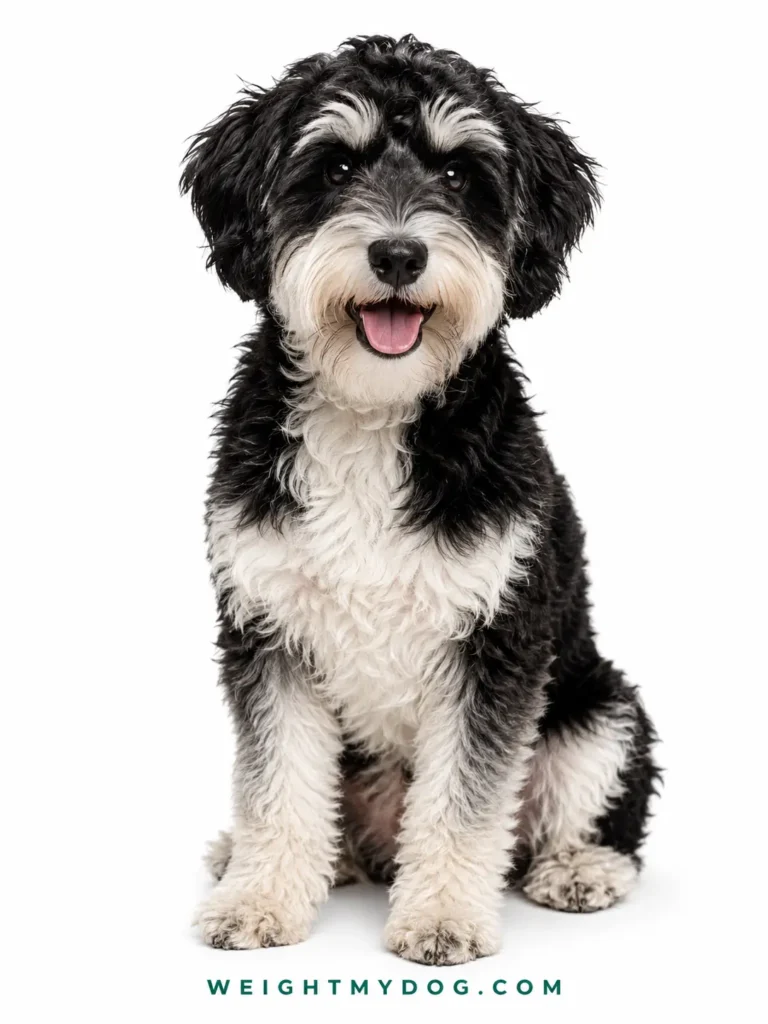
Owning a Schnoodle changes how you think about breed prediction entirely. Most owners arrive at a calculator expecting a single number, but what they receive is something far more useful: a confidence-labeled range built from real genetics and parent stats.
The Miniature Schnoodle and Toy Schnoodle sit at opposite ends of an unpredictable size variation spectrum. Understanding where your puppy lands requires more than guessing — it demands structured weight prediction logic grounded in lineage and verified breed data.
A Standard Schnoodle often surprises owners who assumed adult size would mirror the Schnauzer parent alone. The Poodle parent contributes equally, meaning mixed genetics from a standard Poodle versus mini poodle lineage produces dramatically different adult weight outcomes.
Current weight combined with current age forms the foundation of every reliable growth curve projection. Without both inputs, any estimate becomes a rough guess rather than an honest estimate backed by 600 data points or structured breed-standard math.
Gender plays a consistently underestimated role — females smaller than intact males by measurable margins across all Schnoodle size categories. This distinction matters when evaluating feeding decisions, harness sizing, dog beds, and long-term lifestyle fit.
The Schnauzer Poodle cross represents one of the most intelligent, low-shedding, allergy-friendly hybrid breed combinations available to modern dog owners. A good puppy weight tool respects that complexity rather than flattening it into oversimplified breed standards.
Schnoodle (Miniature) Weight Calculator
| Age | ♂ Male (Expected) | ♀ Female (Expected) | Your Dog |
|---|
How to use the Schnoodle weight calculator
Get your Schnoodle's ideal weight in under 10 seconds. No account needed.
Enter your dog’s details
Enter your Schnoodle's current age, weight, and gender. Works in both lbs and kg — supports weeks, months, and years.
Get your instant weight results
See your Schnoodle's predicted adult weight range, current ideal weight, visual growth chart, and health status — instantly calculated.
Check your dog’s health status
Find out if your Schnoodle is underweight, ideal, or overweight based on breeder and parent-breed data — and get a personalised feeding guide.
Male Schnoodle Growth, Weight & Height Chart by Age
| Age | Male Weight | Male Height |
|---|---|---|
| 4 Weeks | 1 – 2 lbs (0.5 – 0.9 kg) | 3 – 4 in (8 – 10 cm) |
| 2 Months | 4 – 8 lbs (1.8 – 3.6 kg) | 5 – 7 in (13 – 18 cm) |
| 3 Months | 6 – 11 lbs (2.7 – 5.0 kg) | 7 – 9 in (18 – 23 cm) |
| 4 Months | 8 – 15 lbs (3.6 – 6.8 kg) | 8 – 10 in (20 – 25 cm) |
| 5 Months | 10 – 18 lbs (4.5 – 8.2 kg) | 9 – 11 in (23 – 28 cm) |
| 6 Months | 11 – 22 lbs (5.0 – 10.0 kg) | 10 – 12 in (25 – 30 cm) |
| 7 Months | 13 – 25 lbs (5.9 – 11.3 kg) | 11 – 13 in (28 – 33 cm) |
| 8 Months | 14 – 28 lbs (6.4 – 12.7 kg) | 11 – 14 in (28 – 36 cm) |
| 9 Months (Adult) | 15 – 30 lbs (6.8 – 13.6 kg) | 12 – 15 in (30 – 38 cm) |
Female Schnoodle Growth, Weight & Height Chart by Age
| Age | Female Weight | Female Height |
|---|---|---|
| 4 Weeks | 1 – 2 lbs (0.5 – 0.9 kg) | 3 – 4 in (8 – 10 cm) |
| 2 Months | 3 – 7 lbs (1.4 – 3.2 kg) | 4 – 6 in (10 – 15 cm) |
| 3 Months | 5 – 9 lbs (2.3 – 4.1 kg) | 6 – 8 in (15 – 20 cm) |
| 4 Months | 7 – 13 lbs (3.2 – 5.9 kg) | 7 – 9 in (18 – 23 cm) |
| 5 Months | 9 – 15 lbs (4.1 – 6.8 kg) | 8 – 10 in (20 – 25 cm) |
| 6 Months | 10 – 19 lbs (4.5 – 8.6 kg) | 9 – 11 in (23 – 28 cm) |
| 7 Months | 11 – 21 lbs (5.0 – 9.5 kg) | 10 – 12 in (25 – 30 cm) |
| 8 Months | 12 – 23 lbs (5.4 – 10.4 kg) | 10 – 13 in (25 – 33 cm) |
| 9 Months (Adult) | 13 – 25 lbs (5.9 – 11.3 kg) | 11 – 14 in (28 – 36 cm) |
Puppy Growth Chart And AKC Breed Weight Standard
| Breed Size | 8 Weeks | 3 Months | 4 Months | 6 Months | 1 Year |
|---|---|---|---|---|---|
| Toy | 0.9 – 1.8 kg | 1.4 – 2 kg | 2 – 2.5 kg | 2.5 – 3 kg | 3 – 5.5 kg |
| Small | 1.5 – 3 kg | 3 – 5 kg | 4 – 7 kg | 6 – 9 kg | 6 – 11 kg |
| Medium | 3 – 5 kg | 5 – 8 kg | 8 – 13 kg | 10 – 18 kg | 11 – 23 kg |
| Large | 5 – 9 kg | 9 – 12 kg | 12 – 20 kg | 18 – 30 kg | 23 – 45 kg |
| Giant | 7 – 12 kg | 12 – 18 kg | 18 – 28 kg | 28 – 40 kg | 45 – 70 kg |
Schnoodle Breed Overview
The Schnoodle emerged prominently during the 1980s as breeders began crossing Giant Schnauzer, Standard Schnauzer, and Mini Schnauzer lines with Poodle varieties. This direct cross produced a family dog combining intelligence, low-allergen coat qualities, and remarkable temperament flexibility across all sizes.
Coat consistency across generations remains one of the breed’s most discussed traits. The fast-growing coat requires professional grooming and regular brushing — characteristics inherited from both the Poodle and Schnauzer sides regardless of generation or F1 versus F1b classification.
Hypoallergenic claims surrounding the Schnoodle deserve nuanced handling. The low-shed coat reduces allergen spread significantly, making these dogs genuinely suitable for allergy sufferers, though coat consistency varies when multigenerational breeding introduces new gene combination variables.
Compatibility with children ranks among the breed’s strongest lifestyle advantages. The Schnoodle tends to be energetic and consistent training-responsive, though standoffish behavior toward strangers is common initially — the breed warms up over time once trust is established.
Compatibility with other pets follows similar patterns. Household dynamics matter more than raw breed instinct. A well-socialized Schnoodle integrates smoothly with other pets, particularly when introduced during the critical 2-6 months high-growth window when behavioral imprinting occurs most rapidly.
Breed history confirms that not AKC-recognized status hasn’t reduced the Schnoodle‘s popularity. Prospective owners consistently cite lifestyle fit, apartment suitability, portability, and mental stimulation needs as primary selection factors — all of which tie directly back to adult size projection accuracy.
When Do Schnoodles Stop Growing (Growth Timeline)
Toy Schnoodle varieties reach fully grown status earliest, typically completing significant growth between 6-7 months and showing growth tapers by 10 months. Small breeds mature faster than their larger counterparts — this principle holds firmly across Toy breeds and Small size classifications.
Mini Schnoodle development extends slightly longer. Most Miniature variety dogs reach adult size between 12 months and 12-18 months, with body fills out phases continuing even after height first milestones are reached. Legs lengthen before muscle development and weight distribution stabilize.
Standard Schnoodle maturity span stretches considerably further. 12-24 months represents the realistic maturity age window for standard size dogs, with continued growth in muscle mass and body structure persisting well past the point owners assume fully grown status has been achieved.
Giant Schnoodle timelines push the boundary further still. Giant breeds routinely require 24 months before reaching true maturity, with bone development and muscle filling continuing through the second birthday. Growing joints need protection during this extended first-year growth period.
Growth rates vary sharply across the multiple sizes this breed encompasses. Small breeds close to adult size by 6-7 months contrast dramatically with giant type Schnoodles still showing noticeable growth at 18 months. Age-based growth curves exist specifically to map these diverging growth-stage patterns.
Early prediction unreliability is highest before 8 weeks. Prediction window accuracy improves meaningfully after 12 weeks and becomes most reliable after 16 weeks, when rapid growth patterns stabilize enough to support honest estimate generation through validated completion fraction methods.
How the Calculator Works (Methodology)
The core weight multiplication formula starts with current weight divided by a completion fraction derived from age-based growth curves. For a Toy Schnoodle at 16 weeks, the 0.35 completion fraction benchmark produces a reliable adult weight estimation when applied correctly.
Breed-standard math incorporates parent stats input as a secondary validation layer. Parent size range data — specifically the largest parent and parent-weight lookback across grandparents and great-grandparents — provides a confidence boost that raw age-based growth curve reliance alone cannot deliver.
55-65 percent weighting toward the dominant breed is applied when parent data reflects unequal breed contributions. An F1b Schnoodle bred back to Poodle receives heavier dominant breed weighting, shifting the prediction meaningfully toward Poodle sizes rather than splitting the calculation evenly.
Regression analysis across 600 data points underpins the granular chart logic. Data scientist Erica Irish developed this structured approach, drawing on AKC adult weight by breed standards and Wikipedia data source inputs to build age table references covering all sizes from Toy through Giant.
Unit conversion between kilograms and pounds is handled automatically. Whether owners input current weight in 2.5-5 kg or 4-7 kg format, the online calculator converts and applies the appropriate medium-large formula or small breed diet adjustment without requiring manual recalculation.
Confidence label outputs communicate result reliability transparently. The calculator distinguishes between high-growth window predictions with strong size predictability and early prediction unreliability zones where individual variation warrants wider confidence range outputs rather than false precision.
Why Predicting Adult Weight Matters / Practical Uses
Correctly sized harnesses cannot be purchased accurately without a reasonable adult size projection. Owners who skip weight prediction often purchase collars, harnesses, and dog beds based on current weight alone — then face replacement costs as their Schnoodle grows through multiple size categories within months.
Feeding decisions tied to expected adult weight prevent both over-feeding and under-feeding during critical growth-stage patterns. Portion size recommendations shift significantly between a Mini Schnoodle tracking toward 10-12 pounds versus a Standard Schnoodle projected at 45-70 kg equivalent ranges.
Apartment suitability assessments depend directly on adult size projections. A larger Giant Schnoodle needs more space than apartment living typically provides, while Toy Schnoodle and Small Miniature varieties remain genuinely apartment-compatible — but only if owners confirm adult size before committing to a living situation.
Lifestyle fit evaluation for families, travel, portability, and household compatibility all benefit from early size predictability. Knowing whether your Schnoodle will reach 20-60 pounds versus 60-110 pounds shapes every practical decision from living space selection to exercise routine planning.
Gear sizing across clothing, correctly sized beds, and comfort products requires forward-looking size classification data. Puppy owners who invest in prediction early avoid the repeated expense of replacing undersized product categories as their dog moves through growth-phase graph stages.
Nutrition planning and age-based feeding schedules both depend on expected adulthood age and ideal weight range targets. Feeding chart construction for a large breed diet differs fundamentally from small breed diet protocols — distinctions that only become actionable once adult weight bands are reliably established.
Factors That Can Cause a Puppy to Grow More/Less Than Predicted
Genetics remain the dominant force behind individual deviation from predicted adult weight. Blended inherited traits from great-grandparents introduce higher variation than stable breeding line scenarios, particularly in multigenerational Schnoodle crosses where gene combination outcomes resist neat prediction.
Nutrition quality during the 3-8 months window directly impacts growth rates. Well-nourished puppies track prediction curves more reliably, while chronic illness, parasites, digestive upset, and under-feeding during rapid growth phases can cause a puppy to grow More/Less than any breed-standard math suggests.
Spay/neuter status introduces measurable hormonal development effects on bone development and muscle growth. Desexing timing influences maturity span outcomes — dogs desexed before 6 months sometimes growing slower or exhibiting altered body condition compared to intact males who complete natural hormonal development cycles.
Environmental factors including exercise levels, activity level, and living space constraints contribute to weight deviation from prediction. Large-breed puppies with insufficient exercise may develop differently than growth charts anticipate, while over-feeding with excessive treat rule violations compounds individual variation further.
Health conditions — including luxating patella, epilepsy, liver disease, pancreatitis, bladder stones, diabetes, and endocrine issues — can cause growing slower or growing faster patterns that diverge from standard age-based growth curves. Vet monitoring is essential when weight deviation appears outside 15 percent tolerance band margins.
Illness during 6-8 weeks to 12 weeks growth phases carries disproportionate impact. Littermates in the same litter may catch up after early illness, but growth timing delays sometimes persist. Chronic illness suppresses the rapid growth phases responsible for double weight milestones that predictive models rely upon.
Vet Check-Up Schedule Tied to Growth Monitoring
Milestone visits during the 6-8 weeks, 12 weeks, and 16 weeks windows establish the baseline growth curve data every veterinarian needs for accurate growth assessment. These early appointments also align with vaccination schedule requirements set by Australian vet standards and broadly accepted AKC recommendation protocols.
Weighing frequency between vet visits should follow a weekly schedule during 2-6 months — the high-growth window where noticeable growth occurs fastest. Monthly weigh-ins become sufficient after 6 months once growth rates stabilize and weight maintenance rather than rapid growth becomes the primary concern.
Immunisation scheduling integrates naturally with growth monitoring visits. First checkup appointments at 6-8 weeks capture birth weight trajectory data, while 9-12 months visits assess whether adult size projections remain consistent with early prediction benchmarks established at 15 weeks and 16-week weight measurements.
Health screening for breed-specific health risks — including luxating patella screening and joint protection assessment — fits logically into 12-18 months appointments when bone development reaches measurable completion stages. Vet consult at this stage validates whether ideal weight targets align with body condition assessments.
Desexing timing conversations belong in veterinary schedule planning discussions between 6 months and 12 months for most Schnoodle size categories. Australian vets and veterinarian consultation resources consistently recommend timing desexing decisions around growth-phase graph completion rather than arbitrary age cutoffs.
Regular vet visits build the growth-tracking record that makes between vet visits self-monitoring meaningful. Growth-tracking apps and granular chart references help owners interpret weigh-in date data accurately, but vet care guidance remains the authoritative source for confirming healthy development trajectories.
Do Mixed-Breed Puppies Grow Differently?
Mixed-breed puppies often show higher variation in growth rates than older breeds with stable breeding line histories. The Schnoodle as a hybrid breed exemplifies this — blended inherited traits from divergent Poodle sizes and Schnauzer lineages produce growth-stage patterns that resist clean categorization within standard breed groupings.
Hybrid dogs like the Schnoodle frequently display heterosis effects — commonly called hybrid vigor — that can push adult weight slightly beyond parent-based prediction ranges. This phenomenon makes dominant breed weighting adjustments critical when building mixed-breed estimation models for non-purebred dogs with documented parentage.
Mixed genetics from F1, F1b, and multigenerational line backgrounds each produce distinct prediction accuracy profiles. First-generation crosses show more individual variation than multigenerational lines where size predictability has stabilized through consistent training of breeding outcomes across generation sequences.
Harder to predict outcomes emerge specifically when parent stats reflect multiple sizes within the same Poodle contribution. A Moyen Poodle parent versus a Toy Poodle parent creates fundamentally different adult weight estimation trajectories even when the Schnauzer parent data remains constant.
Mixed-breed puppy growth order follows the same legs lengthen before body fills out sequence seen in purebred dogs, but the timeline compresses or extends unpredictably based on gene combination outcomes. Height first development often precedes weight fill-out by weeks in hybrid breeds like the Schnoodle.
Closest known breed matching remains the most practical mixed-breed estimation fallback when parent data is unavailable. Searchable breed list tools identify the dominant breed by appearance and paw size, then apply breed-standard math from the AKC breed standards database to generate a reasonable estimate for non-purebred dogs.
Height Measurement Guidance
Shoulder height — measured from ground to shoulder at the withers — represents the only standardized measurement point used in canine height prediction systems. Measuring anywhere other than the withers introduces systematic error that invalidates height estimate comparisons against breed-standard reference ranges.
Standing naturally is the measurement prerequisite most owners misunderstand. A Schnoodle measured while crouching, stretching, or shifting weight produces unreliable shoulder height data. The dog must be standing naturally on a flat surface with legs positioned directly beneath the withers measurement point for accuracy.
Measurement technique consistency matters across repeated growth tracking sessions. Using the same measurement point methodology at each weigh-in date interval — ideally at 8 weeks, 12 weeks, 16 weeks, and 6 months — allows growth-phase graph comparison that reveals whether height first or weight fill-out is leading development.
Height prediction improvement comes from combining shoulder height measurements with current weight inputs. The step-by-step method used in validated growth calculator tools weights shoulder height data alongside breed input and parent stats to narrow confidence range outputs for Schnoodle varieties across all sizes.
Practical measurement for Standard Schnoodle dogs targets 15-26 inches at the withers, while Giant Schnoodle projections reference 26-28 inches as the upper breed standard benchmark. Mini Schnoodle height typically falls between 12-15 inches, and Toy Schnoodle varieties measure closer to 10-12 inches at full maturity.
Not visible measurement errors occur when owners measure shoulder height incorrectly by referencing the head rather than the withers. Ground to shoulder measurement requires a flat rigid surface, a level tool, and a cooperative dog — conditions that growth-tracking apps increasingly guide owners through with visual measurement technique prompts.
Confidence-Labeled Ranges
Confidence label outputs exist because no exact prediction of adult weight is achievable for mixed-breed puppies — particularly Schnoodle dogs with multiple sizes of Poodle parent in their lineage. A single number output would misrepresent the genuine individual variation present across hybrid breed populations.
Result range outputs from validated calculators reflect 15 percent tolerance band margins applied around expected adult weight projections. A Miniature Schnoodle predicted at 12-13 pounds carries this tolerance on both ends — meaning final adult weight anywhere from roughly 10-12 pounds to 14-20 pounds remains within statistically expected confidence range boundaries.
Accuracy limitation acknowledgment distinguishes honest puppy owner tools from misleading ones. Calculator limitation documentation should clarify that not 100 percent accurate outputs are inherent to mixed-breed estimation — not failures of the methodology but reflections of genuine genetic variability within hybrid populations.
Confidence boost occurs when parent stats input is provided alongside current weight and current age. Optional input fields for parent data meaningfully narrow result range outputs by anchoring prediction to actual parent size range data rather than relying exclusively on age-based growth curve population averages.
Higher variation labels appropriately accompany predictions made before 12 weeks, when early prediction unreliability is highest. Individual deviation from the central estimate is most pronounced during 8-12 weeks — the period when rapid growth introduces the most variation in weekly measurement trajectories.
Averaging results from four alternative prediction methods — weight multiplication formula, regression modeling, parent-based prediction, and closest known breed matching — produces tighter confidence range outputs than any single approach alone. Prediction improvement through averaging results is particularly valuable for Giant variety Schnoodle dogs where size predictability is inherently lower.
“How Big Will My Schnoodle Be” Detail by Poodle Lineage
Toy poodle lineage produces the smallest Schnoodle outcomes. A Toy Schnoodle from Toy Poodle parentage typically reaches 5-10 pounds at adult weight, with Small Toy specimens sometimes staying closer to 4-5 pounds when Schnauzer parent size also trends small. Toy classification applies to dogs under roughly 10 pounds at maturity.
Mini poodle lineage generates Miniature Schnoodle outcomes in the 10-20 pounds range. Small Miniature examples track toward 11-15 pounds, while Large Miniature specimens approach 16-20 pounds depending on Schnauzer parent parent-breed size contributions. 6-10 pounds overlap with the Toy range occurs when Mini Schnauzer sizing trends smaller.
Standard poodle lineage creates Standard Schnoodle dogs spanning 20-75 pounds depending on Schnauzer parent size. Standard Schnauzer crosses with standard Poodle produce dogs in the 30-75 pounds midrange, while Mini Schnauzer combined with standard poodle lineage sometimes stays closer to 20-50 pounds due to size variation in the smaller parent.
Giant Schnauzer paired with standard Poodle or Giant Poodle produces Giant Schnoodle dogs reaching 60-110 pounds. 90-plus pounds outcomes are documented when both giant Schnauzer and Standard Poodle parents contribute large breeds genetics. Generation-specific detail matters here — F1 crosses sometimes exceed F1b outcomes in adult size.
Moyen Poodle lineage — a medium-large size classification common in European breed standards — produces Schnoodle dogs in the 20-60 pounds range that doesn’t map cleanly onto Toy, Miniature, or Standard categories. Moyen contribution is increasingly relevant as multigenerational Schnoodle breeding incorporates this Poodle size more frequently.
Generation beyond F1 affects size predictability significantly. F1b crosses — bred back to Poodle — often produce smaller size outcomes than F1 Schnoodle pairings when the Poodle parent is smaller than the Schnauzer. Multigenerational line Schnoodle breeding reduces higher variation by establishing stable breeding line size categories across litter sequences.
Biggest Schnoodle Ever Recorded
The largest recorded Schnoodle reached 110 pounds — a weight that challenges assumptions about this breed’s size variation ceiling. This record size dog came from a Giant Schnauzer and standard Poodle pairing, demonstrating that Giant Schnoodle adult weight can approach giant breeds territory under the right genetics conditions.
Giant categorization for Schnoodle dogs places the upper adult weight threshold at 90-plus pounds, with 60-110 pounds representing the documented Giant Schnoodle range. The 110 pounds record sits at the extreme end of this range, achieved only when both parent breed calculation inputs reflect the largest parent measurements available.
Record size documentation matters for prospective owners considering Giant Schnoodle adoption. A dog capable of reaching 110 pounds requires more room, large breed diet protocols, extended maturity span timelines of 24 months, and joint protection strategies appropriate for giant breeds rather than medium breeds assumptions.
Breed history reveals that early Schnoodle breeding in the 1980s rarely produced Giant outcomes — the breed was initially conceived as a small to medium companion dog. Giant Schnoodle emergence reflects deliberate giant schnauzer integration into breeding programs seeking more space-appropriate dogs for specific lifestyle fit requirements.
Comparison reference between the Giant Schnoodle and Goldendoodle comparison reveals meaningful adult weight overlaps. Both hybrid breed types can reach 75 pounds or beyond, though Giant Schnoodle dogs with giant Schnauzer lineage can exceed Goldendoodle maximums when dominant breed genetics push toward the 110 pounds recorded ceiling.
Size breakdown between Giant Schnoodle and Standard Schnoodle at 60-110 pounds versus 30-75 pounds illustrates how dramatically lineage shapes outcomes within a single breed name. Largest parent tracking across grandparents and great-grandparents provides the most reliable honest estimate for whether a puppy will approach record size territory.
Spay/Neuter Timing Recommendations by Schnoodle Size
Spay timing for Toy Schnoodle and Small variety dogs generally aligns with 6 months as a commonly cited threshold, though veterinarian consultation increasingly supports waiting until after 6-7 months to allow hormonal development to complete initial bone development phases before desexing occurs.
Neutering timing for Mini Schnoodle dogs follows similar 6-9 months recommendations. Spay/neuter status decisions at this size primarily affect weight maintenance trajectories and metabolism patterns post-procedure rather than dramatically altering bone development outcomes the way earlier desexing can for large breeds.
Standard Schnoodle spay/neuter status decisions benefit from 12 months timing recommendations. Larger dogs experience more pronounced hormonal development contributions to bone development and joint protection — making desexing before growth tapers at 12-18 months a potentially impactful choice on adult size outcomes.
Giant Schnoodle desexing timing warrants the most conservative approach. Giant breeds — and Giant Schnoodle dogs with giant Schnauzer genetics specifically — benefit from neutering timing delayed until 18 months or beyond. Australian vets and veterinary advice resources increasingly recommend this extended timeline for large breeds and giant breeds alike.
Hormonal development interruption through early spaying timing can push metabolism slows patterns earlier than natural maturity would dictate. Caloric needs drop post-desexing, making feeding decisions and portion size adjustments essential immediately following spay/neuter status changes at any Schnoodle size.
Neuter status information entered into growth calculator tools improves prediction accuracy by adjusting age-based growth curves to reflect documented weight deviation patterns in desexed dogs versus intact males. This optional input field makes a meaningful difference in confidence range accuracy, particularly for Standard Schnoodle and Giant variety dogs.
Housetraining Timeline
Potty training readiness emerges between 3-5 months in most Schnoodle puppies, though bladder control capacity limits success before 4 months. Housetraining milestone achievement correlates with hormonal development stages and consistent training investment rather than rigid age-based expectations alone.
Toy Schnoodle and Small variety dogs often prove harder to predict in housetraining timelines due to smaller bladder capacity relative to body metabolism rates. Smaller dogs easier to manage physically, but their higher energy needs and faster metabolism mean more frequent potty training opportunities are required than medium breeds schedules suggest.
Consistency in housetraining approach matters more than timing precision. 5 minutes per month of age as an activity guideline helps owners schedule potty training sessions appropriately, providing a rule of thumb that adjusts naturally as puppies age through 2-6 months and 6-12 months growth-stage patterns.
Mental stimulation alongside obedience basics accelerates housetraining milestone achievement in intelligent breeds like the Schnoodle. Training planning that integrates sit, drop it, and stay commands with potty training routines produces faster consistent training outcomes than isolated housetraining approaches.
Stubborn streaks — inherited from the Schnauzer parent — can delay housetraining progress beyond typical 3-5 months windows. Obedience basics investment during the 2-4 kg puppy stage, when training age receptivity is highest, counteracts this tendency more effectively than addressing it after bad habits solidify.
Training planning should account for the Schnoodle’s intelligence advantage. These dogs learn first commands faster than many breed groupings, meaning housetraining milestone achievement is highly attainable — but the same intelligence that accelerates learning also means a stubborn puppy will find workarounds faster than owners expect.
Puppy Food Transition Timing
Puppy food sustains the rapid growth requirements of Schnoodle puppies through their most critical high-growth window. Adult food switch timing depends on adult size projections — Toy and Small variety dogs transition around 9-12 months, while Standard Schnoodle and Giant varieties benefit from staying on puppy food until 12-18 months.
Small breed diet formulations serve Toy Schnoodle and Small Miniature puppies most effectively during developing phases. These specialized formulas account for higher energy needs per kilogram of body condition — a biological reality that large breed diet formulations address differently through caloric needs drop anticipation built into nutrient ratios.
Gradual transition over 2-3 months from puppy food to adult feeding schedule prevents digestive upset that abrupt switches cause. Feeding advice disclaimer applies universally: any feeding chart represents a rough indicator, not a prescription — vet consult remains essential for Schnoodle puppies with health conditions or documented under-feeding histories.
Meal frequency shifts during transition. Twice daily rule applies for most Schnoodle sizes during adult food switch phases, replacing the three-to-four-meal puppy food schedules typical during 3-8 months rapid growth windows. Daily calories calculations should reflect expected adult weight rather than current weight during this transition.
Nutrition quality during adult food switch timing directly impacts weight maintenance trajectories. Cups per day guidance from feeding chart references provides starting portion size benchmarks, but body condition monitoring — checking ribs, waistline, and viewed from above silhouette — should validate whether caloric needs drop post-growth adjustments are tracking correctly.
Large breed diet protocols for Standard Schnoodle and Giant Schnoodle varieties require joint protection nutrient profiles not found in small breed diet formulations. Feeding decisions at adult food switch timing must account for breed-specific health risks including pancreatitis susceptibility documented in Poodle-lineage dogs with over-feeding histories.
Teething Timeline
Baby teeth emergence begins around 3-4 weeks in Schnoodle puppies, with the full newborn dental sequence complete by 6-8 weeks. Tooth loss of baby teeth begins around 3-4 months as adult teeth push through, a process that typically concludes between 6-7 months for Toy and Small variety dogs.
Teething pain peaks during 4-5 months — coinciding with the rapid growth phase when Schnoodle puppies are also navigating housetraining milestone demands and first commands training. Mental stimulation through appropriate chew enrichment during this period reduces stubborn behavioral expressions tied to teething discomfort.
Adult teeth completion by 6-8 months marks the end of active teething for most Schnoodle sizes. Standard Schnoodle and Giant variety dogs may experience adult teeth emergence slightly later, following the larger breeds pattern where bone development timelines extend proportionally with adult size projections.
Enrichment strategies during teething must account for the Schnoodle’s intelligent problem-solving tendency. Simple chew toys lose appeal quickly — mental stimulation tools that engage the dog’s inherited intelligence from both Poodle and Schnauzer lineage provide more effective teething management than passive chew items alone.
Training age during active teething at 4-5 months presents both challenges and opportunities. Obedience basics absorption remains high despite teething discomfort, and consistent training sessions shorter than 5 minutes per month of age guidelines prevent frustration from compounding teething-related behavioral disruptions.
Tooth loss timing provides informal growth tracking data. Baby teeth shedding follows predictable sequences that correlate with age-based growth curves — owners who note tooth loss milestones alongside weigh-in date records build richer growth tracking datasets than weight measurements alone provide.
Training Age & First Commands
Training age receptivity peaks between 8 weeks and 16 weeks for Schnoodle puppies — the high-growth window that also happens to be the optimal period for first commands introduction. Sit, drop it, and stay form the essential obedience basics foundation that consistent training builds upon through 6-9 months and beyond.
Schnoodle dogs inherit intelligence from both Poodle and Schnauzer parents, making first commands acquisition faster than many breed groupings achieve. Training planning that leverages this intelligence through mental stimulation exercises rather than repetitive drills produces more durable obedience basics retention in this hybrid breed.
Consistent training before 4 months shapes behavioral patterns that persist into adult size stages. Schnoodle puppies exposed to first commands during 8-12 weeks windows show measurably faster obedience basics mastery than those who begin training after 6 months, when stubborn patterns may already be establishing.
Enrichment through training serves the Schnoodle’s higher energy needs productively. Activity level channeled through structured exercise routine and first commands practice prevents destructive behavior that energetic, intelligent dogs develop when mental stimulation needs go unmet during developing phases.
Smaller dogs easier to manage physically during training sessions does not translate to easier behavioral compliance. Toy Schnoodle and Small variety dogs trained with identical consistent training investment as Standard Schnoodle counterparts show similar obedience basics achievement — size doesn’t predict training difficulty in this hybrid breed.
Training essentials for Schnoodle dogs extend beyond first commands into socialization investment during 2-6 months windows. The breed’s tendency to be standoffish with strangers and warms up over time means early socialization alongside obedience basics training produces the family dog temperament prospective owners expect from this Schnauzer Poodle cross.
Mixed-Breed Weight Estimation Method
Mixed-breed estimation begins with identifying the closest known breed by appearance, paw size, and documented parentage. When parent stats are unavailable, searchable breed list tools cross-reference physical characteristics against AKC adult weight by breed databases to establish a reasonable estimate starting point.
Dominant breed weighting at 55-65 percent provides the mathematical foundation for parent breed calculation in non-purebred dogs. The dominant breed — identified by paw size, body structure, and coat consistency — receives heavier weighting than the secondary parent when building adult weight estimation projections for mixed genetics dogs.
Worked example: a Schnoodle with documented Mini Poodle and Mini Schnauzer parents uses parent-weight lookback averaging, applies 55-65 percent dominant breed weighting toward the heavier parent, then cross-references the result against age-based growth curves for the Small to Medium size classification range.
Averaging results across four alternative prediction methods — weight multiplication formula, regression modeling, dominant breed weighting calculation, and age-based growth curve reliance — reduces individual deviation risk. No single method achieves the accuracy that averaging results across multiple approaches delivers for mixed-breed puppies.
Birth weight contributes meaningfully to mixed-breed estimation accuracy when available. Doubling birth weight at 1 week and triple weight at 3 months serve as informal rule of thumb checkpoints that worked example calculations can validate against — catching early prediction unreliability before it compounds into larger weight deviation at 6 months.
Parent data unavailability is common with rescue or non-purebred dogs lacking documentation. Breed input fields in online calculator tools accommodate this by offering mix option selections that apply population average age-based growth curves rather than requiring parent stats input — producing honest estimate outputs with appropriately wider confidence range margins.
Breed Group Lists by Size
Size categories across Schnoodle varieties map onto broader breed groupings in ways that inform lifestyle fit assessments. Toy breeds include Toy Schnoodle alongside Chihuahua, Pug, and comparable small dogs — sharing faster growth completion timelines and small breed diet requirements that distinguish them from medium breeds counterparts.
Small breeds classification covers Mini Schnoodle dogs in 10-20 pounds ranges alongside Dachshund, Basset Hound, and Pug at comparable adult weight bands. Small breeds mature faster than medium breeds — typically reaching fully grown status between 9-12 months versus the 12-24 months maturity span seen in larger categories.
Medium breeds category includes Standard Schnoodle dogs in the 20-60 pounds midrange alongside Labrador, Collie, Husky, and German Shepherd as comparison reference benchmarks. Medium size default settings in most growth calculator tools apply 18-28 kg or 23-45 kg equivalent adult weight bands to this classification.
Large breeds classification encompasses upper Standard Schnoodle and lower Giant Schnoodle territory — 45-70 kg equivalent ranges shared with Labrador, Golden Retriever, Malamute, and German Shepherd at their upper size expressions. Large breed diet and joint protection protocols apply to Schnoodle dogs reaching large breeds size thresholds.
Giant breeds category captures Giant Schnoodle dogs approaching 90-plus pounds alongside Great Dane, St. Bernard, Bullmastiff, and Malamute at giant type classifications. Giant breeds share 24 months maturity span timelines, large breed diet requirements, and the more space needed lifestyle fit realities that apartment suitability assessments must flag clearly.
Breed list reference tools organized by size classification help prospective owners position their Schnoodle accurately within breed groupings relevant to gear sizing, exercise levels, feeding chart protocols, and household compatibility assessments. Searchable breed list databases incorporating AKC breed standards data provide the most reliable comparison reference for mixed-breed size positioning.
Extensive General Puppy Content
Puppy growth follows universal biological sequences regardless of breed groupings. Legs lengthen before body fills out, height first development precedes weight fill-out completion, and bone development reaches structural maturity before muscle development fills the frame that growth charts have been tracking since 8 weeks.
Growth-tracking apps represent the modern evolution of granular chart monitoring that data scientist researchers originally tracked through paper-based 600 data points databases. Today’s online calculator tools synthesize breed data, parent stats, age-based growth curves, and unit conversion capabilities into accessible puppy owner tools that previous generations lacked entirely.
Body condition assessment — checking ribs, waistline visibility, and viewed from above silhouette shape — provides real-world validation that weight prediction calculations alone cannot replace. Easy to feel ribs without visible protrusion indicates healthy body condition; inability to feel ribs suggests over-feeding that feeding decisions must correct.
Double weight milestones at predictable age markers provide informal growth tracking checkpoints between vet visits. Newborn weight doubles within the first week for most breeds; 8-week weight approximately doubles by 16 weeks; and half adult weight is typically reached by 4 months in small breeds and by 5-9 months in large breeds.
Growth assessment between milestone visits benefits from weighing frequency discipline. Weekly measurement during 2-6 months rapid growth phases, transitioning to monthly tracking after 6 months, creates the growth curve dataset that veterinarian consultations use to assess whether development is proceeding within healthy 15 percent tolerance band expectations.
Puppy owners who maintain consistent weigh-in date records from 8 weeks forward build invaluable growth tracking histories. Between vet visits self-monitoring using growth-tracking apps and visual chart references catches weight deviation early — enabling vet consult before health conditions that cause growing slower or growing faster patterns become entrenched.
General Breed-by-Breed Weight and Maturity Examples
Labrador dogs reach adult weight of 25-36 kg typically by 12-18 months, serving as a reliable medium-large breeds comparison reference for Standard Schnoodle projections in overlapping weight range territory. Labrador maturity span parallels Standard Schnoodle timelines closely enough to make it a useful breed-standard math benchmark.
Golden Retriever adult weight range of 25-34 kg and 12-18 months maturity age provides similar comparison reference utility for Standard Schnoodle owners. Golden Retriever growth-stage patterns — particularly the pronounced body fills out phase following height first development — mirror what Standard Schnoodle owners observe during 12-24 months completion phases.
German Shepherd maturity span extending to 18-24 months and adult weight of 23-40 kg establishes the upper reference boundary for large breeds positioned above Standard Schnoodle midrange projections. German Shepherd growth rates during 6-12 months provide comparison reference data for Giant Schnoodle early development pattern assessment.
Chihuahua represents the fastest to finish growing benchmark — reaching fully grown status by 6-9 months at 1.5-3 kg adult weight. Toy breeds like Chihuahua mature on timelines that Toy Schnoodle owners can use as upper-bound comparison reference when evaluating whether their puppy’s growth rates are tracking within expected size predictability ranges.
Great Dane at 45-90 kg and 24 months maturity span establishes the giant breeds comparison ceiling — providing scale for understanding what Giant Schnoodle development timelines mean in practice. Giant breeds like Great Dane and St. Bernard demonstrate that maturity span length correlates directly with adult weight magnitude across breed groupings.
Bulldog maturity at 18-24 months and Bullmastiff at 23-45 kg provide large breeds comparison reference bracketing for Giant Schnoodle projections. Dachshund at 7-14 kg serves Mini Schnoodle breed-standard math comparison, while Husky at 16-27 kg calibrates Standard Schnoodle midrange adult weight estimation accuracy.
Four Alternative Prediction Methods
Weight multiplication formula represents the most accessible prediction approach: divide current weight by the completion fraction corresponding to current age on validated age-based growth curves. A Miniature Schnoodle weighing 6 pounds at 16 weeks applies a 0.35 completion fraction to project 17 pounds as the adult weight central estimate.
Regression modeling — the method data scientist Erica Irish applied across 600 data points — generates prediction outputs by fitting current weight and age combinations to statistically validated growth curve trajectories. Regression approaches outperform simple weight multiplication formula methods when breed data and parent stats inputs are available to anchor the model.
Parent-based prediction averages parent data weights and applies dominant breed weighting adjustments based on generation and lineage classification. F1 Schnoodle calculations weight Schnauzer and Poodle parent contributions at 50-50, while F1b crosses bred back to Poodle shift weighting toward 55-65 percent Poodle influence on projected adult weight.
Closest known breed matching applies when parentage documentation is unavailable. This method identifies the dominant breed through physical characteristics, retrieves AKC adult weight by breed reference data, and generates a reasonable estimate using breed-standard math from the searchable breed list — producing an honest estimate despite absent parent stats input.
Worked example demonstrating averaging results: a Standard Schnoodle at 12 weeks weighing 8 pounds generates 28 pounds via weight multiplication formula, 26 pounds via regression, 30 pounds via parent-based prediction, and 27 pounds via closest known breed matching — averaging results to approximately 27-28 pounds with a stronger confidence label than any single method provides.
Prediction improvement through method combination represents the most sophisticated approach available to puppy owners without direct veterinarian access. Averaging results across multiple validated methods — while applying 15 percent tolerance band margins to the result range — produces confidence-labeled outputs that honest calculator tools present as ranges rather than misleading single number predictions.
Feeding Guidance
Feeding decisions for Schnoodle puppies should align with adult size projections from the earliest 8 weeks stage. Small breeds and Toy variety dogs require higher energy density portion size per kilogram of body condition than large breeds — a distinction that breed-specific feeding chart references encode into cups per day recommendations.
Portion size calibration using current weight and expected adult weight simultaneously prevents both over-feeding and under-feeding during growth-stage patterns. 10 percent calories from treat rule compliance ensures that supplemental feeding doesn’t silently push daily calories beyond age-based feeding targets designed around ideal weight maintenance.
Meal frequency protocols shift predictably as Schnoodle puppies develop. Three to four daily meals during 8-12 weeks, transitioning to twice daily rule by 6 months, then continuing adult feeding schedule maintenance at twice daily rule frequency through maturity — this sequence applies broadly across all sizes with portion size adjustments by size classification.
Large breed diet formulations contain joint protection nutrient profiles — specifically calcium-to-phosphorus ratios — that small breed diet products don’t optimize for. Standard Schnoodle and Giant Schnoodle puppies fed small breed diet formulas risk bone development imbalances that vet monitoring should catch but feeding decisions should prevent in the first instance.
Nutrition requirements shift markedly after adult food switch completion. Caloric needs drop measurably as metabolism slows post-growth tapers, meaning portion size maintained at puppy food levels after maturity reliably produces weight maintenance failures. Adult feeding schedule recalibration using ideal weight range targets prevents gradual over-feeding from accumulating.
Feeding advice disclaimer applies to all feeding chart guidance: pancreatitis, diabetes, liver disease, and other health conditions documented in Poodle and Schnauzer lineages require veterinarian consultation before feeding decisions finalize. General care feeding chart benchmarks serve healthy dogs without active health issues — vet consult governs all exceptions.
Exercise Guidance
Exercise requirements for Schnoodle dogs scale predictably with adult size — but the 5 minutes per month of age activity guideline applies universally during puppy development phases. A 4-month Schnoodle receives approximately 20 minutes of structured exercise per session, regardless of whether adult size projections target Toy or Standard classifications.
Growing joints protection during 2-6 months and 6-12 months phases limits high-impact exercise appropriateness. Joint protection protocols recommend avoiding repetitive jumping, extended running on hard surfaces, and forced exercise beyond 5 minutes per month of age guidelines — restrictions that apply most critically to large breeds and Giant Schnoodle dogs whose bone development timelines extend furthest.
Exercise routine variety suits the Schnoodle’s intelligence inheritance. Mental stimulation through structured activity level variation — combining enrichment games, obedience basics practice, and free play — meets higher energy needs more effectively than monotonous exercise patterns that energetic dogs with Schnauzer and Poodle ancestry quickly tire of.
Adult feeding schedule and exercise timing coordination improves weight maintenance outcomes. Caloric needs drop as activity level patterns stabilize after growth tapers, meaning exercise routine consistency provides the metabolic baseline that feeding decisions should be calibrated against rather than treated as an independent variable.
Apartment suitability for Toy Schnoodle and Small Miniature varieties depends heavily on exercise routine quality rather than raw quantity. Smaller dogs easier to exercise adequately within apartment contexts — mental stimulation tools and indoor obedience basics sessions substitute effectively for outdoor space that standard size needs more room dogs require.
Exercise tailoring by size classification produces better health screening outcomes across Schnoodle sizes. Toy variety dogs with higher energy needs per kilogram benefit from enrichment-focused exercise sessions, while Giant Schnoodle dogs need joint protection-conscious exercise routine planning that accounts for their extended bone development and maturity span timelines.
Breed-Specific Weight Chart Call-outs
Breed-specific chart references for Schnoodle sizes provide the granular chart detail that generic mixed-breed estimation tools miss. Toy Schnoodle dogs tracking toward 5-10 pounds require weight chart benchmarks calibrated to toy poodle lineage growth trajectories rather than generic small breeds population averages.
Quick reference table outputs for Schnoodle by size classification condense the age table data that puppy owners need during between vet visits self-monitoring. A breed-specific chart showing expected weight by age milestones — 8 weeks, 12 weeks, 16 weeks, 6 months, 12 months — gives Miniature Schnoodle owners actionable comparison reference without requiring veterinarian consultation for every weigh-in date.
Weight by age call-outs for Standard Schnoodle dogs reflect the medium-large formula projection: 8-13 kg at 12 weeks, 18-30 kg at 6 months, and 23-45 kg at 12-24 months maturity. Breed-specific chart accuracy for this size depends heavily on whether standard poodle lineage or mini poodle lineage dominates the parent-breed size contribution.
Adult weight bands by Schnoodle variety provide the size breakdown that prospective owners use for lifestyle fit and gear sizing planning. Toy Schnoodle at 5-10 pounds, Miniature Schnoodle at 11-20 pounds, Standard Schnoodle at 20-75 pounds, and Giant Schnoodle at 60-110 pounds represent the four primary size categories requiring distinct breed-specific chart references.
Growth-phase graph visualization helps owners understand that weight chart numbers represent trajectories, not fixed points. Breed-specific chart graphs showing S-curve growth patterns — rapid ascent during 3-8 months, plateau entry at 9-12 months, and growth tapers approaching adult weight — communicate what static age table numbers alone cannot convey.
Cross-reference tool functionality in advanced growth calculator platforms allows breed-specific chart data to validate weight multiplication formula outputs. When current weight falls outside breed-specific chart expected ranges by more than 15 percent tolerance band margins, cross-reference tool flagging prompts vet consult before weight deviation from predicted growth curve trajectories becomes clinically significant.
Tools & Resources List
Online calculator tools for Schnoodle weight prediction range from simple weight multiplication formula interfaces to sophisticated regression-based platforms incorporating 600 data points and AKC adult weight by breed reference databases. Puppy owner tools at varying complexity levels serve different prediction accuracy needs across Toy through Giant size classifications.
Growth-tracking apps extend puppy owner tools functionality beyond weight prediction into longitudinal growth tracking — recording weigh-in date sequences, flagging weight deviation against breed-specific chart benchmarks, and generating visual chart outputs that veterinarian consultations can use for growth assessment discussions at milestone visits.
AKC adult height and weight database serves as the breed data foundation underlying most validated prediction tools. Searchable breed list access within AKC breed standards resources allows parent breed calculation for Schnoodle varieties by retrieving standardized adult weight bands for both Poodle sizes and Schnauzer varieties used in parent stats input fields.
Resource list for Schnoodle owners should include Australian vets guidance documents alongside AKC recommendation resources, since veterinary advice standards differ meaningfully by region. 7 locations of reference authority — AKC, Wikipedia data source, Australian vet standards, breed-specific health risks databases, immunisation schedules, and veterinary schedule tools — collectively provide comprehensive vet care guidance for all Schnoodle sizes.
Clinic addresses and local business content aggregators serve prospective owners seeking veterinarian consultation access for growth monitoring and health screening purposes. Puppy owner tools directories increasingly integrate local business content with prediction calculator functionality — connecting weight prediction outputs directly to vet consult booking resources.
Comparison reference tools specifically for Goldendoodle comparison versus Schnoodle sizing help families evaluate lifestyle fit between similar hybrid breed options. Breed list platforms that include Goldendoodle, Labradoodle, and comparable mixed-breed weight and maturity span data alongside Schnoodle size categories give prospective owners the cross-reference tool capability needed for informed adoption decisions.
Schnoodle Temperament, Coat, Grooming, Health & Breed History
The Schnoodle’s temperament combines Schnauzer alertness with Poodle sociability in ratios that shift by generation and F1 versus F1b classification. Intelligent, energetic, and family dog-oriented by nature, the breed also exhibits standoffish initial reactions to strangers — a Schnauzer inheritance that consistent training and early socialization effectively moderates over time.
Coat consistency across Schnoodle generations reflects the blended inherited traits of fast-growing coat Poodle genetics and Schnauzer wire-coat tendencies. Low-shed coat outcomes are more reliable in F1b and multigenerational crosses than F1 Schnoodle first-generation pairings — though hypoallergenic claims should always be qualified by individual coat consistency variability.
Professional grooming needs for Schnoodle dogs are non-negotiable regardless of size classification. Brushing every 2-3 days prevents matting in the fast-growing coat, while professional grooming every 6-8 weeks maintains coat consistency and allows health screening checks that identify breed-specific health risks including skin conditions linked to Poodle lineage.
Breed-specific health risks across Schnoodle populations include epilepsy, luxating patella, pancreatitis, bladder stones, diabetes, liver disease, and endocrine issues — conditions documented across both Poodle and Schnauzer parent lines. Health screening at milestone visits throughout the 12-15 years lifespan of smaller varieties longer lifespan Schnoodles provides the earliest intervention opportunities.
Breed history traces the Schnoodle to intentional Schnauzer Poodle cross breeding programs beginning in the 1980s, initially targeting Mini Schnauzer and Toy Poodle pairings for allergy sufferers seeking low-allergen coat companions. Expansion into Standard Schnoodle and Giant Schnoodle varieties followed as prospective owners demanded larger family dog options with the same hypoallergenic and intelligence characteristics.
Lifespan for Schnoodle dogs follows the smaller varieties longer lifespan principle — Toy Schnoodle and Mini Schnoodle dogs averaging 12-15 years versus Standard Schnoodle and Giant Schnoodle variants whose lifespan shortens proportionally with adult size. Vet care guidance calibrated to breed-specific health risks by size classification maximizes lifespan quality across all Schnoodle varieties.
“What Affects Final Size” Generation Detail
Generation classification — F1, F1b, multigenerational — represents the most underexamined determinant of Schnoodle final weight outcomes. F1 Schnoodle dogs produced by direct cross of Schnauzer and Poodle show the highest individual variation, while multigenerational line breeding progressively stabilizes size predictability by reducing gene combination unpredictability across litter sequences.
F1b dogs — bred back to Poodle at 55-65 percent Poodle genetic contribution — predictably skew toward smaller size outcomes when the Poodle parent is smaller than the Schnauzer. Generation-specific detail in weight prediction tools that account for F1b versus F1 classification produce narrower confidence range outputs than tools applying uniform dominant breed weighting regardless of generation.
Multigenerational Schnoodle lines with documented stable breeding line histories offer the most predictable adult weight estimation outcomes. Multigenerational breeders who maintain parent stats records across grandparents and great-grandparents provide the lineage data that transforms growth calculator outputs from rough indicator estimates into genuinely confidence-worthy projections.
Parent stats from both parents — including grandparents where documented — substantially narrow prediction error margins for any generation. Parent-weight lookback extending to great-grandparents provides the deepest lineage foundation, particularly for Giant Schnoodle varieties where giant Schnauzer contributions two generations back continue influencing adult size materially.
Gene combination unpredictability peaks in F1 Schnoodle first-generation pairings where no stable breeding line history constrains outcome variation. Higher variation in F1 litters means littermates may diverge significantly — with one puppy tracking toward 20 pounds and another from the identical litter approaching 45 pounds — making generation-specific detail critical for honest estimate construction.
Red flag breeders in the Schnoodle market often obscure generation details that would reveal size predictability limitations. Prospective owners should request parent stats input documentation — including parent size range measurements and grandparents weight records — before relying on breeder estimate claims about expected adult size for any Schnoodle generation.
Why Size Matters
Living space requirements correlate directly with adult size projections for Schnoodle dogs. Apartment suitability assessments that don’t incorporate size predictability data leave prospective owners discovering too late that a Standard Schnoodle tracking toward 60-70 pounds needs more room than their apartment provides, while a Toy Schnoodle would have been entirely compatible.
Lifestyle needs vary dramatically across Schnoodle size categories — from portability and travel convenience of Toy and Small Miniature varieties to exercise levels, living space, and large breed diet costs associated with Standard Schnoodle and Giant Schnoodle adult sizes. Size matters because it determines the entire lifestyle fit equation from gear sizing to exercise routine.
Household compatibility with children and other pets doesn’t change fundamentally by Schnoodle size — but household dynamics management does. A 60-110 pounds Giant Schnoodle interacting with young children requires different training planning and consistent training investment than a 10-20 pounds Mini Schnoodle in the same household compatibility scenario.
Gear sizing accuracy across dog beds, harnesses, collars, and clothing depends on adult size rather than current weight. Correctly sized beds purchased based on adult weight bands remain usable throughout the dog’s lifespan — versus puppy-sized gear purchased without size predictability awareness that becomes obsolete within months of rapid growth onset.
Lifespan planning — including veterinary schedule investment, health screening frequency, and breed-specific health risks management — scales with size classification. Smaller varieties longer lifespan Schnoodle dogs require sustained vet care guidance investment over more years than Giant Schnoodle varieties, making adult size projection relevant to long-term ownership cost estimation.
Why size matters ultimately reduces to honest prospective owners alignment with lifestyle fit reality before adoption commits both dog and owner to a potentially mismatched arrangement. Size predictability tools exist precisely to prevent the regrettable scenario where expected adult size diverges enough from actual Giant Schnoodle development to strain the family dog relationship that motivated adoption.
Frequently Asked Questions — Schnoodle Weight
How Accurate Are Puppy Weight Calculators?
Puppy weight calculators achieve reliable accuracy within a 15 percent tolerance band when current weight, current age, and breed data inputs are correctly entered. Not 100 percent accurate by design, these tools generate confidence-labeled ranges rather than single number outputs — reflecting genuine individual variation inherent in mixed-breed and hybrid puppy development.
Accuracy limitation increases for mixed-breed puppies with undocumented parentage and for predictions made before 12 weeks, when early prediction unreliability is highest. Averaging results across multiple prediction methods — including regression modeling and parent-based prediction — produces meaningfully tighter confidence range outputs than any single calculator approach delivers alone.
How Often Should I Weigh My Puppy?
Weekly weighing during the 2-6 months high-growth window captures rapid growth trajectory data essential for prediction improvement and growth assessment accuracy. Growth-tracking apps that record weigh-in date sequences help puppy owners spot weight deviation from expected age-based growth curves before health conditions requiring vet consult escalate undetected.
Monthly weighing becomes appropriate after 6 months once growth rates stabilize and weight maintenance replaces rapid growth as the primary monitoring concern. Between vet visits self-monitoring at monthly intervals through 12-18 months provides sufficient growth tracking data to support veterinarian consultations at scheduled milestone visits without requiring excessive measurement frequency.
How Big Will My Puppy Get?
Adult size projection combines current weight, current age, and breed data through validated age-based growth curves to generate a confidence-labeled result range. Toy Schnoodle dogs typically reach 5-10 pounds, Miniature Schnoodle 11-20 pounds, Standard Schnoodle 20-75 pounds, and Giant Schnoodle 60-110 pounds — though individual variation means every projection carries inherent estimate margins.
Parent stats input narrows result range outputs substantially for Schnoodle puppies with documented lineage. When both parent size range measurements are available alongside generation classification — F1, F1b, or multigenerational — weight prediction tools apply dominant breed weighting to generate the tightest confidence range achievable without direct veterinarian measurement at milestone visits.
What Factors Affect Puppy Growth Rate?
Genetics dominate puppy growth rate determination — parent-breed size, generation, gene combination outcomes, and blended inherited traits from grandparents collectively establish the biological ceiling and floor within which nutrition, exercise levels, and health conditions operate as secondary modifiers.
Spay/neuter status, illness, parasites, chronic illness, and environmental factors can push growth rates measurably above or below prediction benchmarks. Hormonal development disruption through early desexing and nutrition deficiencies during 3-8 months windows carry disproportionate influence on final weight outcomes compared to the same factors applied after growth tapers begin.
Can Paw Size Predict Final Size?
Paw size provides a rough indicator of adult size potential — large paws relative to current weight often signal continued significant growth ahead — but unreliable alone as a prediction methodology. Paw size works best as a mixed-breed estimation supplement when parentage documentation is unavailable and closest known breed identification requires physical characteristic assessment.
Individual variation in paw size relative to adult weight outcomes limits this method’s accuracy limitation ceiling. Some Schnoodle puppies with notably large paws at 8 weeks reach only medium breeds sizes, while others with proportionally smaller paws approach Standard Schnoodle upper ranges — confirming that paw size alone should never replace genetics-anchored weight prediction methods.
Do Mixed-Breed Puppies Grow Differently?
Mixed-breed puppies — including Schnoodle dogs across F1, F1b, and multigenerational classifications — display higher variation in growth rates than stable breeding line purebred counterparts. Blended inherited traits from divergent parent lines introduce gene combination unpredictability that makes size predictability inherently lower for hybrid breed dogs than breed-standard populations.
Growth order follows the same legs lengthen before body fills out sequence in mixed-breed puppies as in purebred dogs — but timing compresses or extends unpredictably based on dominant breed contribution ratios. Mixed-breed estimation tools apply 55-65 percent dominant breed weighting specifically to account for the asymmetric genetic variability that distinguishes non-purebred puppy growth trajectories.
When Do Puppies Stop Growing?
Toy breeds complete significant growth by 6-9 months, while small breeds reach fully grown status between 9-12 months. Medium breeds extend to 12-15 months, large breeds to 12-18 months, and giant breeds routinely require 24 months before maturity is genuinely achieved — confirming that adult size magnitude directly determines maturity span length.
Schnoodle specifically stops growing along timelines matching its size classification: Toy Schnoodle by 10 months, Mini Schnoodle by 12-18 months, Standard Schnoodle by 12-24 months, and Giant Schnoodle approaching 24 months maturity. Growth tapers rather than stops abruptly — body fills out and muscle development continue after height first milestones complete.
How Accurate Is This Predictor?
Prediction accuracy for validated growth calculator tools typically falls within 15 percent tolerance band margins when inputs — current weight, current age, breed data, and optional parent stats — are entered correctly. Not 100 percent accurate statements in calculator limitation documentation reflect honest estimate disclaimer practice rather than tool inadequacy.
Confidence boost from parent stats input meaningfully improves prediction accuracy beyond default age-based growth curve population averages. For Schnoodle dogs specifically, generation-specific detail — distinguishing F1, F1b, and multigenerational line classifications — provides additional accuracy limitation reduction that generic mixed-breed estimation methods cannot achieve.
What Height Should I Measure?
Shoulder height at the withers — the highest point of the shoulder blades — represents the only valid measurement for canine height prediction comparisons. Ground to shoulder measurement taken while the dog is standing naturally on a flat surface ensures measurement technique consistency that makes growth tracking data comparable across weigh-in date intervals.
Withers measurement for Schnoodle varieties targets 10-12 inches for Toy Schnoodle, 12-15 inches for Mini Schnoodle, 15-26 inches for Standard Schnoodle, and 26-28 inches for Giant Schnoodle at maturity. Height prediction improvement comes from combining shoulder height measurements with current weight inputs — providing two-dimensional development tracking that enhances confidence range accuracy.
Why a Range Instead of One Number?
Individual variation across mixed-breed and hybrid populations makes single number outputs misleading — a confidence-labeled range communicates the genuine uncertainty embedded in weight prediction methodology. Genetic variability from F1 and multigenerational breeding means two Schnoodle puppies from the same litter can legitimately reach different adult weight outcomes within the same projected result range.
Confidence range outputs protect puppy owners from false precision that damages lifestyle fit planning. A Standard Schnoodle projected at exactly 45 pounds creates false certainty; the same dog projected at 30-60 pounds with a confidence label reflecting higher variation in standard poodle lineage crosses gives owners realistic planning parameters for living space, gear sizing, and feeding decisions.
Do I Need Parent Information?
Parent data is optional input in most growth calculator platforms but meaningfully improves prediction accuracy when provided. Parent stats — specifically parent size range measurements for both Poodle and Schnauzer parents — allow dominant breed weighting calculations that narrow confidence range outputs beyond what age-based growth curves alone achieve.
Not required for basic weight prediction functionality — current weight and current age generate useful honest estimate outputs without parent stats input. However, prediction improvement through parent data integration is substantial enough that puppy owners with access to breeder records should always provide parent size range information when growth calculator tools offer this optional input field.
What If My Puppy Is a Mix?
Mixed-breed estimation for non-purebred dogs without documented parentage uses closest known breed identification through physical characteristics — paw size, body structure, coat consistency — to apply appropriate breed-standard math from AKC breed standards databases. Searchable breed list tools make this dominant breed identification process accessible to puppy owners without specialist knowledge.
Mix option selections in online calculator platforms accommodate undocumented parentage by applying population average age-based growth curves weighted toward the dominant breed identified through physical assessment. Harder to predict outcomes are communicated through wider confidence range outputs — an honest accuracy limitation acknowledgment that mixed-breed puppies with unknown genetics warrant rather than a limitation to obscure.
At What Age Do Puppies Double Their Weight?
Double weight from birth weight occurs within the first week for virtually all breed groupings — one of the most reliable early growth tracking milestones available to puppy owners. 8-week weight then approximately doubles by 16 weeks, providing the worked example foundation that weight multiplication formula calculations build upon for adult weight estimation.
Triple weight from 8-week weight typically occurs by 3 months, adding another informal rule of thumb checkpoint to the growth-stage patterns timeline. Small breeds achieve these double weight milestones slightly faster than large breeds, with Toy Schnoodle hitting triple weight benchmarks earlier than Standard Schnoodle counterparts — reflecting the faster growth completion timelines of smaller size dogs.
Does the Smallest Puppy in a Litter Stay Small?
Littermates diverge in adult size outcomes more than most owners expect — the smallest puppy in a litter does not reliably stay smaller at maturity. Individual variation from gene combination differences between littermates can produce significantly different final weight outcomes even when nutrition, exercise levels, and environmental factors remain identical across the litter.
Birth weight differences within litters narrow substantially by 12 weeks as catch up growth allows initially smaller puppies to close developmental gaps. Prediction accuracy for the smallest littermate requires the same current weight and age-based growth curves methodology applied to any puppy — birth weight ranking within the litter alone provides insufficient size predictability data for reliable adult weight estimation.
How Can I Tell If My Puppy Is Under/Overweight?
Body condition assessment using ribs, waistline, and viewed from above silhouette evaluation provides the most reliable healthy weight indicator between formal vet visits. Easy to feel ribs without prominent visibility indicates ideal weight; ribs invisible under fat padding confirms over-feeding, while visibly protruding ribs suggests under-feeding — both conditions requiring feeding decisions adjustment.
Waistline visibility viewed from above should show a gentle taper behind the ribs — a body condition marker that applies across all sizes from Toy Schnoodle to Giant Schnoodle. Vet consult provides professional body condition scoring on a standardized scale that puppy owners self-assessment approximates — health screening at milestone visits validates whether weight maintenance targets are being met.
Do Puppies Grow in Height or Weight First?
Height first development precedes weight fill-out in virtually all breed groupings — legs lengthen establishing shoulder height milestones before muscle development and body fills out phases add the mass that brings adult weight to completion. This growth order sequence means puppies appear disproportionately tall and lean during 6-9 months phases before body fills out resolves the visual imbalance.
Bone development driving height first growth completes earlier than muscle development in large breeds and Giant Schnoodle varieties — which is precisely why maturity span extends to 24 months for giant type dogs even when shoulder height appears complete by 12-15 months. Weight fill-out after height first completion accounts for the significant adult weight gains recorded between 12 months and 24 months in giant breeds.
Is My Puppy Done Growing at 6 Months?
Toy Schnoodle and Small variety dogs are approaching fully grown status at 6 months — having completed the majority of significant growth by this point. However, body fills out phases continue even in small breeds past 6 months, with muscle development and weight fill-out adding meaningful mass through 9-12 months before genuine maturity is achieved.
Standard Schnoodle and Giant Schnoodle dogs at 6 months have completed roughly 50-60 percent of their final weight trajectory — nowhere near fully grown. 12-24 months remains the realistic maturity span for these sizes, meaning owners observing noticeable growth tapering at 6 months in larger dogs should expect continued growth through the second birthday before adult weight stabilizes.
Do Dogs Eat Less Once They Stop Growing?
Caloric needs drop measurably after growth tapers complete — metabolism slows post-maturity as the high energy needs of rapid growth phases give way to weight maintenance requirements. Adult feeding schedule protocols consistently recommend reducing portion size after fully grown status is confirmed, typically around 12 months for small breeds and 24 months for giant breeds.
Over-feeding at puppy food calorie levels after adult food switch timing is the most common weight maintenance failure pattern. Caloric needs drop by roughly 20-30 percent after growth tapers in most breed groupings, making feeding decisions recalibration at maturity essential. Vet monitoring at 12-18 months appointments provides the body condition assessment needed to validate whether adult feeding schedule adjustments are correctly calibrated.
Are Schnoodles Good Apartment Dogs?
Apartment suitability for Schnoodle dogs depends almost entirely on size classification — Toy Schnoodle and Small Miniature varieties adapt genuinely well to apartment living when exercise routine and mental stimulation needs are met through structured activity level management. Smaller dogs easier to exercise within confined living space contexts, making apartment compatibility realistic for small breeds Schnoodle variants.
Standard Schnoodle and Giant Schnoodle dogs present genuine apartment suitability challenges. Standard size needs more room is not merely a preference — exercise levels appropriate for larger Schnoodle varieties require outdoor space that apartment environments typically don’t provide adequately. Lifestyle fit honesty from prospective owners before adoption prevents household dynamics strain from living space mismatches.
Will My Schnoodle Stay the Same Size as Their Puppy Stage?
Puppy growth continues far beyond the baby appearance stage — Schnoodle dogs at 8 weeks have typically completed only 25-35 percent of their final weight trajectory. Growth curve progression from 8 weeks through maturity at 10-24 months (depending on size classification) means the Toy Schnoodle weighing 2-3 pounds at 8 weeks will reach an adult weight three to four times that measure.
Body fills out and muscle development phases following height first growth create substantial visible change from puppy appearance to adult size form. Schnoodle owners who rely on 8-week weight impressions alone for gear sizing and lifestyle fit planning consistently underestimate final weight — validating why weight prediction calculator tools exist as essential puppy owner tools rather than optional curiosities.
How Big Does a Schnoodle Get Compared to a Goldendoodle?
Goldendoodle comparison reveals meaningful adult weight overlaps between the two hybrid breed types. Standard Schnoodle dogs in the 30-75 pounds range overlap substantially with Standard Goldendoodle adult weight bands, while Giant Schnoodle varieties at 60-110 pounds can exceed Goldendoodle upper limits when giant Schnauzer genetics dominate the lineage contribution.
Size variation within both breeds makes direct comparison reference complex — both Schnoodle and Goldendoodle span Toy through Standard size classifications depending on Poodle parent size selection. Goldendoodle tends toward slightly heavier adult weight in Standard classification due to Golden Retriever parent adult weight bands, while Schnoodle shows more size predictability variability from Schnauzer parent-breed size diversity.
Is There a Way to Predict Exactly How Big My Schnoodle Will Get?
No exact prediction of Schnoodle adult weight is achievable — genetic variability from mixed-breed gene combination outcomes introduces irreducible individual variation that no calculator, regression model, or parent-based prediction method eliminates entirely. Not 100 percent accurate is the honest characterization of every weight prediction tool, regardless of methodology sophistication.
Closest approach to precision combines parent stats input with regression-based age-based growth curves and current weight measurements taken at 16 weeks or later. Averaging results from four alternative prediction methods with appropriate confidence range margins produces the most reliable honest estimate available — but estimate disclaimer acknowledgment remains appropriate because individual deviation within 15 percent tolerance band margins is always possible.
Do Larger Schnoodles Shed More?
Low-shed coat characteristics derive from Poodle genetics rather than size classification — meaning Giant Schnoodle dogs with strong Poodle lineage contribution shed no more than Toy Schnoodle counterparts despite their substantially larger adult size. Shedding patterns in Schnoodle dogs correlate with coat consistency and Poodle dominant breed contribution percentage rather than body size categories.
F1b crosses with 55-65 percent Poodle genetics typically display more reliable low-shedding outcomes than F1 Schnoodle first-generation dogs where Schnauzer wire-coat blended inherited traits introduce more coat consistency variability. Professional grooming investment remains constant across size categories — fast-growing coat management requires identical brushing frequency and professional grooming scheduling whether the Schnoodle weighs 5 pounds or 110 pounds.
Table of Contents
Toggle